
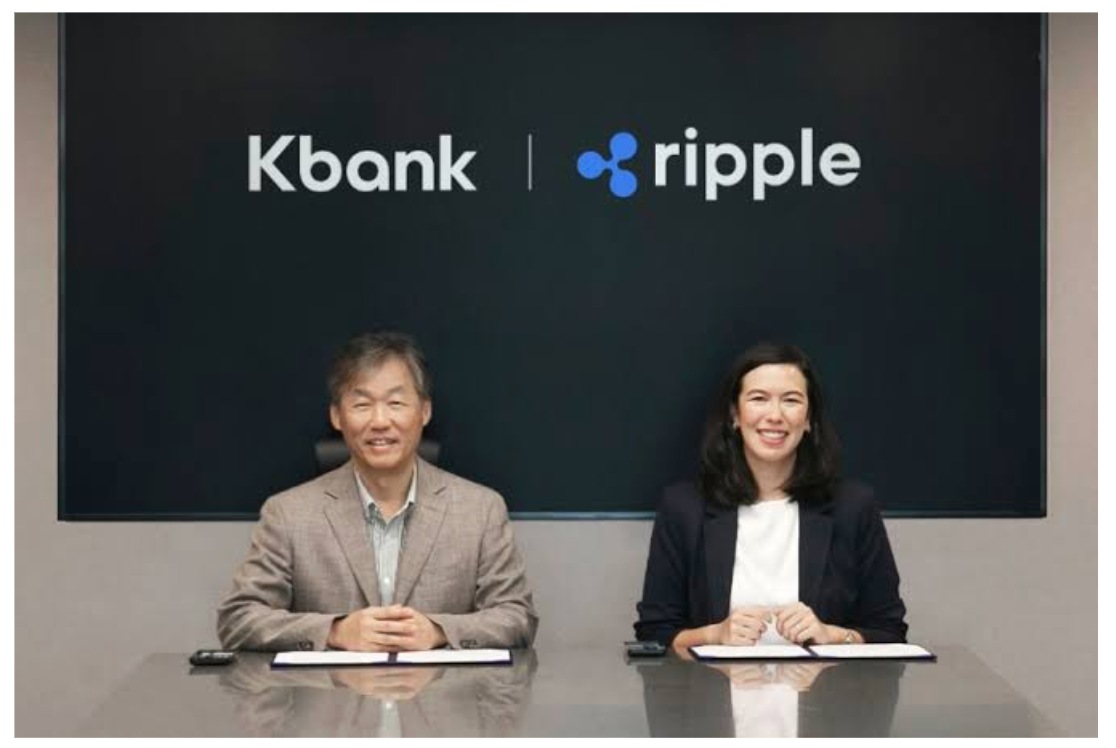
South Korea’s KBank has signed a strategic partnership with blockchain payments firm Ripple. The agreement targets the long-standing inefficiencies in international money transfers. Both companies formalized the deal at KBank’s headquarters in Seoul on April 27, 2026.
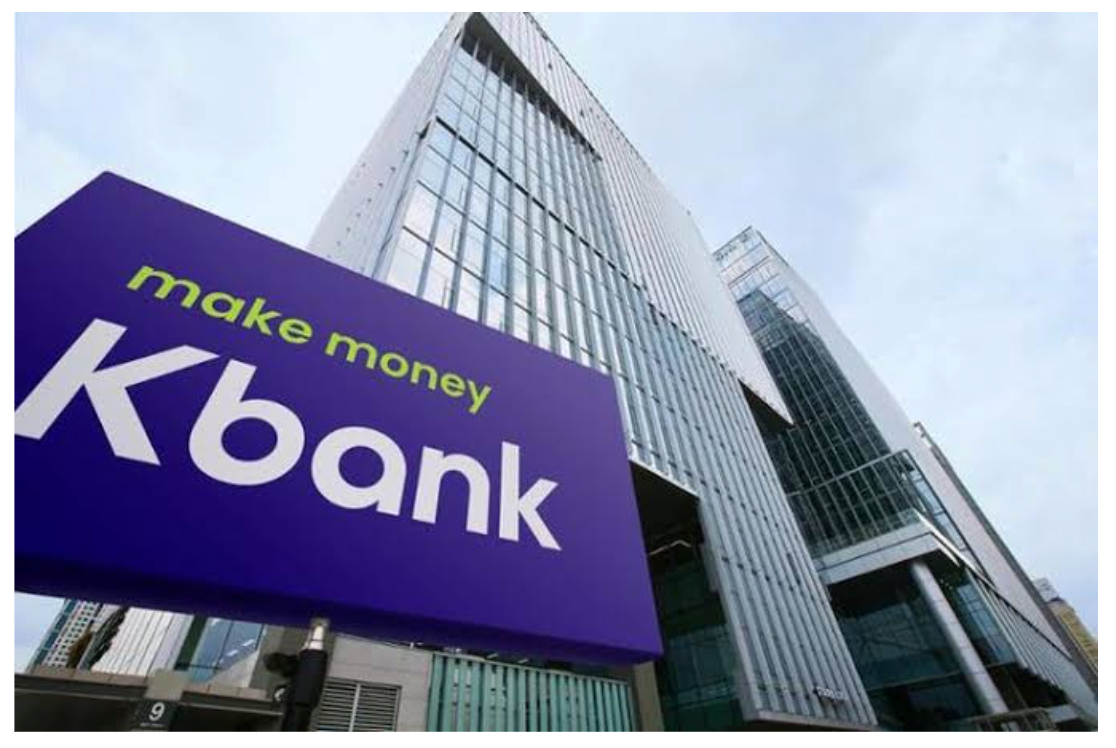 KBank and Ripple formalise partnership to modernise cross-border remittances using blockchain technology. [The Korea Times]
KBank Chief Executive Officer Choi Woo-hyung and Ripple Asia-Pacific Managing Director Fiona Murray attended the signing ceremony. The partnership marks a significant step in South Korea’s broader push toward blockchain-based financial services.
What the KBank and Ripple Partnership Covers
Under the agreement, KBank will use Ripple’s global network and blockchain infrastructure for testing. The bank aims to measure potential improvements in transaction speed, cost efficiency, and transparency. The collaboration centers on overseas remittances rather than domestic transfers.
The two companies also discussed expanded cooperation in digital assets. This includes wallet integration, transaction processing models, and stablecoin-based payment testing. KBank views this partnership as part of a wider digital expansion strategy.
Ripple operates a global financial network with over 100 institutional clients worldwide. The firm launched its own stablecoin, RLUSD, in 2024 and has applied for a US trust bank charter. The approval process for that application remains ongoing.
KBank’s Role in South Korea’s Digital Banking Sector
KBank is South Korea’s first internet-only bank, founded in 2017. The bank has grown its customer base from roughly 2 million users in 2020 to 15 million by end of 2025. This rapid growth reflects strong demand for digital-first financial services in the country.
Upbit operator Dunamu counts among KBank’s major shareholders. This connection to one of South Korea’s largest cryptocurrency exchanges positions the bank well for digital asset exploration. The Ripple partnership builds naturally on that existing foundation.
South Korea ranks among the world’s highest adopters of digital banking. Its financial regulators have shown openness to blockchain technology, provided it meets strict security and transparency requirements.
How the Blockchain Remittance Proof of Concept Works
KBank and Ripple structured the collaboration as a multi-phase proof of concept. The goal is to verify the effectiveness of blockchain-based money transfers before any commercial rollout. Each phase builds on the results of the previous one.
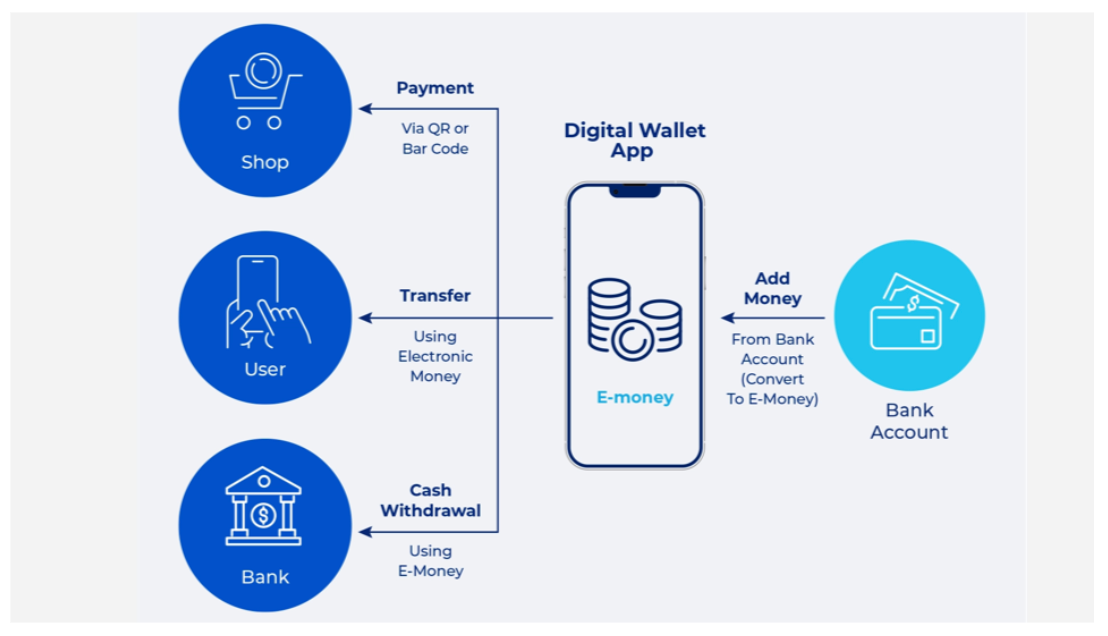 KBank tests wallet-based transfers using Ripple’s Palisade platform in a multi-phase proof of concept.[LinkedIn]
The first phase tested wallet-based transfers through a dedicated app interface. KBank used an in-house digital wallet during this stage to simulate how retail customers might send money overseas. The bank and Ripple verified the system’s basic functionality during this period.
The second phase moves the testing into a virtual environment. Engineers are now linking customer accounts directly with internal banking systems. This stage assesses transaction stability under more realistic operating conditions.
UAE and Thailand as Key Remittance Test Corridors
KBank selected the United Arab Emirates and Thailand as the primary corridors for its second-phase testing. The bank already holds memorandums of understanding with partners in both countries for stablecoin-based transactions. These existing agreements support a smoother testing environment.
 KBank selects UAE and Thailand as key corridors for testing blockchain-based remittance flows. [Defi Planet]
These corridors reflect common remittance routes from South Korea. Workers and businesses regularly send money to and from Southeast Asia and the Middle East. A faster, cheaper system on these routes would benefit a significant number of users.
The on-chain transfers between these regions allow KBank to evaluate performance under real-world geographic and currency conditions. Results from these corridors will inform whether the model scales to additional markets.
Ripple’s Palisade Platform Takes Center Stage
KBank will use Ripple’s Palisade platform during the second phase of testing. Palisade is a software-as-a-service digital wallet solution designed for financial institutions. It meets international security standards and supports compliance requirements.
The platform connects wallet functions directly with blockchain networks. It also allows banks to simulate real remittance conditions without full infrastructure changes. KBank sees Palisade as a faster and more scalable option compared to building a proprietary system.
Palisade also helps evaluate compliance workflows before any commercial deployment. This matters in a regulated environment like South Korea, where financial regulators expect robust controls on digital asset transactions.
Cross-Border Payment Inefficiencies Drive the Initiative
Traditional international money transfers pass through multiple intermediary banks. This process typically takes one to three business days to complete. Each intermediary adds fees, which erodes the value received by the end recipient.
The global remittance market processes over $700 billion in transactions annually. Average fees on these transfers run between 6 and 7 percent of the total amount sent. Blockchain-based systems could potentially bring those fees below 1 percent.
KBank’s on-chain testing aims to cut settlement times to seconds rather than days. The bank also plans to share test results with regulators to support a wider case for blockchain remittances across South Korea.
Alignment With South Korea’s 2026 Stablecoin Roadmap
South Korea has set out a regulatory roadmap for legalizing stablecoin payments in 2026. KBank’s partnership with Ripple positions the bank ahead of that regulatory shift. Testing stablecoin-based transfers now allows the bank to prepare its infrastructure in advance.
Regulators across Asia, including in South Korea, Japan, Hong Kong, and Singapore, are moving to build formal frameworks for digital asset use in banking. These frameworks create clearer rules for institutions exploring blockchain payments.
KBank’s work with Ripple also connects to Ripple’s own stablecoin, RLUSD, introduced in 2024. Testing stablecoin-denominated transactions aligns with the direction both companies expect the regulatory landscape to support.
What Comes Next for KBank and Ripple’s Blockchain Push
KBank and Ripple have not announced a commercial launch date. The current work remains a proof of concept, with results expected to guide future decisions. Regulators must review findings before any live remittance service can begin.
If tests succeed and regulators approve, both companies could expand the system into a live remittance product. That expansion may reach additional corridors beyond the UAE and Thailand. Southeast Asia and other parts of the Middle East represent likely targets, given existing remittance flows from South Korea.
Fiona Murray of Ripple stated the partnership gives KBank a chance to strengthen its position in blockchain-based overseas transfers. CEO Choi Woo-hyung echoed that view, calling the collaboration a tool for enhancing the bank’s international competitiveness.
FAQS
Q1: What is the KBank and Ripple partnership about?
A1: The partnership between KBank and Ripple focuses on improving cross-border remittances using blockchain technology. It aims to reduce transaction costs, increase speed, and enhance transparency in international money transfers.
Q2: How will Ripple’s technology be used by KBank?
A2: KBank will use Ripple’s blockchain infrastructure and its Palisade platform to test wallet-based transfers, stablecoin payments, and integration with banking systems in a controlled environment.
Q3: Which countries are involved in the remittance testing?
A3: The second phase of testing focuses on remittance corridors between South Korea and the United Arab Emirates and Thailand, reflecting common international money transfer routes.
Q4: What is RLUSD and how does it relate to the partnership?
A4: RLUSD is Ripple’s stablecoin launched in 2024. It may be used in testing to facilitate faster and more stable cross-border transactions within the partnership.
Q5: When will KBank and Ripple launch a live remittance service?
A5: There is no confirmed launch date yet. The project is currently in a proof-of-concept phase, and any commercial rollout will depend on test results and regulatory approval in South Korea.
Disclaimer
This article is for informational purposes only and does not constitute financial, investment, or legal advice. The content is based on publicly available information regarding KBank and Ripple as of the publication date. While efforts have been made to ensure accuracy, no guarantee is given regarding the completeness or reliability of the information. Readers should conduct their own research and consult qualified professionals before making any financial or investment decisions. Crafmin does not accept any liability for losses arising directly or indirectly from the use of this information.
Sources
https://en.bitcoinsistemi.com/attention-xrp-community-ripple-announces-new-partnership/
https://coinfomania.com/south-koreas-k-bank-partners-ripple-for-blockchain-payments/
https://bitcoinworld.co.in/kbank-ripple-on-chain-remittances/