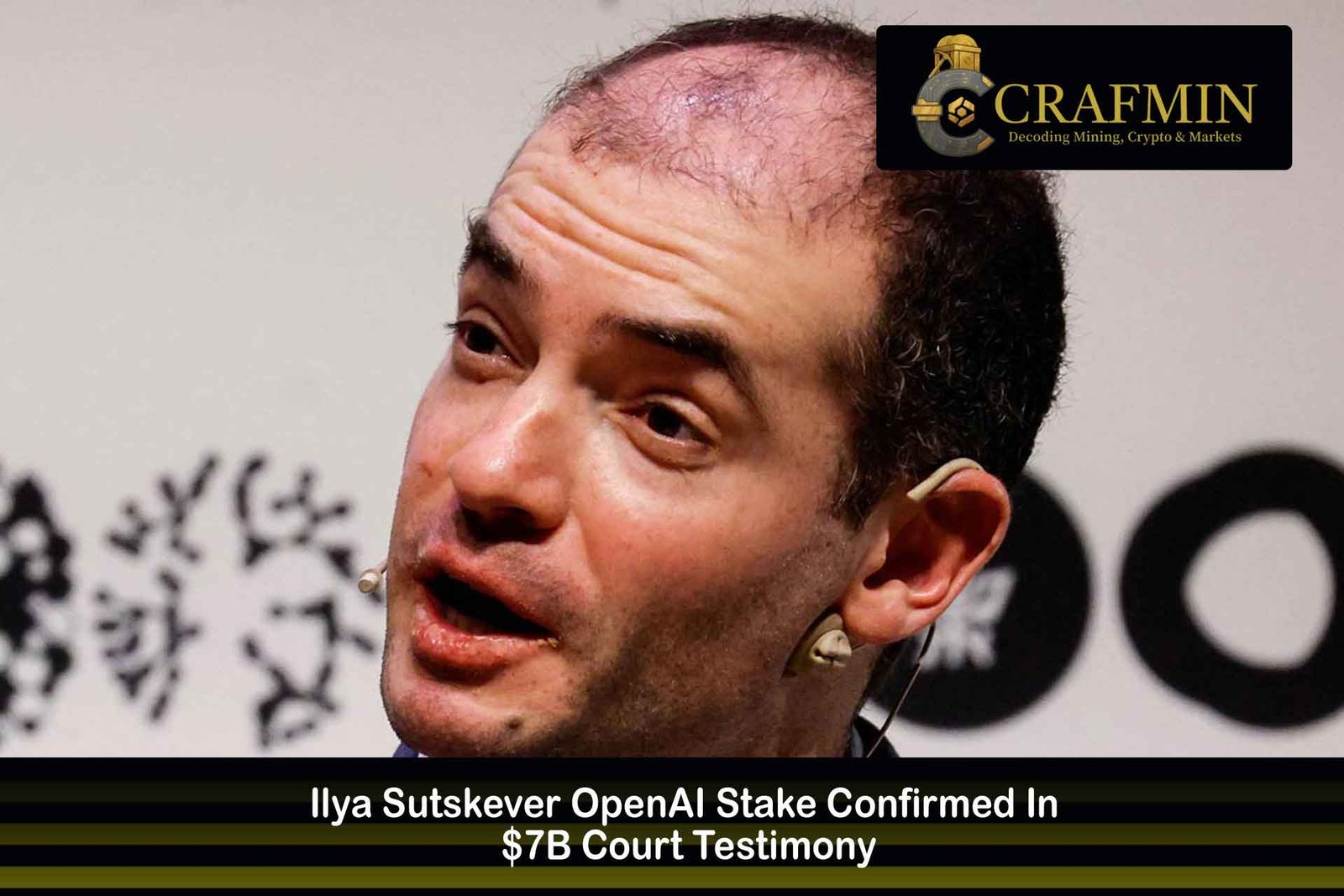
In testimony before a federal court, Ilya Sutskever admitted he owned about $7 billion in OpenAI. The comment came on May 11th, in connection with Elon Musk suing OpenAI and Sam Altman.
The case focuses on OpenAI’s alleged departure from its non-profit roots. The company’s emphasis was on profit, not benefit, says Musk. The new revelation from Sutskever lends credence to the discussion about insider equity and structural evolution.
The testimony gives a definite value to the participation of the founders. It also shows the monetary changes in OpenAI’s transition to a company.
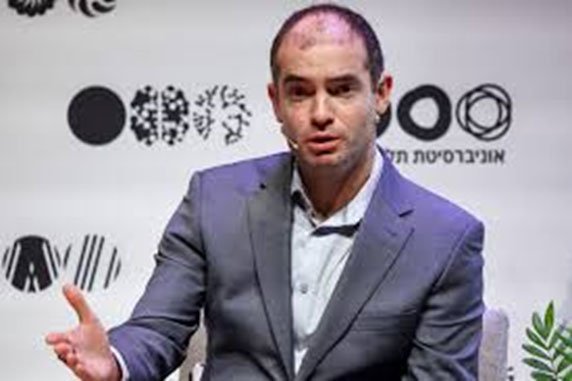
Ilya Sutskever during a public speaking engagement. [Courtesy: Yahoo Finance]
What Triggered The Court Dispute Over OpenAI’s Structure
The lawsuit brought by Elon Musk accuses OpenAI of betraying its initial mission. Musk says the organisation had shifted its focus from a non-profit research to a profit maximisation process.
The legal battle is over the governance changes and decisions made over the years. In 2019, OpenAI established a capped profit company to bring in funds. The step was meant to help cover the steep bill to train more sophisticated AI models.
Critics, however, contend that the building of these distinctions between mission and market incentives was not accomplished. Backers believe it was necessary to invest heavily in frontier AI. These underlying issues are still being litigated in the court proceedings.
Why The $7 Billion Stake Matters For Governance Debate
Sutskever’s reported $7 billion holding adds weighty arguments to the financial arguments rocking OpenAI. The company is worth more than $100 billion now, according to its estimation. These numbers are evidence of the magnitude of growth from its early research days.
Original non-profit organization dealing with increasing computing costs. The non-profit organization had increasing computing costs. The costs made large-scale development of AI difficult. A capped profit model was introduced to strike a balance between mission and investment.
But the suit by Musk calls into doubt whether the cap actually restricted returns. This is because there is a significant amount of founder equity, which raises governance questions. It also sharpens the focus on profit-making structures of advanced AI companies.

Symbolic representation of AI valuation growth. [Courtesy: Bitget]
How OpenAI Transitioned From Nonprofit To Capped Profit Model
Rather, OpenAI’s origins stem from a mission to create artificial intelligence in a safe way, driven by its inception as a non-profit research laboratory. Training frontier models was a very time-consuming process in the long run.
The organisation created a capped profit subsidiary in 2019 to secure funding. This combination enabled investors to get returns within predetermined limits. The model was designed to maintain the mission alignment while enticing investors.
OpenAI’s leadership made this argument in favor of continued funding: The shift was a result of industry trends towards scalable AI development. Now legal arguments are raising the question as to whether the capped structure really limited profits. The court case explores the alignment of governance intent and governance results.
Where The Testimony Fits Within Broader AI Industry Tensions
The testimony actually took place in the midst of federal proceedings in the United States. It is attracting investment and policymakers’ interest around the world. OpenAI is a key player in the fiercely competitive AI market segment. Its actions have a ripple effect on the overall market confidence.
In May 2024, Sutskever resigned from OpenAI in the wake of internal restructuring. Later, he established Safe Superintelligence Inc., which aims to prioritize AI safety. His exit coincided with major changes in the organisation.
There is some tension between the speed of innovation and accountability for governance at the court level. Such dynamics remain to influence global discussions on responsible AI development.
Key Issues Raised In Court
- The suit criticizes OpenAI’s shift to a profit-making enterprise.
- In testimony, Sutskever confirmed that he owns $7 billion worth of stock.
- OpenAI’s valuation has grown to be more than $100 billion.
- The capped profit model continues to be at the heart of legal arguments.
They are the fundamental issues that were discussed during a court hearing. They encompass financial, structural,l and governance aspects. The case could have implications for future frameworks of AI companies. Investors keep a keen eye out for structural possibilities. There is also a regulatory observation of implications for transparency standards.
The conflict could influence the way hybrid AI structures blend with mission and market needs. The clash could influence the equilibrium of mission and market needs in hybrid AI entities. Clarification of the law could impact the way this industry’s capital is raised in the future.
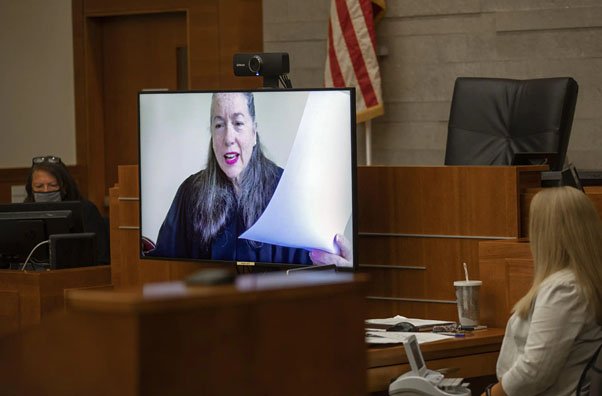
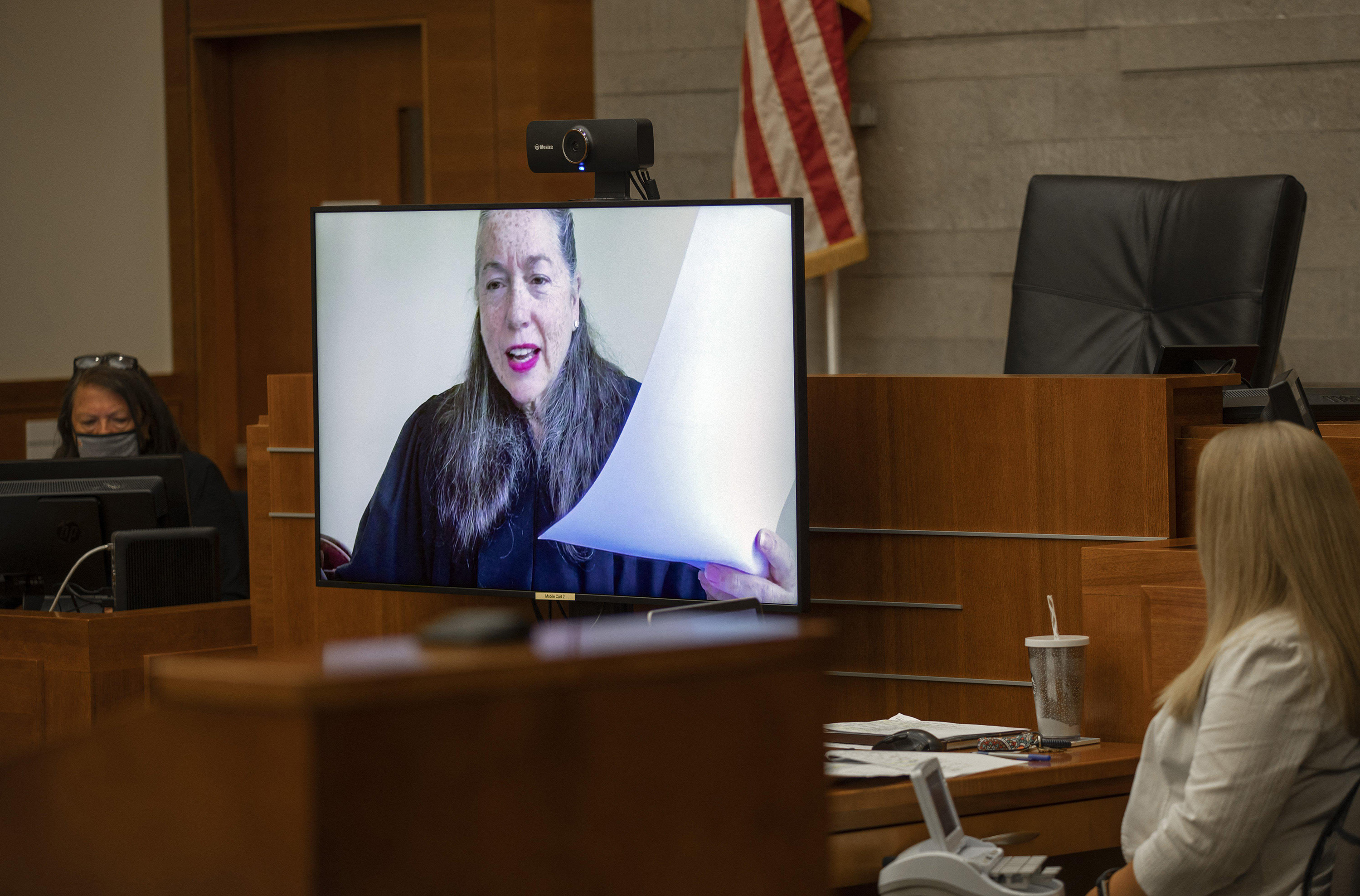
Courtroom setting reflecting technology litigation. [Courtesy: Brookings Institution]
What This Means For AI-Linked Markets And Crypto Narratives
The case is not limited to corporate governance issues, but also includes a broader discussion of technology markets discussion. AI is still the central focus of digital asset conversations. Projects linked to industry leaders can have an impact on investor sentiment.
Sam Altman is the co-founder of World, a company once known as Worldcoin, that combines biometric identity verification with blockchain technology. Uncertainty in OpenAI’s governance could impact trust in related initiatives. Leadership stability is a key watch item for market participants. Founders’ strategic bandwidth has an effect on innovation pipelines.
Structural clarity is a key criterion that investors pay attention to for long-term valuation stability. The decision in a lawsuit could affect the world’s perception of AI-based ecosystems.
When The Next Developments Could Influence Direction
The federal suit proceeds through the court system. Further evidence and testimony may be heard at future hearings. Any decision made would settle what to expect from the governance of AI organisations.
Changes in structure may occur contingent on legal interpretations. The length of the proceedings is expected to be longer, according to industry watchers, due to the complexity of the proceedings. Several parties are keeping an eye on the development of OpenAI. Hybrid nonprofit models are under examination by regulatory bodies around the world.
Final decisions have yet to be made and are expected to be made in the near future. But as time goes on in court, investment narratives around AI are likely to be influenced. The spotlight continues to be on transparency and accountability in governance.
Also Read: Coinbase Q1 Earnings Highlight Stablecoin And AI Expansion
Frequently Asked Questions
Q1. What Did Ilya Sutskever Confirm In Court?
A1: He confirmed that his OpenAI ownership stake is worth approximately $7 billion. The testimony occurred during Elon Musk’s federal lawsuit proceedings.
Q2. Why Is OpenAI Being Sued?
A2: Elon Musk alleges OpenAI shifted away from its original nonprofit mission. The lawsuit questions the company’s transition toward profit-driven objectives.
Q3. When Did Sutskever Leave OpenAI?
A3: He departed OpenAI in May 2024. His exit followed significant internal leadership changes within the organisation.
Q4. How Could The Lawsuit Affect AI Governance?
A4: The case may influence how hybrid AI companies structure profit mechanisms. A ruling could shape future transparency and investment frameworks.
Disclaimer
This article is based solely on the provided court testimony summary and related reporting details. It does not constitute legal, financial, or investment advice. Valuations, ownership figures, and litigation outcomes may change as proceedings continue. Readers should verify updates through official court documents and OpenAI statements. The information reflects developments reported at the time of writing and may not represent final judicial conclusions or corporate restructuring decisions.
Source Links
- https://cryptobriefing.com/sutskever-confirms-7b-openai-stake/
- https://www.msn.com/en-in/news/insight/sutskever-reveals-7b-openai-stake-in-musk-trial-testimony/gm-GM5E6A6559
- https://www.bloomberg.com/news/articles/2026-05-11/sutskever-says-his-openai-stake-worth-about-7-billion