

The cryptocurrency market staged a recovery today as digital assets reversed losses. Bitcoin climbed back above the US$60,000 threshold after testing support boundaries earlier in the week. Simultaneously, Ethereum and XRP established trading floors above their baselines.
Ether outpaced its trajectory by climbing past the US$1,600 mark during the morning trading sessions. XRP maintained a path, trading securely above US$1.06 as volume increased. These movements brought relief to a market that endured liquidation trends.
Technical data from trading platforms showed a turn in momentum indicators for the top three currencies. The Relative Strength Index (RSI) and Moving Average Convergence Divergence (MACD) models both shifted into growth territory. This move added billions of dollars back into the cryptocurrency market capitalisation.
The valuation of Bitcoin and Ethereum reached US$1.4 trillion during the afternoon trading window. This figure represents 70 per cent of the total market value. The influx of buy orders halted a correction that threatened to breach lows.
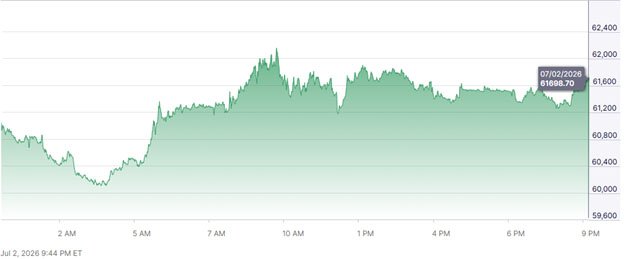
Figure 1: Bitcoin climbed above the $60,000 threshold [Source: NASDAQ]
Historical data showed a 2.42 per cent increase within the primary twelve-hour window for Bitcoin. This trajectory immediately stabilised Ethereum above its baseline floor of US$1,500. XRP mirrored this price action by holding its market capitalisation at US$65 billion.
Trading desks reported a reduction in sell-side order books as prices crossed resistance marks. Spot market volume rose by 25 per cent compared to the previous twenty-four hour rolling average. This volume surge confirms spot market demand rather than derivative liquidations.
Significance for Investors
Investors track these price movements because they signal shifts in macroeconomic stability. The recovery demonstrates the resilience of digital assets during periods of market corrections. Fluctuations in these tokens influence the valuation of altcoins and financial instruments.
Superannuation funds and asset managers allocate capital toward spot cryptocurrency exchange-traded funds (ETFs). Consequently, savers now hold exposure to these digital assets through retirement portfolios. Stable prices protect investments from capital degradation.
Furthermore, the rally highlights how digital currencies react to geopolitical events and fiat currency weaknesses. Observers view this rebound as a test of market maturity for the asset class. The turnaround shows that capital layers provide a price floor during market distress.
Traders utilise these reversals to gauge sentiment and adjust portfolio risk parameters. A defence of support levels attracts capital back into the financial ecosystem. Understanding these mechanics helps market participants navigate the volatility inherent to digital currencies.
Institutional data indicates that U.S. spot Bitcoin ETFs continue to hold approximately US$100 billion in cumulative assets. BlackRock leads the specific category with its IBIT product holding tens of billions in assets under management. These fixed allocations show that long-term portfolios resisted panic selling during recent downturns.
Digital assets serve as indicators for technological adoption and financial infrastructure. When tokens rally, public interest in finance applications and blockchain utility experiences an increase. This relationship affects employment, innovation, and funding within the technology sector.
Key Stakeholders and Sectors
The market action involves financial institutions, blockchain development firms, and macroeconomic regulators. Fintech pioneer Ripple Labs remains a central figure due to its connection with the XRP ledger. Asset management firms like BlackRock influence market liquidity through their investment products.
- Key entities manage billions in digital assets through spot ETFs.
- Brokers process trading volumes as investors re-enter the market.
- Market makers provide the depth to sustain these price tiers.
The digital asset sector encompasses participants from software engineers to venture capital funds. The Ethereum Foundation manages the network upgrades that keep the blockchain functioning efficiently. Meanwhile, traders execute algorithmic strategies that drive daily liquidity across exchanges.
Solana and Ethereum compete heavily for decentralised exchange trading volume across the broader smart contract sector. During specific periods in recent months, alternative networks exceeded the transaction throughput of legacy protocols. This competition drives continuous optimisation within the development teams managing these public ledgers.
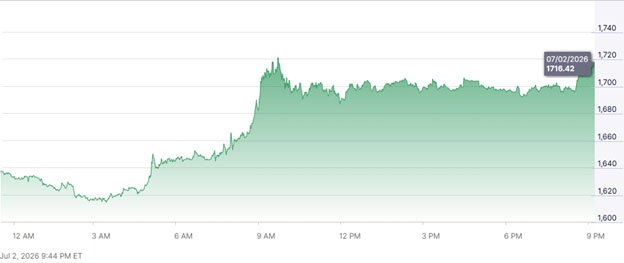
Figure 2: Ethereum has stabilised above its baseline floor of US$1,500 [Source: NASDAQ]
Banking corporations participate by integrating blockchain ledgers into cross-border payment operations. Financial institutions utilise XRP to bypass traditional correspondent banking networks. The adoption of these protocols links legacy finance with the digital economy.
Geographic Impact
While digital asset trading occurs across a network, physical locations drove today’s momentum. Qatari mediators in Doha provided the geopolitical catalyst that altered investor sentiment. The diplomatic discussions in the Middle Eastern nation influenced trading desks from New York to Sydney.
United States financial hubs played a role as Wall Street institutions absorbed spot ETF inflows. European trading desks sustained the momentum during operational hours before handing control to Asian markets. This global relay ensures that price discoveries happen simultaneously across time zones.
Australian digital currency exchanges reported a surge in domestic trading volume during the business day. Investors across the Asia-Pacific region reacted to the news flow by adjusting their portfolios. The connectivity of blockchain ledgers permits capital reallocation across borders.
Liquidity pools concentrate within server architectures located in North America and Asia. These data centres process millions of transactions per second to update order books in real-time. The infrastructure supports the network protocols that ensure global market access.
Regulatory bodies monitor these activities from their respective capital cities. Decisions originating in Washington, Brussels, and Canberra dictate the legal framework for asset custody. The distribution of these updates impacts where companies deploy capital.
Timeline of Events
The market reversal materialised on Thursday, July 2, 2026, following a period of selling pressure. The price action followed a mid-year correction that began in the first quarter of 2026. Bitcoin had hit a yearly low of US$57,800 twenty-four hours prior to this turnaround.
- Selling pressure pushed Bitcoin down to its lowest level since September 2024.
- Statistics showed Ether down approximately 47 per cent before today’s bounce.
- Thursday morning announcements regarding international diplomacy triggered the market reversal.
Analysts noted that the turning point occurred when Qatari officials released their diplomatic briefing. The news reached markets during a period of reduced liquidity, amplifying the price impact. The shift caught short-sellers off guard and forced short-covering across derivative platforms.
Also Read: Crypto Law Changes: Will New Crypto Regulations Shape the Market’s Future?
The year 2026 has presented operational headwinds for the cryptocurrency industry following the peak prices of late 2025. Bitcoin surrendered one-third of its value during the first six months of the year. Today’s reversal marks a break in that multi-month downtrend.
Trading systems recorded a concentration of buy orders at 05:00 UTC on Thursday. The influx triggered trading algorithms that accelerated the price momentum within minutes. Market participants view this timeframe as a historical marker for the current market cycle.
Future Outlook
The rally occurred because updates regarding indirect US-Iran talks in Doha boosted risk tolerance. Investors abandoned defensive positions and sought assets across financial sectors. The drop in geopolitical tension helped capital flow back into markets.
Looking forward, market participants expect the three cryptocurrencies to consolidate gains before attempting targets. Bitcoin must maintain its position above the US$60,000 mark to confirm an end to the bearish cycle. Ethereum requires inflows into its investment products to break through resistance levels.
The long-term outlook depends on whether Ripple Labs can expand the utility of XRP for banking settlements. A trillion-dollar market cap remains a target if assets displace traditional payment systems. The coming months will reveal whether today’s price spike marks a bounce or the start of a bull run.
Derivative markets will dictate volatility as traders adjust positions to match the price ranges. Open interest in Bitcoin futures rose following the breakout, indicating a return of leverage. If buyers fail to defend support levels, a liquidation cascade could erase today’s gains.
Regulatory clarity will shape the outcome of this market cycle as governments standardise asset laws. Guidelines prevent enforcement actions that historically triggered selling across markets. The interaction between adoption and regulatory frameworks will determine the value of these tokens.
Disclaimer: This article is for informational purposes only and does not constitute financial advice. Cryptocurrency investments involve significant risk, and you should conduct your own research or consult with a qualified financial advisor before making any investment decisions.