

The European Union is at a crucial crossroads when it comes to digital asset regulation. Markets in Crypto-Assets (MiCA) is represented by the deadline of July 1, 2026.
However, according to these regulations, Tether’s USDT is no longer allowed to be listed on regulated exchanges in Europe.
Stablecoin has already been delisted from the order books of major exchanges like Coinbase, Kraken and Crypto.com in Europe.
The development is one of the most significant crypto law modifications in 2026. The decision has raised doubts among investors and companies about its impact on the liquidity, stablecoin adoption and the future of the global cryptocurrency market.
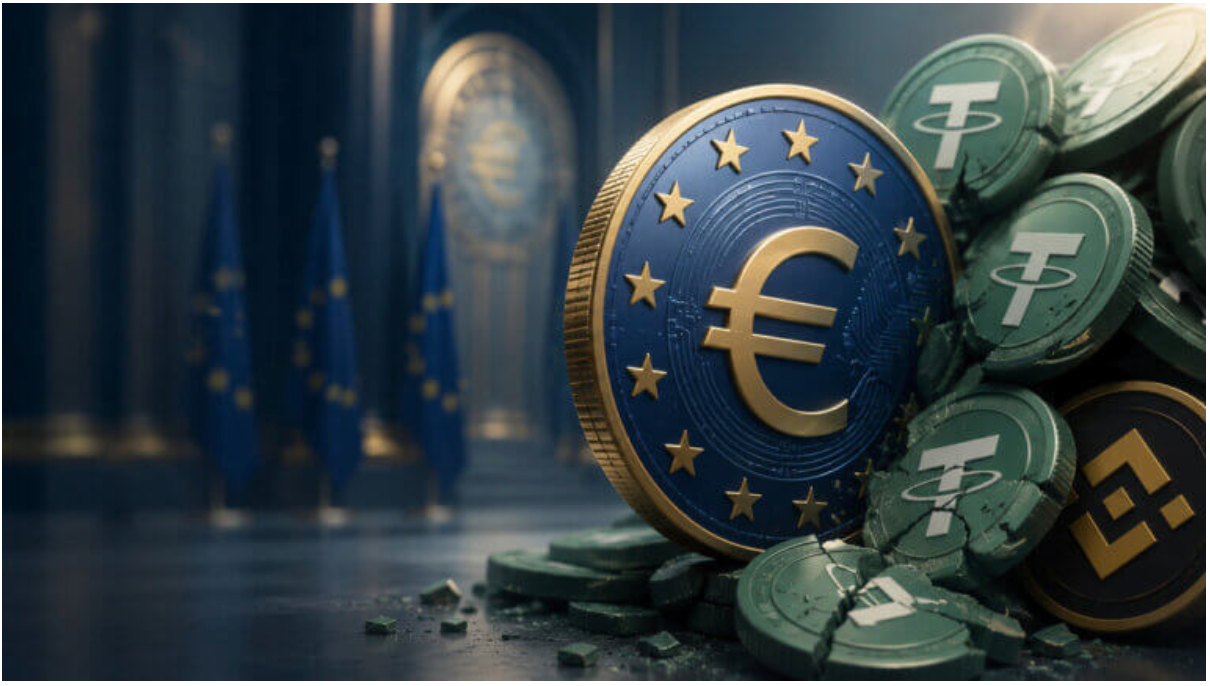 The EU’s MiCA rules have officially removed USDT from regulated European crypto exchanges. [Courtesy: Cryptoslate]
Why Did Tether Reject MiCA Compliance?
Tether chose not to pursue authorisation as an Electronic Money Token issuer under MiCA. The company’s leadership argued that the framework’s reserve requirements carried significant risks.
Chief Executive Paolo Ardoino criticised the requirement that 60% of reserves remain within European bank deposits. Tether’s reserve strategy relies heavily on United States Treasury holdings and globally diversified assets.
The company felt it was not advisable to change this structure as it was exposing its business model to unnecessary risk.
In 2024, Tether made a long-term strategic decision to pull its EURT stablecoin from the market, thus signalling its exit from Europe.
How Did Exchanges Gradually Remove USDT?
The delisting process happened over several months rather than overnight. Several leading exchanges adjusted their policies before the final deadline.
- Coinbase Europe removed USDT in December 2024.
- Crypto.com followed by delisting the token in January 2025.
- Binance restricted European USDT trading pairs in March 2025.
- Kraken initially offered a sell-only model before fully suspending support.
These actions reflected growing certainty that USDT would not achieve MiCA compliance. The changes also highlighted the crypto laws’ impact on market operations across Europe.
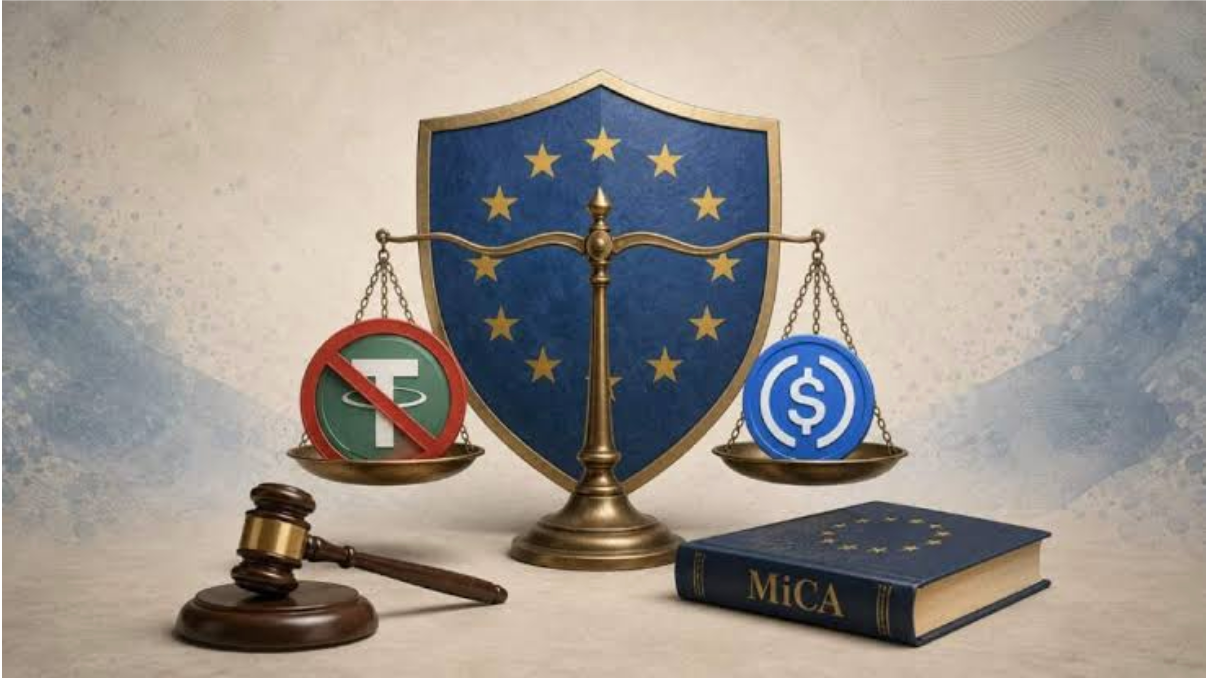 Major crypto exchanges removed USDT in stages ahead of the MiCA compliance deadline. [Courtesy: CoinLaw]
How Is USDC Benefiting From The Market Shift?
Circle took the opposite approach by embracing the new regulatory environment. The company secured an Electronic Money Institution licence in France. This approval allows Circle to operate throughout all 27 European Union member states under passporting rules. As a result, USDC and EURC have emerged as the only top-10 stablecoins with full MiCA compliance.
The transition is creating new opportunities for Circle and its ecosystem.
- Licensed exchanges are increasingly adopting USDC trading pairs.
- Market makers are rebuilding liquidity around compliant stablecoins.
- European investors are gaining regulated access to dollar-backed assets.
The shift may strengthen USDC’s position in global digital finance and influence the cryptocurrency regulation future.
Could Europe Build Its Own Stablecoin Ecosystem?
Europe’s response extends beyond replacing USDT with another dollar-backed token. Several companies are developing new compliant alternatives under the MiCA framework.
- StablR has launched the EURR stablecoin.
- Oobit introduced the USDR token.
- Both assets utilise Tether’s Hadron tokenisation platform.
At the same time, a consortium of 37 European banks is pursuing an even broader ambition. Financial institutions,s including BNP Paribas and ING, are developing Qivalis, a unified euro stablecoin. The initiative seeks to reduce Europe’s reliance on dollar-pegged digital currencies and create a stronger regional payments infrastructure.
 European banks are developing new stablecoins to reduce dependence on dollar-backed cryptocurrencies. [Courtesy: Bitcoin World]
What Does The EU’s New Rulebook Mean For Crypto Markets?
The implementation of MiCA is creating a more unified regulatory landscape. Only 244 MiCA licences had been granted across the European Union before the final deadline. Many crypto businesses have instead chosen alternative jurisdictions such as Dubai due to easier regulatory pathways.
Several important trends are emerging:
- Greater emphasis on regulatory certainty.
- Increased demand for compliant stablecoins.
- Faster consolidation among cryptocurrency firms.
- Growing competition between global regulatory hubs.
The crypto regulation changes in 2026 may become a template for other jurisdictions considering similar frameworks.
Will New Crypto Regulations Shape the Market’s Future?
The European Union’s decision marks a significant turning point for the digital asset industry. The removal of USDT from regulated exchanges demonstrates that compliance is becoming essential for long-term market access.
Companies willing to adapt may gain substantial advantages, while others could lose important regions.
The big question hasn’t been resolved yet. Will regulation be tighter, and will it give investors more faith and stabilise markets, or will it push innovation toward less rigid markets? The solution may set the tone for the future of cryptocurrency development worldwide.
Also Read: Crypto Market Forecast 2026: The Current Landscape
FAQs
Q1: What was the reason for USDT to be delisted from European exchanges?
A1: By the deadline of July 1, 2026, USDT will not meet the MiCA requirements. This led to the stablecoin being delisted from regulated exchanges in Europe.
Q2: How many licenses for the MiCAs were issued in advance of the deadline?
A2: Up until the end of the application, there were just 244 licenses issued throughout the European Union.
Q3: What Is Qivalis?
A3: Qivalis is a proposed euro stablecoin which is being developed by a consortium of 37 European banks, including banking giants BNP Paribas and ING.
Disclaimer
This article is for informational purposes only and does not count as financial, investment, legal, or cryptocurrency trading advice. Digital assets stay pretty volatile, and regulatory developments can shift the market conditions fast, like even overnight. Please do your own independent research and consider getting professional counsel before making any investment choices tied to cryptocurrencies, stablecoins, or blockchain assets.
Source Links