

The use of deepfakes and impersonation scams is positively increasing AI scams in cryptocurrency. A recent alert points to the fact that these scams led to huge losses in crypto ATM fraud cases in the United States.
According to law enforcement reports, the victims lost $333 million during crypto ATM scams in 2025. The tricks are characterised by the participation of criminals who impersonate governmental agents or representatives of firms.
False pretexts are used to force victims to place money in a cryptocurrency ATM. As soon as they are turned into cryptocurrency, the money is immediately sent to the wallets of scammers.
The decentralised blockchain transactions make recovery extremely difficult. Analysts fear that such fraud is gaining momentum due to the increased availability of artificial intelligence devices.

Crypto ATMs have become a growing target for AI-driven cryptocurrency fraud. [Courtesy: Gadget Review]
Why Are AI Scams In Cryptocurrency Increasing In 2026?
The recent increase in AI fraud in cryptocurrency is an indication of the development of fraud methods. To produce believable deepfake voices and videos, criminal gangs are now relying on artificial intelligence.
These will assist the scammer to masquerade as a bank employee, crypto exchange, or even a family member. Victims are often told that their stories are compromised and they have to send money at once.
Older people who are not acquainted with the cryptocurrency market also face a lot of scams. In some instances, fraudsters take their victims on a tour to the nearby crypto ATMs. The machines enable users to transfer cash into electronic assets in a matter of minutes.
When the transaction takes place, the money is transferred through a series of wallets, and it is hard to trace. According to experts, these fraudulent schemes are swiftly being propagated as AI tools are used to automate fraud campaigns across the world.
How Do Crypto ATM Scams Actually Work?
Crypto ATM fraud tends to start with an unsolicited message sent by a fraudster. The criminal can say that he or she works in a government agency, a bank or a technology company. Victims receive warnings of an alleged legal threat or a threat to their security.
Then, they are asked to withdraw money and insert it in a crypto ATM. The device transforms the money into a cryptocurrency and transfers it to a wallet address.
Scammers give the address in the form of QR codes or messages. When the transfer is made, money cannot be practically recovered.
According to law enforcement officials, this technique is one of the most rapidly emerging fraud channels. Investigators say over 12,000 victims were scammed by a crypto ATM in the US in 2025.
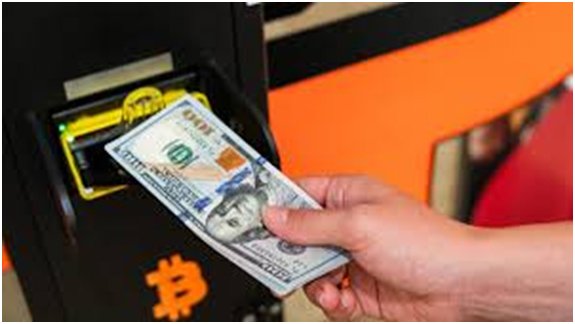
Fraudsters often guide victims to deposit cash into crypto ATMs. [Courtesy: CNET]
The Global Expansion Of Crypto ATMs Is Creating New Fraud Risks
The proliferation of crypto ATM all over the world is giving new avenues to criminals. Most of these machines are found in the United States.
It is estimated that there were more than 30,000 crypto ATMs in operation throughout the US by 2024. Over 81 per cent of the world’s crypto ATM placements are of these machines.
The ease with which cash can be changed to digital currency is a lure to both honest and bad users. Nevertheless, the government cautions that the same convenience favours fraudsters.
Convenience stores, petrol stations, and shopping areas tend to have machines. Their availability is an easy target for fraud schemes. Stricter regulation and compliance policies on operators are also being considered by the regulators.
How To Avoid Crypto ATM Scams As Fraud Techniques Grow
Learning to steer clear of crypto ATM scams is turning out to be crucial to cryptocurrency users. Analysts caution that the credible businesses seldom demand remittances using cryptocurrency dispenser machines.
Demanding to be paid with digital assets should become questionable when there is an urgent need. Officials suggest that the identity of any person demanding the transfer of cryptocurrencies should be verified.
People must never transfer money to wallet addresses that they are not familiar with, in the form of messages or calls. It is also recommended that consumers do their due diligence before committing their money to an investment.
Financial regulators underline that the fact that crypto transactions are finalised makes it very hard to undo them. The campaign on public awareness is being increased all over the world to minimise the number of victims.
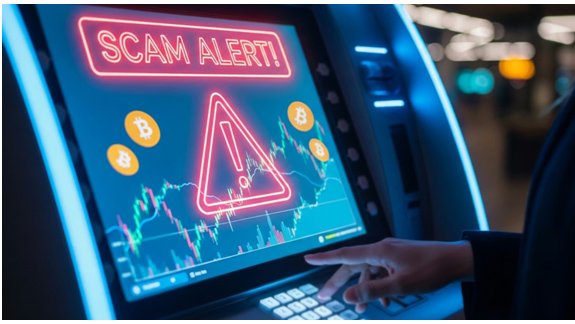
Awareness campaigns aim to protect users from crypto ATM scams. [Courtesy: Location ATM]
Regulators And Crypto Companies Respond To Fraud Surge
Governments and cryptocurrency businesses are also reacting to the emergence of AI scams in cryptocurrency. The police powers are enhancing surveillance of suspicious transactions.
There are those regulators that are lobbying towards the creation of tougher compliance regulations for the crypto ATM operators. The industry giants also encourage users to observe security measures whenever handling digital items.
In the meantime, there are cybersecurity companies that are working to create AI to identify scam networks earlier on. Although these have been done, analysts caution that the trend of fraud can keep increasing.
The increasing complexity of artificial intelligence enables fraudsters to multiply attacks at a high pace. Analysts explain that more international collaboration will be required to fight crypto-related financial crime.
Also Read: Secret Service Powers 60 Countries to Battle Crypto Fraud
FAQs
Q1. What are AI scams in cryptocurrency?
A1: AI scams in cryptocurrency involve criminals using artificial intelligence tools to impersonate trusted individuals or organisations to steal digital assets.
Q2. How much money was lost in crypto ATM scams recently?
A2: Reports indicate victims lost $333 million through crypto ATM fraud in the United States during 2025.
Q3. Who is most vulnerable to crypto ATM scams?
A3: Older individuals and people unfamiliar with cryptocurrency are often targeted by scammers.
Q4. How can people avoid crypto ATM scams?
A4: Users should avoid urgent payment requests, verify identities, and never transfer funds to unknown wallet addresses.
Disclaimer: This article is for informational purposes only and does not constitute financial or investment advice. Readers should conduct their own research before making financial decisions.
Sources: