

The crypto market shockwave on September 15, 2026, showed how much investors had attached to progress on US regulation. Digital assets were already weakening before the Senate decision, and losses deepened after the legislation failed to advance.
The reported vote was 49 in favour and 50 against, below the 60 votes required to move forward. For an industry seeking clearer boundaries between regulators, the outcome removed an anticipated catalyst.
Bitcoin fell below USD76,000 in the reported afternoon snapshot. Ethereum and Solana suffered larger percentage declines.
However, a failed procedural vote does not itself establish that the legislation has been permanently abandoned. The immediate consequence was renewed uncertainty over its path forward.

Figure 1: A physical Bitcoin token with cryptocurrency market exposure. Photo credit: Jonathan Borba.
What Happened to Crypto Prices
At the reference article’s reported 4:33 p.m. snapshot on September 15, Bitcoin was down 4.7% at USD75,758.66.
Total cryptocurrency market capitalisation was reported down 3.7% at USD2.68 trillion.
| Asset or measure | Reported value | Reported decline |
| Bitcoin | USD75,758.66 | 4.7% |
| Ethereum | USD2,398.80 | 7.6% |
| Solana | USD96.71 | 6.5% |
| Total crypto market capitalisation | USD2.68 trillion | 3.7% |
The reference also contains a separate market table with different prices and percentage changes. Those figures should not be combined with this snapshot or treated as a consistent closing-price series.
Why the Senate Setback Mattered
Investors had hoped the Clarity Act would provide a more durable framework for digital asset businesses operating in the United States.
Central questions include which regulator oversees particular assets and how securities rules apply. Those distinctions affect exchanges, token issuers and financial institutions considering blockchain services.
The Digital Asset Market Clarity Act legislative record provides the official bill text and recorded legislative history.
For markets, the disappointment concerned the expected timetable for clarity. Investors who anticipated progress had to reconsider that assumption.
The phrase Clarity Act collapse captures the disappointment surrounding the vote. More precisely, the legislation failed to clear a procedural hurdle; the outcome should not be described as an immediate prohibition on cryptocurrency activity.
What Drove the Selling Pressure
Several pressures formed the backdrop to the digital asset sell-off:
- Legislative disappointment: The vote interrupted expectations that a clearer statutory framework was moving closer.
- Unresolved oversight: Questions about asset classification and regulatory responsibility remained central to the industry’s outlook.
- Interest-rate expectations: A high perceived likelihood of a Federal Reserve rate increase was already weighing on sentiment.
- Higher oil prices: Rising energy prices added another concern to the wider market environment.
The vote was the main catalyst identified in the supplied report. However, the available figures do not isolate how much of each asset’s decline resulted from legislation rather than other pressures.
Why Ethereum and Solana Fell More
Ethereum and Solana recorded steeper losses than Bitcoin in the afternoon snapshot.
Both networks support programmable blockchain applications, including activity connected with stablecoins and tokenised assets. Their investment narratives therefore extend beyond holding or transferring a cryptocurrency.
A clearer framework could make it easier for regulated financial institutions to assess participation in those activities. Delayed legislation introduces uncertainty into that expansion story.
This offers a plausible explanation for their larger declines, but it remains an interpretation. The price figures alone cannot establish why individual holders sold.
They also cannot show whether the relative weakness will persist. A single session reveals the immediate reaction, rather than the eventual commercial effect on either network.
How Regulatory Uncertainty Reaches Businesses
For a bank or payment company, a promising blockchain application must also fit its compliance obligations.
Uncertainty over the treatment of an asset can complicate decisions about introducing services, selecting partners and allocating resources. Clear legislation could reduce some of those questions, although implementation would still require work.
The Senate setback leaves businesses evaluating their plans within the existing framework while monitoring further developments.
That does not mean every project stops. The supplied reporting describes banks, payment processors and other institutions as already integrating blockchain into their operations.
The distinction matters: slower progress towards a new law can affect confidence without reversing every existing business decision.
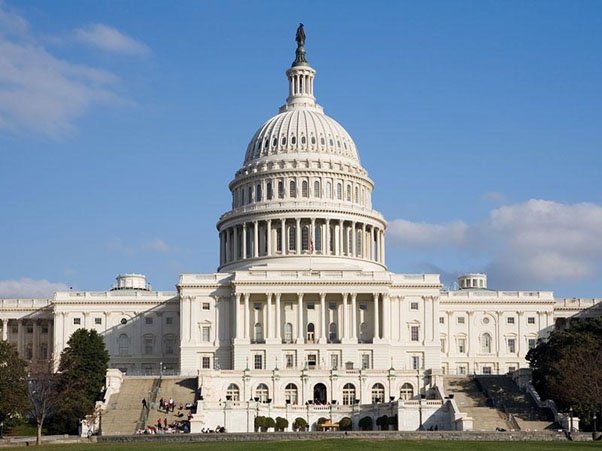
Figure 2: The US Capitol in Washington, where Congress considers federal legislation. This is a contextual image, not a photograph of the September 15 vote. Image source: Office of US Representative Neal Dunn.
What the Vote Does Not Establish
The crypto market shockwave should be assessed alongside the limits of the available evidence:
- It does not confirm a permanent legislative defeat: Failure to advance at this vote is distinct from every possible future route being closed.
- It does not end regulatory work: Agency initiatives can continue within their existing authority.
- It does not demonstrate a network failure: The reported catalyst concerned regulation and sentiment.
- It does not establish lasting investment losses: The supplied figures describe a particular market snapshot, not a forecast.
These distinctions help separate the observed price reaction from broader claims about cryptocurrency’s future.
Where Regulatory Work Goes From Here
Attention now turns partly to the Securities and Exchange Commission and Commodity Futures Trading Commission.
The supplied report describes both agencies as preparing cryptocurrency guidance. Separately, the SEC’s Crypto Task Force identifies clearer regulatory boundaries, disclosure frameworks and registration pathways among its objectives.
Agency work and legislation are different processes. Investors should examine what any announcement actually changes, which activities it covers and when it takes effect.
A statement of intent is not equivalent to an implemented rule. Equally, an unsuccessful Senate vote does not erase work already underway at the agencies.
What Market Readers Should Watch Next
Further developments will help establish whether the digital asset sell-off becomes a longer period of weakness:
- Legislative scheduling: Look for confirmed next steps rather than assumptions about another vote.
- Agency announcements: Distinguish proposals and speeches from measures that have taken effect.
- Institutional activity: Watch for disclosed launches, delays or changes to blockchain programmes.
- Comparable market data: Use consistent timestamps and measurement periods when assessing price movements.
- Monetary conditions: Keep interest-rate developments separate from the legislative story.
These measures offer a more useful framework than treating every subsequent price move as a consequence of the same vote.
FAQ
Did the Clarity Act become law?
No. It failed to advance in the reported Senate vote.
Which major asset fell most in the snapshot?
Ethereum, down 7.6%, compared with Solana’s 6.5% and Bitcoin’s 4.7%.
Are the quoted prices current?
No. They describe the supplied September 15 report.
Also Read: Crypto Regulation Breakpoint: How the Clarity Act Could Reshape Digital Asset Markets
Disclaimer
Prepared for Crafmin for informational purposes only. This article does not constitute investment or legal advice. Cryptocurrency prices are volatile, and regulatory outcomes remain uncertain. Historical figures are not live quotes. The reader should make financial decisions based on market data and official announcements independently verified by the reader.