
Blockchain technology expanded beyond digital tokens into physical infrastructure through Decentralised Physical Infrastructure Networks, commonly known as DePIN. These protocols incentivise individual participants to deploy hardware devices ranging from wireless hotspots and dashcams to solar panels and compute clusters. Active commercial utilisation drove the global DePIN market capitalisation to ten billion US dollars.
Participants connect physical hardware nodes to public blockchains to record operational telemetry and distribute token rewards. The sector generated seventy-two million US dollars in annual on-chain revenue through verifiable real-world service sales. This operational framework replaces centralised corporate monopolies with crowdsourced physical systems.
Hardware hosts receive cryptographic tokens in exchange for providing real-world bandwidth, data storage, or compute power. Enterprise clients purchase these aggregated physical services directly from protocol treasuries at reduced operational costs. This arrangement creates a self-sustaining physical economy that relies on actual commercial demand.
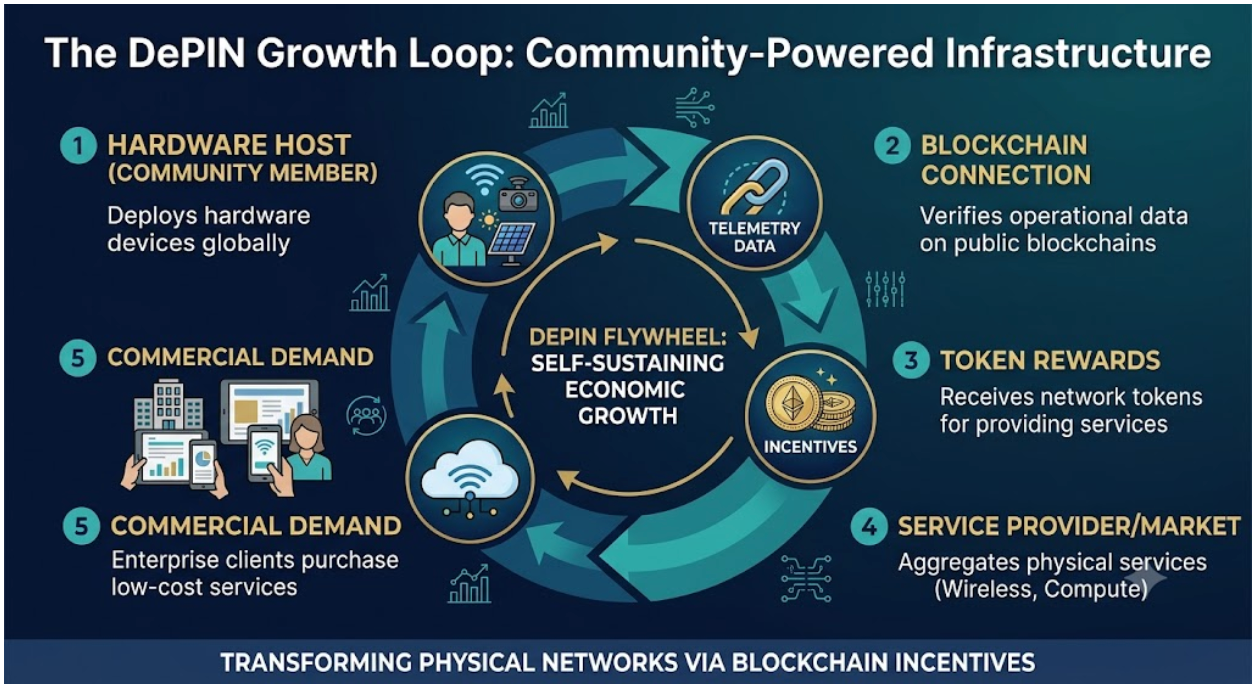 Figure 1: How DePIN Works (The Flywheel Concept)
The DePIN model spans four primary categories that transform traditional industrial sectors:
- Wireless networks providing cellular coverage and Internet of Things connectivity.
- Compute networks offering high-performance graphics processing units and data storage facilities.
- Sensor networks gathering street mapping, weather data, and environmental telemetry.
- Energy networks coordinating distributed solar generation and battery storage systems.
The DePIN Revolution
Consumers gain access to mobile plans, cloud computing resources, and mapping services at lower prices than traditional corporate rates. Individuals deploy low-power hardware in homes or vehicles to earn recurring digital token rewards. This model transforms passive technology users into active network owners and infrastructure operators.
Subscribers to decentralised wireless services receive reliable mobile coverage that community-deployed hotspots maintain. Small businesses reduce operational expenditure by sourcing raw graphics processing power from distributed computer networks. Local communities build resilient communication pathways that survive single-point corporate network outages.
Direct token rewards compensate hardware hosts transparently, lowering entry barriers for everyday individuals seeking supplemental income. Software developers build open-source application tools on top of these crowdsourced datasets without restrictive corporate licensing fees. This open economic architecture democratises access to global cloud resources and telecom infrastructure.
Key advantages for everyday users include:
- Significantly lower service costs compared to legacy telecom and cloud computing monopolies.
- Direct financial rewards for individual hardware hosts through automated token distribution.
- Enhanced user privacy protection through decentralised data routing and cryptographic verification.
- Greater community ownership and local control of vital physical infrastructure networks.
The Innovators Leading the Charge
Helium leads the wireless sector with more than nine hundred thousand active Internet of Things hotspots operating across the globe. Helium Mobile serves over one hundred and twenty thousand mobile subscribers using community-hosted cellular radios. Global telecommunication carriers like Telefónica integrate Helium wireless nodes to offload urban mobile traffic efficiently.
Hivemapper operates a decentralised street-mapping network through specialised dashcams installed in driver vehicles. Drivers mapped over twenty-five percent of global road networks to supply real-time geographic data to logistics corporations. Render Network coordinates distributed graphics processing units to supply visual computing power for artificial intelligence and film animation studios.
Akash Network provides decentralised cloud computing by connecting idle server hardware with software developers. DIMO Network collects connected-vehicle data to give car owners complete ownership over their personal telemetry. Venture capital firms invested approximately one billion US dollars into early-stage DePIN startups to scale physical hardware deployments worldwide.
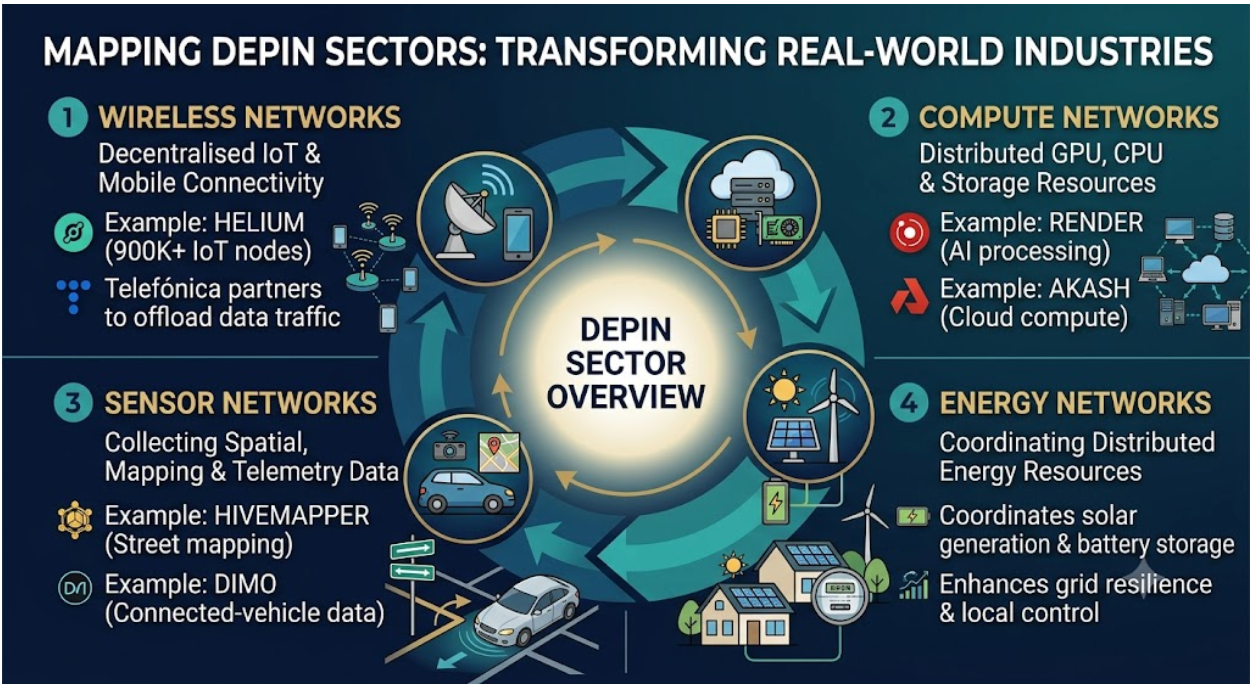 Figure 2: Key DePIN Sectors & Real-World Examples
Key industry participants span several major technology verticals:
- Helium and Telefónica expanding wireless communication networks across consumer markets.
- Render Network and Akash Network delivering scalable high-performance compute resources.
- Hivemapper and DIMO capturing real-world spatial sensor telemetry for enterprise applications.
- Venture capital firms providing capital to early-stage physical infrastructure startups.
Global Reach: DePIN Across the Map
DePIN hardware deployments span thousands of cities across North America, Europe, Asia-Pacific, and Latin America. Drivers in major metropolitan regions carry Hivemapper cameras to map dense urban traffic corridors daily. Homeowners across suburban districts install Helium hotspots to extend wireless network coverage throughout their local neighbourhoods.
Enterprise data centres in North America and Asia link idle server capacity directly to Akash Network compute pools. Emerging markets deploy decentralised wireless hardware to build modern digital infrastructure without massive government capital expenditure. This global physical distribution ensures high fault tolerance and continuous service availability across regions.
Regional deployment patterns highlight the worldwide scale of physical network expansion:
- Urban transit corridors across North America host dense mapping sensor arrays.
- European suburban communities deploy high-density decentralised Internet of Things radio nodes.
- Asian enterprise data facilities supply high-performance graphics hardware to distributed compute pools.
From Vision to Reality: A Timeline
Early DePIN experiments began between 2018 and 2022 during initial blockchain infrastructure development. Token markets experienced significant price volatility during 2021 before shifting toward utility-driven operational models. The market matured as networks established verifiable commercial cash flows and real customer bases.
Annual on-chain revenue figures surged to seventy-two million US dollars as corporate clients adopted distributed computing services. Institutional interest reached new milestones as venture capital firms committed one billion US dollars in private startup financing. Current metrics indicate steady ongoing expansion into mainstream commercial and industrial sectors.
Chronological developments reveal a distinct evolution toward sustainable business operations:
- 2018–2022 marked the deployment of initial proof-of-concept hardware networks.
- 2021 brought high initial token valuations followed by industry-wide capital consolidation.
- The present operational era features verifiable customer revenue and reduced token inflation.
The Future: Building the Physical Economy
DePIN protocols scale physical infrastructure by eliminating upfront central corporate capital investments. Community participants purchase and maintain their own node hardware to earn ongoing token emissions. This capital-efficient structure allows networks to reach global scale faster than traditional corporate infrastructure rollouts.
The sector now integrates decentralised finance mechanisms known as InfraFi to underwrite physical hardware expansion. Institutional yield seekers deploy stablecoins from a total available market of one hundred and seventy-five billion US dollars to fund hardware deployments. This financing structure yields predictable returns while rapidly expanding physical network density.
Future expansion will focus heavily on artificial intelligence compute demands and smart grid energy management. Distributed GPU protocols will bridge global chip shortages by aggregating consumer graphics cards into unified processing networks. Legacy telecommunication giants will increasingly lease decentralised coverage to reduce capital expenditures on physical cell tower infrastructure.
Future industry trajectories point toward several key structural shifts:
- InfraFi stablecoin financing pools providing low-cost capital for physical hardware installation.
- Artificial intelligence workloads driving explosive demand for distributed GPU compute power.
- Traditional telecom operators integrating crowdsourced coverage into legacy communication networks.
Sources
- https://bingx.com/ar/news/post/depin-sector-reaches-billion-market-cap-as-revenue-climbs-to-million
- https://incrypted.com/en/depin-projects-generated-72m-in-onchain-revenue-in-2025-report
Disclaimer: The information provided in this article is for educational and informational purposes only and does not constitute financial, investment, or legal advice. Cryptocurrency and Decentralised Physical Infrastructure Network (DePIN) projects involve significant risks, including the potential loss of capital. Markets in this sector are highly volatile, and past performance does not guarantee future results. Please conduct your own thorough research and consult with a qualified financial advisor before making any investment decisions. .