

What Is Driving The Bitcoin Price Recovery Pattern?
The Bitcoin price recovery pattern is attracting market observers after Bitcoin achieved a 4.65% price increase, which brought its value to approximately $71,013, following a severe decline in February that drove prices from mid-$90,000s to a low of $59,000.
The market shows better short-term sentiment, but the current recovery pattern has not developed into a confirmed trend reversal because worldwide economic uncertainty continues to affect cryptocurrency markets.
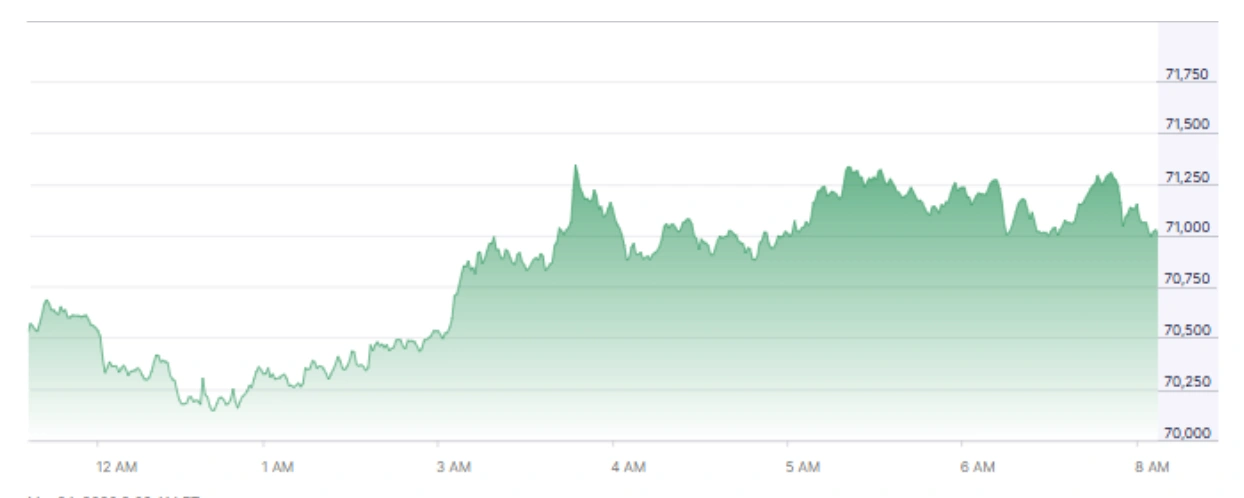 Bitcoin recovery pattern draws attention after 4.65% rise to $71,013. [Courtesy: Nasdaq]
Why Does This Pattern Raise Concerns For Investors?
The pattern creates investor concern because historical data shows similar rebounds often led to further market corrections.
The broader markets remain cautious because stocks have reached four-month lows, while the Crypto Fear and Greed Index shows extreme fear in the crypto market due to delayed U.S.-Iran tensions.
The temporary price gains create a deceptive appearance of strength, but the actual market sentiment exists in a weak state that can experience instant changes.
How Does Current Data Compare With Historical Trends?
The price of BTS rose by 4.6% after starting at $67,844 and reaching a peak of $71,811 before the price stabilized at approximately $70,985.
The Average Directional Index shows a reading of 19.1, which falls below the 25 threshold that defines strong trend movement according to technical indicators.
The 50-day exponential moving average stays below the 200-day average, which creates an extended bearish market pattern that continues to exist despite recent price increases.
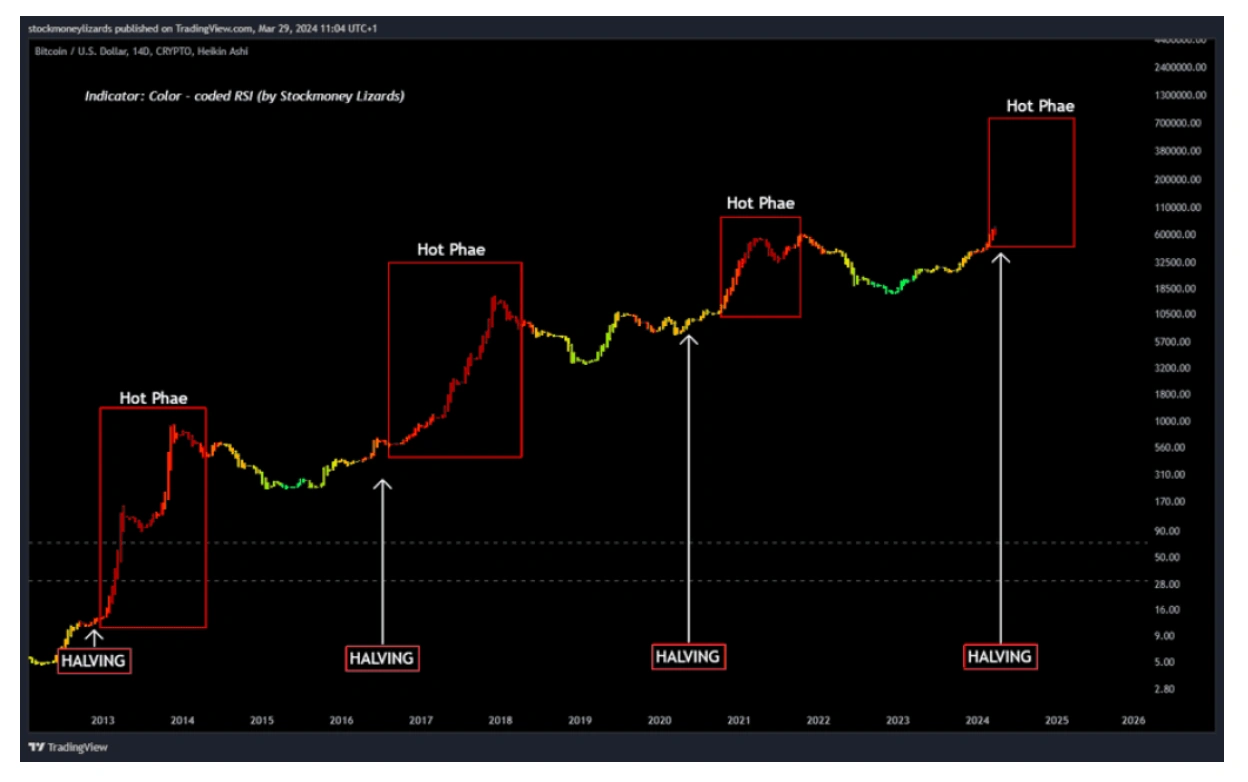 Technical indicators show weak momentum despite Bitcoin’s recent price spike. [Courtesy: Binance]
Who Is Affected By The Bitcoin Price Recovery Pattern?
The BTS price recovery pattern impacts retail traders, institutional investors, and crypto-linked businesses because market participants evaluate whether the price rise represents a buying opportunity or a brief market rebound.
The activity levels of exchanges, miners, and blockchain firms change according to market sentiment and the unpredictable movement of capital between international financial markets.
Where And When Is This Trend Emerging?
The present trading week shows Bitcoin price patterns early in the week, with noticeable strength following recent market declines. The movements show strong worldwide market links that connect the United States market with both European and Asian markets.
Demonstrating how global economic conditions and international political conflicts affect cryptocurrency prices in all markets.
 Global crypto markets reflect Bitcoin’s recovery amid ongoing uncertainty. [Courtesy: Business Line]
What Do Indicators Suggest About Bitcoin’s Next Move?
The indicators produce a divided prediction because the Relative Strength Index shows 51.5, which indicates neutral market conditions, and the Squeeze Momentum Indicator shows 0.26, which demonstrates growing potential energy that lacks defined movement.
The current market conditions will determine whether the Bitcoin price breaks through resistance or experiences downward movement.
What Role Do Macroeconomic Factors Play In Bitcoin Movement?
The BTS price recovery pattern depends on macroeconomic conditions because global uncertainty, interest rate pressures, and geopolitical tensions determine investor behavior toward risk assets.
The recent WTI crude price decline and the stock market drop to four-month lows demonstrate that crypto markets depend on overall market sentiment.
The external economic signals that impact Bitcoin recovery have created a situation where Bitcoin price increases become vulnerable to sudden declines.
Can Institutional Activity Change The Current Bitcoin Trend?
The Bitcoin price recovery pattern will develop into a sustained rally through institutional participation because institutional investors create liquidity and market stability in times of market uncertainty.
Current market conditions show investors have adopted a cautious stance, which prevents them from making substantial investments.
Bitcoin will experience short-term price fluctuations until institutional investors begin their significant investments and regulatory agencies establish their definitive rules.
Also Read: Why Bitcoin Won’t Go To Zero Despite Market Uncertainty
FAQs
Q1. What caused Bitcoin’s recent recovery?
A1: Bitcoin rose 4.65% after falling to $59,000, reflecting a short-term rebound.
Q2. Why is the current pattern considered risky?
A2: Because similar past recoveries often led to further price declines.
Q3. What do key indicators show now?
A3: ADX is 19.1, RSI is 51.5, and momentum remains weak.
Q4. What price levels are important now?
A4: Bitcoin faces resistance near its 200-day average and recent highs above $71,800.
Disclaimer
This article is based on publicly available market data and analysis and is intended for informational purposes only. It does not constitute financial or investment advice. Cryptocurrency markets, including Bitcoin, are highly volatile and subject to rapid price fluctuations. Readers should conduct their own research and consult qualified financial advisors before making any investment decisions, as market conditions can change quickly and unpredictably.