

The derivatives market of Bitcoin has moved into a sharp risk-off with traders liquidating leveraged positions and de-exposing. The open interest in total bitcoin derivatives fell to $44 billion compared to a record high of more than $94 billion in October 2025.
That constitutes a 55 per cent compression and the sharpest fall since April 2023, as CoinGlass says. The increase in open interest is usually new capital and new conviction.
Declining levels are rather indicators of warning and diminishing leverage. The current slide implies that traders are retreating due to macro and policy uncertainty. Spot exposure is favoured by the market players as compared to furious future positioning.

Bitcoin derivatives trading calms down with traders lowering leverage in futures markets. [Markets Media]
Market Conditions Trigger Broad Deleveraging Across Crypto
The withdrawal of speculative markets seems to be caused by broader financial stress. The confounding factors quoted by the analysts include a weak U.S. dollar, wars abroad and unrest in the Japanese bond market.
There is also AI-based disruption at technology companies that obscures growth prospects. A combination of these forces suppresses risk appetite in institutions. Unsettling sentiment was further shaken with a hotter-than-anticipated jobs report.
In January, the U.S. economy had increased by 130,000 jobs, which reduced the expectations of rate cuts. There was selling in institutional desks. The activity overshadowed long-term accumulation by the bullish parties.
What Do Futures And Options Signals Reveal Now?
The interest in Bitcoin futures is still open, and funding rates have become negative. These are indications that traders are not creating new leveraged longs. Rather, recent rebounds were led by short covering and spot buying.
Bitcoin was unable to maintain positions over 70,000 for almost two weeks. It was also during this period that investor confidence in equities and, more so, tech stocks declined.
Traders of derivatives seem reluctant to follow price moves without a more compelling macro understanding. This deviation shows the discrepancy between the cash demand and leveraged conviction.
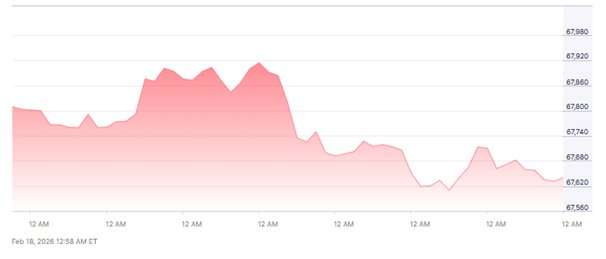
Bitcoin failed above 70,000 as tech equities’ confidence weakened. [Nasdaq]
Inflation Data Offers Brief Relief For Spot Buyers
Sentiment was given a temporary boost by January inflation. The year-on-year consumer prices inflation also fell to 2.4 per cent, a decline of 2.7 per cent in December.
The light reading eased the anxieties of reduced rate cuttings. The spot demand was enhanced due to the exit of the perpetual futures by the short sellers. Bitcoin had regained briefly on the weekend to the tune of $70,000.
Nevertheless, the exposure to derivatives continued to go down throughout the rally. This trend, according to analysts, is a sign of defensive positioning and not risk-taking. The traders like smaller allocations that are cash-based.
How Deep Is The Current Bitcoin Price Drawdown?
Price damage is serious, even though short-term reversals have occurred. Bitcoin is down 1.8% on the day to $67,544.
Its asset also trades at the all-time high of over 126000 in October, which is more than 46 per cent lower. Leveraged strategies are burdened with such losses. February selling is showing strain in long-term holders.
However, there are still investors who consider such levels as accumulation zones. Instead of aggressive derivatives trades, patients can use dollar-cost averaging.
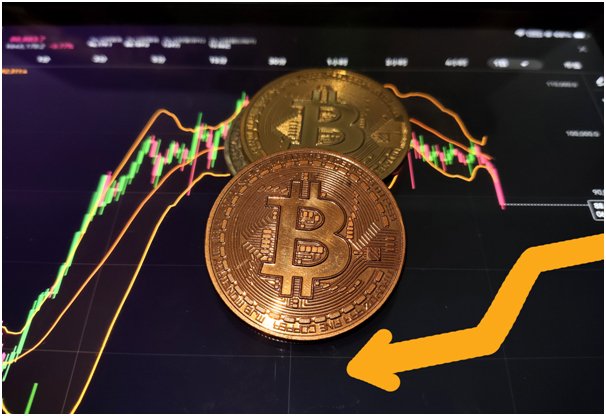
Bitcoin is not free; the currency is at its lowest level since the last peak. [CNBC]
Caution Dominates Outlook For Bitcoin Futures Vs Options Open Interest
The future of bitcoin futures and options open interest indicates that it will remain mediocre. Unless the macro conditions stabilise, analysts predict that leverage will recover gradually. The professional investors seem to be capital preservation-oriented.
Limitations on exposure reduced liquidations, but limited upside momentum. According to market watchers, sustainable rallies need new inflows in derivatives markets. Volatility could continue with conviction trades of lower persuasion at that time.
Until further notice, Bitcoin derivatives open interest will continue to be one of the crucial indicators of sentiment and appetite towards risk.
Tech Weakness Added Pressure On Crypto Markets
Bitcoin failed above 70,000 as tech equities’ confidence weakened. Broader stock market softness amplified caution among digital asset traders.
Risk capital rotated away from speculative positions across both sectors. Lower conviction reduced leverage and trimmed derivatives exposure. Sentiment remained fragile as macro uncertainty persisted.
Also Read: Bitcoin Price Correlation With Gold: US ETF Outflows Signal Market Rotation
FAQs
Q1: What is Bitcoin derivatives open interest?
A1: It measures the total value of outstanding futures and options contracts that remain open.
Q2: Why does falling open interest matter?
A2: It signals traders are closing positions and reducing leverage, indicating weaker conviction.
Q3: What is the difference between bitcoin futures and options open interest?
A3: Futures reflect directional bets, while options show hedging or volatility strategies.
Q4: Could open interest recover soon?
A4: Recovery depends on macro stability, stronger sentiment, and renewed institutional inflows.