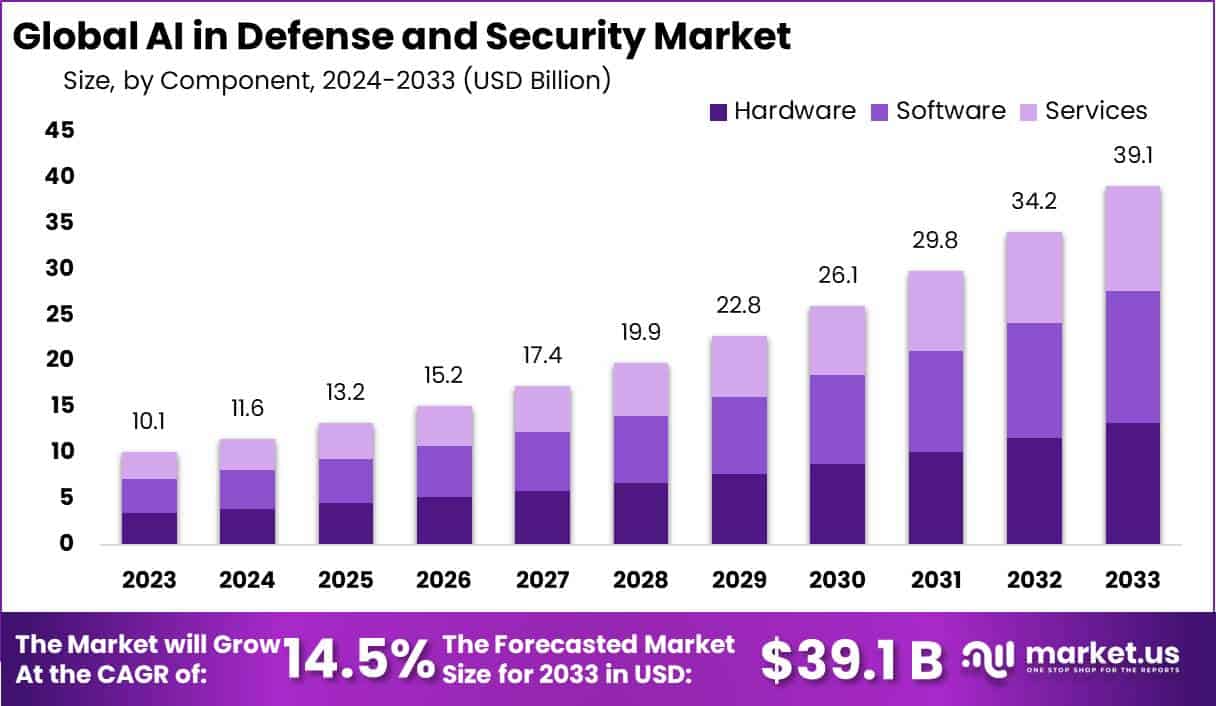

Global security spending continues to rise as governments respond to cyber threats, regional conflicts, and rapid advances in artificial intelligence. This shift has increased demand for AI systems that support surveillance, logistics, and digital defence. As a result, several publicly listed technology companies now stand to gain from higher investment in security-focused AI tools. Officials and executives say procurement plans now place greater emphasis on data analysis, automation, and real-time response.
 AI technologies are increasingly integrated into global security and defence systems. [IStock]
Defence agencies seek systems that process large volumes of information at speed. Cybersecurity units also require AI tools that identify threats before damage occurs. These needs have created opportunities for firms that already supply cloud platforms, specialised chips, and security software. Analysts note that government budgets for digital defence now represent a growing share of overall security expenditure.
Rising Defence Budgets Drive AI Adoption
Governments across Europe, North America, and parts of Asia have increased defence allocations. Several budget statements highlight artificial intelligence as a core capability. Funding now supports predictive analysis, autonomous platforms, and digital battlefield management.
Australian officials have also identified AI as a priority for national security programs. The Department of Defence has stated that automation and data integration will shape future operations. This approach mirrors policies in allied countries that aim to modernise command systems and reduce response times.
Security agencies seek tools that combine satellite data, communications records, and logistics reports. AI software can unify these streams into usable intelligence. Officials argue this improves situational awareness and reduces operational risk.
Industry executives say this trend creates long-term demand. “Governments now treat AI as essential infrastructure,” one senior technology executive said in a recent briefing. “Defence planning now depends on it.”
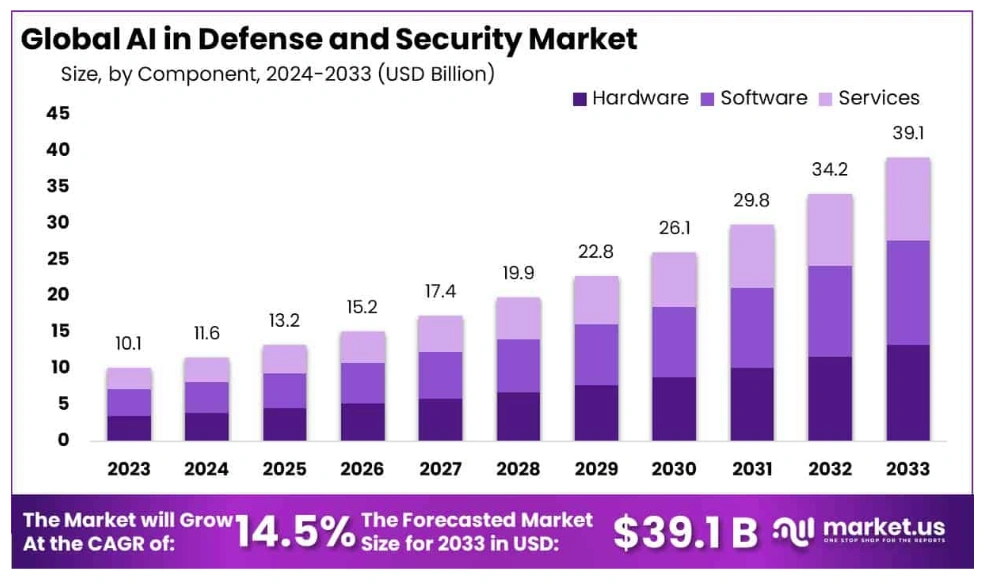 Global defence budgets increasingly allocate funding for AI-driven capabilities. [Market.US]
Chipmakers and Cloud Providers at the Centre
High-performance processors remain vital to AI deployment. Defence systems require chips that can handle image recognition and pattern analysis. These tasks need large computing power and reliable supply chains.
NVIDIA remains a key supplier of advanced graphics processing units used in data centres. Its chips support training and inference for security models. Company filings state that public sector clients now represent a growing segment of its revenue mix.
Cloud infrastructure also plays a central role. Defence departments use secure cloud platforms for storage and computation. Microsoft provides government-approved cloud services and AI tools. Executives have said that national agencies now request customised AI environments for classified work.
Amazon operates similar services through its cloud division. Officials in several countries have confirmed contracts for secure computing facilities. These agreements aim to host defence data within national borders.
 High-performance processors and cloud infrastructure support AI applications in defence and security. [NVIDIA]
Data Analytics Firms Support Intelligence Work
Data integration has become critical for modern intelligence operations. Agencies handle satellite images, intercepted communications, and field reports. AI systems now process this information to identify patterns and risks.
Palantir has expanded its work with defence and law enforcement clients. Its platforms support decision-making by combining multiple data sources. Company representatives have stated that demand for real-time analytics has increased over the past year.
These tools assist in logistics planning and threat detection. Military planners can model scenarios before deploying resources. Analysts say this reduces waste and improves readiness.
Experts note that such systems raise policy questions. Governments continue to debate oversight and transparency. Still, most defence agencies agree that data-driven tools remain necessary for future operations.
Cybersecurity Firms Address AI-Driven Threats
Cyber attacks now use automation and machine learning. Criminal groups and hostile actors deploy AI to scale phishing and malware campaigns. Security agencies respond with defensive AI systems.
CrowdStrike reports growing interest from public sector clients. Its software uses machine learning to detect abnormal behaviour on networks. Officials in several jurisdictions have said automated detection improves response times.
Palo Alto Networks has also invested in AI-based security platforms. Its systems protect cloud infrastructure and sensitive networks. The company states that governments now seek tools that defend both hardware and data.
Cyber officials warn that attacks increasingly target infrastructure and utilities. AI security tools help identify breaches before service disruption occurs. This focus has raised procurement budgets for digital protection.
 AI-powered cybersecurity tools detect and prevent automated cyberattacks on critical infrastructure. [Sify]
Defence Contractors Integrate AI Systems
Traditional defence firms now embed AI into weapons, aircraft, and surveillance tools. These upgrades support navigation, maintenance, and threat assessment.
Lockheed Martin has demonstrated autonomous systems that manage mission planning. Executives have said AI improves efficiency and reduces pilot workload. Defence departments view such capabilities as essential for next-generation platforms.
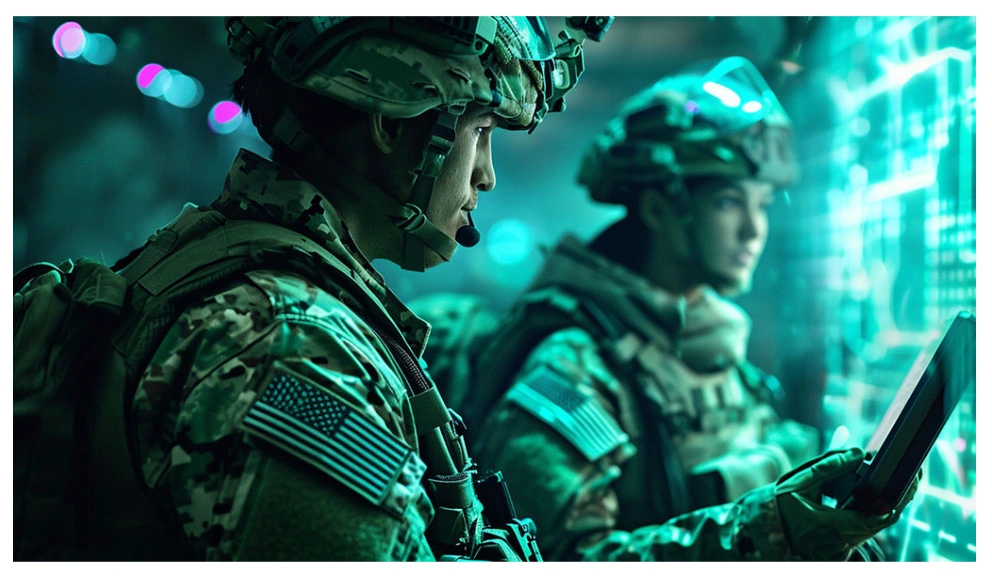 Autonomous platforms integrate AI to improve efficiency and mission readiness. [Defense Update]
Other contractors also test AI for radar and missile guidance. These systems process signals faster than manual methods. Officials argue that speed now determines operational success.
The shift toward AI does not replace existing hardware programs. Instead, it upgrades them. Analysts say this approach allows governments to modernise fleets without full replacement.
Regulatory and Policy Context Shapes Investment
Export controls and data laws affect AI supply chains. Several governments limit advanced chip exports to protect strategic interests. These rules influence how firms allocate production and sales.
Australian regulators have aligned many policies with allied standards. The government has stated that national security exemptions apply to some technology imports. This stance supports domestic defence projects.
Companies must also meet privacy and safety standards. Public sector contracts require strict compliance. Executives note that certification processes now take longer, but they also secure long-term revenue.
Policy experts say clear regulation provides stability for investors. Firms with established compliance frameworks gain an advantage. This factor has become part of market assessments.
Also Read: Why Crypto Corrections Are Normal: Simple Math, Not a Crash
Market Outlook and Investor Signals
Stock performance reflects expectations of sustained defence spending. Investors monitor contract announcements and budget statements. Rising order books signal future revenue streams.
Market analysts observe that AI-focused firms now appear in defence investment strategies. Hardware suppliers benefit from infrastructure builds. Software providers gain from subscription contracts.
A senior defence official recently said that “automation will define how forces operate over the next decade.” Such statements influence market confidence. They suggest continued reliance on commercial technology partners.
While risks remain, including geopolitical tension and regulatory shifts, the current environment supports firms linked to digital security. AI now stands at the centre of modern defence planning. As budgets adapt to new threats, companies that deliver secure, scalable systems appear positioned to benefit from global security trends.