
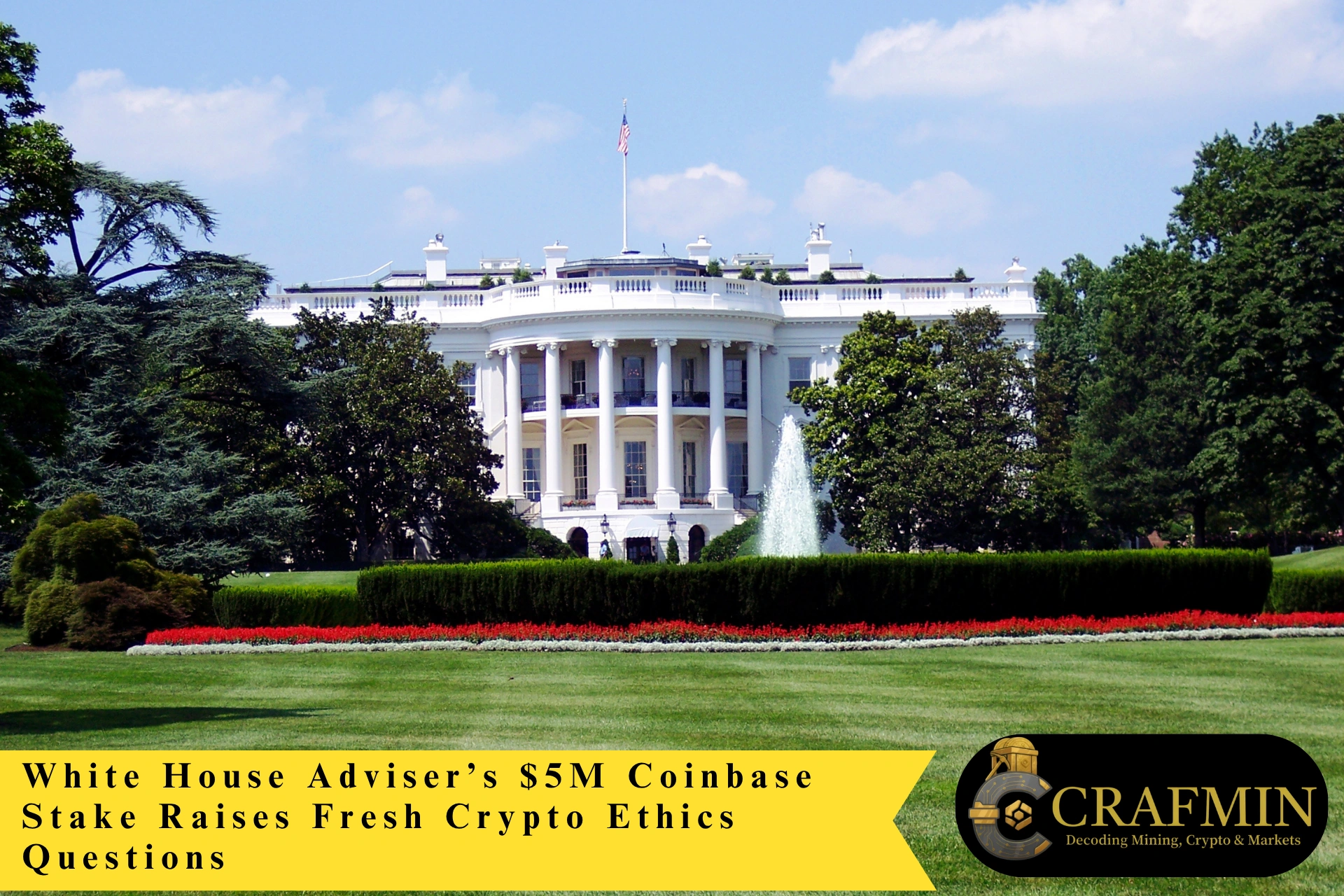
White House economic adviser Kevin Hassett disclosed between $1 million and $5 million in Coinbase stock. The holding was reported as of Dec. 31, 2025. The federal disclosure forms do not rely on specific numbers.
Accordingly, the filing does not disclose the exact proportion of Hassett’s holdings of Coinbase. It also does not verify whether he still holds the shares in 2026.
The disclosure has attracted attention as Hassett is a director of the National Economic Council. His work relates to economic policies that impact the digital-asset space.
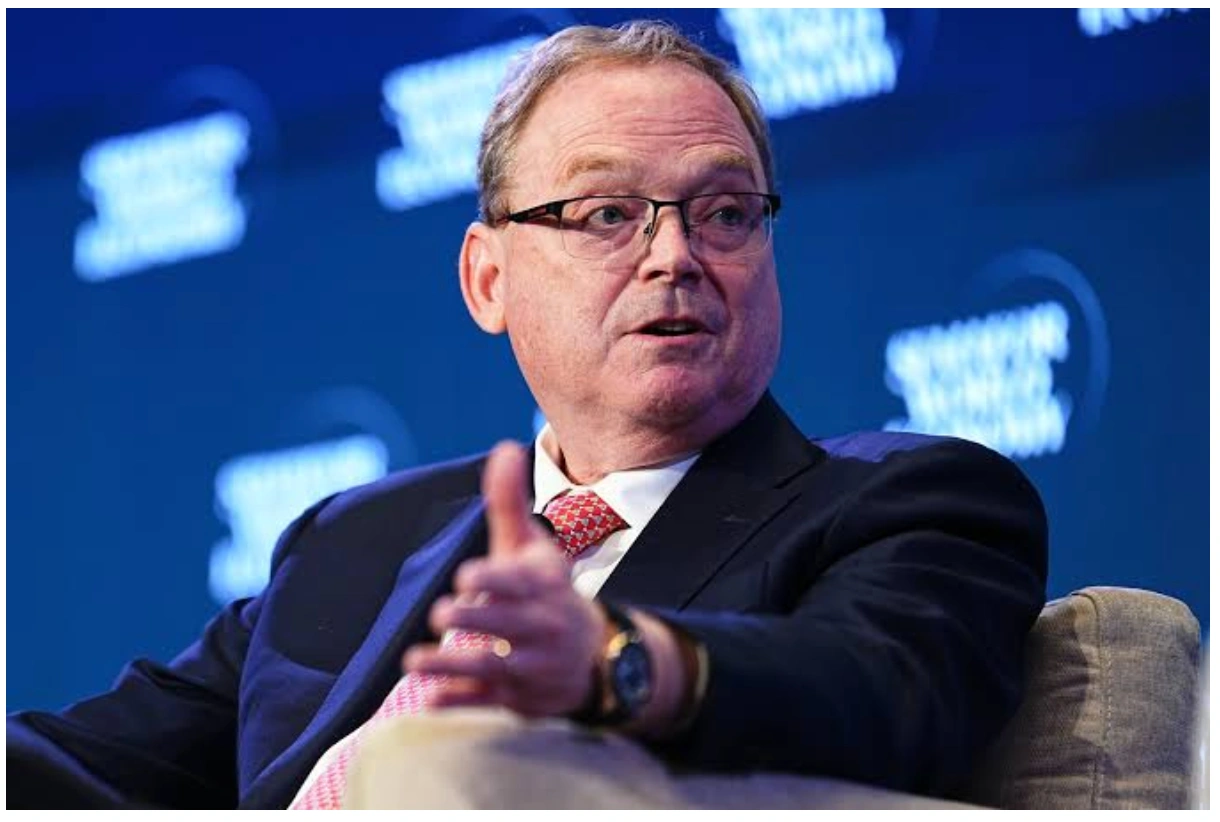 Kevin Hassett’s release at Coinbase brings crypto policy interests into question. [Courtesy: CNBC]
Coinbase Shares Remained In Hassett’s Portfolio
Hassett was previously a member of Coinbase’s Academic and Regulatory Advisory Council. He was appointed as an adviser in 2021 and remained until January 2025. During that month, he came to the White House.
Another June 2025 disclosure had him valued at between $1 million and $5 million for his vested Coinbase stock. More than $50,000 of compensation was reported on that filing for advisory fees from Coinbase.
He did not disclose whether he disposed of, decreased, or held onto the investment. Coinbase is a ticker listed on Nasdaq that trades directly with crypto markets.
White House Crypto Policy Creates Potential Overlap
The National Economic Council has an important role in coordinating economic policy. Its responsibilities can overlap with decisions affecting digital-asset businesses.
The administration created a President’s Working Group on Digital Asset Markets three days after Trump returned.
The group was tasked with developing proposals involving crypto regulation and stablecoins. It also examined a possible national digital-asset stockpile. Key policy areas included:
- Crypto market regulation and federal oversight.
- Stablecoin rules and digital-asset banking access.
- Tax treatment and securities regulation.
- Clearer authority between the SEC and CFTC.
These areas could materially affect Coinbase’s operations and revenues.
Hassett Says He Avoided Crypto-Related Matters
Hassett told CNBC that he avoided cryptocurrency matters after consulting government ethics officials. The White House also said he continues to comply with ethical requirements. However, the disclosure does not establish whether a formal waiver exists.
It also does not confirm whether Hassett sold Coinbase shares after December 2025. Federal ethics rules generally restrict officials from participating personally in matters affecting financial interests.
The specific application depends on government duties and relevant circumstances. Former SEC ethics lawyer Shira Pavis Minton Kantor described the holding as significant.
Coinbase’s Political Influence Adds To Scrutiny
Coinbase has become a major participant in U.S. crypto policy discussions. The exchange supported Fairshake alongside Ripple and Andreessen Horowitz. The political action group backed candidates viewed as supportive of digital-asset legislation.
Coinbase also contributed $1 million to Trump’s inaugural committee. CEO Brian Armstrong met Trump and other senior officials during policy discussions. Several developments have strengthened Coinbase’s position in Washington. These include:
- Continued lobbying for market-structure legislation.
- Advocacy for stablecoin legislation and clearer crypto rules.
- Political spending during the 2024 election cycle.
- Direct engagement with senior administration officials.
SEC Case And Policy Stakes Raise Questions
The Coinbase disclosure arrives after major regulatory changes involving the exchange. In February 2025, the SEC dismissed its civil enforcement case against Coinbase. The case had alleged an unregistered securities platform and staking service.
The SEC said the dismissal supported its broader regulatory work. It did not rule on the merits of Coinbase’s legal arguments. The dismissal was approved with prejudice, preventing the same claims from returning.
No penalty or admission of wrongdoing followed. The case illustrates why federal crypto policy can carry significant consequences for Coinbase.
 Coinbase’s regulatory history highlights the financial stakes surrounding U.S. crypto policy. [Courtesy: Reuters]
What The Disclosure Establishes
The available filing confirms Hassett held a substantial financial interest in Coinbase. However, it does not establish misconduct or a legal ethics violation. The disclosure also does not identify specific decisions involving Coinbase. Several facts remain important when assessing the situation:
- The reported holding was valued between $1 million and $5 million.
- The disclosure covers assets through Dec. 31, 2025.
- Hassett’s Coinbase advisory relationship ended in January 2025.
- He says he avoided crypto-related matters after receiving ethics guidance.
Any formal ethics assessment would require additional information about recusals, waivers and official duties.
Why The Coinbase Holding Matters
The controversy centres on the intersection between private investments and public policymaking. Coinbase operates across trading, custody and stablecoin-related services. Federal decisions can influence each of these business areas.
Hassett’s NEC role places him near broader economic policy discussions. Yet ownership alone does not prove that he influenced decisions for personal gain. Evidence about specific matters would be necessary for a definitive ethics finding.
The disclosure instead highlights the importance of transparency when officials hold significant interests in regulated industries.
What Happens Next For Hassett And Coinbase?
Further scrutiny could focus on whether Hassett retained the Coinbase position during 2026. It could also examine any recusals or ethics guidance governing his government work. The disclosure itself provides no answer on those issues.
In the United States, however, Coinbase continues to be heavily engaged in the U.S. regulatory and political discussions. The company remains on the quest for the “rules of the road” with digital assets.
The situation highlights the impact of regulatory decisions on COIN for investors. It is a cautionary tale for policymakers to remember the need to keep financial interests and official duties apart.
Also Read: Bitcoin Slips Below Key Levels as Fed Rate Hike Fears Shake Crypto Market
FAQs
Q1: How much does Kevin Hassett have in Coinbase?
A1: Hassett revealed that he sold shares in Coinbase for $1 million to $5 million. The filing does not provide an exact value.
Q2: Is the disclosure a violation of ethics?
A2: No. The disclosure establishes a financial interest but does not prove misconduct or a legal violation.
Q3: When did Hassett’s Coinbase advisory role end?
A3: His advisory relationship with Coinbase ended in January 2025. He entered the White House during that month.
Q4: Why does Coinbase matter to U.S. crypto policy?
A4: Federal rules can influence Coinbase’s trading, custody, and stablecoin-related activities. Regulatory changes may therefore affect its business.
Disclaimer
The information contained in this article is for general information purposes only and should not be treated as financial, investment, legal, or regulatory advice. It provides a summary of statements and policy changes that have been reported publicly and contained in the source material. The article makes no determination about whether Kevin Hassett violated any ethics requirement. Investors should make their own decisions regarding investment in Coinbase and other digital-asset companies after evaluating their own official documents, regulatory decisions, and advice.