
The race for AI is no longer theoretical; It feels urgent.
OpenAI’s GPT-5.2 and Google’s Gemini are at the heart of this ever-shifting landscape of technology. These tools are much more than question-and-answer engines. They define how humans search, work, and make decisions. (apnews)
- This rivalry is important as it affects almost all screens, processes, and sectors.
- But search no longer begins with ten blue links.
- Productivity is no longer reliant on static software.
- Digital innovation is not dependent on human direction only.
Now, with GPT-5.2 and Gemini racing towards the end of the year, and the year approaching 2026, GPT-5.2 and Gemini are not simply
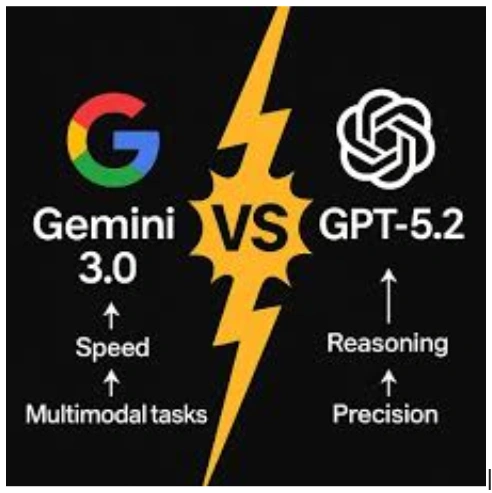
GPT-5.2 vs Gemini: AI reshaping search and work in 2026. (Image Source: Threads)
The Essential Facts: What Is Happening Right Now
| Aspect | OpenAI GPT-5.2 | Google Gemini |
| Core Approach | Incremental improvement rather than a full reboot | Ecosystem-first alternative model |
| Reasoning Ability | Enhanced reasoning depth and logical processing | Strong contextual reasoning supported by live data |
| Multi-Step Tasks | Handles complex, multi-step workflows effectively | Executes tasks across connected tools efficiently |
| Context Memory | Improved ability to retain and apply context | Context enhanced through Google services integration |
| Speed & Responsiveness | Faster reactions and clearer understanding of nuance | Optimized through cloud-scale infrastructure |
| Key Strengths | Research, programming, analytics, and content creation | Search, Workspace tools, Android, cloud services |
| Data Access | Strong synthesis from provided and inferred information | Native real-time data access via the Google ecosystem |
| Multimodal Capabilities | Advanced understanding across formats | Deep multimodal input and output support |
| Workflow Integration | Operates as a powerful standalone thinking system | Seamless handoff between Google tools and platforms |
Why This AI Arms Race Feels Different?
Technology wars are not new; we have seen search wars, browser wars, and mobile wars. This one cuts deeper; It is an attack on thinking itself.
GPT-5.2 and Gemini are not competing on features. They compete on how well they interpret intent. That interpretation distributes power.
Whoever understands intent best controls discovery, flow, and trust.
Nothing is left to determine who is on top; it is no longer about who ranks higher. It is about who answers better.
Search is no longer a page; Search is a conversation.
The function of search has shifted from directory to dialogue.
At its core, this shift changes how discovery works:
- Search prioritizes intent over keywords
- Answers outweigh rankings
- Context replaces directories
- Visibility inside AI responses matters more than clicks
- Discovery becomes conversational rather than transactional
GPT-5.2 pushes conversational discovery forward. Users refine concepts within a sentence, explore routes rather than keywords, and receive organized responses instead of scattered sources.
Gemini responds through deep integration with Google Search itself. Queries increasingly summarise, contrast, and recommend actions before users scroll. The traditional results page contracts as context expands.
From the user’s perspective, the experience feels efficient.
For publishers and companies, it is disruptive.
- Clicks no longer define success.
- In AI-driven search, visibility defines relevance.
This represents the biggest shift in search behaviour since the mobile era.
What Does This Mean for SEO Today?
SEO is no longer about ranking; it revolves around usefulness.
GPT-5.2 incentivizes quality that is clear, organized, and properly aligned. Gemini incentivizes quality that is authoritative, novel, and contextually relevant to the GMN ecosystem. Both systems produce content that solves a problem, not content that is
This moves optimization towards:
- Clear explanations
- Direct answers
- Strong topical authority
- Human-centered writing
Productivity Enters a New Phase
AI is already in use in the workplace. GPT-5.2 and Gemini take this further.
- GPT-5.2 shines when it comes to synthesis. It can link ideas from various documents, tasks, or formats. It is more like a thinking partner.
- Gemini is strong at delivery. It can seamlessly switch between email, documents, calendars, spreadsheets, and searching.
- Employees also now expect the AI to write, analyse, plan, summarize, and adjust instantly.
- This has an impact on how output is measured. Productivity is now less about time and more about good decisions.
The Quiet Shift: Decision Making at Scale
One of the most significant changes is happening beneath the headlines.
AI is influencing decisions even before humans are fully aware of the situation.
- GPT-5.2 focuses on reasoning and prioritization
- Gemini implies actions and suggests next steps
- Both systems guide users on what to explore next
These influences extend across multiple areas, including marketing, recruitment, research, and policy.
The decisions are not made by AI, but AI presents options, shaping the decision-making process. This subtle guidance is powerful.
As models advance, the focus will shift from asking: “Is the answer correct?” to asking: “Why was this answer shown first?”
Technology Innovation: The Acceleration Trend Continues
Start-ups used to take years to have full stacks; they are now prototyping in weeks.
GPT-5.2 removes barriers for conceptual thinking at speed. Gemini removes barriers for idea execution across platforms. These two technologies, when combined, bring innovation cycles closer.
This favours:
- Small teams and strong ideas
- Rapid experimentation
- Inter-disciplinary Tab
It poses a threat to the slow-moving large organization; Speed becomes the advantage.
GPT-5.2 and Gemini are accelerating innovation and shortening development cycles. (Image Source: TTMS)
The Trust Question Grows Louder
As AI becomes more integrated into daily life, trust becomes apparent.
Users ask:
- Can I rely on this answer?
- Where does this information come from?
- Who benefits from this response?
GPT-5.2 relies on transparency in reasoning. Gemini relies on the overall ecosystem’s reliability. Both have not fully addressed trust issues, though they are competing in this space.
“The AI that gains trust will be the one that gets all the attention.” The hardest-earned reward is attention.
Three Application-Oriented Changes Follow
Quality-wise, topic authority is more important than keyword density. Topics favour reputable and well-organized sources that respond to particular user intent.
Second, timeliness and context are more important than ever. To be current and to show you know you are current will greatly improve the odds of your content being displayed.
Finally, schema and structured data are the new go-to tactical tools. Descriptive markup about intent and facts helps differentiate your content as a possible source for the model.
For publishers, this has one big takeaway: try to be the most understandable and useful source for what people mean by queries, rather than just trying to be the top result for a phrase.
Enterprise Adoption: Opportunity, Restructure, and Real Costs
Organizations compete to integrate these models into their systems. The promise is impossible to resist: quicker reporting, better assistants, less friction between knowledge and execution. OpenAI’s GPT-5.2 and Google’s Gemini represent rival approaches: one better suited for deep thinking and generative range, the other for integration into productivity suites. Both lower the cost of doing complex work. However, for the implementation, more than the subscription cost is required.
Companies have three direct expenses:
Integration Overhead
- Integrating models with real-world workflows, such as calendars, CRMs, and ERPs, is a matter of architecture, governance, and testing. It is a problem where Workspace Studio simplifies some of it, but integration is also a concern.
Quality Control
- Errors happen when the models provide believable, although incorrect, advice. Human-in-the-loop validation loops must be designed.
Skills and Change Management
- Workers need to be trained in new working methods: prompting, checking suggestions, and deciding on overriding the model.
Organizations that invest in those three areas will be fast movers. Organizations that buy only seats will stumble.

GPT-5.2 and Gemini boost work but need proper integration. (Image Source: servicepath)
Risk Landscape: Risks of Inaccuracy, Biased Views, and Concentration
When models structure decision-making, minor inconsistencies build cumulatively.
An unreliable summary in a board package can scuttle a strategy. A confident-but-wrong data interpretation can misallocate resources. The challenge isn’t innovation, or even the size of the error space; it’s the scope. It can make thousands of decisions with one model result. Recent model enhancements aim at better reasoning and tool use, yet the error space is very real and very significant.
Biases are obstinate. Models trained on massive bodies of text will exhibit the biases of the datasets on which they are trained. Organizations will need to deploy models together with auditing and red-teaming if they are to mitigate detrimental bias and expect increasing regulation regarding the management of bias.
Concentration of influence is also a consideration here. The biggest overall models and channels of answer distribution are in the control of a few key providers. This has major implications when it comes to who reaps the benefits of automated work.
Regulation and Ethics: Looking Ahead to 2026
People in positions of policy-making are already reacting.
Expect regulations that demand explainability for important decisions, provenance for sourced information, and liability terms for causing harm through the suggestions offered. These regulations shall not be the same across all sectors. Sectors such as health and finance shall have tougher regulations. Organizations shall be ready to face audits on the use of models.
On the other hand, regulators will insist on transparency that users can understand. This will impact product design, and “show your work” interfaces, provenance links, and human review flags will go from being niche features to mainstream requirements.
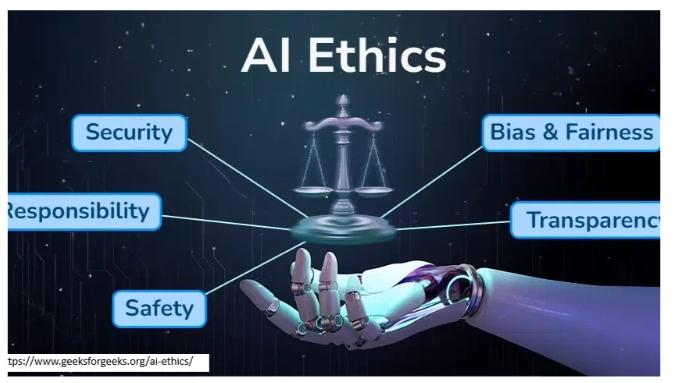
By 2026, AI must be transparent, accountable, and explainable. (Image Source: LinkedIn)
Who Will Win? And Why ‘Winning’ Is Complicated
“Winning” in terms of raw capacity is a close call for both giants. GPT-5.2 excels at deep thinking and multi-step problems. The advantage for Gemini is its ecosystem and connections with real-time data. Benchmarks indicate trade-offs: one performs better than the other at certain reasoning tasks, the other at writing within a seamless workflow. The advantage for any given organization depends on what is considered more valuable: synthesis capacity or seamless execution.
But market power is not purely a technical matter; Distribution Is Important
A model integrated into a leading search or productivity offering immediately reaches a large user base. Ties to Google Workspace and search give Gemini a distribution boost.
Developer Ecosystems Are Important
- APIs, tools, and extensions define who delivers highly integrated experiences. Open ecosystems drive innovation; closed ecosystems constrain innovation.
Trust Is a Consideration
- As users increasingly depend on the model’s predictions for high-stakes tasks, a certain level of trust and transparency will be key in driving adoption beyond features.
- Just no single company offers all. The market divides over the use cases, and the successful formula looks like a combination of aptitude, reach, and trust.
The Playbook: Actions and Recommendations for Businesses and Creators
Here’s a short, actionable checklist you can implement this week:
- Check the intent clarity of audited content. Optimize top pages to address user intent in the first 50 to 150 words of each piece of audited content to ensure easier extraction for generative models.
- Include provenance hooks. Use citations properly and include structured data to enable answers to cite content from my answers.
- Create one prototype of an agentised process. Choose an important, repetitive activity such as reporting, prospecting, or building the board package, and create a protected prototype that has human validation. Test for error conditions.
- Train internal teams on verification. Teach them how to ask questions effectively and how to verify the results quickly. Prompt engineering will become a new literacy. With the assistance of language models like the ones discussed here, teams can scale output safely.
- Keep abreast of updates to models. The release cycles change functionality overnightyou need agile integration points. See what the vendors say in release notes and compare key workflows.
These methods lower risk and build a competitive advantage early on.
For Content Writers and SEO Professionals, a Concise Strategy
- Answer first. Place factual and concise answers first.
- Earn citations. Research-quality explainers that AI models rely on and credit as sources.
- Optimize for GEO/AEO. Organize content for easy extraction by using clear blocks of answers and questions, numbered lists, and direct quotations of facts.
- Diversify your distribution. Don’t put your traffic dependence on one platform; the presence of multiple platforms increases the chances of being shown by the generative model.
So, this is now your benchmark if you want to be selected as the answer.
The Human Element Still Matters
In the final analysis, even for models of this magnitude, there is one reality. People are still in search of meaning. Artificial intelligence responds to questions. Humans interpret the consequences. GPT-5.2 or Gemini might possess the element of complexity, while values, judgment, and creativity come through the human context.
The best use of AI comes from people who consider it an amplifier, not a substitute. This attitude distinguishes leaders from their followers.

AI amplifies work, but human judgment and creativity remain essential. (Image Source: LinkedIn)
What This Means Going Into 2026
The AI arms race is no longer on the horizon. It now develops into refined intelligence. However, the largest change will occur in behaviour.
They expect answers, not results. They want simplicity, not complexity. They want the AI technology to collaborate with them, not replace them. This expectation transforms technology itself.
Also Read: Artificial Intelligence Research Agent Redefines Global AI Competition
The Human Conclusion: Control, Context, and Craftsmanship
Technology drives tools, and humans drive meanings.
OpenAI’s GPT-5.2 and Google’s Gemini fine-tune the toolkit. They change how information appears and how tasks are accomplished. It is the human element what information matters, where nuances reside, and the burden of moral judgment that truly matters.
The strategy is simple, yet profound, when considering the creation of systems that blend speed with human review, content that addresses true intent, or measuring results that are relevant to more than click-throughs.
So, if you do this, then the next year’s reward will be simplicity, clarity, context, and craftsmanship. The new frontier is no longer who has the most ostentatious model, but who
Frequently Asked Questions
- Is GPT-5.2 superior to Google Gemini?
Ans: Usage-dependent. GPT-5.2 excels at deep reasoning and synthesis, while Gemini performs best in integration and real-time utility. - Will traditional search engines be replaced by AI?
Ans: Not entirely. However, search behaviour is shifting. Answers are becoming conversational rather than link-based lists. - Does this impact content creators and journalists?
Ans: Yes. Originality and authority matter more than ever, while generic content faces greater challenges. - Which is the better productivity AI?
Ans: GPT-5.2 suits thinkers and analysts. Gemini suits operators working within teams that rely on Google software. - Is the AI arms race slowing down?
Ans: No. It is accelerating. Each new release raises expectations across entire industries. - Will search traffic decline as answers replace click-throughs?
Ans: Some traditional click types decline, but high-value visits increase. Brands that become trusted answer sources continue to drive engagement and conversions. Many intents can still generate strong leads through GEO. - Which should your company use: GPT-5.2 or Gemini?
Ans: Choose based on function. Use GPT-5.2 for deep synthesis, customized reasoning, and multi-step research. Use Gemini for tight Google app integration and real-time business operations. Most organizations will likely use both. - How do we prevent becoming too reliant on model outputs?
Ans: Implement deliberate human review points, validate worst-case errors, and ensure responsible decision-making. High-risk decisions should never be fully automated without layered approvals. - What should organizations measure?
Ans: Cite rate for tracked answers, task completion rates for internal agents, time-to-decision, and instances requiring corrective action due to model errors.