

Bitcoin used to ride on retail enthusiasm and social media buzz, but the mood in the market has changed into structured capital and positioning. Flows are now dominated by hedge funds, asset managers and family offices and smaller traders are pushed aside following volatile cycles.
This shift is the reason why buying Bitcoin is being taken by institutions as a portfolio hedge and not a gambling spree. The requirements of professional investors are stability, liquidity and regulated exposure, which is now available in ETFs, custodians, and compliance structures.
The move indicates the maturing infrastructure and a better understanding of tax treatment in leading economies, and makes the institutional uptake of Bitcoin more rational and less emotional than in the previous boom periods.
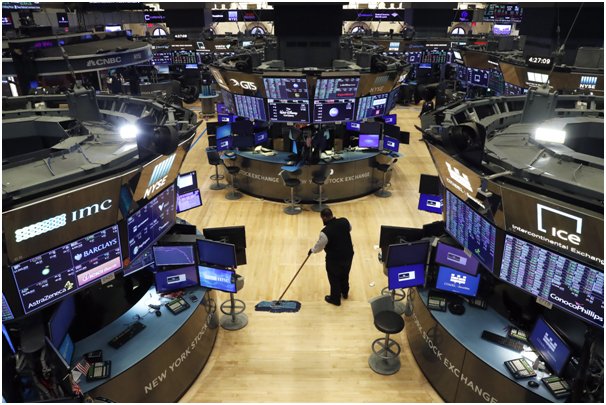
Institutional trading desks now guide daily Bitcoin flows rather than retail chat rooms. [CNBC]
Institutional Capital Is Reshaping The Bitcoin Market Structure
Retail surges do not change liquidity patterns as much as large orders by funds do, since large orders compress volatility. The block trades are undertaken using over-the-counter desks rather than open exchanges, which minimises the intraday sharp swings.
Custody services have become a reflection of the traditional asset classes, consisting of insured storage and governance surveillance.
These upgrades lower counterparty risks and motivate pension funds to experiment through allocations. Analysts believe that such behaviour is a structural reset and not a momentary phase.
Consequently, the flows of investment in Bitcoin Australia, the US, UK begin to take place through regulated vehicles. The market depth has been enhanced and the speculative leverage reduced, thereby forming more stable price discovery.
Why Are Asset Managers Treating Bitcoin Like Digital Gold?
A large number of portfolio managers now categorise Bitcoin under commodities and not tech stocks. They refer to it as digital gold, which is limited and not controlled by central banks.
The supply cap protects against monetary debasement and uncertainty in policy decisions. These cycles of inflation and geopolitical strains further reinforce this story among conservative investors.
Such a structure aids committees in counter-allocating risk-based models. As a result, institutional adoption of Bitcoin does not require any reformulation of existing diversification.
Correlation back-testing on research desks is becoming more popular, and Bitcoin exhibits different behaviour than equities on long-term scales, which makes it a better addition to the portfolio.

Portfolio teams increasingly compare Bitcoin’s scarcity model with gold reserves. [Goldavenue]
Regulation And Infrastructure Are Driving Professional Confidence
Improved jurisdictional clarity would lead to less legal uncertainty as well as bring in more capital that is compliance-oriented. Transactions have enhanced know-your-customer operations and reporting criteria to correspond with conventional finance.
Custodians have multi-signature storage and insurance, and fiduciary responsibilities on large sums. There is also a faster and cheaper payment network and settlement rails. The developments encourage boards that operational risks are controllable.
The effect is a continuous flow of institutional requirements as opposed to speculative episodes. The investors receive the asset as an investable infrastructure and not an experimental technology.
Can Retail Investors Still Benefit From Bitcoin Institutional Adoption?
Retail players have not been left behind but their power has been transformed in a very significant way. They now deal in deeper markets of professional liquidity. Reduced spreads and improved custody packages can help the regular purchasers.
Price movements can, however, be less evident and impressive than previous cycles. Disciplined strategies and education are better than pursuing what is trending on a virus.
Users have the opportunity to replicate the institutional behaviour by averaging their purchases and looking at the long-term perspectives. The environment encourages patience rather than speculation and the risk of extreme drawdowns in market stress is minimised.

Everyday investors now trade within markets defined by institutional liquidity and rules. [Investopedia]
The Shift Signals Bitcoin’s Evolution Into A Core Asset Class
The Bitcoin story has graduated from rebellion logic to allocation logic. During uncertain macro cycles, institutions are looking to have yield protection and non-correlated returns.
They offer governance, research coverage and credibility in their entry. This development encourages further derivatives markets and structured products. Analysts anticipate more consolidation with mainstream portfolios regionally.
Institutional uptake of Bitcoin then seems to be long-term and not cyclical. The asset is more and more like a strategic asset in diversified wealth management platforms, which is quite distinct from its retail roots.
Also Read: Bitcoin vs Gold: Is Crypto Reaching Its Market Bottom?
FAQs
Q1. Why are institutions buying Bitcoin now?
A1: Institutions seek diversification, inflation hedging, and regulated exposure with improved custody solutions.
Q2. Does Bitcoin institutional adoption reduce volatility?
A2: Yes, larger professional trades often stabilise prices and reduce extreme swings.
Q3. How do Bitcoin investments in Australia, the US, UK differ?
A3: Rules vary, but regulated funds and ETFs drive most allocations across these markets.
Q4. Can small investors still profit?
A4: Yes, long-term strategies and disciplined buying can align with institutional trends.