
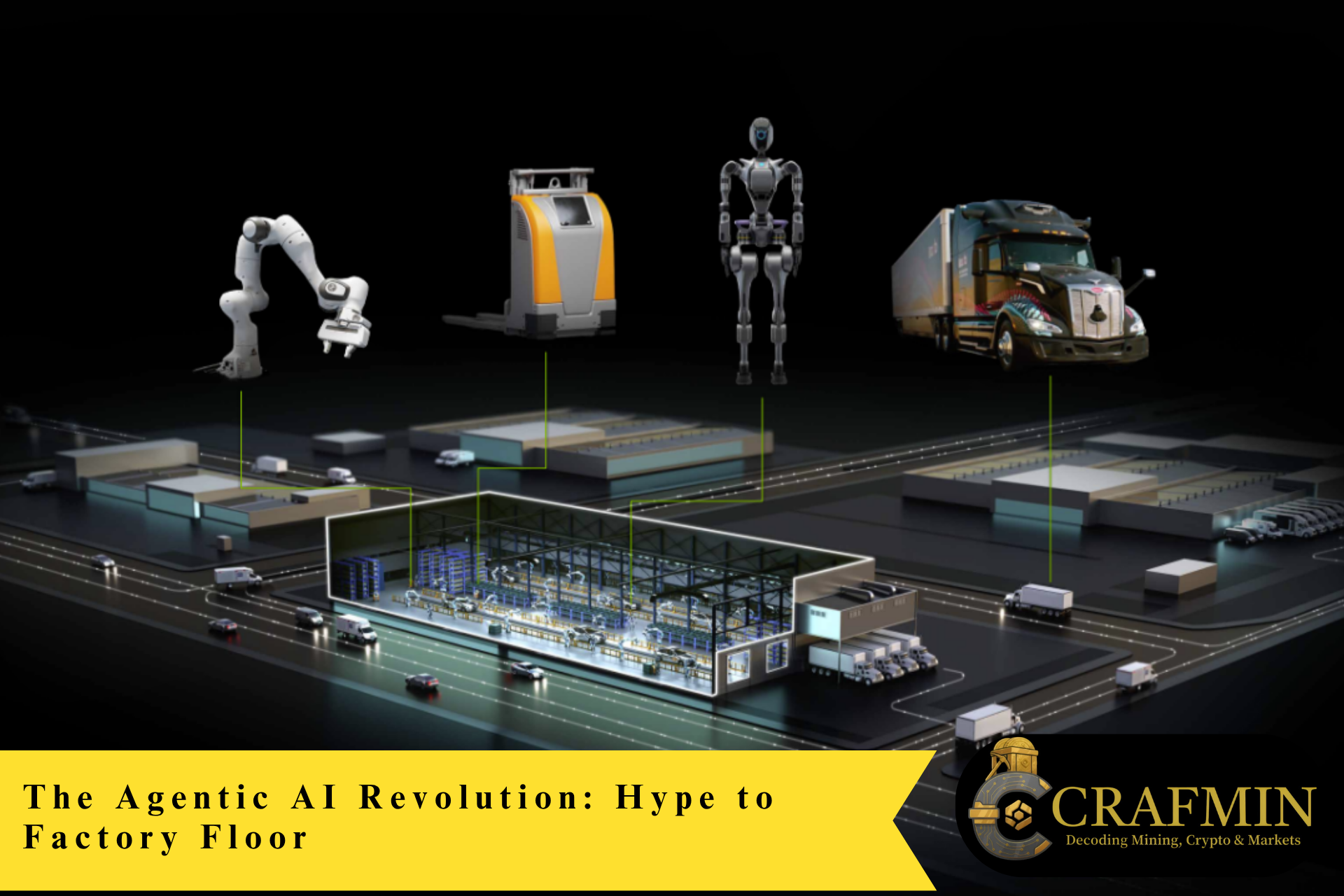
Powerful agents, computer programs that sense, decide, and act with minimal or no human input, are no longer a prototype exercise. Major producers and suppliers apply them in planning, maintenance, and logistics. They prioritize events, communicate with machines and people, and make decisions previously taken by human beings. Prototype-to-production phase has begun. (Reuters)

Autonomous agents now manage real factory tasks and decisions. (Image Source: Antonio Figueiredo – Medium)
Why It Matters
Factories depend on cadence and uptime: The blink of a machine, schedules slip and costs rise. Agents enable factories to respond in real time, rescheduling work, calling for spares, and setting up technicians ahead of managers, even looking at a dashboard. What gets measured is measurable downtime improvement and quicker response to supply shocks. Industry company CEOs now refer to such tools as “agentic” because they intervene between systems, not merely upon process data. (Siemens)
Big business is embracing the idea: Enterprise-wide platforms are being built to deploy, build, and run agents at scale from machine maintenance to business processes. That enterprise adoption puts the technology ahead of firms more compellingly than big pilots with excessive investment. Managed platforms are offered by vendors that embed agents into convergence with ERPs, MES, IoT sensors and human beings so agents can actually act throughout the factory stack. (Axios)
A Glance Into Factory Shopfloor In A Nutshell
Consider the case of a medium-sized sheet metal fabrication unit. A spindle is detected by a vibration sensor. An agent linked to the sensor and maintenance management system checks the fault, checks the availability of spares, checks the availability of a technician and schedules a slot at the same time. The technician receives a diagnostic message, arrives with the correct part and the line is once again in production with very little lost time. That isn’t science fiction; pilots and first rollouts demonstrate that this is a procedure that occurs and can be repeated. (McKinsey & Company)
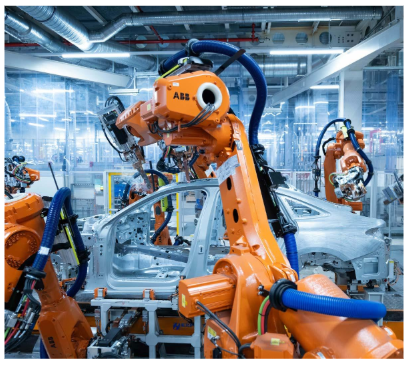
A sensor detects, an agent fixes: real factory efficiency in action. (Image Source: Issuu)
How Autonomous Agents Work In The Real World Today
Agents are already conducting some high-value operations in the plant:
- Predictive maintenance scheduling: Agents monitor streams of sensors and schedule maintenance ahead of time to avoid failure. That minimizes unplanned downtime and maximizes asset life. (Google Cloud)
- Rescheduling of schedules in real-time: Agents reschedule operations in response to updates on queues to maintain throughput with priority order of completion.
- Quality checking and quality feedback: Agents analyze camera images and indicate anomalies, then trigger repair operations and adjust process tolerances. (Siemens)
- Coordination of supply and logistics. Agents know stock shortfall, forecast reordering points and order or trigger internal movement.
- They’re old friends: agents bridge action and occurrence in historical discrete systems. The ROI vision makes sense. Tightly constrained, well-defined use-cases, not “sweep-it-all-away” “replace-everything” fantasies, win early battles.
The Time Is Now
Three drivers drive agents from promise to practice.
- Platform Maturity. Product sets that enable agent lifecycle management: creation, enterprise context access, safety controls and audit trails are provided by vendors now. Enterprises are no longer required to piece together dozens of breakable point solutions. It reduces deployment risk. New enterprise-level agent platform releases demonstrate how quickly vendor priorities moved to production readiness.
- Granular Real-Time Information. They have sensors, equipment, and digital twins. That constant stream of structured telemetry is what input agents leverage to find issues and make choices. Aside from cost reduction models, agents need a respectable context asset history, contracts, operator schedules and producers now have sufficient of that context in digital form. (ScienceDirect)
- Pressure Of Business. Thin margins, supply chain uncertainty and inflation are compelling ops teams to desperately chase productivity that can easily get out of hand very, very quickly. Agents are the obvious levers: reduced mean time to repair, reduced expedited shipments and reduced manual handoffs. And that gets right to the bottom line.
Most people overcomplicate Agents.
They’re not magic. They’re just scaffolding that helps an LLMs do economically valuable work.
Here’s what happens when you run an Agent:
> The agent builds context (system/user messages, chat history, memory, state)
> Sends it to the model
>… pic.twitter.com/8vm0hM7Tw1— Ashpreet Bedi (@ashpreetbedi) October 20, 2025
Real Companies, Real Pilots And Real Caveats
The industrial giants have floor demos in exhibitions, but deployment before drama is a safer bet. Siemens and the other industrial vendors have agents in the workplace today as collaboration tools: human-plus-agent combinations with humans imposing limits and agents suggesting. That human-in-the-loop architecture puts responsibility within arm’s reach as the agent controls pace and scale. (Siemens)
But the rollouts are guarded ones. Companies install data quality first, then compliance checking and escalation paths. Chains of risk remain: garbage data creates garbage recommendations; poor automation hardwires exposure; and ERP legacy consolidation is a nightmare. The answer is horse sense: pilot small, measure, scale out by playbook. Consultancy briefings recommend quantifiable KPIs and tangible human decision landmarks before unleashing agents on a wider field. (McKinney & Company)
What The Leaders Actually Do Alter
When factories use agentic flows, alteration is unobtrusive and fruitful:
- Things are modified rather than vanishing. Warning notices are provided to technicians and sophisticated diagnostics; on-time decisions come for planners, not evening hours of firefighting. Work is transforming into monitoring and exception handling.
- Event-based on processes. No longer batch meetings and reporting, but processes responding to what is happening in the here and now with agents sensing, leading and delivering solutions. That reduces lead times and makes the business more responsive.
- Governance exists. Audit trails, guardrails and “off-switches” are being used by organizations to offer human managers the last word on high-risk decisions. Governance is as much about change management and trust as it is security.
Brief Case Excerpt (Composite, Anonymised)
At one Australian auto plant, a test agent reduced unscheduled line shutdowns to single digits. The plant remained in the loop and let the agent schedule non-mission-critical maintenance on slow shifts. The payoff: reduced call-ins and a smoother production rate. It is this kind of subtle, incremental improvement that builds operations managers’ confidence and justifies the big rollouts. (Case composite based on vendor briefings and industry reports.)
How Agentic Systems Become Part Of Factory Architecture
Consider agentic systems as a third layer between humans and machines and enterprise systems. It does three things: it collects context, it decides, and it acts with audit trails and human monitoring built in. You generally have four layers of architecture.
- Edge And Sensor Layer: Thermometers, vibration sensors, PLCs and cameras provide real-time telemetry. Agents need the real-time feed to detect problems.
- Context And Model Layer: Process models and histories of assets, digital twins give context to decision-making agents, making an informed decision and not a guess. Digital twins enable agents to test before purchase.
- Governance And Orchestration: An orchestration layer (an “agent OS” or MCP-style platform) choreographs who to do what, maintains audit trails, and securely coordinates many agents. Human-in-the-loop checkpoints and rollbacks occur here.
- Actuation And Integration. Agents notify ERP, MES and maintenance systems, or produce human-consumable tickets and alerts. The integration must be transactional and auditable ad hoc is not allowed.
- Brief: You need good data, a good plant model, a safe control plane, and clean integrations. Compromise on one of those and you’re asking for bad automation.
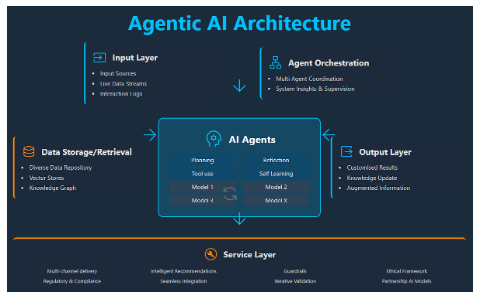
Agentic systems link humans and machines for smart, autonomous action. (Image Source: Medium)
Technical Building Blocks: What Teams Actually Deploy
A team will typically create a stack of commercial and custom building blocks.
- Sensor data filtering platform (Kafka, MQTT).
- What-if test simulation engine or digital twin.
- Agent runtime/orchestration hosting protocols like MCP and enforcing policy. New vendor platforms become irreversible enterprise MCP offerings.
- Governance dashboard and decision logs to record why an agent took an action and who authorized it. IBM and others require human-in-the-loop controls for audibility. (IBM)
Agentic orchestration replaces stiff scripts to audit and scale each auto-choice.
Use-Case 1: Orchestrated Predictive Maintenance (Step-by-Step)
The original early win
Detect: Edge sensors stream vibration and temperature. Trending spindle vibration is detected by the anomaly detector.- Contextualise: The agent asks the digital twin and asset history to determine if this trend has been a predictor of failure in the past.
- Simulate: The Agent simulates for a short time period (digital twin) to determine the remaining useful life and impact on throughput. (anylogic.com)
- Plan: Takes into account inventory of parts on hand, manufacturing schedule and number of available technicians, and calculates non-disruptive maintenance window.
- Human checkpoint: The supervisor checks the plan, signs off, and the agent assigns work.
- Do & capture: Work order is scheduled by the agent, monitored for completion, and an audit trail for compliance and learning support.
Result: fewer emergency call-outs, combined traceability and quantifiable uptime benefit.
Use-Case 2: Dynamic Scheduling And Completion
Shop floors of factories are plagued with rush orders, supply chain disruption and utilization of machines. Agents keep production going.
- Trigger: Receipt of short SLA high-priority order.
- Sense: Agents track machine status, wait queue and raw materials inventory.
- Coordinate: They query the digital twin for the number of scheduling alternatives and choose the best one to meet the SLA, with minimal disruption.
- Act: Agents re-design MES, notify floor workers and re-design package schedules.
- Escalate: If quality must be compromised by the chosen plan, the agent escalates the decision to a human planner for authorization.
Result: better fulfillment without burning through the schedule; planners off from tactics again.
Use-Case 3: Process Repair And Quality Feedback Cycle
Quality is in small variations. Agents bridge the gap.
- Check: Vision systems detect a sneaking defect rate on a station.
- Diagnose: Agents correlate defect patterns with tool wear history and operator shift records.
- Suggest: They suggest a change (feed rate, tool speed) and estimate the impact.
- Validate: Once approved by a human, the agent makes the change in a test batch mode safe.
- Verify & learn: The test reduces defects, so parameter change is logged by the agent and control limits are shifted.
Result: quicker defect detection, reduced recall and reduced scrap.
Adoption Playbook Working Step-by-Step Manual For Ops Leaders
- Start small in scope: what is the absolute first issue that an agent will be resolving in 90 days? Specify a real, concrete use case. Predictive maintenance, one schedule window or one inspection point. Quick wins set the trend.
- Instrument gaps and data gap auditing: Your agents will make bad decisions if your histories and sensors are poor. Data quality head start. (Siemens)
- Create the digital context: Create a minimum viable digital twin and asset history to support smart decisions. (anylogic.com)
- Insert human checkpoints: Indicate where the decision should be manually approved by a human and where the decision can be safely left to a machine. Use role-based approvals.
- Offer ship control and rollback: Provide audit logs, quotas, and a switch-off facility. Test failure modes and keep recovery playbooks in writing.
- Measure and scale: Track MTTR, unplanned downtime, and on-time delivery. Once you have a reproducible outcome, replay the playbook against the next use case.
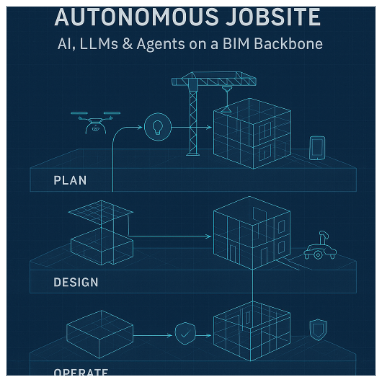
Ops leaders: start small, fix data, add human checks, ensure safety, then scale success. (Image Source: Medium)
Also Read: Apple Declares War on Nvidia: How M5 Chip Shakes Up AI Landscape
Governance Template (Summary)
- Decision Class Matrix: a list of what decisions are delegated to agents to make autonomously and what require approval.
- Data Quality SLA defines tolerable rates of sensor up/down time and data completeness.
- Audit Policy log format, retention, and who is being audited every week.
- Failure Modes for every agent: define three failure modes with a recovery playbook.
- Scale Gate doesn’t scale to new lines until 3 months of success on the pilot metric.
These five are a real-world template for governance that you can complete in seconds.
Conclusion: What Leaders Need To Do Next
Agentic systems are important when you move out of pretending there’s one silver bullet and create iterative, quantifiable lines of automation instead. Start small. Ford small. Instrument everything. Commoditize agents into something that requires owners, audits and human checkpoints. Do that and you make tools an attainable, iterable win.
FAQs: What Readers Want To Know First
- Q: Are agents going to be making free-will decisions?
No production deployments have hard safety gates and human approval for high-risk changes. Governance is needed. - Q: Do I need a cloud provider?
Not exactly. Agents can be on-prem for latency and data sovereignty; most enterprise platforms have hybrid offerings. - Q: How do I audit a decision an agent makes?
Every action should leave behind a timestamped record: input data, model/logic used, recommended action, approver and execution history. That audit trail makes it simple to audit and debug. - Q: What about legacy ERPs?
Integrations are brittle. Integrate with ERP using resilient connectors or APIs across an orchestration layer instead of brittle point-to-point scripts. - Q: Who owns the agent?
Productize agents. Give it a product owner from ops, a platform owner from IT and a governance lead from risk/compliance. That cross-functional ownership keeps the project in check. - Q: How quickly will it pay back?
Targeted pilots return quantitative ROI in months. Rollouts are slow in factories, but return quickly when you achieve playbook size. - Q: Are vendor platforms to drive adoption in the market?
Yes, most vendors now offer orchestration and MCP-like platforms for enterprise-scale management of agents with minimal custom-engineering effort. - Q: Do agents substitute for workers?
No, Early indications are that agents supplement workers: agents automate chains of low-level choices and free people to do more value-creating work. Human guidance and management are still required. - Q: Do agents require new hardware?
Not necessarily. A lot of initiative software is on-prem or cloud compute these days and can be bolted onto existing systems and sensors. Integration and data quality are the greatest pain points. - Q: When do agents pay off?
Some pilots’ predictive maintenance, scheduling optimization can prove ROI in months. Years will be required for enterprise-wide transformation, but early payback is real and quantifiable.