

On 16 July, Bitcoin lost its momentum after rising tensions in the Middle East made global markets feel a bit more unsettled. Investors pulled back from more adventurous positions, and that move dragged both cryptocurrencies and technology shares down with it.
Bitcoin slid 1.3% to $64,087.07 in the early evening trading, roughly. Ethereum was down 2.6% to $1,873.08, and Solana dipped 2.0% to $75.80. At the same time, total crypto market capitalisation also eased 1.3% to about $2.28 trillion.
Even if the retracement looked fairly modest, it still seemed to point to a wider change in investor mood, more than any actual fragility inside the crypto sector itself. In the crypto market today, risk aversion has become the main storyline across financial markets.
 Bitcoin fell below $65,000 as investors moved away from riskier assets amid rising geopolitical tensions. [Courtesy: Mint]
Crypto Market Today: Risk Aversion Shifts Through The Global Markets
As of today, in the recent crypto market, risk aversion was seen due to renewed conflict between the United States and Iran.
With the uncertainty growing, traders started limiting their risk on assets that are prone to sudden price fluctuations. Other major cryptocurrencies also dipped below $65,000 briefly as well.
The weakness was in technology stocks, reflecting that investors were reducing the risks in several sectors. Despite geopolitical worries, gold prices also eased.
Instead, markets turned to the potential of a continuation of the tension potentially driving oil prices higher and sparking renewed inflationary pressures. The guarded outlook soon permeated the world financial markets.
The Bitcoin pullback in July 2026 is a remarkable occurrence
The bitcoin pullback was caused by a few developments. Investors didn’t react to a single event but to a number of uncertainties.
- Rising U.S.-Iran tensions wrought financial market worry.
- Traders cut back on their holdings of cryptocurrencies and tech stocks.
- Oil prices spooked new inflation worries.
- Investors were asking about the possibility of maintaining higher interest rates for an extended period.
- There was additional selling pressure due to short-term profit-taking as well.
These offset recent positive sentiment. However, Bitcoin’s drop was not due to any major blow to the cryptocurrency sector, but rather a sign of market uncertainty.
 Geopolitical risks increased, and investors cut back on investing in growth assets, including cryptocurrencies. [Courtesy: Blevins Franks]
ETF Demand Offers A Brighter Picture
Interest among institutions did not go away, even though prices were down. Large investors kept buying into digital assets, as evidenced by recent ETF transaction data.
- Spot bitcoin ETFs attracted an additional $107 million of net inflows.
- The iShares Bitcoin Trust ETF brought in $81M.
- Fidelity Wise Origin Bitcoin Fund invested $17M.
- The iShares Ethereum Trust ETF received $45 million in Ethereum.
Long-term investors are holding their ground even when markets pull back slightly, as indicated by these numbers. But fresh flow data could alter if selling pressure is maintained in the upcoming sessions, analysts believe.
Bitcoin Price Dip Analysis Points To Bigger Market Concerns
Investors were more interested in global events than crypto news, as the latest bitcoin price dip analysis revealed. Energy supply disruptions would almost certainly push up oil prices, markets worry.
A rise in fuel prices would add to inflationary pressures. This would give the US Federal Reserve little leeway to loosen policy.
The higher the rate of interest, the less demand there is for growth assets, such as cryptocurrencies. Bitcoin tends to bounce back from these times, but during times when investors go into defensive mode, short-term price fluctuations become more frequent.
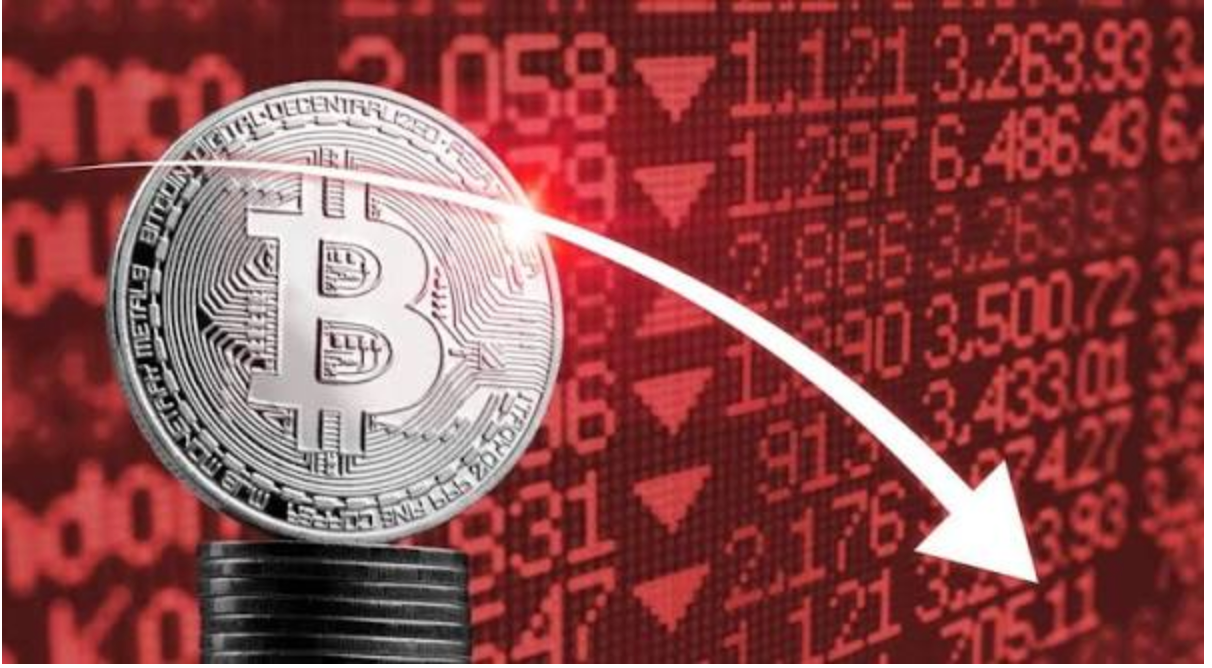 Bitcoin continued to drop lower, with inflation expectations and interest rate uncertainty being major factors. [Courtesy: Finance Magnates]
What Investors Should Watch Next
The recent pullback isn’t a wash of the goods this year. There are a number of events that may impact the market in the near future.
- Advances in the US Senate’s Clarity Act.
- Bitcoin and Ethereum ETF flows update every day.
- Increased use of blockchain in the financial sector.
- Changes in the Middle East situation.
- Whether the Fed will raise interest rates in the future.
The developments are likely to impact market confidence. As the uncertainty subsides, Bitcoin may rise back. However, new geopolitical jolts could keep volatility high.
Short-Term Pressure, Long-Term Story Remains Intact
Bitcoin has seen such times in the past. Prices tend to change in the short term, driven by short-term headlines, but longer time frames are typically driven by adoption, regulation, and participation from institutions.
The current drop occurred despite the volume of ETF transactions, underscoring the distinction between sentiment and overall interest in ETFs.
Although caution could remain in the short term, the industry’s future remains contingent on the application of blockchain technology and greater regulatory transparency and institutional participation.
With that said, the crypto market today appears to be dominated by risk aversion, which is driving the prices of cryptocurrencies in daily trading.
Also Read: Market Snapshot: Bitcoin Surges, JPMorgan Flags Stablecoin Risks, and the Digital Euro Advances
FAQs
Q1: Why did Bitcoin pull back even with positive ETF interest?
A1: Bitcoin got hit a bit, not like people expected, because investors started shifting away from riskier assets. In the end, geopolitical uncertainty seemed to outweigh all the good vibes coming from institutional ETF demand, and so the price pulled back, kinda abruptly.
Q2: How do geopolitical events mess with cryptocurrency markets?
A2: Big geopolitical developments usually crank up uncertainty in the market. During moments like these, investors often scale down exposure to jumpier, more volatile assets such as cryptocurrencies. It’s basically a fear response, but in a market way.
Q3: What might help Bitcoin bounce back over the next few months?
A3: If regulations become clearer, if blockchain adoption keeps widening, and if investor confidence starts improving again, that could support Bitcoin’s recovery. Once the broader uncertainty cools down, Bitcoin’s longer-term outlook might get a stronger footing – you know, more stable.
Disclaimer
This article is meant for general information only, not for anything that counts as financial or investment advice. Cryptocurrency prices can move fast because market sentiment does, economic conditions do, plus regulation and geopolitical events too. So readers really should do their own research and, if possible, get guidance from a qualified financial adviser before any investment decision is made.
Source Links
- https://www.fool.com/coverage/stock-market-today/2026/07/16/crypto-market-today-july-16-bitcoin-pulls-back-as-risk-aversion-weighs-on-markets/
- https://finance.yahoo.com/markets/crypto/articles/crypto-market-today-july-16-220952948.html
- https://m.economictimes.com/markets/cryptocurrency/crypto-news/bitcoin-falls-nearly-2-to-63000-as-geopolitical-tensions-weigh-on-crypto-markets/articleshow/132458432.cms