

The Senate Banking Committee voted 15-9 last Thursday to push the Digital Asset Market Clarity Act forward. It was the first time a full Senate committee had backed the bill. Now comes the harder part. What comes next is arguably harder than what just passed.
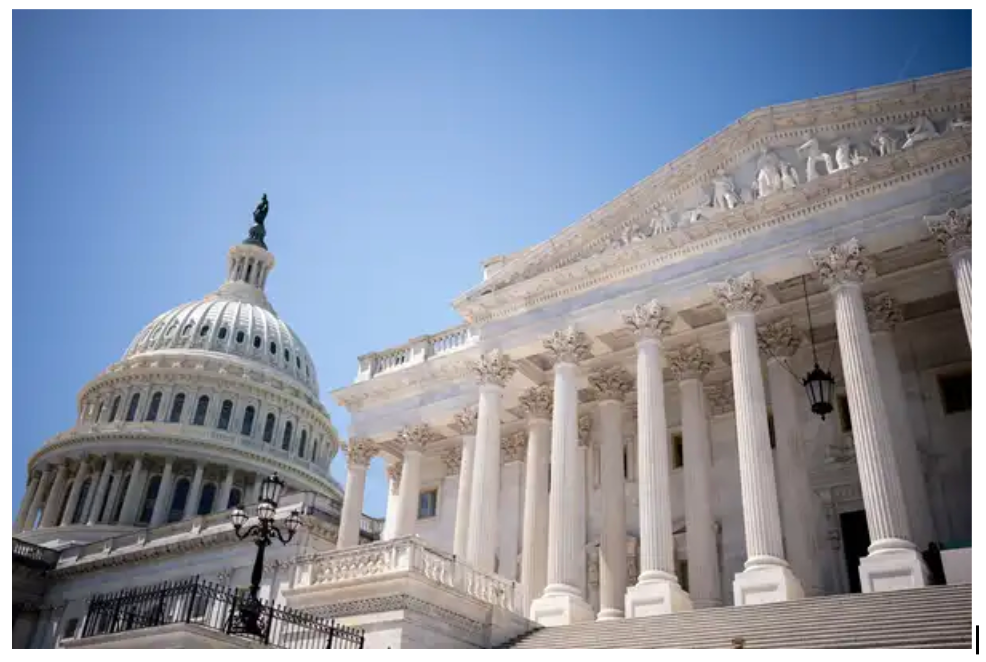 The Senate Banking Committee advanced the CLARITY Act after months of negotiations. [Image Source: Marketplace]
The road to President Trump’s desk runs through a 60-vote Senate threshold, an unresolved ethics fight, two competing bill versions, and a congressional calendar that is already running short.
Senate Banking Committee Passes the Crypto Market Structure Bill
The 309-page draft passed the committee last Thursday. Under the bill, the SEC takes oversight of certain digital assets while the CFTC covers digital commodities. Getting a full committee to agree on that split took months of back-and-forth.
Scott spoke after the vote wrapped.
“This bill reflects serious, good-faith work across the committee and delivers the certainty, safeguards, and accountability Americans deserve,” Scott said.
The South Carolina Republican has made this point repeatedly over the past year. Without clear federal rules, he argues, crypto businesses pick up and move. London, Singapore, Dubai — those markets have been happy to take them.
Coinbase CEO Brian Armstrong welcomed the vote publicly. “Historic day for crypto and for the future of digital assets in America,” Armstrong wrote. He called it a “big improvement” and urged lawmakers to push toward a bipartisan final law.
The crypto market structure bill has PASSED the Senate Banking Committee with a bi-partisan vote!
Historic day for crypto and for the future of digital assets in America. Grateful for the countless hours from lawmakers and staff to strengthen this legislation. Big improvement…
— Brian Armstrong (@brian_armstrong) May 14, 2026
The mood in markets was cautiously positive. Bitcoin rose roughly 2% on the day of the vote. Still, traders and analysts were careful not to read too much into a committee result.
The 60-Vote Hurdle in the Full Senate Is a Different Fight
A committee vote and a floor vote are not the same battle. On the Senate floor, the bill needs 60 votes to win. Republicans cannot get there alone.
The committee result did not inspire much confidence. The bill moved through mostly on Republican support. Only two Democrats crossed over to vote yes. That is a thin base to build from.
For context, the GENIUS Act, which dealt with stablecoin regulation, passed the full Senate 68-30 earlier this year. The CLARITY Act needs such support to pass.
Senator Mark Warner of Virginia sat through weeks of negotiations with Republicans on the bill. At a committee hearing, he described the experience as being stuck in “crypto hell.” He said he had since moved into “crypto purgatory” and was still hoping to reach “crypto heaven” at some point. He left the timeline open.
Trump’s Crypto Interests Have Turned Ethics Rules Into a Political Wall
No issue has complicated the bill more than conflict-of-interest rules tied to President Trump’s personal crypto holdings. Democrats want the legislation to bar government officials from profiting off digital assets while in office. Republicans have resisted, and the White House has drawn a hard line.
The situation is further complicated by jurisdiction. The conflict-of-interest provisions do not fall under the Senate Banking Committee’s authority. That means the ethics language must be added through a separate process before any floor vote.
Senator Kirsten Gillibrand said at the Consensus Miami conference last week that Democrats will not move the bill without an ethics section. White House crypto adviser Patrick Witt said the administration supports universal rules but will not accept anything written to target a specific official or office. That gap has not closed.
More Than 130 Amendments Were Filed and Most Were Turned Away
Before Thursday’s session, senators piled in more than 130 proposed amendments. Warren alone put her name on 44 of them.
Most never got a real discussion. Scott voted several Democratic proposals down outright. Others he rejected on procedural grounds, saying they were not written correctly and could not be offered as filed.
Democrats were not happy leaving that room. Several said their concerns got brushed aside rather than actually worked through. That bitterness does not disappear overnight. Republicans now need some of those same senators to vote yes on the Senate floor, and the markup did not exactly build goodwill.
Banks and Stablecoin Companies Are Still Fighting Over Yield Rules
The stablecoin yield dispute nearly killed the bill months before the markup. Coinbase pulled its support from an earlier draft after it proposed banning stablecoin rewards altogether. A later compromise between Senators Thom Tillis and Angela Alsobrooks brought the company back.
The banking industry has not made peace with that deal. Members of the American Bankers Association sent more than 8,000 letters to Senate offices opposing the yield compromise. Their argument is that allowing stablecoin rewards gives crypto companies an edge that traditional banks cannot match under current rules.
The tension reflects something the bill has struggled to resolve throughout its development. Bringing crypto into regulated finance without disrupting the existing banking system has proven far easier to promise than to deliver.
Two Versions of the Bill Still Need to Be Merged
The House passed its own version of the CLARITY Act in July 2025, with 294 members voting in favor and 134 opposed. The Senate Agriculture Committee cleared a separate crypto market structure bill in January 2026. Before anything reaches Trump’s desk, negotiators must merge these two texts into one.
The differences are not minor. Stablecoin provisions, DeFi oversight rules, and ethics language all vary between the versions. Each chamber will need to vote again on whatever compromise emerges from that process.
Law Enforcement and Labor Groups Are Pushing Back Hard
Opposition to the bill is not limited to Democratic senators. Law enforcement organizations have argued publicly that the CLARITY Act weakens their ability to track illegal activity in crypto markets. They say the bill creates gaps that bad actors can exploit.
The AFL-CIO and other labor groups have raised separate concerns. They warned Senate offices that expanding crypto’s role in the financial system could put pension funds and retirement accounts at risk. These are not fringe voices. They carry real weight with the moderate Democrats whose votes Republicans need.
The Legislative Window Is Narrow and Closing Fast
Congress heads into Memorial Day recess on May 21. That is three days away. Whatever energy the committee vote created, it now has a very short shelf life.
Lummis has been direct about what a delay means. The Wyoming Republican said publicly that if the bill does not pass this season, it is likely to not pass any time sooner. She thinks that the next realistic opportunity would be at 2030.
The White House is pushing for a July 4 signing. To get there, the full Senate has to pass the bill first. After that negotiators from both chambers have to hammer out the differences between the Senate and House versions. Then both chambers vote again on whatever comes out of that process.
July 4 is seven weeks away.
Prediction markets currently put the odds of passage in 2026 at around 60 percent, down from nearly 80 percent earlier in the month. Even if everything falls into place, extensive SEC and CFTC rulemaking would follow before the law takes practical effect. The bill’s supporters have a historic opportunity. Whether they can execute on it is a different question entirely.
FAQS
Q1. What is the CLARITY Act?
A1. It is a bill that separates crypto supervision between the SEC and the CFTC.
Q2. Did the bill pass?
Q2. It passed on the Senate Banking Committee but it still needs 60 full Senate votes.
Q3. Why are Democrats hesitant?
Q3. Most want rules targeting Trump’s crypto interests added before they accepting.
Q4. What happens if the Senate passes it?
Q4. The Senate and House versions still needs to come into an agreement
Q5. When could it become law?
Q5. The White House wants a July 4 signing, but some analyst believe that odds are at around 60 percent.
Disclaimer: This article is published by crafmin for informational purposes only and does not constitute financial, investment, or trading advice. Readers should conduct independent research before making any financial decisions in crypto markets. Information is derived from publicly available sources