

Australia’s federal government is weighing changes to a tax rule that has benefited investors for over two decades. The 50% capital gains tax discount, introduced in 1999, may not survive the upcoming federal budget. Crypto holders, shareholders, and property investors are all watching closely.
The 50% CGT Discount That Built a Generation of Investors
When John Howard’s government scrapped inflation indexing back in 1999, the 50% CGT discount replaced it. The logic was straightforward. Hold an asset for more than a year, and only half your profit gets added to taxable income.
That single rule shaped how millions of Australians approach investing. It rewarded patience. It made shares and crypto viable long-term bets. Now the Albanese government wants to revisit that decision.

The proposed reform would replace Australia’s current 50% CGT discount with an inflation-indexed tax calculation model. [Image: CNBC]
The consultation paper circulating among Treasury officials lists cryptocurrencies, shares, managed funds, and investment properties all under the proposed changes. Nothing in the document carves out any asset class from the new rules.
What Jim Chalmers Plans to Say on Budget Night
Tuesday, May 13, 2026 is the date circled on every investor’s calendar. Treasurer Jim Chalmers is scheduled to deliver the federal budget that evening, and the CGT announcement forms a central part of it.
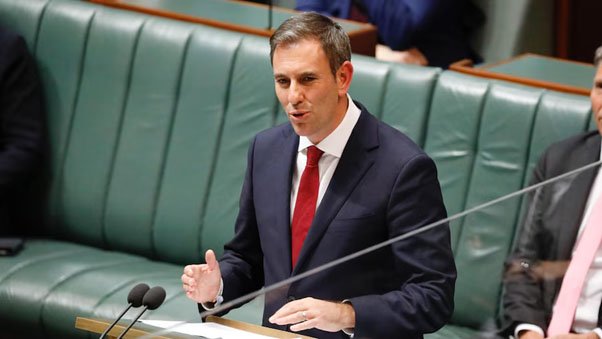
Treasurer Jim Chalmers is expected to unveil the proposed capital gains tax reforms during Australia’s federal budget announcement. [Image: ABC News]
The Australian Financial Review broke the story over the weekend. According to the outlet, Chalmers will confirm the government’s intention to replace the 50% discount with an inflation-based calculation method. Full legislative text has not been released yet.
What is confirmed is that a transition period will accompany the announcement. The government has signalled a 12-month window before the new rules fully kick in.
Inflation Indexing Explained: How the New Maths Would Work
Rather than cutting a gain in half, the new model adjusts the original purchase price upward by inflation. Whatever gap remains between the adjusted cost and the sale price becomes the taxable amount.
Treasury provided a worked example. An investor buys property at AUD 500,000 and sells at AUD 700,000. Under the current 50% rule, AUD 100,000 becomes taxable. Under the inflation-adjusted approach, that figure climbs to roughly AUD 121,000.
On paper, the difference looks modest. But inflation has averaged between 2% and 3% in recent years. In that environment, the inflation adjustment barely dents a large nominal gain. Crypto investors who rode a bull market would feel this most.
Bitcoin and Ethereum Holders Stand to Lose the Most
Crypto markets do not move like residential property. An asset can double or triple within 18 months. Under the old system, a long-term holder handed half that gain back tax-free. That protection disappears under the new model.
An Ethereum investor who bought at AUD 3,000 and sold at AUD 9,000 after 14 months would currently pay tax on AUD 3,000. Under the inflation-indexed model, that taxable amount jumps significantly, with inflation providing only minimal relief.
Australians currently holding Bitcoin, Ethereum, or altcoins past the 12-month mark benefit from the same CGT treatment as shares. That parity gave crypto a credibility boost within mainstream investment portfolios. Removing the discount now adds a new layer of cost to holding digital assets long term.

Crypto investors could face significantly larger taxable gains during strong market rallies under the proposed framework. [Image: Stocktwits]
Transition Dates Every Investor Needs to Know
Assets bought before May 10, 2026 sit in a protected category. Those holdings remain partially covered under the existing 50% system for a period, giving existing investors some breathing room.
For assets purchased on or after budget night, a 12-month grace period applies. The 50% discount stays available during that window. After July 1, 2027, the inflation-indexed model applies across the board.
That leaves a narrow window for investors who want to enter positions still covered by the current rules. Anyone buying crypto or shares after Tuesday works under the old discount only until mid-2027.
Coolabah Capital’s Christopher Joye Fires Back at the Proposal
Christopher Joye, Chief Investment Officer at Coolabah Capital, did not hold back. Writing on X shortly after the reports surfaced, he warned of serious consequences for how Australians allocate their money.
Joye stated: “After the budget doubles the capital gains tax on productive businesses and assets from circa 23.5% to 46 to 47%, investors will understandably pull money from businesses, shares, commercial property, and rental housing and plough it into their tax-free owner-occupied home.”
The single biggest winner from the budget: the tax-free owner-occupied home, which is where people will put their money. After the budget doubles the capital gains tax on productive businesses/assets from circa 23.5% to 46-47%, investors will understandably pull money from… pic.twitter.com/w7LsiWAOOz
— christopher joye (@cjoye) May 11, 2026
The concern Joye raises is not abstract. Owner-occupied homes carry no CGT liability in Australia. If shares and crypto become significantly more expensive to exit, the family home becomes a more attractive place to park wealth. That shift could drain liquidity from equity markets and reduce business investment.
Treasury Sees AUD 21.8 Billion Reason to Act
The existing CGT discount costs the government real money. Treasury’s own figures put the revenue forgone at AUD 21.8 billion for the 2025 to 2026 financial year alone.
Commonwealth Bank economists ran the numbers on the combined impact of CGT and negative gearing reforms. Their modelling suggests AUD 20 billion in extra revenue could flow to government coffers over the next decade. The same analysis projects a 3% to 6% fall in house prices.
Negative gearing sits alongside CGT in the government’s review. Reports suggest the government may restrict negative gearing deductions to newly constructed properties only, pushing investor demand toward new housing stock rather than existing homes.
Australia’s Crypto Regulation Push Goes Beyond Tax
The CGT shake-up lands in the middle of a broader regulatory drive. Last month, Australian parliament passed laws requiring digital asset platforms and tokenised custody services to hold valid financial services licences.
A payments policy document released in April added to the picture. The Account-to-Account Payments Roundtable, which includes the Reserve Bank of Australia and Commonwealth Treasury, identified stablecoins and tokenised liabilities as technologies crossing into practical adoption.
Taken together, these developments show a government moving to bring crypto firmly within established financial law. Higher taxes, mandatory licensing, and payments policy integration all point in the same direction. Crypto in Australia is being treated as a mature asset class and taxed accordingly.
Also Read: https://crafmin.com/south-korea-crypto-market-falls-stocks-surge/
FAQS
Q1. What is the proposed change to Australia’s capital gains tax system?
A1. The Australian government is considering replacing the current 50% CGT discount with an inflation-indexed model. Under the new system, investors would adjust their asset’s cost base by inflation and pay tax on the remaining real gain at their standard marginal income tax rate.
Q2. How does the proposed reform affect crypto investors specifically?
A2. Crypto investors who hold digital assets like Bitcoin or Ethereum for more than 12 months currently qualify for the 50% CGT discount. If the reform passes, that discount disappears. In bull market conditions where crypto gains far outpace inflation, investors would face significantly higher tax bills than under the existing rules.
Q3. When would the new capital gains tax rules take effect?
A3. Assets purchased before May 10, 2026 remain partially covered under the current system during a transition period. Assets bought after budget night on May 13, 2026 qualify for the existing 50% discount only until June 30, 2027. From July 1, 2027, the inflation-indexed model applies across all eligible asset classes.
Q4. Does the reform affect other investments beyond cryptocurrency?
A4. Yes. The proposed changes cover a broad range of assets including shares, managed funds, and investment properties. The consultation paper makes no exceptions for any asset class. Owner-occupied residential property, however, remains exempt from capital gains tax under Australian law.
Q5. Is this reform officially confirmed?
A5. As of May 12, 2026, the reform remains a proposal. Treasurer Jim Chalmers is scheduled to deliver the full details during the federal budget address on Tuesday, May 13, 2026. No final legislative text has been released. Readers should monitor official announcements from the Australian Treasury before making any financial or tax decisions.
Disclaimer:
This article is published by Crafmin for informational purposes only. It does not constitute financial, investment, legal, or tax advice. Cryptocurrency investments and tax regulations involve risks and may change over time. Readers should consult qualified financial or tax professionals before making any investment or compliance decisions. Crafmin does not guarantee the accuracy or completeness of third-party statements, projections, or regulatory developments mentioned here.