

South Korea’s cryptocurrency market has suffered a sharp decline. Investors have pulled back significantly from digital assets over the past year. The shift marks one of the most dramatic rotations in the country’s retail investment history.
Data from the Bank of Korea tells a clear story. Domestic crypto holdings fell from 121.8 trillion won ($83.3 billion) in January 2025 to 60.6 trillion won ($41.4 billion) by February 2026. That represents more than a 50% drop in just over 12 months.
 Crypto holdings across South Korea’s major exchanges declined by more than 50% between 2025 and 2026. [Cryptorank]
The figures cover assets held across South Korea’s five largest exchanges. These include Upbit, Bithumb, Korbit, Coinone, and Gopax. The Bank of Korea submitted the data to Rep. Cha Gyu-geun of the Rebuilding Korea Party.
Trading Volumes on Korean Crypto Exchanges Collapse
The decline in holdings was not the only sign of a cooling market. Trading activity fell sharply as well. Daily turnover dropped from a peak of 17.1 trillion won ($12.4 billion) in December 2024 to just 4.5 trillion won ($3.3 billion) by the end of February 2026.
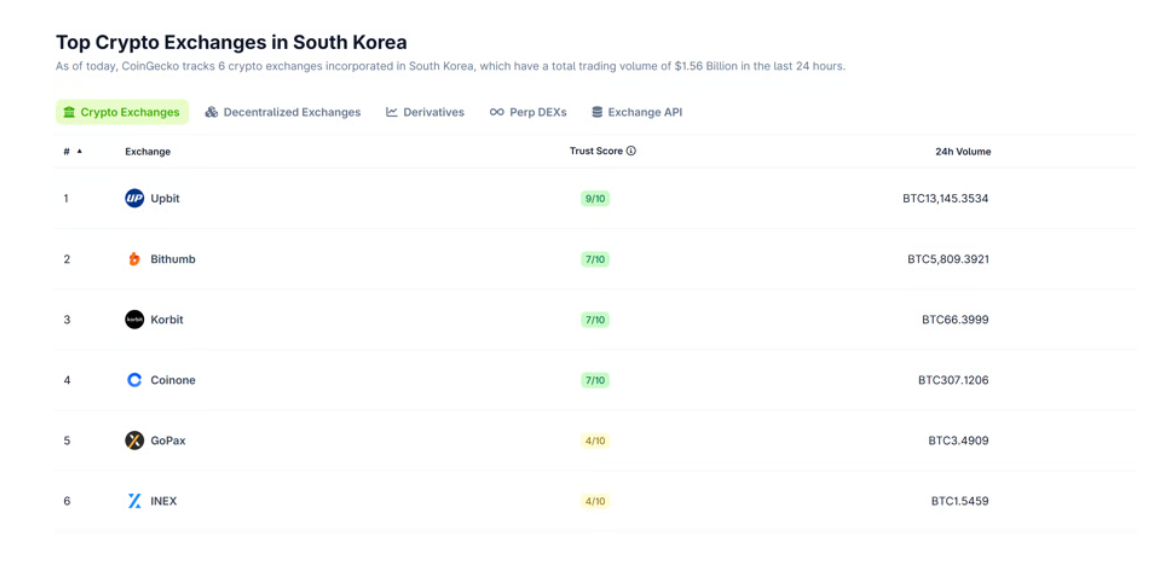 Top Korean exchanges by volume. Source: CoinGecko
Exchange deposits, money held on platforms and ready to invest, also fell. Won-denominated deposits dropped from 10.7 trillion won at the end of 2024 to 7.8 trillion won. This signals that fewer investors are preparing to buy back into the market.
The trading slowdown reflects a broader loss of retail enthusiasm for digital assets. South Korea was once a global hotspot for crypto speculation. That energy has now largely shifted elsewhere.
Stock Market Rally Pulls Korean Retail Investors Away From Crypto
The Korean stock market has staged a powerful rally. The KOSPI index surged more than 70% in 2025. That performance drew millions of retail investors away from crypto and into equities.
AI-linked chipmakers led the charge. Samsung Electronics and SK Hynix posted explosive gains. Their combined daily turnover now accounts for more than a quarter of the entire exchange.
Korean traders have not abandoned risk appetite. They have simply redirected it. Margin lending is rising. Leveraged ETFs are selling fast. Retail leveraged positions now make up nearly 30% of total market holdings.
Government Policies Push Capital Toward Domestic Equities
South Korea’s government has actively encouraged the shift. New repatriation accounts offer up to 100% capital gains tax exemptions. Investors who sell overseas assets and reinvest locally qualify for these benefits.
These incentives have been effective. Brokerage data shows clear capital inflows into domestic stocks. Analysts say the policy has helped power the semiconductor-led KOSPI rally.
The government’s strategy reflects a broader goal. Officials want to deepen domestic capital markets. They are using tax incentives to redirect retail flows away from volatile assets.
Crypto Valuations and a Weaker Won Add to the Pressure
Market conditions have also worked against crypto. Bitcoin, often seen as a benchmark for the broader sector, fell from a record high above $125,000 in October 2025 to around $82,000 in early 2026. That drop reduced the total value of Korean investors’ holdings directly.
The won has also weakened considerably. It moved from 1,224 per dollar in early 2023 to 1,511 by March 2026. That depreciation made dollar-denominated assets more attractive to Korean investors.
Global uncertainty added further pressure. Ongoing conflicts in Ukraine and Iran weighed on investor confidence. Higher oil prices and broader market volatility made speculative assets less appealing.
Stablecoins Buck the Trend With Strong Growth
Not all digital assets lost ground. Stablecoins, coins pegged to assets like the US dollar, saw a notable rise. Holdings climbed from 88.5 billion won ($64 million) in July 2024 to a peak of 872.3 billion won ($632 million) in December 2025.
By February 2026, stablecoin holdings remained relatively high at 607.1 billion won ($440 million). That level far exceeded where they stood at the start of the trend.
Korbit Research Center head Kim Min-seung explained the dynamic. “Fluctuations in the won-dollar exchange rate appear to have influenced demand for stablecoin investment,” he said. “Because most coins were also weak on overseas exchanges, some investment funds that had flowed out have returned to the domestic market.”
South Korea Tightens Crypto Rules Amid Market Shift
Regulators are not standing still. South Korea plans to introduce stricter anti-money laundering rules from August 2026. Transactions above 10 million won involving overseas exchanges or private wallets may be flagged as suspicious.
The government is also proposing to reclassify dollar-backed stablecoins as foreign exchange instruments. That move reflects growing concern over cross-border capital flows. Stablecoins made up nearly half of South Korea’s crypto outflows in early 2025.
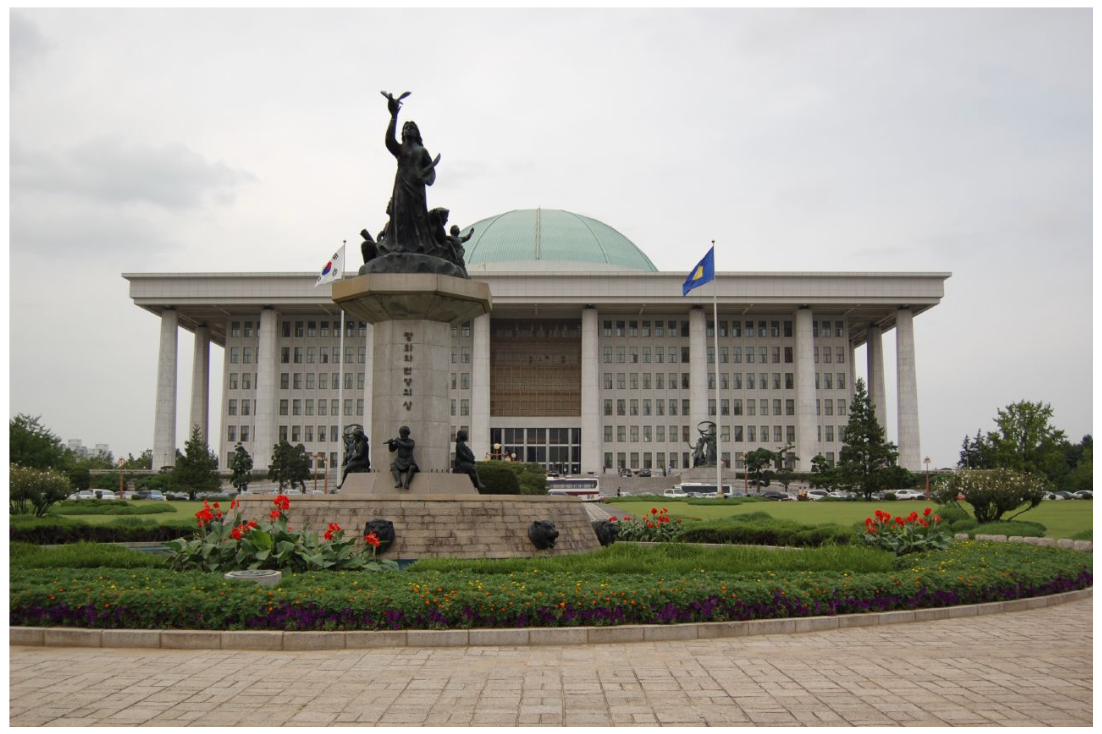 South Korea plans to tighten crypto oversight with new anti-money laundering and stablecoin regulations starting in 2026. [Wikipedia]
A crypto capital gains tax is scheduled to take effect in 2027. Market participants expect this to add further pressure on local exchanges. Smaller platforms may struggle to retain users under the new framework.
Global Crypto Markets Feel the Loss of Korean Retail Activity
South Korea’s retreat from crypto has ripple effects globally. For years, Korean retail investors provided consistent liquidity to global markets. Their absence is now being felt.
Memecoin rallies that once gained momentum in Korean chatrooms now fade faster. The Kimchi Premium, a term coined to describe how crypto assets traded at a markup in Korea, has effectively disappeared.
Bradley Park, founder of DNTV Research, noted that the outflows reflect capital rotation rather than a regional trend. Broader stablecoin transaction volumes across Asia have actually risen over the past year. Korea’s decline is a domestic story, not a continental one.
Also Read: What Triggered SUI Token’s 13% Surge as Institutional Staking Reduced Supply?
What the Korean Crypto Retreat Means for the Broader Market
South Korea’s shift from crypto to equities is more than a local footnote. It signals how quickly retail sentiment can change. A combination of strong stock returns, government incentives, and falling crypto prices proved sufficient to redirect billions in capital.
The market that once defined global crypto speculation is now a study in contrast. Institutional frameworks are being built. Tokenized securities platforms are in development. Samsung SDS is constructing the Korea Securities Depository’s token securities platform ahead of a new framework set for February 2027.
South Korea is not exiting the digital asset space entirely. It is restructuring its participation, moving from speculative retail trading toward regulated, institutional-grade infrastructure. How that transition unfolds will be worth watching.
FAQS
Q1. Why did South Korea’s crypto market decline so sharply?
A1. South Korea’s crypto market declined as retail investors shifted capital into domestic stocks, especially semiconductor and AI-related equities that delivered strong returns in 2025.
Q2. How much did Korean crypto holdings fall?
A2. Crypto holdings on South Korea’s major exchanges dropped from 121.8 trillion won in January 2025 to 60.6 trillion won by February 2026, representing a decline of more than 50%.
Q3. Which South Korean stocks attracted investors away from crypto?
A3. Major companies such as Samsung Electronics and SK Hynix attracted significant investor interest during the stock market rally.
Q4. Did all crypto assets decline in South Korea?
A4. No. Stablecoins recorded strong growth during the period as investors sought dollar-linked digital assets amid currency volatility and weaker crypto prices.
Q5. What new crypto regulations is South Korea introducing?
A5. South Korea plans to implement stricter anti-money laundering rules in August 2026 and introduce a crypto capital gains tax in 2027.
Q6. What is the Kimchi Premium in crypto markets?
A6. The Kimchi Premium refers to the higher prices cryptocurrencies historically traded for on South Korean exchanges compared to global markets. The premium has largely disappeared amid falling retail activity.
Q7. Is South Korea abandoning cryptocurrency completely?
A7. No. South Korea is shifting toward regulated and institutional-grade digital asset infrastructure, including tokenized securities and stricter compliance frameworks.
Disclaimer
This article is published by Crafmin for informational and educational purposes only and should not be considered financial, investment, or legal advice. Cryptocurrency and stock market investments involve significant risk, and market conditions can change rapidly. Readers should conduct their own research and consult a qualified financial advisor before making any investment decisions. Crafmin does not guarantee the accuracy, completeness, or future reliability of market data, price movements, or third-party statements mentioned in this report.
Sources
https://crypto.news/south-korea-crypto-holdings-crash-50-as-investors-chase-stocks/
https://coingeek.com/south-korea-shifts-from-crypto-to-stocks-and-stablecoins/