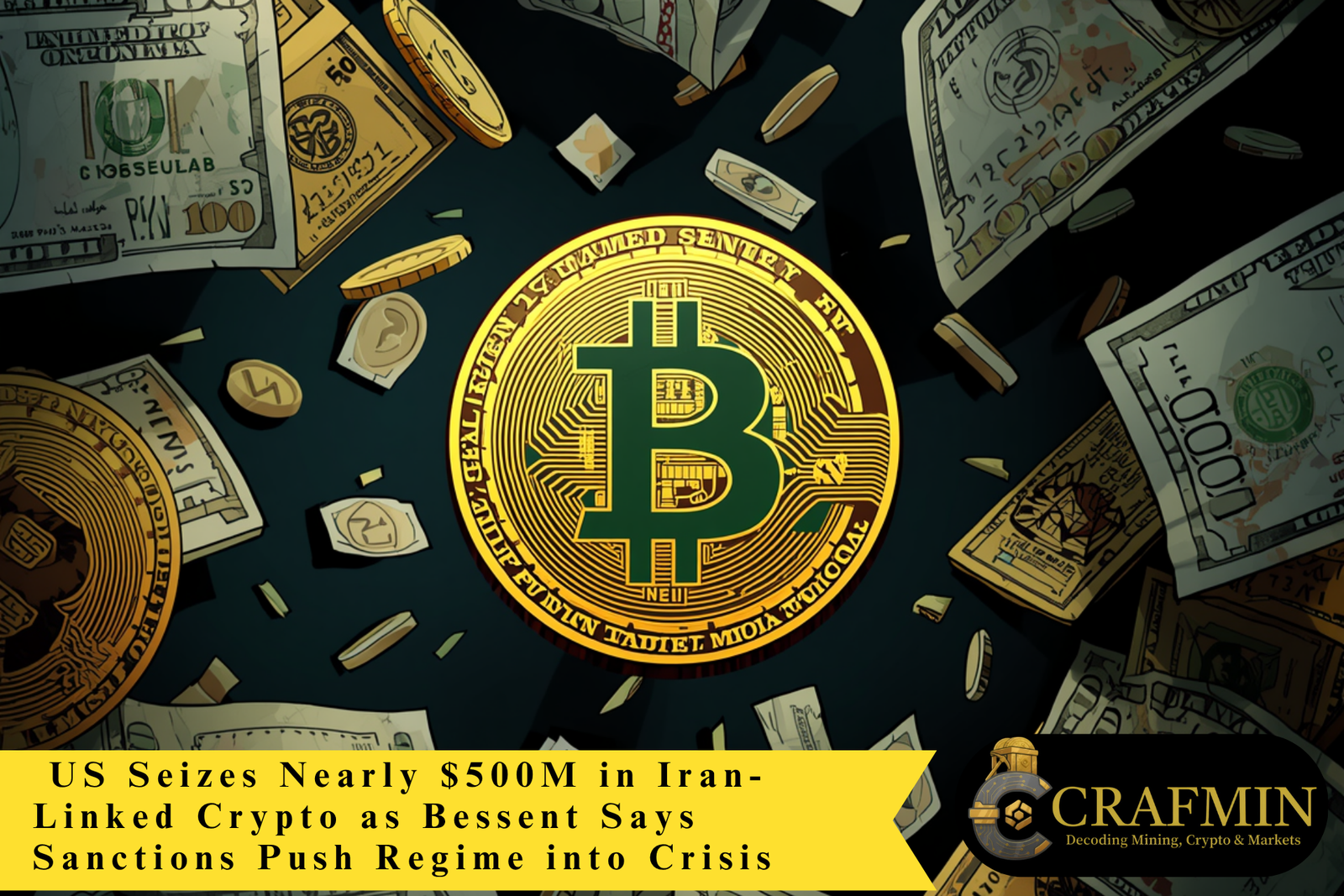
US Treasury Seizes Nearly $500M in Iranian Cryptocurrency Assets
The United States Treasury has seized nearly $500 million in cryptocurrency assets linked to Iran. Treasury Secretary Scott Bessent confirmed the total during an appearance on Fox Business’ Kudlow programme on Wednesday, April 29.
Bessent said the Treasury first recovered roughly $350 million in crypto holdings. An additional $100 million came from a separate earlier action, bringing the combined total close to half a billion dollars. “We were able to grab about $350 million in crypto assets, and then on top of another $100 million that we had recently gotten, so we’re almost at half a billion there,” he said.
The figure marks a significant jump from the $344 million in seized crypto assets previously disclosed. Officials say the seizures form part of a sustained and expanding enforcement effort targeting Iran’s digital financial infrastructure.
The Treasury Department, through Economic Fury, has targeted Iran’s international shadow banking infrastructure, access to crypto, shadow fleet, weapons procurement networks, funding for terrorist proxies in the region, and independent Chinese “teapot” refineries that support…
— Treasury Secretary Scott Bessent (@SecScottBessent) April 29, 2026
What Is Operation Economic Fury? Inside the Iran Sanctions Campaign
President Donald Trump ordered the Treasury to launch Operation Economic Fury in March 2025. The campaign targets Iran’s financial lifelines through asset seizures, frozen bank accounts, and diplomatic pressure on foreign governments to cut ties with Tehran.
Bessent described its scope broadly. The operation specifically targets Tehran’s international shadow banking infrastructure, weapons procurement networks, the so-called shadow fleet of tankers that conceal oil origins, funding for proxy groups, and independent Chinese refineries that process Iranian crude.
Since February 2025, OFAC has sanctioned more than 1,000 Iran-related individuals, vessels, and aircraft under the operation. On Tuesday alone, the Treasury sanctioned 35 entities tied to Iran’s shadow banking network, around 40 shipping firms, and 14 individuals linked to missile and drone component procurement.
Tether Freezes $344M in USDT Tied to Iran’s Central Bank and IRGC
The largest single enforcement action took place on April 23. Stablecoin issuer Tether froze more than $344 million in USDT across two wallet addresses on the Tron blockchain. The company acted after receiving information from OFAC and US law enforcement agencies.
 Tether froze over $344 million in USDT linked to Iranian entities following US directives. [Cointrust]
OFAC simultaneously updated its Specially Designated Nationals list, adding the two wallet addresses as property of the Central Bank of Iran, with linkages to the Islamic Revolutionary Guard Corps and Hezbollah. One address held roughly $213 million in USDT while the other held about $131 million. Both were blacklisted at the smart-contract level, meaning the tokens cannot be moved.
Blockchain analytics firm Chainalysis traced the wallet history. The two addresses received approximately $370 million across nearly 1,000 transactions over more than five years, with activity beginning in March 2021. Outflows from both wallets totalled roughly $25 million over the same period, less than 7% of what came in.
How Iran Routes Crypto Through DeFi Bridges to Evade Sanctions
Chainalysis mapped the financial pipeline Iran used to move the frozen funds. The network moved money from brokers who converted Iranian fiat currency into stablecoins. Those funds then passed through intermediary wallets, crossed DeFi bridges to obscure the trail, and returned to Iranian crypto exchanges and IRGC-affiliated accounts.
Iran’s reliance on stablecoins reflects a broader strategy. The Central Bank of Iran purchased more than $500 million in USDT in the year prior to the seizures, according to a January 2026 report by blockchain analytics company Elliptic. That report described the activity as a sophisticated strategy to bypass the global banking system.
IRGC-associated addresses received more than $3 billion in on-chain funds in 2025, up from over $2 billion in 2024, according to Chainalysis. The IRGC alone accounted for roughly half of all cryptocurrency activity in Iran during the final quarter of 2025.
Iran’s Currency Crisis: Bank Collapse, Inflation, and a Falling Rial
Bessent pointed to concrete signs of economic strain inside Iran. The country’s largest bank collapsed in December 2025. The Iranian rial has since fallen between 60% and 70% against the US dollar. “They’re in the middle of a currency crisis,” Bessent said.
He attributed those outcomes directly to Operation Economic Fury. Trump originally ordered the campaign in March 2025, and three weeks before the Wednesday broadcast, directed Bessent to intensify the pressure further. “President Trump told me three weeks ago to up the pressure again,” Bessent said.
Analysts noted that while Iran shows limited signs of immediate fiscal collapse, banks remain open and salaries continue to reach workers. However, businesses face severe disruption from inflation, supply shortages, and an internet blackout. A double-digit GDP contraction is projected for 2026.
Oil Squeeze: Kharg Island Terminal Nears Capacity Under US Blockade
Alongside the crypto enforcement effort, the US pressed foreign governments and companies to stop buying Iranian oil. Bessent said the Treasury sent warnings to buyers of Iranian crude, telling them the US stands ready to impose secondary sanctions on their industries and banks.
Kharg Island, Iran’s primary oil export hub, handles approximately 90% of the country’s crude shipments. Bessent said the terminal approaches storage capacity. Once full, Iran must cap its oil wells, a step that causes lasting infrastructure damage. He estimated the resulting squeeze could drain an additional $170 million per day in lost oil revenue from Tehran.
The US naval blockade of Iranian ports in the Strait of Hormuz adds further pressure. Bessent said the combined weight of economic sanctions and the blockade will cause permanent harm to Iran’s energy sector. “The regime won’t be able to pay their soldiers, and equally important, they won’t be able to fund their proxies,” he said.
Iran Charges Bitcoin Tolls on Oil Tankers Crossing the Strait of Hormuz
Reports surfaced that Iran began collecting cryptocurrency payments from oil tankers seeking passage through the Strait of Hormuz. Bloomberg reported in April 2026 that the IRGC extracted transit tolls from vessels, with fees typically starting at around $1 per barrel of oil, payable in yuan or stablecoins through an IRGC-linked intermediary.
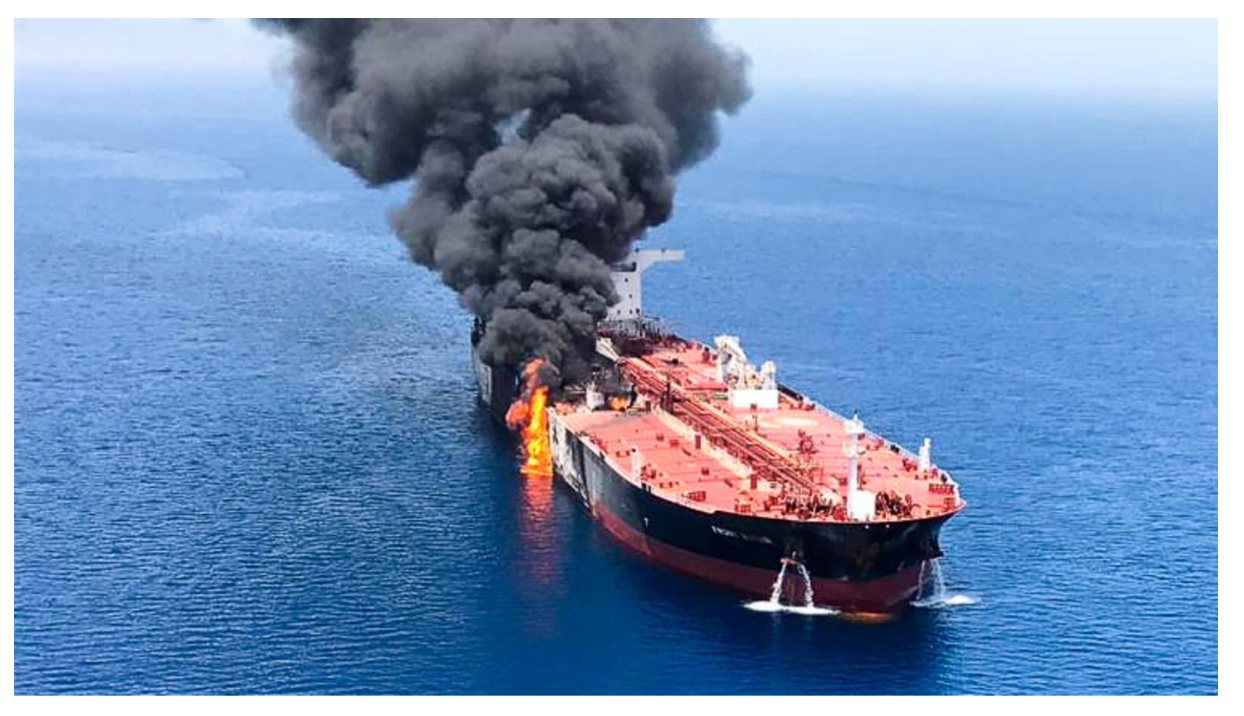 Oil shipments through the Strait of Hormuz remain central to Iran’s economic strategy. [CNBC]
A spokesperson for Iran’s Oil, Gas and Petrochemical Products Exporters’ Union confirmed that tankers must contact Iranian authorities about their cargo. Iran then issues a toll amount payable in digital currency. Chainalysis noted that the use of stablecoins for these tolls fits Iran’s established on-chain activity patterns.
Fraudulent actors also exploited the situation. Some shipping companies paid fake agents. When those payments did not reach Iranian authorities, IRGC naval vessels later confronted those vessels in the strait. The payment mechanisms involved remain under investigation.
Experts Question Whether Iran Crypto Seizures Will Shift Tehran’s Behaviour
Not all analysts accept that the seizures will produce a strategic change in Tehran. Daniel Tannebaum, a senior fellow at the Atlantic Council and partner at Oliver Wyman, told CNN the asset freeze carries meaning. However, he questioned whether it moves the needle in practical terms, given how sanctioned Iran already is.
Tannebaum argued that Iran has spent decades building mechanisms to adapt to economic pressure. He pointed to third-country actors, particularly China, as the more consequential pressure point. “The way to get at Iran at this point is to go with the third-country actors enabling them,” he said.
Kaitlin Martin, a senior intelligence analyst at Chainalysis, told Al Jazeera that heavily sanctioned states naturally gravitate toward cryptocurrency as an alternative financial rail. She added that the known IRGC wallets likely represent only a fraction of the total authority-controlled addresses, as many remain unidentified by regulatory bodies.
What the Iran Crypto Crackdown Means for Stablecoin Regulation Worldwide
The enforcement action highlights a growing reality for the stablecoin market. Centralised issuers like Tether can freeze wallets on request from national authorities. The $344 million freeze demonstrates that stablecoins, despite operating on decentralised blockchains, carry significant counterparty risk tied to their issuers.
Chainalysis concluded in its April 2026 analysis that stablecoins are not a viable long-term tool for state-sponsored sanctions evasion. The transparency of public blockchain ledgers, combined with public-private coordination between enforcement agencies and asset issuers, makes large-scale evasion highly vulnerable to targeted disruption.
For the global crypto industry, the action reinforces that regulators treat centralised stablecoins as active instruments of financial law enforcement. Businesses transacting with sanctioned entities, even through digital assets, face significant legal exposure under US sanctions law. Compliance requirements now extend explicitly to blockchain wallet screening alongside traditional financial due diligence.
Also Read: KyberSwap Hacker Sends 1,000 ETH to Tornado Cash Amid Active DOJ Investigation
FAQS
Q1. What cryptocurrency assets did the US seize from Iran?
A1. The US Treasury seized nearly $500 million in cryptocurrency assets linked to Iranian entities. This includes a previously disclosed $344 million freeze in USDT and additional seizures that brought the total close to half a billion dollars.
Q2. Who confirmed the crypto seizure?
A2. US Treasury Secretary Scott Bessent confirmed the seizure during an appearance on Fox Business’s Kudlow programme on April 29, 2026.
Q3. What is Operation Economic Fury?
A3. Operation Economic Fury is a US sanctions campaign launched in March 2025 under Donald Trump. It targets Iran’s financial systems, oil exports, and global networks through asset seizures, sanctions, and diplomatic pressure.
Q4. How did Tether contribute to the enforcement action?
A4. Tether froze over $344 million in USDT held in two wallet addresses linked to Iran’s Central Bank and the Islamic Revolutionary Guard Corps (IRGC), following requests from US authorities.
Q5. How does Iran use cryptocurrency to bypass sanctions?
A5. Iran converts fiat currency into stablecoins, routes funds through intermediary wallets and DeFi bridges, and then moves them back into domestic exchanges or affiliated accounts to avoid traditional banking restrictions.
Q6. What role does the IRGC play in crypto activity?
A6. The Islamic Revolutionary Guard Corps is heavily involved in Iran’s crypto ecosystem, accounting for a significant share of the country’s on-chain transactions and using digital assets for funding and operations.
Q7. Are stablecoins effective for sanctions evasion?
A7. Not entirely. While stablecoins offer an alternative to traditional finance, their issuers can freeze funds, and blockchain transparency allows authorities to track transactions, making large-scale evasion difficult.
Q8. Will these crypto seizures change Iran’s behaviour?
A8. Experts remain divided. Some believe the seizures increase financial pressure, while others argue Iran has long adapted to sanctions and may continue using alternative channels and third-country intermediaries.
Q9. What does this mean for the global crypto industry?
A9. The case highlights increasing regulatory scrutiny. Businesses dealing with digital assets must comply with sanctions laws, including screening blockchain wallets to avoid exposure to sanctioned entities.
Disclaimer
This article is published by Crafmin for informational purposes only and does not constitute financial, investment, legal, or regulatory advice. While the information is based on publicly available sources believed to be reliable, Crafmin makes no representations or warranties regarding its accuracy, completeness, or timeliness. References to entities such as Tether, US Department of the Treasury, or the Islamic Revolutionary Guard Corps are included solely for news reporting and context, without implying endorsement or affiliation. Readers should conduct their own independent research and consult qualified professionals before making any financial or investment decisions, particularly in relation to cryptocurrencies and digital assets, which are subject to high volatility and evolving regulation. Crafmin and its affiliates shall not be held liable for any direct or indirect losses arising from the use of or reliance on this information.
Sources
https://www.chainalysis.com/blog/iran-strait-of-hormuz-crypto-toll/
https://financefeeds.com/bessent-says-us-crypto-seizures-from-iran-near-500-million/