

Brazil’s Finance Ministry moved swiftly on Thursday. It instructed internet providers to block access to 28 online prediction market platforms operating in the country. Finance Minister Dario Durigan confirmed the action at a press conference in Brasilia.
Brazil blocks Kalshi, Polymarket in sweeping ban citing investor protections https://t.co/T4VD91iqlJ
— The Block (@TheBlockCo) April 24, 2026
Telecom regulator Anatel enforced the blocks. By early Friday afternoon, users across Brazil could no longer access either Polymarket or Kalshi. The government described the move as a direct response to platforms it said were operating outside the country’s legal framework.
Durigan stated that prediction markets are neither legal nor regulated in Brazil. He added that the government would pursue further regulation to address what it called the social harm caused by unregulated online gambling.
Finance Ministry Cites Investor Protection and Household Debt
The Finance Ministry framed the ban around protecting Brazilian citizens. Durigan told reporters that President Luiz Inácio Lula da Silva remains deeply concerned about household debt and the spread of unregulated gambling among the population.

Brazilian President Luiz Inácio Lula da Silva, during an official meeting in Brasília, as the government tightens regulation on online prediction markets and betting platforms. [Bloomberg]
Chief of Staff Miriam Belchior echoed that position. She said the measure aims to protect income, reduce financial losses, and limit families’ exposure to unsafe financial practices. The government linked the ban to its broader national campaign on debt reduction.
Officials argued that allowing unregulated platforms to operate would undermine efforts to stabilize household finances. The government indicated it may announce additional regulatory measures for the betting sector in the coming weeks.
Central Bank and Monetary Council Establish Legal Ground for the Ban
Brazil’s Central Bank provided the legal foundation for the ban. It published a formal resolution stating that the platforms violated local regulations on derivatives trading. The bank said the platforms posed clear risks to market integrity.
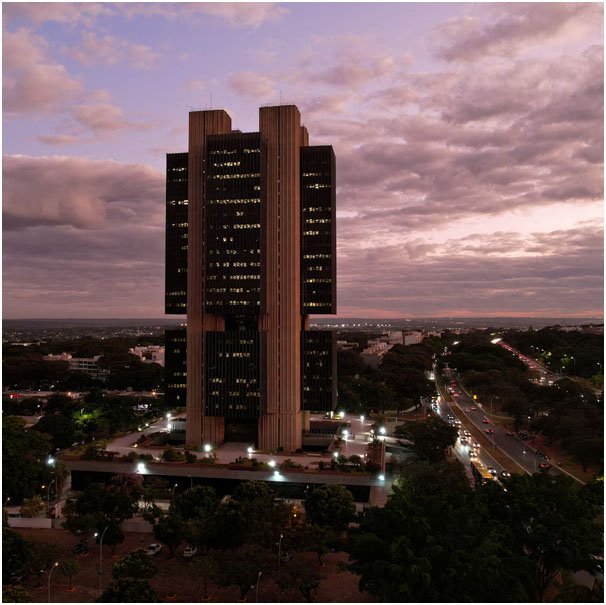
Brazil’s Central Bank published a formal resolution citing violations of local derivatives trading rules as the legal basis for the platform shutdowns. [Reuters]
The National Monetary Council had recently issued a rule restricting derivatives to economic and financial benchmarks. These include price indexes, interest rates, and exchange rates. Contracts tied to sports, elections, politics, cultural events, and social outcomes fall outside that framework.
The Finance Ministry released a technical note explaining its classification. It described prediction market contracts as binary event instruments where users take yes or no positions on future outcomes. Authorities concluded that this structure overlaps with fixed-odds betting under Brazilian law.
Neither Polymarket Nor Kalshi Held a Brazilian Operating License
Both platforms failed to meet Brazil’s formal licensing requirements. The country’s regulated betting market launched in January 2025 following the legalization of gambling in 2019. Compliance involves several strict conditions that neither company has fulfilled.

Kalshi had been in talks with Brazilian investment firm XP for a local market entry, while Polymarket had been growing its Brazilian user base ahead of the government’s crackdown. [LinkedIn]
Operators must be headquartered in Brazil and maintain local legal representation. They must also pay a BRL 30 million operating license fee valid for five years. Platforms must implement facial recognition for user verification and process all transactions through Pix, Brazil’s domestic instant payment system.
Polymarket accepts cryptocurrency and international card payments. Kalshi routes payments through international remittances. Neither company held a local license or maintained a Brazilian headquarters at the time of the ban.
Kalshi’s XP Partnership and Polymarket’s Growth Plans Face Uncertainty
The ban creates immediate challenges for both companies. Kalshi had been in advanced discussions with Brazilian investment firm XP to explore a formal local launch. That deal now appears uncertain following the government’s decision.
Polymarket had been expanding its Brazilian user base aggressively. The platform processed $9.3 billion in total trading volume globally in 2024. Brazil represented a significant growth market for the company heading into 2025 and 2026.
Kalshi said it was assessing the situation following the announcement. Polymarket had not issued a formal response at the time of publication. The block does not prevent access through VPNs, but that limits the reachable user base to technically proficient users.
Licensed Bookmakers Had Lobbied for the Crackdown Since Early 2026
The ban did not emerge solely from regulatory concern. Licensed bookmakers operating in Brazil had been lobbying the Finance Ministry since early 2026 to block prediction platforms. Each licensed operator paid roughly $6 million for its operating rights.
Those operators argued that unregulated platforms competed unfairly by avoiding licensing costs entirely. Brazilian betting industry publication BNL Data documented the lobbying effort in detail before the ban. Bloomberg also reported on the industry pressure preceding the government’s formal announcement.
The government’s official statements focused on consumer protection. However, the timing and the lobbying history suggest that competitive pressure from the licensed sector contributed to the outcome.
Brazil Joins a Growing List of Countries That Have Blocked Prediction Platforms
Brazil’s action reflects a wider global regulatory trend. Polymarket is already blocked in more than 30 countries. Restricted jurisdictions include France, Belgium, Australia, the United Kingdom, Italy, Poland, and Singapore.
Portugal restricted access to one prediction platform earlier in 2026. Some countries apply partial bans, targeting only specific market categories such as political betting. Taiwan, for example, restricts political markets while permitting others.
The core question across all these jurisdictions remains the same. Regulators must decide whether event-based contracts qualify as financial instruments or as gambling. Where they choose the latter, access restrictions typically follow.
US States Also Push Back Against Prediction Market Expansion
Regulatory pressure on prediction markets is not limited to foreign governments. Several US states have taken legal action against platforms in recent months. Wisconsin filed the most recent lawsuit, naming Kalshi, Polymarket, Robinhood, Coinbase, and Crypto.com.
Wisconsin’s lawsuit argues that sports event contracts on these platforms violate the state’s commercial gambling ban. The case adds to a growing list of state-level challenges targeting prediction market operators in the United States.
The US Congress is also considering legislation that would restrict prediction markets on sports outcomes. That legislative effort was partly triggered by the rapid expansion of Kalshi and Polymarket into sports-related contract territory.
Prediction Market Industry Faces Compliance Gap Across Global Markets
The Brazil ban highlights a structural problem for the prediction market sector. Platforms have scaled their technology and user bases faster than their compliance infrastructure. That gap is what regulators in multiple countries are now targeting.
Prediction markets offer real-time probability data on consequential events. Research has shown they often outperform traditional institutional forecasters. The utility of the product is not the issue regulators are raising.
The problem lies in the legal classification of the product across different regulatory environments. In markets where payments, gambling laws, and financial product rules overlap, platforms must navigate all three simultaneously. Brazil made clear that it expects full compliance before any platform can operate within its borders.
Also Read: Brazilian Police Bust $320M Crypto Laundering Network Involving Funk Stars and Influencers
FAQS
Q1. Why did Brazil ban Polymarket and Kalshi?
A1. Brazil banned the platforms for operating without local licenses and for violating federal gambling and derivatives trading regulations.
Q2. How many prediction market platforms were blocked in Brazil?
A2. A total of 28 prediction market and betting platforms were blocked across the country by the Finance Ministry.
Q3. Can users still access Polymarket and Kalshi in Brazil?
A3. Direct access has been blocked, but some users may still attempt to reach them using VPNs, which limits accessibility.
Q4. What requirements did the platforms fail to meet?
A4. They failed to obtain a Brazilian operating license, establish local headquarters, and comply with payment and user verification rules like Pix integration and facial recognition.
Q5. Will Brazil introduce more regulation on prediction markets?
A5. Yes. Authorities have signaled that additional regulatory measures for online betting and prediction markets are likely in the coming months.
Disclaimer
This article is for informational and editorial purposes only. It does not constitute financial, legal, or investment advice. Colitco makes no representations or warranties regarding the accuracy, completeness, or reliability of the information provided. Readers should conduct their own research or seek professional advice before making any financial or regulatory decisions. Colitco is not responsible for any losses or damages arising from the use of this content.
Sources
- https://www.theblock.co/post/398870/brazil-blocks-kalshi-polymarket-sweeping-ban-investor-protections
- https://financefeeds.com/brazil-blocks-28-prediction-markets-as-polymarket-and-kalshi-go-offline/