

The Bitcoin price posted its strongest single-day move in over a month on April 14, briefly touching USD 76,120 before settling near USD 74,796. The catalyst was not on-chain. It came straight off the White House lawn.
President Donald Trump told reporters that Iran had contacted Washington for peace talks. Within minutes, Brent crude broke below USD 100 per barrel. Bitcoin cleared a key technical ceiling at USD 74,000. Both moved fast.
Peace Signals Trigger Risk-On Across Markets
Bitcoin was trading around USD 72,400 at 10:00 am Eastern time when the first headlines crossed about Trump’s Iran comments. The price jumped roughly four percent in the hours that followed.
Bitcoin cleared resistance around USD 74,000, a level it had held below for three to four weeks. That break triggered algorithmic buying and systematic momentum flows, pushing the price into the USD 76,000 range intraday.
Short liquidations added fuel. Coinglass data show more than USD 277 million in leveraged bitcoin short positions were wiped out over that single day, amplifying the move beyond what spot demand alone would have produced.
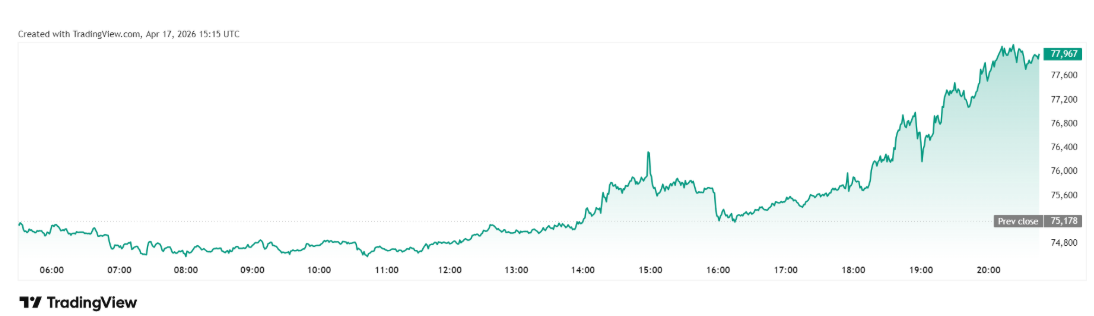 BTC/USD 1-hour chart showing the April 14, 2026 spike [Trading View]
Oil, Inflation and the Fed
The connection between Iranian diplomacy and Bitcoin price is not obvious. The link runs through oil, inflation expectations and rate policy.
Oil above USD 100 was forcing the Fed to price “higher for longer” through the summer, which kept the dollar bid and risk assets capped. Brent back below USD 100 takes pressure off the inflation print and reopens the door to a June rate cut, and Bitcoin trades with rate cut expectations more tightly than most traders realise.
The 2026 oil crisis originated from military action between the United States, Israel, and Iran that began on 28 February 2026. Iran responded by closing the Strait of Hormuz, the route for roughly one-fifth of global oil supply. With the Strait of Hormuz open to traffic again under ceasefire conditions, that supply pressure is easing.
The shift from risk-off to risk-on was broad. Equities, crypto, and emerging market currencies all moved in the same direction once the peace headlines hit.
Short Sellers, Spot Buyers and the Next Ceasefire Deadline
Open interest on Bitcoin futures across the major venues climbed USD 1.8 billion during the spike, which tells you fresh longs came in. But funding rates stayed negative on most exchanges through the close, which is unusual for a four percent rally day and suggests a meaningful slice of the buying was shorts getting squeezed out rather than new conviction longs stepping in.
Deeply negative bitcoin perpetual funding rates show the market is heavily short, raising the risk of a sharp short squeeze that some traders say could push prices toward USD 125,000 in the coming months.
That is the bull case. The bear case is simpler: peace talks break down, oil snaps back above USD 100, and the USD 76,000 print becomes another failed breakout.
Key levels to watch:
- USD 74,000: critical support; losing this invalidates the breakout
- USD 76,000: current resistance ceiling and supply zone
- USD 77,000 to USD 80,000: next meaningful resistance if talks progress
- USD 80,000 to USD 83,000: target on a clean close above USD 76,000
From the White House to the Charts
Bitcoin had touched USD 76,000 earlier in March on a separate round of short-covering and ETF-related flows. April 14’s move came off a deeper dip tied to Iran-related uncertainty, giving it a different character. Essentially, a breakout from recent consolidation rather than a continuation of a prior run.
Bitcoin is trading roughly flat near USD 74,700 after a strong week, as a record-setting global equity rally pauses ahead of next week’s U.S.-Iran cease-fire deadline.
That deadline is the next major event traders are pricing around.
How It Could Play Out
The setup now is binary. Either the ceasefire extends and oil stays pinned under USD 100, giving Bitcoin the fuel to test USD 80,000. Or talks collapse inside 48 hours, crude rebounds and April 14 becomes a liquidity wick.
For the rally to extend, bitcoin needs to establish itself above the USD 74,500 to USD 76,000 supply zone. A clean close above USD 76,000 could accelerate momentum toward the USD 80,000 to USD 83,000 range.
Those watching the broader crypto market will know that sentiment shifts this fast cut both ways. The same headlines that sent Bitcoin to USD 76,000 can reverse within a news cycle.
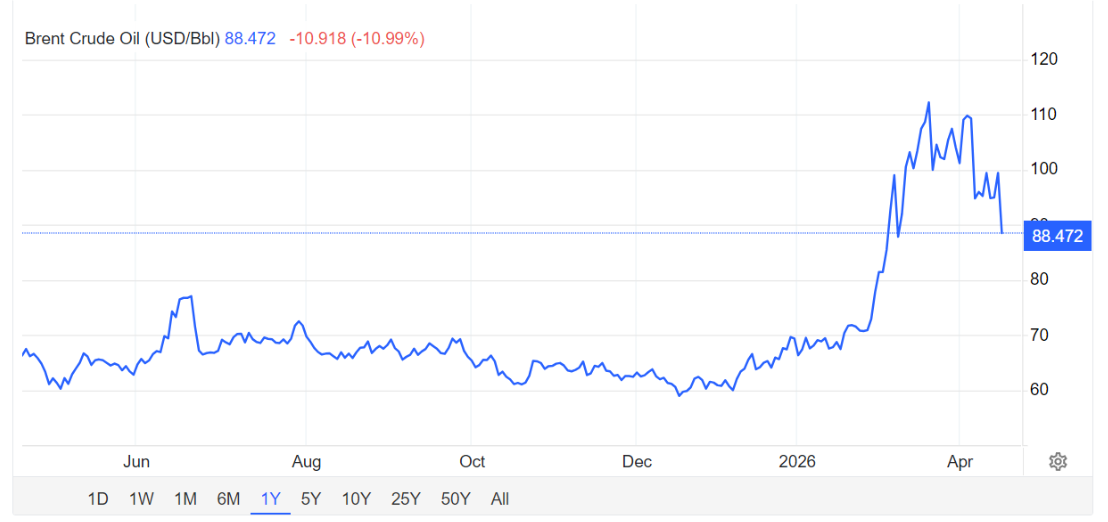 Brent crude price chart [Trading Economics]
Also Read: AI In Crypto Regulation Strengthens Oversight Amid Staffing Cuts
Frequently Asked Questions
Q: Why did the Bitcoin price rise when Iran peace talks were announced?
A: Peace signals reduced fears of a prolonged oil supply disruption. Lower oil eases inflation concerns, which raises the probability of a Federal Reserve rate cut. Bitcoin and other risk assets tend to rise when rate cut expectations improve.
Q: What is the Strait of Hormuz, and why does it matter for crypto?
A: The Strait of Hormuz is a narrow waterway through which roughly one-fifth of global oil supply flows. Iran closed it in February 2026 following military conflict with the U.S. and Israel. Its closure pushed oil above USD 120 per barrel and pressured risk assets, including Bitcoin, for weeks.
Q: Is the USD 76,000 Bitcoin level a confirmed breakout?
A: Not yet. Traders need to see Bitcoin hold above USD 74,000 on a closing basis and for Brent crude to stay under USD 100. If either condition fails, the USD 76,000 spike is likely to be treated as a fakeout.
Q: What happens to Bitcoin if U.S.-Iran talks collapse?
A: The USD 72,000 to USD 74,000 support zone comes back into focus. A return of oil above USD 100 would likely push Bitcoin back toward that range quickly.
Q: Could Bitcoin reach USD 80,000 from here?
A: Technically possible if the ceasefire holds and short-squeeze dynamics persist. Some analysts see USD 80,000 to USD 83,000 as the next meaningful resistance zone on a clean break above USD 76,000.
Disclaimer: This article is for informational purposes only and does not constitute financial product advice. Cryptocurrency markets are highly volatile. Readers should seek independent financial advice before making any investment decisions. Colitco accepts no responsibility for any loss arising from reliance on information in this article.
Source: