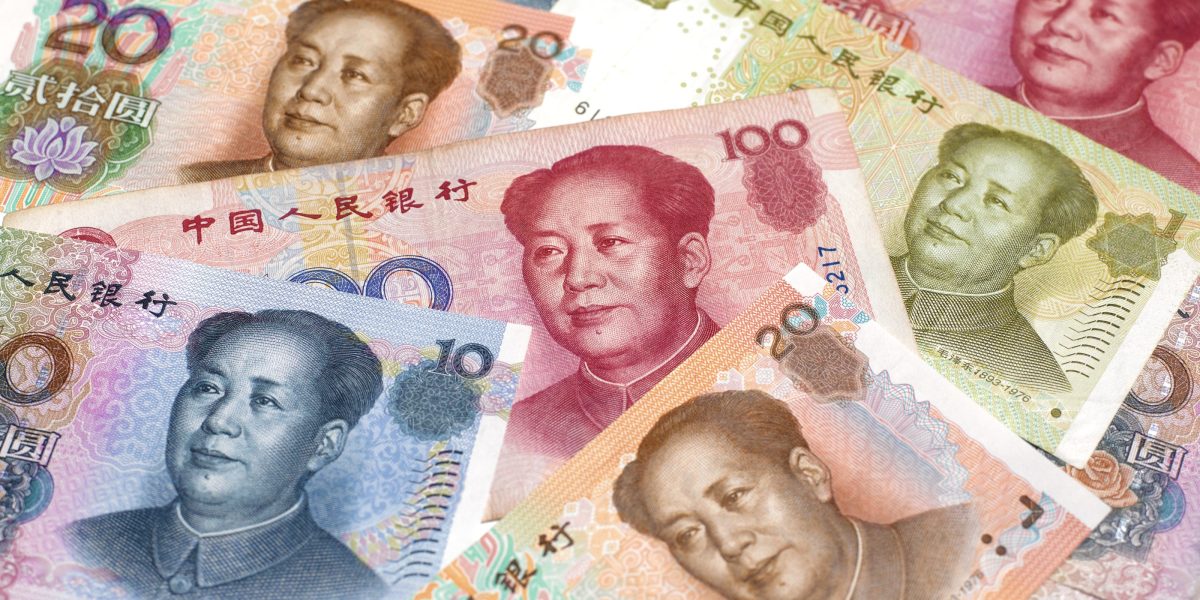

Jeremy Allaire, co-founder and chief executive of Circle Internet Group, says a yuan-backed stablecoin represents one of the most significant untapped opportunities in global digital finance. He made the remarks during an interview with Reuters in Hong Kong on April 16, 2026. His comments come despite China maintaining a firm ban on cryptocurrency trading and mining since 2021.
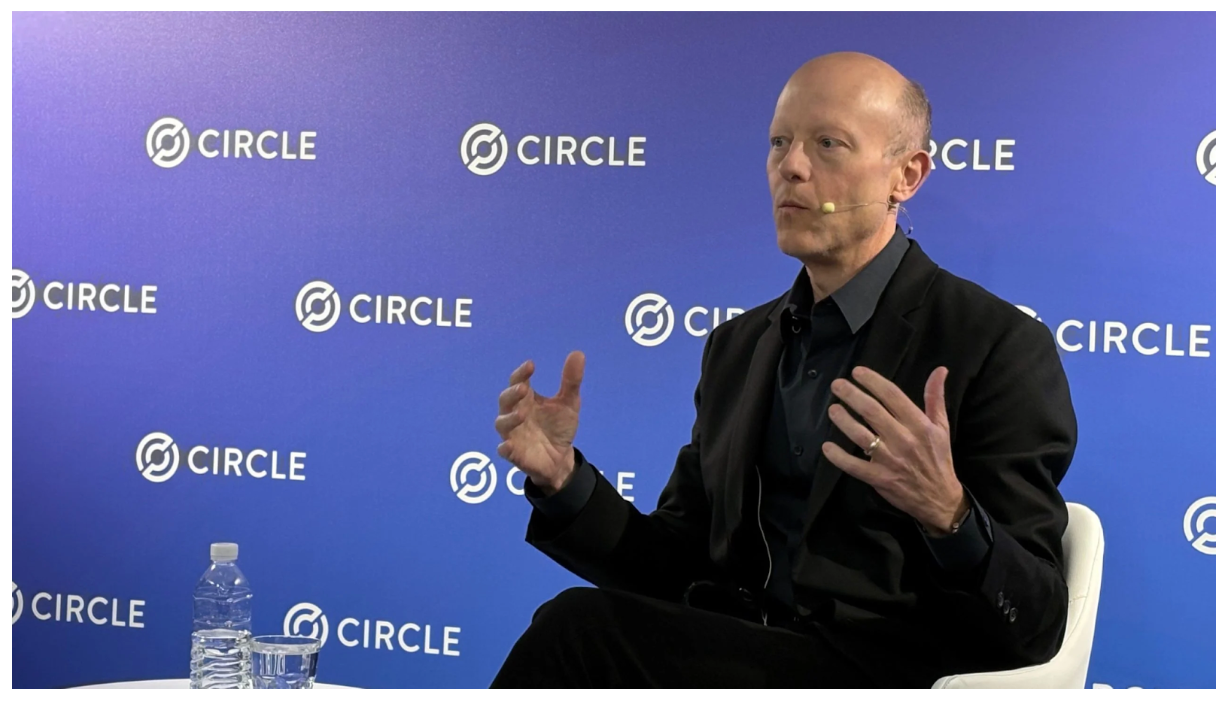 Circle CEO Jeremy Allaire highlights the potential of a yuan-backed stablecoin in global finance. [The Block]
Circle currently issues USD Coin (USDC), the world’s second-largest stablecoin by market value. The company’s push into yuan stablecoin discussions signals growing industry interest in non-dollar digital assets. It also reflects a broader shift in how policymakers and private firms view stablecoins as financial infrastructure, not speculative tools.
Circle CEO Calls Yuan Stablecoin a ‘Tremendous Opportunity’
Allaire stated plainly that the case for a yuan stablecoin is strong. “There’s a tremendous opportunity for a yuan stablecoin,” he told Reuters. He linked the argument directly to the global currency competition taking shape across digital finance.
“If there’s currency competition, you want your currency to have the best features possible. This is becoming a technological competition,” Allaire added.
His framing positions the yuan stablecoin debate not as a crypto question, but as a matter of geopolitical and monetary strategy.
Allaire has made this case since at least 2023. At the time, China’s stance appeared firmly opposed to any form of stablecoin. The current environment, however, has shifted. Regulators and financial institutions in multiple countries now treat stablecoins as a legitimate layer of cross-border payment infrastructure.
China’s RMB Internationalization Goals Drive Stablecoin Interest
China has long sought to expand the yuan’s role in global trade and finance. The renminbi currently holds a limited share of international foreign exchange reserves. Beijing sees digital tools as one path toward changing that. Reuters reported in August 2025 that Chinese officials were studying yuan-backed stablecoin models to boost global adoption of the currency.
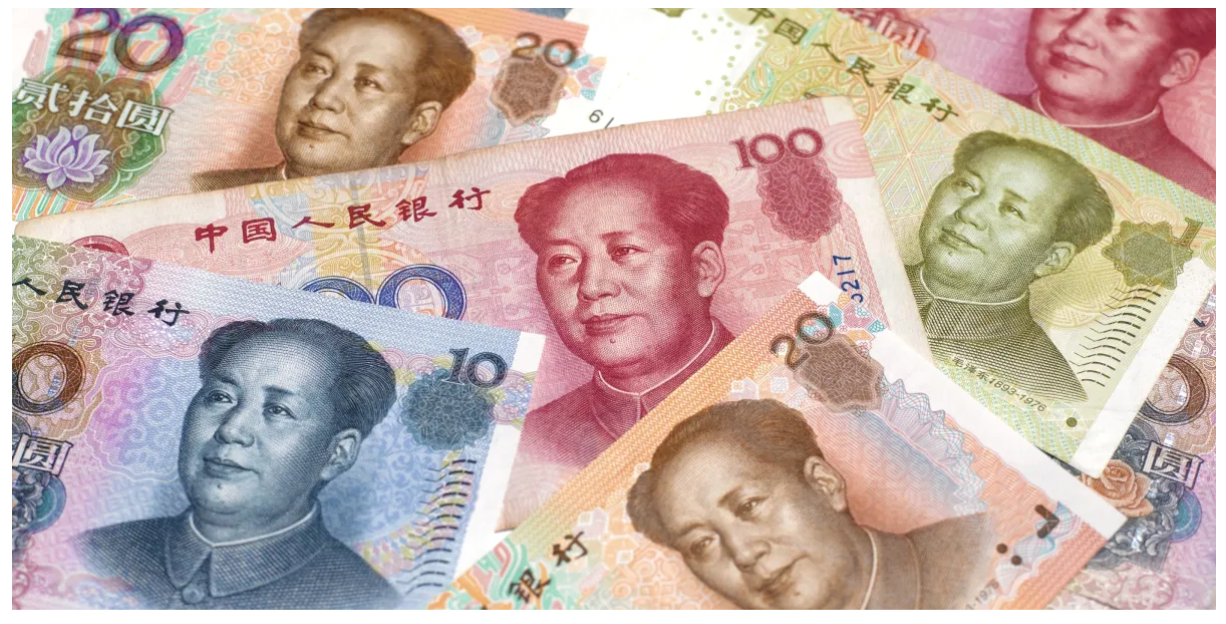 China aims to expand the global role of the renminbi through digital financial infrastructure. [Fortune]
Allaire argued that stablecoins offer China a more practical route to currency internationalization than its existing central bank digital currency, the e-CNY. The e-CNY operates under tight government control and has not gained significant traction outside China. A stablecoin pegged to the yuan, by contrast, could move through open digital networks used globally.
“If eventually the Chinese government wants to see the RMB used more freely in trade and commerce around the world, it may be that stablecoins are the path to do that more than the central bank digital currency,” Allaire said in earlier comments to the South China Morning Post.
Circle CEO Predicts China Could Launch Yuan Stablecoin Within Three to Five Years
Allaire put a specific timeline on the possibility. He predicted China could roll out a yuan-backed stablecoin within three to five years. He tied his forecast to the accelerating pace at which digital currencies are entering global trade and settlement systems.
His timeline, however, rests on a policy decision that remains unresolved. Analysts note that the technology itself presents few barriers. The harder question is whether Beijing chooses to treat stablecoins as a strategic tool for currency expansion or continues to view them through the lens of financial risk.
Capital Controls and RMB Convertibility Remain the Core Barrier
Experts identify one issue above all others: full convertibility. For a yuan stablecoin to function on open global markets, China would need to allow the free exchange of yuan without the capital flow restrictions that currently govern the currency. That represents a fundamental shift in Chinese economic policy.
There is also a technical distinction that matters. The offshore yuan (CNH) and the onshore yuan (CNY) are not equivalent instruments. A stablecoin backed by CNH could operate within China’s existing capital control framework. A stablecoin backed by CNY could not, at least not under current policy settings.
Capital controls remain a pillar of Chinese economic management. Any move toward a fully convertible yuan would carry implications far beyond the stablecoin question. That makes the decision one of macroeconomic policy, not just digital currency design.
China’s Existing Crypto Ban Creates a Challenging Regulatory Landscape
China banned cryptocurrency trading and mining in 2021. The People’s Bank of China reinforced its position on virtual currencies in November 2025, amid a global surge in digital asset activity. In February 2026, Chinese authorities went further, prohibiting the issuance of RMB-pegged stablecoins without prior government licensing.
These regulatory moves signal that Beijing has not abandoned its cautious stance. Earlier, Chinese authorities arrested individuals linked to CNHC, an offshore yuan stablecoin project, indicating that even offshore yuan digital assets face scrutiny under current rules.
Allaire acknowledged the regulatory tension directly. He does not expect mainland China to open broadly to crypto. Instead, he frames the yuan stablecoin concept primarily as an offshore product. Hong Kong, with its distinct regulatory regime, stands out as the most likely base for such a venture.
Hong Kong Emerges as the Key Gateway for Offshore Yuan Digital Assets
Allaire spoke from Hong Kong, where Circle engages financial partners on stablecoin settlement and remittance use cases. Hong Kong operates under a separate legal system from mainland China. Its regulatory framework has moved toward licensing digital asset businesses, making it a plausible hub for a CNH-backed stablecoin.
A yuan stablecoin operating out of Hong Kong could support trade flows linked to mainland China without requiring changes to the mainland’s legal or financial structure. That model preserves Beijing’s control onshore while allowing yuan-denominated digital payments to flow more freely in external markets.
USDC Growth and Geopolitical Demand Strengthen Circle’s Market Position
Circle reported strong performance for USDC in 2025. The stablecoin’s circulation grew 72 percent year-on-year, reaching $75.3 billion by the end of the year. Allaire attributed part of that growth to geopolitical instability. He noted that Circle recorded “several billion dollars” in USDC transaction growth following the outbreak of the U.S.-Iran war, as users sought portable, liquid digital assets.
The global stablecoin market now stands at approximately $315 billion. Dollar-pegged tokens, led by Tether’s USDT and Circle’s USDC, account for the majority of that figure. Allaire expects non-dollar stablecoins to grow in importance. He views currency competition in digital form as an increasingly defining feature of global finance.
U.S. Crypto Regulation Adds Another Layer to the Global Stablecoin Debate
Circle also sits at the center of evolving U.S. regulatory discussions. The CLARITY Act has drawn international attention, particularly around rules on interest-bearing stablecoin products marketed as savings instruments. Allaire stated that any marketing restrictions would affect stablecoin distributors more than issuers such as Circle.
The U.S. regulatory environment carries implications beyond American borders. Rules set in Washington shape global norms for digital dollar products. As Circle operates across multiple jurisdictions, developments in U.S. legislation directly affect the company’s strategic planning, including its engagement with partners in Asia.
Policy Decision, Not Technology, Will Determine the Yuan Stablecoin’s Future
Analysts and industry figures agree on one point: a yuan stablecoin is technically achievable. The infrastructure exists. The design challenges are solvable. What remains uncertain is whether China’s government sees the strategic benefit as outweighing the risks to its financial control architecture.
Allaire’s timeline of three to five years ultimately depends on that decision. If Beijing concludes that a yuan stablecoin advances its currency internationalization goals without undermining capital controls, the pathway could open faster than markets expect. If it does not, the idea remains in the realm of financial speculation.
For now, the conversation has moved from the margins to the mainstream. Circle’s CEO making the case in Hong Kong, the world’s most prominent offshore yuan center, reflects how seriously global financial institutions now treat the question.
FAQs
Q1: What is a yuan-backed stablecoin?
A1: A yuan-backed stablecoin is a digital asset pegged to the value of China’s currency, the renminbi (RMB), designed to maintain a stable price for payments and transfers.
Q2: Why does Circle see an opportunity in a yuan stablecoin?
A2: Jeremy Allaire believes a yuan stablecoin could expand global use of the RMB and compete with dollar-backed stablecoins in cross-border transactions.
Q3: How does China’s crypto ban affect this idea?
A3: China’s ban on crypto trading and mining limits domestic activity, but an offshore yuan stablecoin, potentially based in Hong Kong, could operate under a different regulatory framework.
Q4: What is the difference between CNY and CNH in this context?
A4: CNY refers to the onshore yuan used within mainland China, while CNH is the offshore version traded internationally. A CNH-backed stablecoin would be easier to implement under current policies.
Q5: When could a yuan-backed stablecoin be launched?
A5: Allaire estimates a potential launch within three to five years, depending on China’s regulatory decisions and approach to capital controls.
Disclaimer:
This article is published by Crafmin for informational purposes only. It does not constitute financial, investment, or legal advice. Readers should conduct their own research or consult a qualified professional before making any financial decisions. Crafmin does not guarantee the accuracy or completeness of third-party statements, including those from Jeremy Allaire or Circle Internet Group, and accepts no liability for any losses arising from the use of this information.
Sources