What Does The Quantum Threat To Bitcoin Study Reveal?
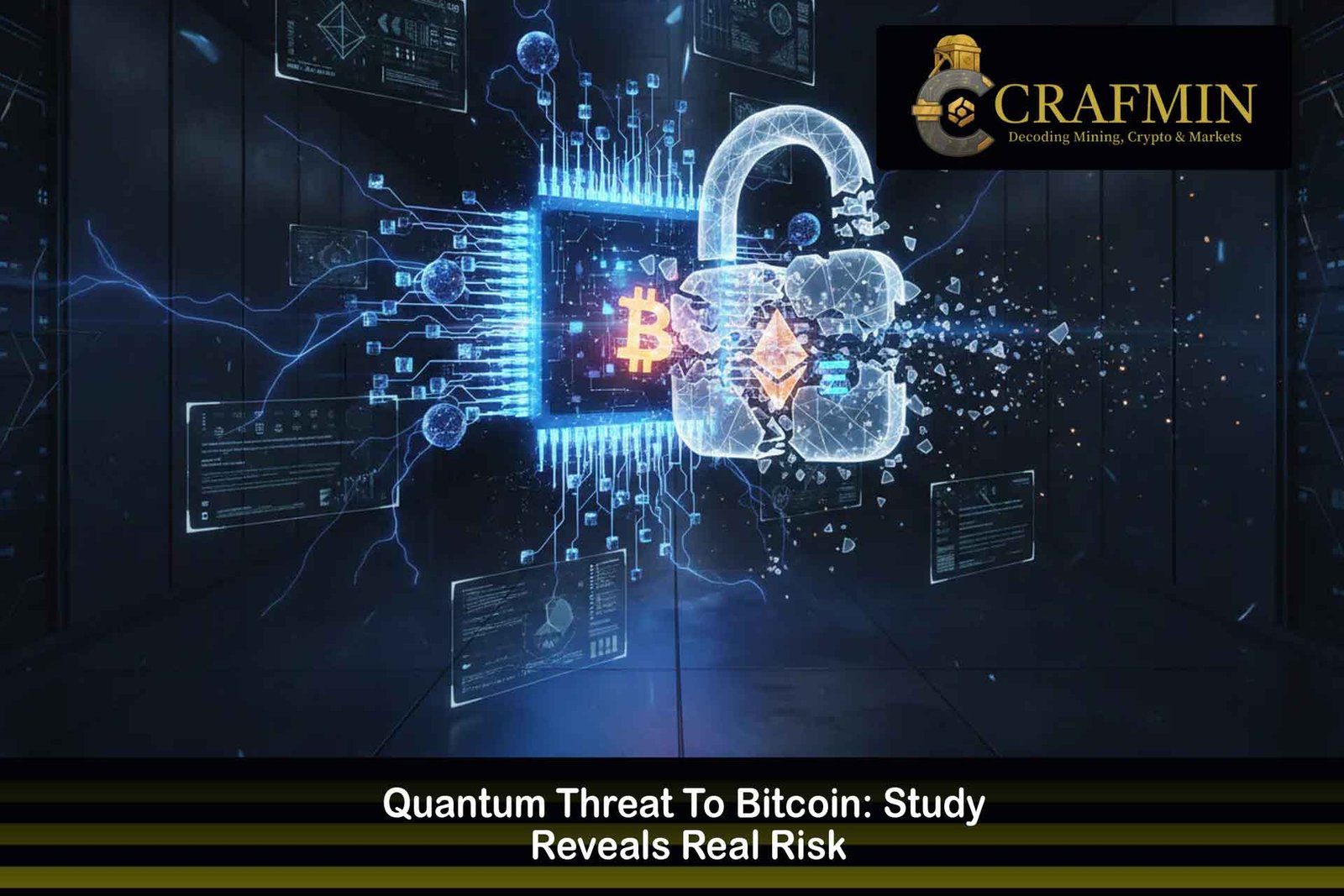
According to a recent research conducted by BTQ Technologies Corp., there is a serious quantum threat to the security of Bitcoin. The study is called Kardashev Scale Quantum Computing to Bitcoin Mining and it dispels common assumptions.
It demonstrates that even under the existing circumstances, quantum computers are not capable of accelerating Bitcoin mining. The article was released on April 7, 2026, and contributes to the existing controversies. It pays attention to technical feasibility and economic restriction.
The results show that the concept of quantum-accelerated mining is not practical. The necessary level of computation cannot be achieved with modern technology. The study is also a better insight into the location of real risks. This changes industry attention to more immediate vulnerabilities of the Bitcoin network.
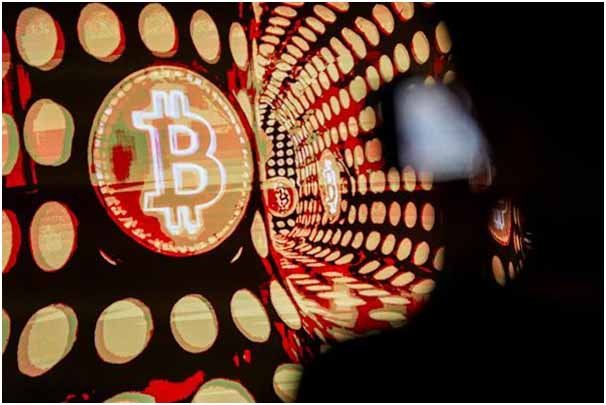
Study highlights the real quantum threat to Bitcoin beyond mining concerns. [Courtesy: Yahoo Finance]
Why Quantum Threat To Bitcoin Matters For Investors
The research has very solid implications to investors and the market at large. It explains that the fears of mining disruption might not be as high. Nevertheless, it brings another more pressing issue related to the security layer of Bitcoin. This contains threats to digital signatures to verify transactions.
Bitcoin uses cryptography based on elliptic curves to ensure security of transactions. This encryption method can be broken in the future by quantum computers. This would enable attackers to counterfeit signatures and get money. This can create a situation where there is no confidence in the network.
The research is an indicator of change in risk perception. Cryptographic threat is long-term rather than short-term mining disruption as an issue that needs to be accounted by investors. This may affect the market sentiments and investment plans.
Quantum Mining Remains Physically Impossible At Scale
The study gives an elaborate understanding of the shortcomings of quantum mining. Pierre-Luc Dallaire-Demers, the author stipulates that the resource demands are drastic. With the difficulty of Bitcoin at January 2025, a quantum system would require about 1023 physical qubits.
Moreover, the power demand would be approximately 1025 watts. This is a powerful level that is close to the amount of a star. These requirements put quantum mining very far out of reach of the present and the near future.
According to Dallaire-Demers, to force mining into non-trivial consensus effects, we have to appeal to astronomical quantum fleets at energy scales that are far beyond the reach of current civilization. This supports the conclusion that quantum mining is not a threat that can be made today.

Quantum mining requires astronomical energy levels beyond current global capabilities. [Courtesy: Stock Titan]
Where Does The Real Quantum Threat To Bitcoin Exist?
The research determines the digital signatures of Bitcoin to be the actual area of weakness. Such signatures are necessary in controlling ownership and authorising transactions. When they are compromised, they may enable malicious individuals to loot money.
Dallaire-Demers emphasised this concern clearly. He stated, “The real cryptographic crisis is the signature vulnerability, and that clock is already ticking.” This highlights the urgency of addressing the issue.
This is in contrast to mining as it does not demand impracticable levels of energy. It relies on the development of quantum algorithms and hardware. With these technologies changing, the threat to signatures is more realistic.
This discovery changes the crypto industry orientation. It promotes developers to focus more on upgrading security, rather than miners issues.
How Is BTQ Building A Quantum-Safe Bitcoin Future?
BTQ Technologies is already working on the solution to this quantum threat to Bitcoin. The firm is working on a system known as Bitcoin Quantum. This architecture is concerned with enhancing the authentication layer of the network.
The strategy involves the absorption of post-quantum cryptography criteria. They are signature schemes NIST-standardised and advanced transaction models. The Pay-to-Merkle-Root structure is one of them.
Christopher Tam, President and Head of Innovation at BTQ, highlighted the importance of this shift. He stated, “Quantum computing may reshape digital money, but not by making legacy Bitcoin mining practical.” His remarks underline the need for forward-looking solutions.
The developments are intended to make Bitcoin resistant to new quantum risks. They are also consistent with the industry-wide attempts to implement quantum-resistant technologies.
BTQ develops quantum-safe frameworks to protect Bitcoin transactions and signatures. [Courtesy: PR Newswire]
What Does The Future Hold For Quantum And Bitcoin?
The paper indicates that quantum-native systems may be the future of digital money. These systems would be quantum capable. It is a change of modifying the available blockchain models.
One such method is provided by BTQ in its Quantum Proof of Work (QPoW). It is targeted at quantum hardware instead of classical hardware. It is modeled that a quantum sampler uses only 0.25 kWh of power in 10 minutes. In comparison, classical systems use 390 kWh. This provides an energy penalty of 1,560x.
The results suggest a long-term change of blockchain technology. In as much as the present systems are safe at the moment, preparation is necessary. The next step in the evolution of crypto will probably be characterized by the shift to quantum-resistant frameworks.
Also Read: Why Quantum Computing Limitations Stall Crypto Risk
FAQs
Q1. What is the quantum threat to Bitcoin?
A1: It refers to the risk that quantum computers could break Bitcoin’s cryptographic security systems.
Q2. Can quantum computers mine Bitcoin faster?
A2: No, the study shows quantum mining requires unrealistic resources and energy levels.
Q3. What is the biggest risk identified in the study?
A3: The vulnerability of Bitcoin’s digital signatures is the most serious concern.
Q4. How is the industry preparing for quantum risks?
A4: Companies are developing post-quantum cryptography and quantum-native blockchain solutions.
Disclaimer
This article is for informational purposes only and does not constitute financial or investment advice. The content is based on company announcements and publicly available research. Cryptocurrency investments carry risks, including technological disruptions such as quantum computing advancements. Readers should conduct independent research and consult professional advisors before making financial decisions.
Sources
- https://finance.yahoo.com/markets/crypto/articles/study-identifies-real-quantum-threat-191607255.html
- https://m.techflowpost.com/en-US/article/31010
- https://cryptorank.io/news/feed/d8cd3-crypto-quantum-scare-is-real-but-here-is-where-the-real-risk-is