
The increased likelihood of the US shutting down in 2026 is again subjecting financial markets to pressure, and crypto hedgers are closely monitoring the possibility of the US government shutting down in 2026 and how it could affect liquidity and sentiment.
The federal government is headed to a potential partial shutdown that is causing concern in the equities and digital assets, but the situation is starkly different compared to the situation of the previous year, when they had a long disruption.
Six out of twelve spending bills have already been passed, which is an indicator of partial fiscal stability, and experience indicates that 60 per cent of the shoe-at-the-last-minute iambus results in shutdown crises that have been resolved, which is why the wider panic has been so far held down.
The traders are pricing a contained disruption instead of a systemic shock, although the uncertainty level is high because political process negotiations are narrowing towards the deadline risk.

Watchers are overlooking screens as US shutdown odds 2026 affect the worldwide market mood and crypto positioning. [Withtap.com]
How High Are US Shutdown Odds 2026 According To Markets?
Prediction platform Polymarket offers a 75 per cent chance of a shutdown occurring on January 31, during the Asian morning, with the overall amount of betting standing at over $13.3 million, noting an increase in conviction among people betting the US government shutting down in 2026.
The stalemate has been on the Democratic resistance to the bill that funds the Department of Homeland Security, with Senate Minority Leader Chuck Schumer saying he would not vote on any bill that funds ICE until it is replaced.
In case there is no consensus by midnight on January 30, many federal agencies will shut down, increasing the acute short-term impact of the US federal shutdown on both administrative services and market psychology.
The high probability makes the investors still hope that a political compromise will happen fast, and their expectation of long-term macro disruption would decrease.
Partial Shutdown Limits Immediate Economic Disruption
Such a possible shutdown is quite unlike October 2025, when all 12 appropriations bills were stuck and caused a record 43-day complete shutdown, which caused a liquidity crunch and decreased investor confidence.
Six spending bills have already been signed into law in the current cycle, and this means that various departments can go on with their usual activities.
According to the Committee of Responsible Federal Budget, Agriculture, Veterans Affairs, Commerce, and Energy have been fully funded to run their programmes throughout the fiscal year, and DHS has been left with about 178 billion out of the One Big Beautiful Bill Act that can fund its operations.
This organisational dissimilarity minimises systemic risk in the short-run, and the worries of recession are contained even with the increasing political anxiety.
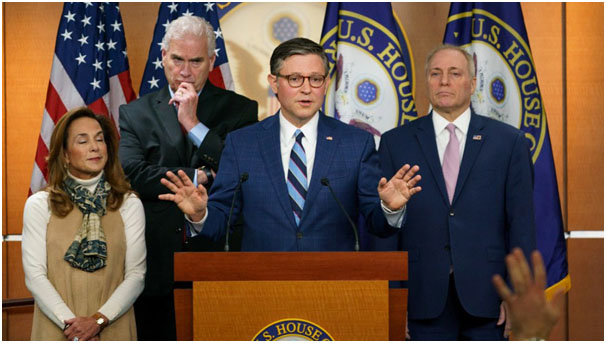
Committee for a Responsible Federal Budget confirms funding, DHS retains $178 billion operational funding. [MSN]
Will Bitcoin Face Volatility From A Shutdown?
Players on the market are reminded of the warnings given by analyst CryptoOracle, who correctly predicted the shutdown last October and forecasted a 30-40 per cent correction in Bitcoin with a downside of 75000-125000 in a full shutdown.
His thesis was that liquidity compression was associated with rapid risk-assets drawdowns, which were succeeded by vigorous recovery rallies when the funding situation was restored.
The situation, however, is that of a partial shutdown, minimising the chances of extreme liquidity drainage and capping the potential downside of Bitcoin.
The positioning of the investors indicates a middle-range volatility and not capitulation selling, but the speculative traders still exhibit vulnerability to headline risk and the congressional negotiations.
Liquidity Conditions Remain More Stable Than in 2025
Last year, the Treasury General Account soared to 1 trillion, and the liquidity withdrawn from markets and the strain on risk assets amounted to some 700 billion.
BitMEX analysts referred to this stage as starving capital flows, which caused sudden corrections in the equities and crypto markets. The current cycle consists of partial funding continuity, which limits the drawdowns by the treasury, keeping the liquidity at the base level and reducing panic behaviour.
This climate plays well with short-term stability, even though geopolitical uncertainty and fiscal debate remain at large in the overall feeling.

The liquidity indicators on the market are more stable than the shutdown cycle of 2025. [Appreciate Trading App]
What Does This Mean For Investors In 2026?
The picture given to investors evaluating the odds of a US shutdown in 2026 is that of contained volatility as opposed to systemic shock, and the probability of a US government shutdown in 2026 repeating the liquidity stress of last year is low.
Tactical price movements in crypto markets can be caused by political news, and structural funding stability prevents severe negative outcomes. Diversification of portfolio and risk management discipline is also paramount, particularly for leveraged crypto exposure.
Market actors must keep a close eye on the changes in sentiments and keep in mind that, as the political situation unfolds, chances of a long-term derailment are lower, although the pace of such a shift is quickly increasing.
Also Read: The Tokenised Trading Push of 24/7 at NYSE Is Real, and it Changes the Conversation
FAQs
Q1: What are the current US shutdown odds for 2026?
A1: Polymarket estimates shutdown probability at 75%, with over $13.3 million wagered.
Q2: Will the US government shutdown in 2026 impact Bitcoin prices significantly?
A2: A partial shutdown may trigger short-term volatility, but large liquidity shocks appear unlikely.
Q3: Which departments remain funded during this potential shutdown?
A3: Agriculture, Veterans Affairs, Commerce, Energy, and DHS retain operational funding.
Q4: How does this shutdown differ from 2025?
A4: The 2025 shutdown lasted 43 days with full funding blockage, while 2026 reflects partial funding continuity.