
The Bank of Japan’s indications of tighter monetary policy have resulted in a downturn for XRP. The central bank of Japan indicated a possible rate hike, considering the high inflation that is not going away. The government bonds of Japan started giving higher returns, which caused the markets to become uncertain and the risk to be global.
The price of XRP was affected unfavorably as the market players reevaluated their positions in the riskier assets. The yen carry trade is a practice that has been giving liquidity support to the markets globally.
Increased Japanese yen yields make borrowing cheap yen less attractive. The entire process was rapid repositioning among the equity, forex, and crypto trading. The price of XRP was among those affected by the external factors and not by the weakness of the internal network.
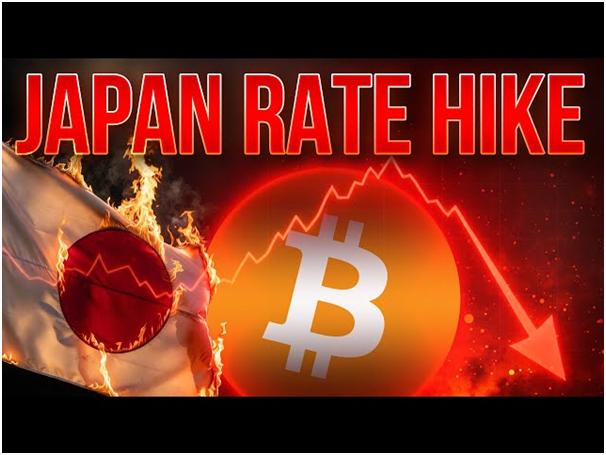
Bank of Japan rate signals trigger XRP downturn
What Is Driving Yen Carry Trade Concerns?
The yen carry trade is a key component of the Japanese economy that is based on low interest rates. Investors borrow yen and invest in countries with higher interest rates. BoJ hints that tighter monetary policy can lead to the closure of this strategy.
As a result of the rising interest rates, the leveraged positions are being broken down, and thus, the capital is leaving the risky assets, including cryptocurrencies, markets. The news in the cryptocurrency market reveals that digital assets frequently react violently to global liquidity changes.
XRP has been seen in the past to have a responsive nature to bond yield movements. Market analysts have traditionally associated rising yen yields with short-term pressure on the XRP price. Investors are still tentative as they anticipate further announcements from the BoJ.
XRP Price Declines Despite Supportive Crypto Fundamentals
The XRP price decline was not favoured by the overall crypto-market situation, which was stable; however, the price of XRP went down nevertheless. The number of transactions on the network, the extent of payment adoption, and the regulatory clarity are the factors that are supporting the asset’s longer-term outlook.
On the other hand, macroeconomic events overpowered these positives in the short run. After the BoJ’s announcement, traders opted for risk reduction. Analysts, however, point out that the XRP sell-off is caused by external factors.
No significant negative impact has taken place in connection with Ripple in the past. The fact that XRP drops due to BoJ signals indicates that the asset is influenced by the conditions in global finance. This shows that there is an increasing integration of cryptocurrency with traditional markets.
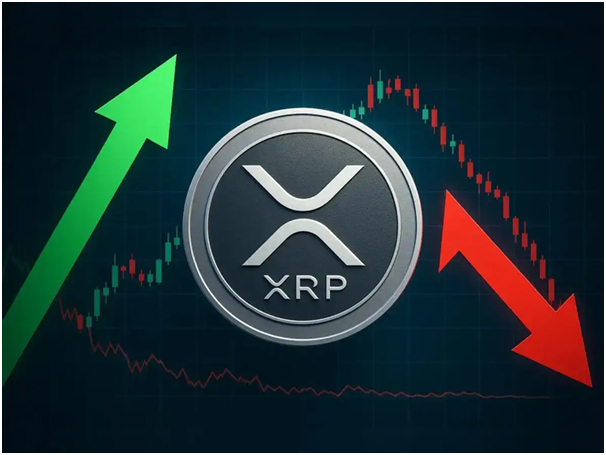
XRP falls despite a stable market and strong fundamentals
Can XRP Recover As Markets Adjust?
Traders are going to see if the XRP price can hold when the yen-related fluctuation reduces. A halt in Japanese yield increases could not only help take the pressure off the risk assets but also the pressure off the XRP price as well.
Generally speaking, XRP has always returned to the trend when the macro uncertainty comes down. Observers are divided as to when the recovery will come, mainly depending on the economic data and communication from the central banks. The Federal Reserve policy remains vital to the mood prevailing in crypto.
The contrast in the monetary policies of the US and Japan may lead to a shift in the currency flows. When the Fed maintains rates at the same level while the BoJ is still careful, the risk appetite might gradually return. This situation may well lead to a price increase in XRP.
Institutional Interest Supports Medium-Term Outlook
The demand for XRP from institutions is still the most important factor for price stabilisation. The banks and other financial institutions are still searching for the blockchain technology that could be used in payments.
Of course, one of the main use cases for XRP is in international transactions, thus keeping it in the market even if its price is weak for a short time. The regulators’ actions in different regions have eventually energised the confidence of the institutions. Cryptocurrency market reports say that there is an increasing interest from the regulated players.
Moreover, this trend will provide the medium-term price of the coin even during the macro-driven sell-offs. The experts believe that accumulation by institutions happens more often during times of volatility. According to this, the fundamentals of XRP may attract long-term investors at the lower price levels.
Institutional demand continues to support XRP price stability
Regulatory Clarity Strengthens Investor Confidence
The developments in regulations are still there to carry on and influence the investment story of XRP. A clearer regulatory framework is reducing the uncertainties for both exchanges and institutional investors.
The resulting clarity further differentiates XRP from the more speculative digital assets. Moreover, when the regulations change, the model of XRP having utility may become even more acknowledged. The signals from the BoJ have given rise to a short-term disruption, but the stability of the regulation is still a good counterbalance.
The investors are increasingly and simultaneously looking at the digital assets from the macro and compliance perspectives. Being part of the regulated financial infrastructure makes XRP stronger in its long-term attractiveness.
Also Read: Inflation Impact On Crypto Pressures XRP Despite Rising ETF Interest
FAQs
Q1. Why did XRP drop after the BoJ signals?
XRP dropped as BoJ signals raised Japanese bond yields, triggering yen carry trade fears and reducing risk appetite.
Q2. What is the yen carry trade, and why does it matter?
The yen carry trade involves borrowing yen cheaply to invest elsewhere, and rising Japanese rates reduce its profitability.
Q3. Is the XRP price decline linked to Ripple fundamentals?
No, the decline is driven by macroeconomic factors rather than changes in XRP’s network or adoption.
Q4. Can XRP recover from this downturn?
XRP may recover if macro pressures ease and institutional demand strengthens amid improving market sentiment.