

A fundamental change in how individuals and companies interact using WhatsApp is being experienced in January 2026. The widely used messaging application is implementing a new policy which prevents third-party chatbot service to work within its business API. It is changing how platforms, developers and users conceptualise smart assistants within messaging apps – and already it is making waves across the technology sector. (techcrunch)
The new terms of WhatsApp will become applicable after 15 January 2026, rendering the possibility of the outside chatbot services to use WhatsApp as a platform hosting general conversational assistants. WhatsApp has changed its policy, and its key players, such as Copilot by Microsoft and conversational tools by OpenAI, are no longer available there.
It is more than a policy adjustment. It is a business strategy that has far-reaching implications on innovation, competition and user behaviour in messaging platforms.
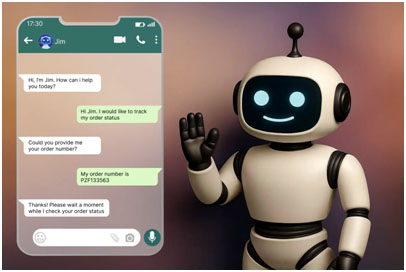
WhatsApp reshapes AI in messaging with its January 2026 chatbot ban. (Image Source: REVE Chat)
What is Changing in WhatsApp Business Rules?
Business API WhatsApp has always had a customer support feature, which enables businesses to use automated systems to get in touch with WhatsApp users. But the most recent version gives an unequivocal line:
General-purpose chat assistants, or those that are intended to have users hold an open-ended conversation, are not allowed as a core service on the API anymore.
Customer support bots, appointment reminders or order confirmations are examples of automation in a business which is still allowed under the rules.
According to Meta, the parent company of WhatsApp, the modification is meant to ensure that Business API remains business-oriented and does not become an open-ended chat assistant.
This will practically imply that chatbots that act as digital companions or general information assistants will cease to operate on the WhatsApp business infrastructure. This is a significant change to the daily users who have become used to chatting with chat assistants in their messaging windows.
The Exit of Copilot and Similar Services
The best illustration of this influence is the Copilot by Microsoft, that had been accessible to WhatsApp users. The possibility of Copilot integrating with WhatsApp gave people an easy-to-use method of conversing with an assistant within the messaging platform. However, because of the changes in the policy of WhatsApp, Copilot will cease to operate on this platform on 15 January 2026. Instead, users are navigated to the stand-alone web and mobile apps of Copilot.
The change will impact the users who found it convenient to have all their conversations in a single location – the main advantage of WhatsApp. Microsoft has recommended that users save any chat history that they wish to retain before the discontinuation date, since such sessions will not be automatically transferred to other versions of Copilot.
Meanwhile, other conversational assistants popular with users, such as third-party services, are being shut down due to the ban. This represents a more general restriction of interactions permitted in the WhatsApp ecosystem.

Microsoft’s Copilot exits WhatsApp on 15 January 2026, pushing users to its standalone apps as WhatsApp tightens chatbot access. (Image Source: CIOL)
The Reason Why WhatsApp is Doing This
The formal justification of WhatsApp’s ban focuses on the priorities in infrastructure and resources. According to the platform:
The Business API was not made to support high-volume interactive assistants but direct business-customer communications.
The provision of the general conversational services has resulted in volumes of messages that are higher than the initial purpose of the infrastructure.
It is intended to safeguard the quality and integrity of business communications by companies relying on the API in their basic operations.
In business terms, the imposition of tougher API regulations also favours the strategic orientation of monetising business relations at WhatsApp in a regulated manner. The company has also highlighted that the other types of automation that are directly associated with the business services are still acceptable.
Nonetheless, critics posit that the move has competitive and strategic questions behind it particularly considering the huge following that WhatsApp has around the world.
The Broader Competitive Debate: Competitive Power and Antitrust
The regulators abroad have been attracted to the policy change. The European Union has the Commission investigating whether the new rules of WhatsApp unfairly benefit the services of Meta or whether they cause distortion in competition of messaging and assistant services.
In the meantime, the competition regulator in Brazil stepped in and suspended the ban policy until it examines whether the ban imposes an unfair limit on competition. This move underscores the international issues regarding the dominance of third-party access to markets by big platforms.
The actions indicate that the discussion is not merely about infrastructure alone, but how the platforms strike the balance between control and innovation and whether their policies are favouring their own products over competitors unknowingly.
Practical Implication on End-Users and Companies
To users who are used to chatting with assistants within WhatsApp, the shift might prove to be shocking. The individuals will now be required to opt for external applications or web interfaces on services that they used to access without any problems in their chats.
In the case of businesses that created experiences with interactive assistants, the transition requires an adjustment. Firms that employed conversational technology to respond to broad questions will now have to reconsider the way they provide such automated support, perhaps by limiting it or switching to platforms where chatbots can be integrated better.
Simultaneously, the prohibition leaves room for the specialised business automation to flourish under the WhatsApp regulations. Order notifications and such support bots will remain permitted.
Messaging Apps Are No Longer Neutral Pipes
The WhatsApp chatbot ban makes this one thing clear: the messaging platforms no longer consider themselves neutral platforms of the digital discourse.
They now act as gatekeepers.
Over the years, messaging applications have branded themselves as open platforms that developers could creatively build on top of large pools of users. That era is fading. The relocation by WhatsApp is a sign of narrowing down on the kind of intelligence that can roam freely within the confines of conversations of privacy.
This is important since messaging applications have ceased to be mere chat applications. They are Web-based town squares, customer support desks, store attendants and, more and more, knowledge platforms.
WhatsApp is redefining the line between chatbots and computation by limiting general-purpose chatbots.

WhatsApp’s chatbot ban signals a shift from open platforms to tightly controlled digital spaces. (Image Source: remio)
Why This Strikes AI Platforms Even Bigger Than You Thought
The ban appears to be under control at first sight. There are other AI platforms in existence. Users can open apps. Browsers still work.
The root problem, however, is distribution.
Messaging apps provide the feature that AI applications have trouble mimicking:
Normal, routine, everyday access.
Individuals use WhatsApp at least dozens of times a day. They do not necessarily access standalone AI applications as often. In chats where assistants stay, they are part of everyday thinking – rapid questions, summary fast, random learning.
The elimination of such access shifts the trend of usage overnight.
In the case of AI companies, the result is not only technical loss. It’s behavioural.
In the absence of WhatsApp, assistants do not have a close connection to the real-life conversations of users, the specific setting that renders them so handy.
An AI Distribution Strategy Reset
WhatsApp’s decision makes AI platforms reconsider how they can reach people.
There are already three strategies that are emerging.
First-Party Apps Take the Centre Stage
The AI platforms are driving users to their own applications and websites. Front more aggressive feature releases, less messy interfaces, and closer integration.
The challenge is friction. This is because users are required to selectively open these applications, and not have them fall in their line of conversation.
New messaging platforms become a matter of interest.
Such apps as Telegram, Discord, and Signal now seem prettier.
Such services have long been bots and integrations permissive. Should they continue to be open like that, they might end up being centers of conversational assistants, particularly among technologically inclined users.
This results in a disjointed future in which various assistants exist on various platforms and not a single dominant channel.
Deep Learning AI Goes Into Operating Systems
The other change is not significant but very strong.
Rather than existing as part of messaging apps, assistants are now brought to the level of the operating system – built into phones, browsers, and productivity tools.
It skips messaging platforms altogether, yet it also changes the thinking of the users towards AI: not as a conversational partner, but as a background feature.
What Companies Must Learn in the Immediate Future
In the case of companies, the WhatsApp chatbot ban poses some form of urgency.
The conversational strategies constructed by many companies were based on the belief that messaging apps would be open. Such an assumption is no longer true.
Customer support should be made purpose-built.
WhatsApp does not entirely renounce business automation. However, this is only in the cases where it is a definite transactional intent.
That means:
Bots that offer customer service should remain attentive.
Unstructured discussions require some kind of structure.
Bots that are based on entertainment or knowledge are no longer applicable.
Responsive companies will succeed. The ones that depended on general chat experiences might not do well.
The Strategy of the Data Gains More Significance
By losing WhatsApp assistants, businesses lose the context of conversations.
This raises new questions:
Where does customer information reside?
How can you ensure continuity between platforms?
What is your approach to valuing privacy and providing personalisation?
The responses will influence customer experience practices in industries.
Why WhatsApp is Prepared to Take a Risk of Backlash
Opponents claim that WhatsApp will endanger both the users and the developers.
So why proceed?
Because control has value.
WhatsApp processes billions of messages every day. Universal chatbots contribute to the high rates of use that are not in line with the business priorities of the platform.
It also has a reputational aspect.
Open-ended AI discussions come with dangers – misinformation, misuse, and unpredictability. WhatsApp is minimising the exposure to the issues that it has no direct control over by constraining the roles of chatbots.
This is not an innovation restriction, as seen in the eyes of WhatsApp. It has to do with possession of the rules of engagement.
Control Will Define the Next Stage
The response of the regulator is the same as the policy.
Europe and South American Investigations indicate that regulators are keeping a close eye. The main question is one of those that are very simple and strong:
Is it possible to limit access through a dominant messaging platform to transform whole markets?
In case of a backlash by the regulators, WhatsApp might have to revise its rules or provide better avenues to the third-party assistants.
Regulators should not permit the policy to be in effect since other platforms can become emulated.
In any case, the results are going to affect the opening or closing of digital ecosystems, which is going to happen in the next several years.
A Cultural Change in the Usage of AI
There is a more human thing that is going on beyond policy and platforms.
Individuals are rethinking their relationship with AI.
Assistants are informal when they reside within messaging applications. Casual. Almost social.
They become meaningful when transferred to stand-alone tools. Intentional. Even transactional at times.
This changes expectations
Users start raising various questions. They do not consider AI as their chat partner, but more as a work assistant.
Such a slight change influences trust, creativity and involvement.

Shifting AI from chats to tools quietly changes how people trust, use and relate to it. (Image Source: Peoples Daily Newspaper)
This is What It Implies for the Future of Messaging Platforms
WhatsApp chatbot ban is a sign of a larger movement: the platforms are increasingly conscious of who can access them and how automated communication can be provided. Communication messaging is a strong network, and choices regarding the kinds of automation they embrace will affect all the experiences of support for online-commerce policies.
In the case of WhatsApp, by strengthening the original business intention of its API, it can simplify its workings and ease the system load. However, with the regulators and competitors coming into the picture, it is an issue that has been observed to be of great interest in the long run in terms of innovation and market competition.
The Bigger Picture: Control Vs Creativity
Fundamentally, the WhatsApp chatbot ban is a continued conflict in the technology world.
Control versus creativity.
Consistency versus dynamism.
Scale versus openness.
The messaging platforms lie at the heart of such tension.
Intelligence will be progressively determined on which side it should be and where it is not on the platforms as AI becomes more competent.
To users, businesses, and developers, it is obvious that the message is:
The principles of online communication are rewritten on the fly.
And the first early adopters will formulate the future.
Frequently Asked Questions (FAQs)
- Q: When will WhatsApp’s new policy take effect?
Ans: The new rule will be effective on 15 January 2026, after which general-purpose assistants will cease to work through the WhatsApp Business API. - Q: Will WhatsApp ban all automated bots?
Ans: Automation related to core business activities, such as support and updates, is still allowed. Only broad, conversational assistants are restricted. - Q: Are services like Microsoft Copilot still available to users?
Ans: Microsoft and other providers offer alternatives through standalone applications and web platforms. - Q: Why are regulators investigating this change?
Ans: Authorities in the EU and Brazil are examining whether the ban creates unfair competition, particularly favouring WhatsApp’s own services. - Q: What should users do about their chat history?
Ans: Users are advised to save or archive their conversations before the cut-off date, as chats will not automatically carry over after the ban. - Q: Does WhatsApp completely ban AI functionality?
Ans: WhatsApp continues to support AI features aligned with its internal roadmap and business use cases. The restriction only applies to generic third-party chatbots. - Q: Will Meta launch its own assistant?
Ans: Meta already integrates AI capabilities across its platforms. The new policy strengthens how it controls AI interactions within WhatsApp. - Q: Does this impact small businesses?
Ans: Businesses that rely on conversational bots for casual interaction rather than support will need to re-architect their workflows to comply with the new rules. - Q: Can WhatsApp reverse the policy?
Ans: That depends on regulatory pressure and market reactions. At present, the platform is standing firm. - Q: What should developers do next?
Ans: Developers should focus on purpose-driven automation, explore alternative platforms, and prepare for increased platform control across the industry.