
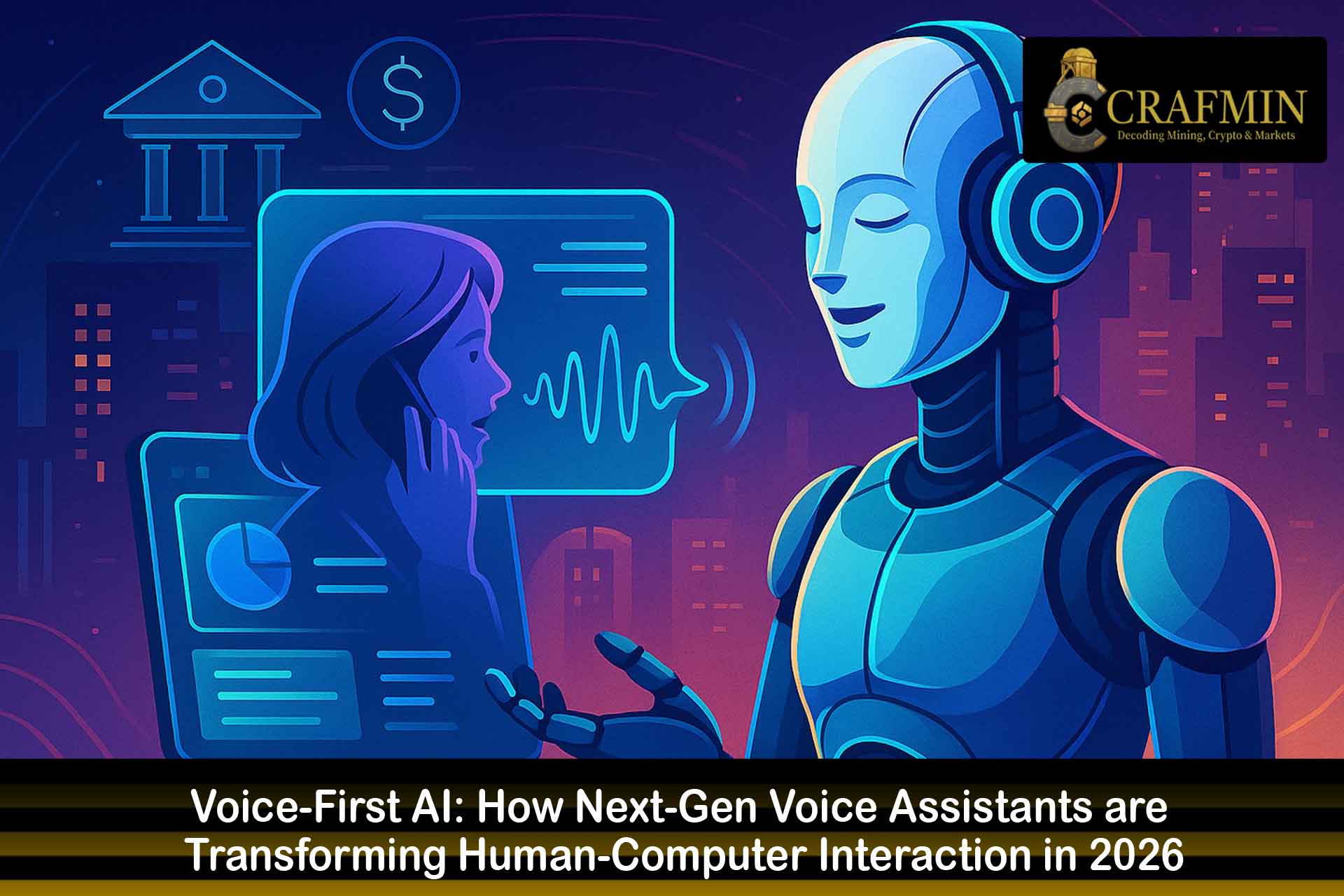
Voice-First AI: The Next Generation of Voice Assistants
The shift is already here. The typing paradigm is no longer the primary way humans interact with computers. Whether in homes, offices, vehicles, or public areas, interaction increasingly begins with voice. Voice-first AI is no longer a product in development; it is a reality that works in the present.
In 2026, voice assistants can respond to complex interrogations. They engage in real conversations and respond with relevance, unlike the robotic answers of the past. They no longer require rigid instructions; they listen and respond according to their interpretation of user intent. This marks a major turning point in human-computer interaction. (mihup)

By 2026, voice-first AI can handle complex questions and natural conversations, reshaping human-computer interaction. (Image Source: Forbes)
The Essential Definition of Voice-First AI
Voice-first AI is not merely “voice-enabled” AI. It is a system where voice takes precedence. The default input system is speech, followed only then by screens, keyboards, or touch. Humans speak naturally without having to adapt their patterns for machine understanding.
Modern voice assistants understand:
- Pauses and self-corrections
- Tone and emotional intent
- Context across follow-up questions
- Changes in intent mid-sentence
Interacting with these systems feels more like having a personal assistant than commanding a machine.
Why Voice-First Technology is Surging Now
Several trends are driving the incorporation of voice-first AI into mainstream culture:
- Advanced Language Models
Current models allow for almost-human speech recognition. They understand nuance, slang, and dialect rather than just literal words.
- Natural Voice Synthesis
Voices no longer have a computer-like quality. They communicate with natural dialogue, rhythm, and accuracy.
- Hardware Advancement
Improved microphones and reduced latency allow for seamless interaction. Critically, systems can now process speech locally, addressing significant privacy concerns.
- Frictionless User Experience
Users are moving away from tapping and navigating complex visual interfaces in favor of the immediate, frictionless experience that voice provides.
Commands vs Conversational Phrasing
The first voice assistants required strict formats and memorized phrases. That phase has passed. Today’s voice-first AI understands the intention behind rambling, casual, or self-interrupting talk.
- The Old Way: “Set alarm for 6 AM.”
- The New Way: “Wake me up early tomorrow. I have a flight.”
The assistant infers the time, confirms the details, and adapts. Voice has been transformed from a tool into a complete interface.
Ambient Computing is Real
Voice-first AI enables ambient computing, where technology becomes invisible. It simply waits to be activated without the need to open an application or unlock a screen.
- At Home: Lighting and music vary according to casual conversation or mood.
- At Work: Virtual assistants schedule meetings, summarize conversations, and search documents without disrupting the flow of a meeting.
The experience is natural because it mimics real-life human behavior.

Voice-first AI enables natural, screen-free control of tasks at home and work. (Image Source: Coderio)
How Voice-First AI Changes Daily Experiences
At Home
Smart homes are now responsive to intention rather than just instruction. A remark like “This room is too bright” triggers a soft ambiance change. “I’m having difficulty sleeping” can signal the system to dim lights, reduce temperature, and play ambient noise.
At Work
Professionals can speak about ideas as they think them. Voice AI can auto-create reports, optimize emails, or summarize meetings in real-time. This reduces the cognitive load, allowing individuals to concentrate on strategy rather than formatting.
On The Move
In-car voice integration has become the primary interface. Drivers can inquire, direct the vehicle, and transmit messages without looking away from the road, significantly increasing safety.
The Human Advantage of Voice-first AI
Sound carries emotion: urgency, confidence, and frustration. These elements are erased in text but interpreted by voice-first AI. This emotional intelligence allows for meaningful, less robotic communication. It helps explain why adoption rates are accelerating; the technology assists the user when they are stressed and adapts its delivery based on the situation. (nice.com)
some thoughts on human-ai relationships and how we’re approaching them at openai
it’s a long blog post —
tl;dr we build models to serve people first. as more people feel increasingly connected to ai, we’re prioritizing research into how this impacts their emotional well-being.… pic.twitter.com/ACDMEKGv19
— Joanne Jang (@joannejang) June 5, 2025
Accessibility Stops Being an Afterthought
Voice-first technology completely alters the digital landscape for:
- People with visual or motor impairments
- Those with lower literacy levels
- Seniors who prefer not to learn complex new visual interfaces
- Children who can interact naturally without being taught
Voice is becoming the most inclusive interface ever implemented at scale, making technology accessible for everyone, not just the tech-savvy.
Enterprise Adoption: From Novelty to Productivity Engine
Business operations now revolve around voice agents. Companies use them for customer support, lead generation, and technical assistance. Market analysis suggests conversational platforms will grow from USD 20 billion in 2025 to nearly USD 161 billion by 2033. This trend allows employees to focus on creativity and human problem-solving while AI handles repetitive data entry and routing.
Healthcare: Saving Time and Lives
Healthcare is a high-risk, time-sensitive field. Professionals now use voice assistants to document patient details during consultations, summarize key details, and ensure clinical guidelines are followed, all without turning their backs on the patient to type into a computer. For patients, these assistants provide medication reminders and symptom monitoring, offering a huge advantage for senior citizens and those with limited mobility.

Voice assistants streamline healthcare, aiding documentation and patient monitoring. (Image Source: MDPI)
Retail And Commerce: Talking to Buy
Voice commerce allows consumers to find items, compare prices, and complete transactions through speech alone. Voice-optimized retailers see higher conversion rates because voice search is more intent-driven. Browsing becomes buying through simple requests like, “Please order almond milk to be delivered tomorrow.”
Supporting Multiple Languages and Inclusive Interaction
In multi-lingual regions, modern voice systems can switch between English, Mandarin, Hindi, and local languages without interrupting the discussion. This flexibility increases the user base and facilitates communication that is culturally embedded and inclusive.
Ethics, Privacy, and Trust
As voice assistants become ubiquitous, questions about “always-on” microphones and data storage are paramount. Trust is the deciding factor in adoption. Developers are addressing this through:
- Local Processing: Handling voice data on the device rather than the cloud.
- Consent Policies: Giving users granular control over what is stored and for how long.
- Transparency Reports: Clear disclosures about how data is handled.
Governments are also legislating safety and transparency, ensuring voice-first technology moves beyond experimental policies into a mature legal framework.
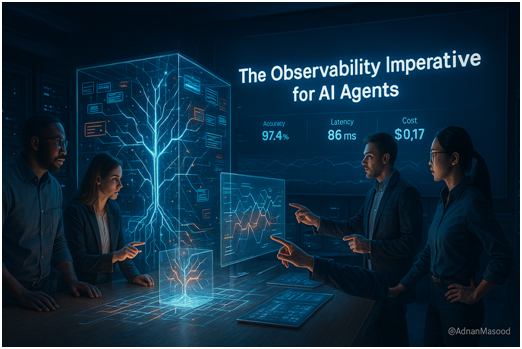
Voice assistants build trust through local processing, consent, and clear data policies. (Image Source: Medium)
Challenges: Why Voice is not Yet Universal
Despite progress, constraints remain:
- Public use: People are often hesitant to speak to devices in public spaces.
- Speech barriers: Accents, speech disorders, and rapid language-switching still pose technical challenges.
- Visual necessity: Some tasks remain better suited for screens where precision and visual confirmation are required.
Also Read: AI-Powered Smart Homes Failing in 2025: Risks of Generative AI
The Future: What Voice-First AI Does Next
By 2030, voice interfaces could be more intuitive than languages are now. Homes will anticipate demands before they are expressed, and offices will respond to spoken strategy. Voice will become much more than a way to command machines; it will be the way we partner with them, making technology more human, intuitive, and ultimately, ubiquitous.
Frequently Asked Questions
- Can Voice Agents Replace Touch Interfaces?
Ans: Voice is excellent for conversation and intent, but it works best in conjunction with screens in scenarios where visual data or precision is required. - Are Voice Systems Secure for Banking?
Ans: Through biometric voice recognition and improved encryption, voice payment systems are becoming highly viable and secure. - Can Voice Assistants Work Offline?
Ans: Many assistants now process elementary tasks on-device, ensuring functionality and privacy without a constant internet connection. - Will Voice Typing Replace Keyboards?
Ans: Voice will dominate most casual and navigational applications, but keyboards will remain essential for high-precision professional work and long-form writing. - Does Voice-First AI Always Listen?
Ans: Most systems listen only for a specific “wake word.” Modern designs prioritise local processing so that your daily conversations are not uploaded to a server. - Can Voice-First AI Remove Screens?
Ans: It reduces the dependence on screens for initiation, but screens remain useful for displaying graphics, summaries, and complex visual confirmations. - Would You Like Me to Research Specific Hardware Requirements for On-Device Voice Processing in 2026?
Ans: Optional, could be explored if needed for advanced planning or development purposes.