

Cambridge now has an enormous AI revitalisation.
In 2020, the government of the UK is investing £36 million to make the Cambridge supercomputer, DAWN, six times larger by spring 2026. The idea is simple: the UK researchers and start-ups can access the best AI chips free of charge with the help of the AI Research Resource (AIRR).
This headline will strike your calendar if AI is one of the components of what you create. It changes what you can ship. It changes what you can test. It changes who can compete.
It arrives at a time when adequate computing power is the primary issue that all people shun.
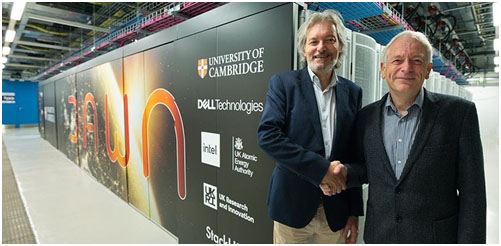
Cambridge’s DAWN supercomputer is getting a major upgrade: £36m to scale it 6× by spring 2026, giving UK researchers and startups free AI compute via AIRR, a big shift at a time when GPU access is the bottleneck. (Image Source: Data Center Dynamics)
What is Happening Now
The following are the main facts, to the point:
- The sixfold growth of the Cambridge supercomputing capacity, dedicated to the project of the supercomputer, and which is planned to increase to up to 36 million pounds, will be directed to the expansion of the supercomputer, aimed at being sixfold by spring 2026.
- The new power is available through AIRR, the national initiative which provides free supercomputing to UK researchers, small and medium enterprises, and start-ups.
- The upgrade will introduce the latest AMD MI355X to AIRR access, the first time offered by Dell Technologies.
- This is part of a bigger scheme in the eyes of the government: public computer infrastructure worth more than 2 billion pounds, a target of 20 times the AIRR by 2030 and a proposed national supercomputer in Edinburgh.
- DAWN already serves over 350 projects, including personalised cancer vaccine tools and environmental models.
That is the announcement.
This is what it begins, now the interesting part.
The Silent Fact: AI Development is After Access to GPUs
Throughout the years, AI news is full of models, chatbots and discoveries.
Real work teams are more concerned with how many GPU hours they receive.
Good founders possess ideas that exhaust themselves. The ability to do one more experiment to modify a product. The ability that will transform a promising prototype into a functioning system capable of dealing with a load.
This is why the upgrade of the DAWN is important, not just at Cambridge.
It transforms computing into a social benefit.
AIRR was established to address a fundamental shortage of community-based computing to do AI research in the UK. It might sound too bureaucratic, however, it suggests that when calculating remains a preserve of big-tech budgets, the innovation can become a members-only club.
This investment attempts to open up the door.
I’m reading NVIDIA’s new paper and its wild.
Everyone keeps talking about scaling transformers with bigger clusters and smarter optimizers… meanwhile NVIDIA and Oxford just showed you can train billion-parameter models using evolution strategies a method most people wrote off… pic.twitter.com/5YhGwLJ03m
— Millie Marconi (@MillieMarconnni) November 27, 2025
The Reason Behind the Use of AMD MI355X Within the Headline
The bulk of the readers will pay attention to the fact that it is six times stronger. That’s fair.
The keener spot, however, is the change of chip.
According to the government release, users of AIRR will receive AMD’s latest MI355X chips, which are the smartest AI processors installed with Dell.
This has significance in two aspects.
First: it incorporates hardware options. That means resilience. According to the release, the move enhances UK computing resilience by diversifying the technology on which the national infrastructure is based.
Second: it transforms the appearance of work. Various accelerators, various tools, various performance. To certain teams, that is a challenge. It is a sweet spot to others- particularly when it is optimised early.
And to researchers, it is a sign that the UK is interested in remaining competitive not only by purchasing more chips, but also by expanding the range of things that its AI ecosystem can execute.
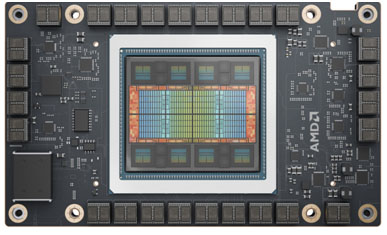
The “6×” headline grabs attention, but the real twist is the hardware: AIRR users gain access to AMD MI355X chips via Dell. It boosts resilience by diversifying the stack and reshaping what teams can run and optimise. (Image Source: Tom’s Hardware)
What DAWN Is Constructed To Accomplish, Interior
DAWN is not simply a supercomputer. It lies at the intersection of AI training and scientific simulation, climate, medicine, physics, and materials.
Docs which are part of AIRR also refer to the Dawn facility as a joint venture between Cambridge, Intel and Dell at the Cambridge Open Zettascale Lab, which is constructed with 1,024 Intel Data Centre GPUs of Max 1550.
Technically, a typical Dell PowerEdge server, with Intel Xeon processors, massive RAM, numerous Intel GPU Max cards, and a high-speed interconnect, gives you a typical D deployed as a DAWN node.
Why A Non‑Expert Should Care?
Since this mixture will be created in the sloppy reality of the present-day AI practice:
- You train models
- You run tests
- You process huge data sets
- You model complicated systems
- You attempt until you become sure that the results are no longer deceiving you
DAWN is designed to deal with such grind.
One of its features is free access, but not free-for-all.
It is not open hacking where anyone would log in and train a frontier model.
AIRR is structured. It has routes. It has rules.
According to AIRR guidelines, the projects have to be conducted in the UK and are targeted to bring benefit to the UK.
It then provides access paths, which include:
- Quick Start to micro/small/medium organisations located in the UK, where the total number of GPU hours available is not more than 20,000 and should be utilized within 3 months.
- Introducing a gateway to benchmarking and first-time users, up to 10,000 GPU hours in 3 months.
This underestimated superpower of the plan: it attempts to make national computing usable in the next year or so, not in two.
For a start‑up, time is oxygen.
To a researcher with research on a grant schedule, it is the gap between publishing and stalling.
The Oxford- Cambridge Corridor Angle is Not Purely Politics
In the government press release, Cambridge is located within the so-called Oxford-Cambridge corridor, which makes it a great science and innovation zone.
Roll your eyes if you want. It still shows real talent.
As computing expands somewhere such as Cambridge, it generates pull:
- Scholars remain domestic rather than exporting tasks to foreign countries.
- Labs and spin-outs are the basis of start-ups.
- Larger companies set up projects in their surroundings.
- Support roles are duplicated: engineers, product, data governance, compliance, ops.
This is the place where the term jobs comes in as though it is not a point to make.
Since AI roles do not imply the existence of jobs called a prompt engineer or an ML scientist.
They mean infrastructure. They mean systems people. They refer to the individuals who understand how to make models fast, safe and practical in the actual sense.
It is more than a sixfold increase that benefits the users of DAWN.
It expands the number of people required to utilize it.

More computing in Cambridge creates gravity: talent stays, startups spin out, big firms cluster, and AI infrastructure roles grow. (Image Source: BBC)
The Reason This Action Comes at This Point: The World Computer Crunch
Governments around the globe take computing as a valuable infrastructure.
Not because it is a good thing to say in speeches.
Due to the increased reliance on AI power on high-speed hardware and energy.
In 2025, Reuters reported that Britain had big plans to increase its computing infrastructure, aiming to increase public computing capacity twentyfold in five years, adding such large systems as Isambard AI and Dawn to AIRR.
The current DAWN news release is no exception: the development of the public capacity, rendering it applicable and affordable in the UK.
Real-Life Effects: What DAWN Allows People to Do in This Year
More than chips are discussed in the press release. It shows results.
DAWN helps work that aims at:
- Devices that assist physicians in the detection of diseases at an earlier stage.
- Smarter technology, which reduces waiting times and enhances services.
- Improved weather forecasting of extreme weather.
These objectives are far-fetched since they are general.
However, this is the definite fact: computing allows you to execute more experiments, on larger data, more frequently.
This is the way medical imaging models are enhanced.
It is in that way that environmental models become finer.
That is how the services pass through an initial stage of piloting to work under pressure.
And that is why the fact that the phrase is six times more powerful is the most important to the people working on the job.
It gives them more cycles. Literally.

It’s not just chips. Its outcomes: earlier detection, better services, sharper weather models. “6×” means more computing cycles, fast. (Image Source: Riseapps)
How Start-Ups Should Proceed Next (Then They Will Get a Share ff This)
You are constructing in the UK, take this as a disguised opportunity to fund using infrastructure.
Free compute is a grant that provides the ability since it is a grant.
A smart move looks like this:
Select the workload that is being held by expense. Training run? Fine‑tuning at scale? Synthetic data generation? Evaluation sweeps?
Formulate a concise project narrative with UK benefit inculcated. AIRR specifically requests delivery in the UK and benefits in the UK.
Choose the right route. Rapid Access could be suitable in case you are in the initial stages and require speed. Gateway can be used in case you are benchmarking and testing.
Evidence design. The application is clearer when you can demonstrate: baseline, compute plan, measurable outcome. This does not sound clever. It is about demonstrating that you will spend limited country resources not in vain.
The New Headline Currency Is Now Compute
Money still matters. Talent still matters.
However, in 2026, the fastest teams succeed since they can perform the most useful experiments – the tedious ones: ablation experiments, the safety checks, robustness tests, evaluation sweeps, re-training, and repeating.
Air is computed using that work.
When the UK opens up public computing, it makes a difference in the fortune of the individuals who are usually budget losers.
The growth of DAWN would be part of a national strategy to grow AIRR by twentyfold by 2030, and join up a broader ecosystem of compute with up to £2 billion of government funding.
The DAWN story is trending for this reason.
It’s not a gadget launch.
It is infrastructure that is becoming tenuous.
The Employment Narrative No One Has Told Right
When politicians mention jobs, people envision some researchers and a bit of glittering new graduate jobs.
That is not the way compute-led growth comes.
It manifests itself in the form of a newly found need in individuals capable of operating AI in large scale, as opposed to talking about it.
This is what comes to mind when a large computing resource is added:
- Systems and platform roles. Individuals who maintain clusters are lean, quick, safe and economical. Consider: HPC engineers, SREs, platform engineers.
- Unglamorous data work (that makes models real) Data governance experts, data engineers, privacy and privacy experts. The creators of the training data make it legal, clean, and useful.
- Applied ML roles, not “build a model and demo it”. More similar: ship it, monitor drift, stop regressions, maintain low latency, minimise hallucinations, minimise bias.
- The “translation layer” includes product managers, subject matter experts, technical writers, and policy/compliance employees. Individuals transform ability into results in health, climatic, production, and civil services.
DAWN already provides support to hundreds of projects, and health and environmental modelling are the areas of real application that are in focus for the government.
A sixfold escalation does not merely assist such projects to execute quicker.
It draws additional projects into the orbit.
And all additional projects generate work positions.
The Rationale Behind the Sudden Practicability of Sovereign AI Compute
Sovereign AI may sound like a company slogan.
But computation makes it real.
By purely depending on foreign infrastructure, a nation can be vulnerable to:
- Price shocks
- Limited supply access causes a squeeze
- Exposure to export controls
- Too many eggs in one basket (concentration risk)
The government describes the upgrade of the DAWN as resilience, which involves diversification of the technology on which the national infrastructure depends.
This is also the reason the information related to AMD MI355X is important: it demonstrates the strategy that is not based on a single-vendor future.
This is not anti‑global.
It is pro‑options.
And alternatives are important when all serious AI strategies are eventually turned back on the same wall: compute availability.

Sovereign AI becomes real when compute is the choke point. DAWN’s upgrade and the AMD MI355X shift signal resilience: more options, less reliance on one supplier.
DAWN Isn’t Alone. The UK is Building a Network
DAWN is the Cambridge node.
However, AIRR is not a single supercomputer but a network of advanced supercomputers.
The story is set on two massive reference points now:
Isambard -AI (Bristol): the big puncher. According to AIRR, the UK has the strongest public compute facility in IsambardAI, which is based on Nvidia GH200 Grace Hopper superchips. University of Bristol refers to it as a significant national facility, created with HPE and NVIDIA.
The upgrade of Cambridge DAWN does not compete with Bristol. It complements it. Different stacks. Different strengths. More routes for users.
Edinburgh: the second national-level jump. A national supercomputer is confirmed in Scotland, with up to £ 750 million funded by the government. Edinburgh is also a confirmation that the system will be hosted in the university.
Add those and you are the actual play: A compute backbone that executes annually through AIRR, and Cambridge is currently boosting at the rate of year-on-year improvement as the immediate-term capacity injection.
The Energy Question: The One Everybody Mumbles Over
Each compute upgrade is followed by a silent follow-up: What is the source of power?
Electricity is not the only thing that supercomputers require. They are very heavy on the grid, require cooling, back-up power, and planning.
The compute roadmap of the UK discusses a joined-up ecosystem. That is important since you cannot increase computing power unless you stack energy, data-centre space, and infrastructure.
Here, the story becomes a reality to the masses.
Due to the fact that AI is not in the cloud.
It inhabits physical buildings, which consume power on a second-by-second basis.
The positive scenario is that even larger public computing will also enable:
- Improved energy-efficiency criteria.
- Wiser scheduling and work balance optimisation.
- More transparent reporting on its use and its accomplishment.
- Enhanced investment planning of research-grade infrastructure.
And that is the distinction between hype and real national ability.
What It Means to Startups, at This Moment
DAWN upgrading would be an opportunity that you can use if you are running a UK startup.
But only if you act early.
There is no free buffet in AIRR access. It operates by a set of routes and eligibility criteria and it anticipates that projects must be based in the UK and should be beneficial to the UK.
The Founder Playbook (Strauss, Simple, Effective)
Select one compute-blocked milestone. Not “build the best model”. Select something to measure: accuracy improvement, reduce latency, execute a safety test, retrain entirely, or a product-grade benchmark. A plan for a design ofan experiment to demonstrate that you use computation well. An efficient plan is written in the form of an enthusiastic checklist rather than a pitch deck.
Take advantage of the access routes. Guidance on AIRR given by UKRI includes structured routes (such as Rapid Access guidance on GOV.UK). The access page of Cambridge itself is also telling that Rapid Access targets UK-registered SMEs to do early-stage work, with up to 20,000 GPU hours within 3 months.
Consider free compute as an extension. Calculating can be a non-productive item that slows the growth. AIRR allows you to use that money on people, data quality and product and at the same time run serious workloads. That is a competitive edge.
What It Implies to Researchers: Fast, Large and Less Compromises
There are compromises that are usually made by research teams not reflected in the final paper: reduced number of model versions, reduced-size data sets, reduced numbers of repeats, short-circuiting of evaluation, and postponed safety work.
Those trade-offs are minimised by increased capacity.
And since DAWN already works with large-scale projects, government cites healthcare and environmental modelling, scaling it up would make it more likely that research would come to fruition quicker.
In addition, according to the own page of DAWN, it is among the fastest AI supercomputers in the UK and was constructed in collaboration with Cambridge, Intel, and Dell.
That is important since large research issues do not easily fall under a single discipline anymore.
They are located at the intersection: AI + medicine, AI + climate, AI + materials, AI + safety.
The common denominator is compute.
The Present-Tense Plot: Why This Point Seems a Turning Point
This is what makes the DAWN upgrade a change to ordinary news of funding:
- An obvious immediate schedule: Spring 2026 is near enough to schedule.
- The promise of direct free access: Not merely capacity. Researcher and start-up usability.
- A more national strategy, which already possesses form: Twenty-fold expansion by 2030, and the national system of Edinburgh.
That is why its attention is tracked by people in the UK AI scene.
It’s not theory.
It is an infrastructural change that alters what is constructed next.
The Bottom Line
The upgrade of DAWN gradually swears aloud:
In case you are capable of creating something useful, and it works, you do not require Silicon Valley capital to become serious about computing in the UK.
That changes the centre of gravity.
It transforms Cambridge not only into a place where AI talent is educated, but also a place where AI talent gets employed.
And the race of AI computing in the UK looks to be more than a slogan. It resembles a map to follow: Cambridge here, Bristol there, Edinburgh there–sewed up with AIRR, and the capacity is increasing at such a rate that it counts.
Frequently Asked Questions (FAQ)
- Is the DAWN supercomputer upgrade underway?
Ans: The UK government announces a £36 million upgrade on 26 January 2026, with added capacity expected by spring 2026. - Who can use DAWN through AIRR?
Ans: UK researchers, SMEs, and startups can apply through AIRR. Projects are expected to be UK-based and deliver UK benefits. - Is AIRR really “free”?
Ans: AIRR offers free compute access for eligible UK users, but it comes with rules and limits (including GPU-hour caps). - What chips are being added?
Ans: AIRR users gain access to AMD MI355X accelerators integrated into DAWN. - What does the DAWN upgrade mean in simple terms?
Ans: It’s a major scale-up of Cambridge’s AI supercomputer, making high-end computing more available to UK researchers and startups via AIRR. - When will the upgraded DAWN capacity be available?
Ans: The government says the extra capacity will be ready by spring 2026. - Who can access DAWN via AIRR, specifically?
Ans: AIRR targets UK researchers, startups, and small businesses, with access granted through defined routes and eligibility criteria. - How many GPU hours can startups get through AIRR Rapid Access?
Ans: Up to 20,000 GPU hours for UK-registered SMEs, typically for early-stage AI product development. - What’s the difference between DAWN and Isambard-AI?
Ans: AIRR includes multiple systems. Isambard-AI is based in Bristol (Nvidia GH200), while DAWN is based in Cambridge (Intel GPU Max), now expanding access and capability. - What’s the relationship between DAWN and Isambard-AI?
Ans: They’re both part of AIRR’s national compute network, serving different workloads and expanding overall UK capacity. - Why is the UK investing in public AI compute?
Ans: The UK plans to build national capability and resilience—scaling AIRR significantly and backing major compute infrastructure, including a new national supercomputer in Edinburgh. - What’s the bigger trend behind this story?
Ans: Governments increasingly treat AI compute as strategic infrastructure. The UK is scaling public supercomputing via AIRR to speed up research, innovation, and real-world deployment.