

Privacy-focused cryptos are leading the pack in the first few days of November 2025. Zcash has experienced a resurgence in its position as a market leader in the industry, following a wild ride in terms of pricing movements. Other privacy-focused cryptocurrencies, such as Dash or Monero, are registering double-digit gains.
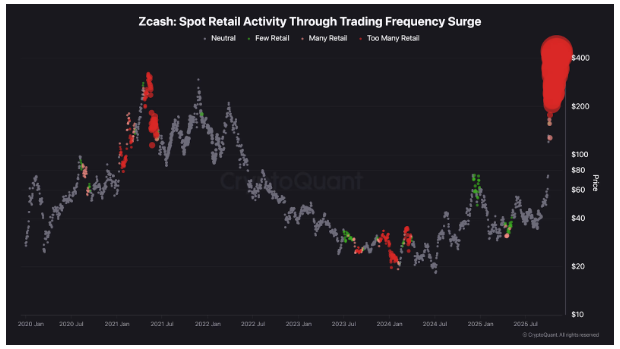
Analysts point to technical causes, improvements to platforms, or simply market demand for anti-surveillance instruments as some of the forces driving these trends. (fxleaders)
Privacy coins are surging in early November 2025 as demand for stronger financial privacy rises. (Image Source: CoinDesk)
Why It Matters Now
It’s not a quiet altcoin pump that dies after a day. “The shift has reallocated a portion of on-chain transaction flow into ‘shielded’ transactions, which has forced exchanges, wallets, and regulators to rethink how to categorize these ‘privacy’ transactions,” which leads to new risks for investors.
- Market rotation & speculative flows: Traders are chasing asymmetric gains. Privacy coins’ recent technical breaks attracted momentum traders.
- Protocol-level drivers: Network events surrounding Zcash and upgrades for Monero have increased the adoption rate for privacy.
- Regulatory and Geopolitical Concerns: The concerns related to surveillance, censorship, or capital controls are driving some users to demand more privacy.
Storytelling: A Moment In The Market
Imagine a late September afternoon where Bitcoin and major altcoins are nearing sideways trading, with a few privacy altcoins consolidating quietly. Then come a few technical breakouts, which catch the interest of short-term traders. Liquidity follows price, and a common thread begins to emerge on social media that of ‘privacy revival.’ A previously overlooked project like Zcash finds itself caught up in that thread due to increased interest in its ‘secret’ transaction feature.
“It sounds like a typical market rotation,” but one with real-world themes. Users living in areas of concern for surveillance are presented with a value proposition for “coins which secure sender, receiver, and amount.”
In-Depth Analysis: The Differences In This Cycle: Zcash, Monero, Dash
Zcash
Indeed, the rally experienced by Zcash has been quite extraordinary, having shown a huge increase in recent weeks, with data indicating increased usage of shielded addresses. For some traders, there are now two narratives to the ZEC story. These include those related to stories of scarcity based on supply-side events (halving or adjustment to emissions), plus improvements due to wallet functionality, which uses shielded transactions.
Monero
Monero remains the privacy leader, privacy enabled by default for all transactions, with development efforts that improve anonymity and resist surveillance. The Monero community has been quite active in terms of privacy-related governance decisions, proposals (such as managing or booting off “spy nodes” suspected to be surveillance-related), which are vital to investors who are keen to see sound long-term development in privacy technology.
Dash
Dash’s resurgence has little to do with complete anonymity (Dash’s privacy features are optional) but more to do with market sentiment and a revived interest in traditional privacy-focused projects. As funds flowed into the industry, Dash was able to ride momentum back to multi-year price highs.
On-Chain Events & Technical Triggers
A few metric data points tracked the move: increasing backed transaction ratios for various tokens, liquidation spirals due to short squeezes, and increasing interest in derivatives related to industry names. Technical components to note are breakouts within weeklies, increasing open interest (and delistings, which pushed pairs to DEXs), both of which pushed pairs into this move. Notice was taken of the halving event, touted to supply a string to the bull’s bowling ball for Zcash.
The Regulatory Crosswinds (Keep A Close Eye)
Privacy coins are found between innovation in finance and compliance burdens. As innovation gains momentum again, privacy assets are back in focus. The following are expected to happen in the near term between regulators and exchanges:
- Stronger KYC requirements for elevated charges on-ramps related to privacy pairs.
- Forces affecting custodial services to refrain from cooperating with shielded transactions.
- More discourse in public policy circles regarding the line between privacy technology and illicit finance.
- These are not hypotheticals. History in the sector shows that after liquidity comes scrutiny. Researchers or service providers must consider both promises and realities.
The institutional cycle is here.
Every major bank is now in crypto
But it looks like they’re all hitting the same wall
23 institutions and 5 different use cases, yet the chart doesn’t show one thing: none of these actually work at scale without privacy:
> trading: competitors… pic.twitter.com/CYTwQP04Ai
— Sandy Peng (@Sandypeng) November 7, 2025
Investor Playbook: Fast, Cautious and Pragmatic
When weighing putting money into privacy coins, you should think along these lines:
Position sizing: Limit exposure. Volatility can reverse rapidly.
Due Diligence
Verify the following:
- Exchange custody policies supporting shielded modes
- Wallets supporting shielded modes
On-chain cleanliness: if you use privacy functionalities, you need to know wallet security best practices.
Regulatory alert: monitor announcements made by large exchanges and local regulators. A delisting can destroy market liquidity.
Exit plan: Establish specific profit or loss limits to stick to.
These are tips for traders as well as investors, a reminder that privacy-related tech listings are a mixture of both narratives and fundamentals.
A Perfectly Competitive Market Represents an Industry Where There Are No Guaranteed Winners
Not all participants reap benefits in these arrangements. In situations where interest increases, speculators, those who supply liquidity, or software companies integrating privacy functionality stand to benefit. On the other hand, custodial exchanges failing to accommodate privacy functionality risk a possible decline in trade or earn favor with regulators. Users in jurisdictions with strict surveillance or capital controls find privacy functionality useful. In regulated financial sectors, functionality poses compliance requirements.
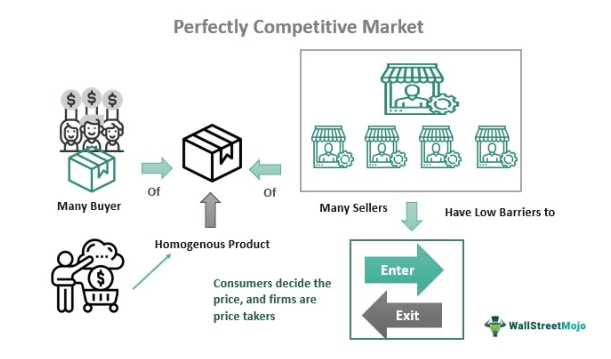
Privacy features aid traders and users but pose challenges for exchanges and compliance. (Image Source: WallStreetMojo)
Common Misreads: What’s Gone Wrong
“Privacy coins = crime.” That’s not very informative. Privacy technology serves a clear good like other domains: finance, communications for dissidents, or transactional independence. Not everything happening in those realms does so illegally.
“All privacy coins are alike.” They are not. Some are optionally privacy-focused, while others are privacy-focused by default. That’s an important difference for regulation and user experience.
Technical Deep Dive: How Privacy Features Work
Privacy coins use a variety of cryptographic methods to achieve anonymity. These methods are used to achieve varying trade-offs between privacy, auditability, and compliance.
Shielded Transactions (Zcash)
One thing to note is that “Zcash implements zero-knowledge proofs (zk-SNARKs), enabling payment transactions to prove validity without revealing transaction details or transaction participants’ identities. These features allow money to go into a “shielded pool,” where transaction data remains hidden unless made public manually. There are indications that there was increased use of shielded pools for ZEC in relation to the run in November 2025. (z.cash)
Ring Signatures & Stealth Addresses (Monero-style)
Monero blends its outputs using ring signatures to conceal which input made a payment. In addition to that, Monero uses stealth addresses, which ensure that the payee’s address does not appear on the blockchain. Monero’s system enhances privacy because all its transactions are opaque. It was pushed by the Monero community to implement a security patch in early November 2025 to improve protection against surveillance.
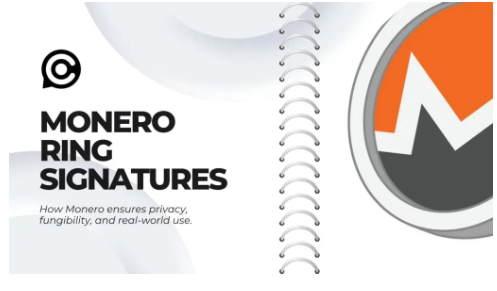
Monero keeps transactions private, with a November 2025 update enhancing security. (Image Source: Our Crypto Talk)
Optional Privacy And Mixing (Dash, CoinJoin)
Other currencies make privacy optionally available. Dash comes with an optional PrivacySend blending feature. Bitcoin privacy options include CoinJoin methods used in conjunction with a wallet. Making privacy optionally available seems easier to cater to custodial wallet providers, but less helpful to users who need to exercise good operating procedures.
What’s In A Wallet?
Dealing with privacy assets calls for a three-level thinking approach: ‘key’ thoughts, ‘software’ thoughts, ‘behaviour’ thoughts
Self-Custody Solutions
Self-custody (your keys, your wallet) offers maximum privacy control. In a custodial market, regulators can enforce KYC/AML, restrict shielded transaction options, or remove privacy coins. During the November 2025 wave, some custodial markets hardened requirements related to shielded transactions, but self-custody increased. Always check the market policy before you trade. (bitpay)
Wallet Features To Prefer
- Default shielded support (ZEC specific): The use of the wallet’s default shielded output increases privacy because the error introduced by the user is eliminated.
- Hardware wallet compatibility attributes to maintaining private keys offline whenever possible.
Coin-specific Best Practices
For Monero users:
- They are advised to run trustworthy nodes or use reliable nodes remotely.
For Zcash users:
- They should know when funds are entering or leaving shielded pools.
Operative Hygiene
- Do not reuse addresses or allow address linking for public profiles.
- Isolate privacy-sensitive assets.
- When using or blending assets, metadata exposure through bridges or cross-chain trades must be carefully considered.
Custody & Compliance: Real Choices
Custodial providers are confronted with three real choices when there’s a dramatic increase in privacy coin volumes:
- Support fully. Some exchanges allow deposits/withdrawals, but with restrictions related to shielded transactions or the need for enhanced KYC.
- Partially support (trading only). The service can allow pairs but not withdraw to hidden addresses. This serves to not expose them to privacy flows but annoys privacy supporters.
- Delist or block. Under pressure from regulators, platforms can opt to delist privacy assets completely. Delisting can drastically reduce market liquidity, enabling a possible consolidation in decentralized markets.
As an investor, you must believe that there are possible sudden changes in custodial policies. In case you are holding privacy coins, you need to have an exit strategy according to your risk threshold.
Shielded token standards is 5% of a solution.
Chainlink Confidential Compute unlocks a new class of private smart contracts that connect to real-world financial data and Web2 systems and interoperate across blockchains while keeping proprietary data, business logic, external… pic.twitter.com/oY5sjaoVN0
— Fishy Catfish (@CatfishFishy) November 8, 2025
Region-By-Region Regulatory Map (What To Watch)
Regulation poses the largest non-technical risk to privacy coins. Below is a brief snapshot up to November 2025of what’s happening or will happen next in each major world region.
United States
The US continues to tighten requirements for VASPS and AML compliance. Privacy features are repeatedly identified as a high-risk aspect for money laundering. There will be enforcement against those who are not yet compliant. Privacy functionality has already been curtailed for some US-facing custodians.
European Union
The EU progresses into a harmonized regime that looks into travel rules implementation and data protection. The EU’s EDPB deliberated upon its blockchain guideline. In fact, this tends to create complex ramifications for both privacy and transparency. Indeed, both privacy protection and anti-money laundering are expected to happen in the EU.
United Kingdom
The UK’s policy approach mirrors that of the EU. Strong focus on AML and a cautious approach regarding privacy technology. Regulators are encouraging the adoption of the travel rule among VASPs but innovation regarding tracing technology with due regard to privacy.
Africa
In many African countries, there’s a balance between financial inclusion and concerns over capital control. In Nigeria’s past record, there’s ambivalence concerning cryptos being both encouraging and restrictive. In markets with surveillance or capital controls, there’s demand for privacy services. One should expect regulators in Africa to monitor international developments in regulation.
Asia (China, Japan, South Korea, India)
In Asia, there’s a mixed attitude. There are complete bans or complete regulations. In Japan and South Korea, there’s strict enforcement of money laundering. In China, there are more restrictive conditions regarding cryptos. But India discusses complete regulation. Under such conditions, there’s focused regulation or a complete ban against privacy-altcoins based on regional laws.
Also Read: From Jokes to Power: How Meme Culture Shapes Finance, Politics, and Modern Identity
On-Chain Data & Dashboards To Monitor
If you trade or follow privacy coins, these are indicators you should include in your watch list. These indicators show you whether there are technical movements or fundamental or narrative-based movements.
- Shielded pool size/contribution to circulating supply (ZEC): larger contribution to circulating supply = increased user adoption.
- Ratio of ‘shielded’ transactions to ‘total’ transactions: indicative of real usage for privacy and not mere speculation in vaulted assets.
- Exchange net flows (in/out flows): Large outflows to non-custodial wallets can potentially anticipate price volatility.
- Open interest in derivatives/funding rates. A measure of leveraged positions. Indicates a squeeze.
- Qualitative node/peer stats for Monero: Snyder node detection events & node distribution data that could point to the risk of surveillance & resilience.
These must be considered in conjunction with sentiment data and on-chain analysis. A sharp increase in shielded transactions, coupled with increasing open interest, looks very different compared to a price pump that does not see a difference in on-chain privacy use.
Conclusion
Privacy coins are no longer just niche experiments, they’re capturing real market attention as users and investors seek stronger financial privacy. While the surge offers opportunity, it comes with regulatory and technical complexities. Staying informed, using self-custody wisely, and understanding each coin’s privacy features are essential for navigating this evolving landscape
Frequently Asked Questions
- Q: Is privacy coin legal?
A: It varies by jurisdiction. Some allow private cryptos but regulate them under AML. Others ban them. We should see some sort of regulation coming with volumes growing. - Q: Why did prices rise for Zcash?
A: Technical breakouts, growth in use of shielded transactions, and a supply story (halving/issuance schedule change), plus flows into the space. - Q: Is Monero safer compared to Zcash?
A: “Safer” is model-dependent. Monero offers “default privacy” with “strong” obfuscation. It’s possible that “selective transparency” or “shielded transactions” found in Zcash are more appealing to a compliance model. - Q: Will exchanges list privacy coins again?
A: They could. Unlisting schemes are influenced by government pressure. But increased online transactions or demand can cause some schemes to reconsider. Monitor major custodial schemes’ guidelines. - Q: Will privacy coins become illegal?
A: Certain counties or jurisdictions may forbid or restrict particular privacy tokens. Others will begin to regulate exchanges or custodians. A global ban doesn’t seem to happen. Fragmentation seems to occur. - Q: Can regulators trace shielded transactions?
A: Not directly. Zero knowledge proofs and ring signatures conceal underlying details. But there are traces possible using TTP instruments, heuristics, and offchain information (KYC data, bridging data). Privacy exists but does not necessarily preclude tracing. - Q: Can privacy technology torpedo mainstream adoption?
A: It makes adoption into institutional structures complicated due to considerations related to compliance. But there are practical uses involving user issues ranging from repression to data minimization. There will be a layering approach where privacy technology meets compliance-friendly audit technology. - Q: In what way should journalists specifically focus on this domain?
A: The focus should be on verified data available on-chain, defined terms (optional privacydefault privacy), and local regulation. Sensationalized pieces linking privacy to crime are not helpful.