
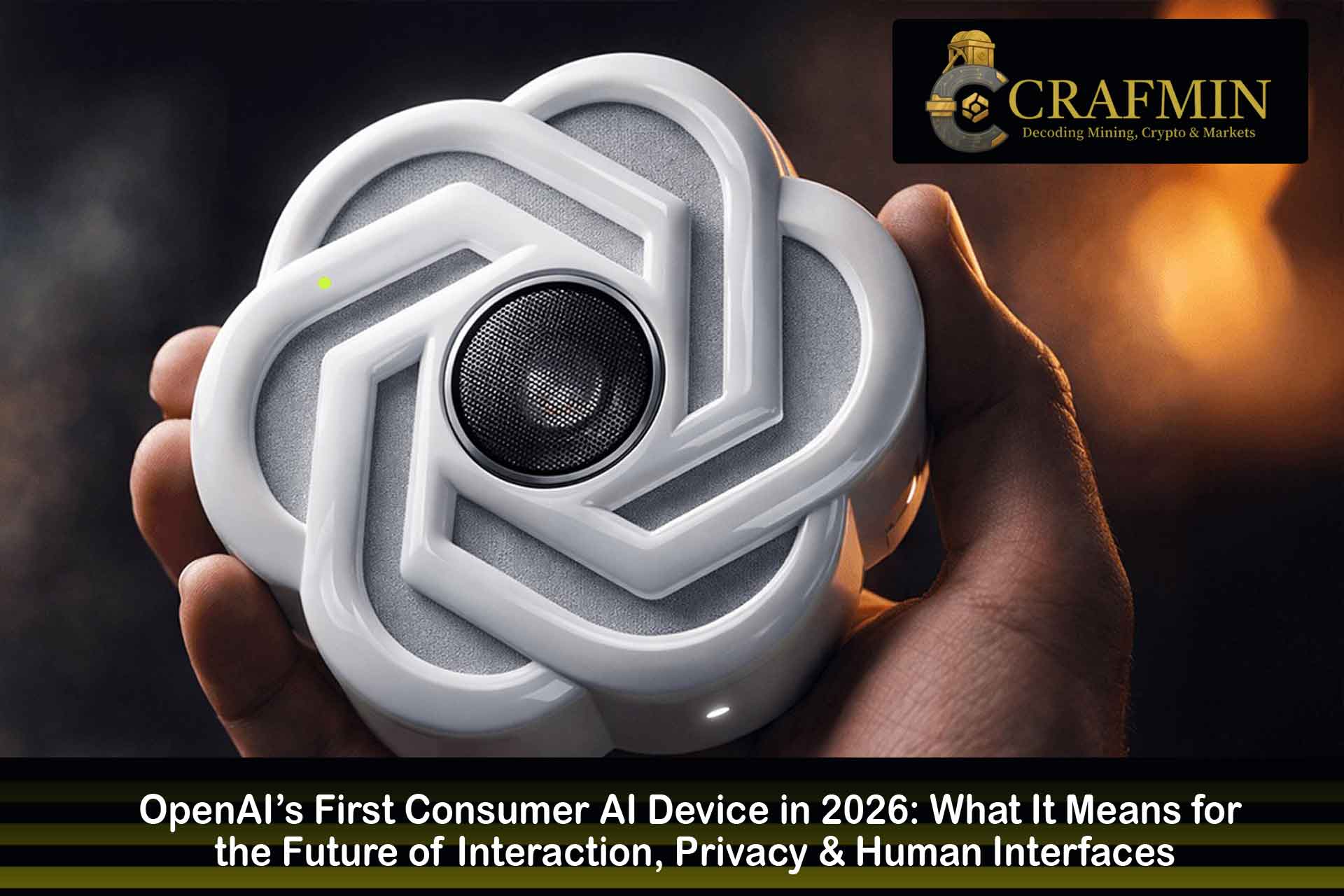
It Is Not Simply Another Device
It demonstrates a shift in thinking about technology, from screens and keyboards to natural and background listening, in which we are not in charge of everything.
It does not require much knowledge in the world of tech to realize this. Imagine a wearable that fits in your pocket, and yet is like a sixth sense. It can know you, call your name and transform as your life transforms immediately.
Such is the conception and it is already coming into reality.
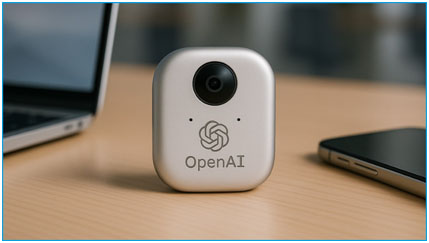
A new way of interacting with technology is emerging; devices that listen and respond naturally, acting like a sixth sense, adapting to you as your life changes. (Image Source: ACS Information Age)
The Importance of a Physical Device Now
Smart assistants have been in phones and laptops for the last ten years. We type, swipe and tap. This device is different. It hearkens, studies and speaks to your screenless life.
This is a big shift. You speak and the device responds instead of searching and finding the facts. You can do it instead of picking up a phone and simply tap or talk and receive assistance, instructions, reminders or even rudimentary companionship.
This is one of a larger movement: it is making devices feel less hard, more like human beings.
Take a moment to think. It is not about being new. It is about handling things to move to our beat and not to make us change.
Design That Breaks the Mould of Familiar
The gadget under production is neither a phone nor a commonplace wearable, such as watches and glasses. The creators are constructing something new, small, convenient and within reach at all times.
This design indicates that the future technology must become part of life rather than take control of it.
The group consisting of renowned designers prefers it to be straightforward and classy. They are yet to reveal every detail, though, according to insiders, the prototype is small and could have no screen, breaking with touchscreens.
The device will prioritize voice, gestures and presence without the use of a screen. It assists rather than distracts. It is listening; there is no need for eyes or hands.
That notion in itself has massive impacts on everyday life.
Fraught Everyday Exists with Intellectual Support
Imagine you have entered your kitchen and told your kitchen you want a recipe. No phone, no typing. You can talk, the device hears you and takes you through a series of steps, offering you options depending on what the fridge has.
Picture a day at work. You query your machine regarding meetings, due dates or work. It provides shortcuts, sets reminders or recommends priorities, which behave like a personal assistant that knows what you should do before you request.
These notions are futuristic, yet the industry is heading in that direction. The new area is ambient tech, which hears everywhere but does not overstep.
Technology is no longer expected to interrupt.
There are numerous applications and received messages on smartphone screens competing to capture our attention. Individuals desire natural, and not alien, tools.
Real World Relevance: Off the Hype
It is not purely tech speak amongst fans. The outcomes are coming to a real life.
Imagine students, employees, inventors, and older people. To a person with deadlines, jobs and tasks, a context-aware device may be a daily co-pilot: it adds up messages, proposes plans and filters information without a menu.
The technology might provide voice-activated medicine, appointment and safety reminders to seniors through easy gestures. It maintains helpful and practical assistance and not superficial screens.
At work, equipment to suit the rhythm and tone of an individual may be used to accelerate work. There is no longer a need to toggle between applications in order to have the answer; all one has to do is ask.
Transforming tech interest into a daily assistant is not an easy task, but it is beginning.
Ownership and Privacy in the Middle of the Discussion
The fact that any device can listen and respond generates one important question: privacy. How is it possible to keep data safe in a device that is aware of its environment at all times?
Since the gadget will probably record sound, environment and context, privacy protection is essential. Designers have to be considerate of good and privacy, and they should use as little as it is necessary, and they should leave the control of shared contents to the user.
According to the industry observers, the problem of constant listening is that people are constantly concerned about whether someone can access the data, whether it is kept in one place, and whether it might be abused. These concerns are not only theoretical, but they also influence trust.
The privacy plan of the device should be articulate and powerful to ensure the device works well for many. Individuals need not struggle with undercover environments. It should have privacy as one of its core values.
The latter implies that the device must display the listening, safeguard data, and process them on-site when feasible. It is hoped that it will become a friend, not an espionage device.
Possible Applications in the Everyday Life of People
What could an ordinary person desire with such a device?
Here are some examples:
- Plan without screens: Plan your daily activities hands-free, schedule, create reminders, and receive summaries.
- Quick search: Inquisitive question and quick reply.
- Context-sensitive assistance: The computer is aware of your schedule, context and environment and must help without you asking.
- Supply of productivity: Writers, researchers and workers can dictate notes or take ideas or summaries.
- Accessibility assistance: Voice assistance may be a life-saving opportunity for individuals experiencing mobility or sight impairments.
This is not hype. Smart speakers and assistants are already being used by people via voice commands. This tool helps improve it by providing additional context and a more detailed insight.
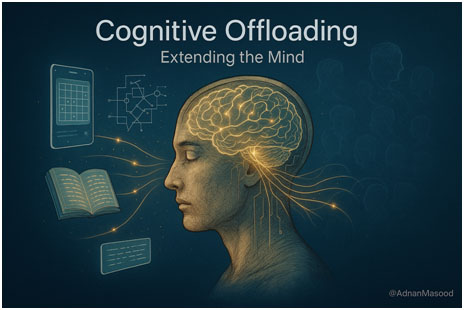
Plan your day hands-free, get instant answers, receive context-aware help, boost productivity, and access vital support for mobility or vision needs; smarter than a regular smart speaker. (Image Source: Medium)
The Bigger Picture: A Change in Human Interface Design
It is not just a new product. It reveals the process of the convergence of technology and people.
It is no longer a tap-scroll interaction, but is a talk-think-respond system.
Systems will anticipate our needs, adapt to the environment and react naturally rather than waiting to be instructed to do something. This is so massive in terms of the way we utilize technology and it may alter the way we exist with technology.
The core of this transformation revolves around human comfort, intuition, and a smooth flow rather than complex screens.
It is the reason why it attracts the attention of experts and ordinary users.
Implications of Industry: Beyond OpenAI
The decision of OpenAI to go into hardware is not merely a new device. It represents a greater change in the technology direction. Over the years, AI used to be predominantly software within the cloud that we consumed during the process of using apps and APIs. There is a definite hint of AI entering the fabric of daily life in an actual, interactive manner in a real-life, functioning device.
This is being compared by the industry analysts to the iPhone launch in 2007 by Apple. iPhone did not invent a smartphone; it transformed the expectations and the usage of phones by people. On the same note, the device made by OpenAI might not be the first voice assistant or ambient AI device, but it provides a smooth and context-sensitive experience otherwise unavailable on the market on that scale.
Competitor Landscape: Who Doth Thou Race?
OpenAI is not penetrating a blank market. Main competitors are:
- Apple: Siri, and soon, AR/VR. Apple continues to enhance ambient AI and is concerned with privacy and style, which resonates with the approach of OpenAI.
- Google: With Google Assistant, Nest, and AI services, it is good at connecting AI to cloud information and provides it with a powerful capability to scale.
- Amazon: The Alexa devices are the leader in the smart-home AI sector, but are based more on direct voice responses and less based on anticipation.
- Microsoft: By using AI in Windows and Teams, Microsoft is focusing on business tools as opposed to consumer home devices.
The combination of powerful language models, the user-friendly interface design, and privacy-first consideration is what makes OpenAI unique. Competitors remain within their current ecosystems, whereas OpenAI is capable of creating a different form of human-centered AI hardware.

OpenAI stands out by combining smart language models, sleek design, and strong privacy, unlike Apple, Google, Amazon, or Microsoft. (Image Source: Northwest AI Consulting)
Professional Opinions About Human-AI Interaction
One of the designers, Jony Ive, says that the device must be part of the thought, and not a machine that takes over. This concept is based on behavioral science, psychology and ergonomics.
The shift towards predicting, rather than reacting, is also indicated by AI professionals. Devices will not wait until we issue an exact command but will guess what we want based on context, history and location. The benefits can be big:
- Less brainwork: The machine sifts information in such a way that we do not need to think.
- Greater efficiency: Work is completed more easily.
- More accessibility: Individuals with limited mobility, visual or dexterity abilities can operate tech with ease.
Critics caution that the more machines get to know about us, the more the likelihood of making a mistake and spying on us increases. Professionals indicate that privacy should not be implemented after the fact.
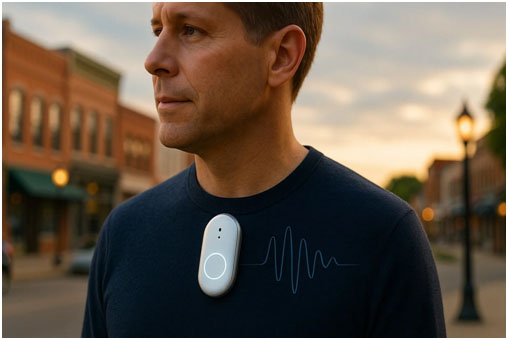
Jony Ive says the device should extend thought, not take over. By anticipating needs, it boosts efficiency, eases access, and reduces mental load, but privacy must be built in from the start. (Image Source: HastingsNow)
Live Applications: Changing Everyday Life
The consumer AI device is a promise that covers a wide range of areas. Here are some examples:
Professional Environments: Without a laptop, remote workers and executives could speak reports, set meetings, or receive summaries. Income data can be scanned by AI and propose priorities that provide professionals with an advantage.
Education: Students would be able to request explanations, history, or translations immediately and learn without having to look at a screen. The device would be able to behave as a tutor and alter the way it explains depending on the understanding of the student.
Healthcare and Wellbeing: The elderly or chronic patients might receive medication, water, or exercise reminders. Mental care may be provided in the form of sweet reminders or some advice and keeping personal data confidential.
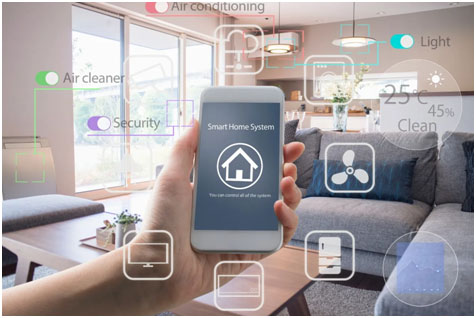
Smart Home: Gadgets may observe patterns and automatically change the lights, heating, or even set reminders about tasks, making life at home easier.
These situations demonstrate that the device is not just a toy; it makes the digital and real life a little closer to each other and simplifies everyday tasks.
Privacy, Security and Ethical Problems
One major issue that the device by OpenAI will face is the response to data. A listening and observing device has several concerns:
- Who is the proprietor of the data collected?
- Where is personal information stored or transferred?
- Why cannot it be abused or dismembered?
According to industry experts, the layered plan would be:
- Edge computing: Compute as much in the device as possible, to ensure that less sensitive data is sent to the cloud.
- Understandable policies: Users should be informed of what exactly is being tracked, how they are being used and how they can be controlled.
- Contextual activation: The device must not listen and analyze continuously, but only where it is really required, where this activity can be seen.
It is difficult to balance between useful instructions and privacy. Being overcautious, the device becomes useless; being undercautious, people lose confidence.
Data is key: local processing, clear policies, and selective listening balance usefulness with privacy. (Image Source: Deccan Chronicle)
The Market Opportunity
Analysts believe that the consumer AI-based hardware could expand rapidly by 2030. The voice and ambient technology will converge, and humans are going to desire something that will be incorporated into their daily routines.
OpenAI’s timing is smart:
- Individuals are getting informed about AI, hence they are at ease with developed interfaces.
- Privacy is more mindful than ever before, and privacy-first design is an excellent selling feature.
- Not many companies combine the highest level of language models, design, and ethical engineering into a single product that is consumed by consumers.
When properly executed, OpenAI has the potential to initiate a new category, similar to Apple and smartphones and wearables.
Philosophy: Subtlety, Not Compoundity
Minimalism and chic are present in numerous reports. Individuals do not prefer intricate-looking and feeling machines. OpenAI is interested in creating a device that is:
- Little and noiseless, perhaps, screenless.
- Intelligent to act according to the situation rather than sending notifications.
- Does what you need to be done in the background, so as not to disturb you.
The idea is a device that can be integrated into daily life, a personal helper, a companion and a useful tool.
Also Read: ChatGPT Health & AI in Medicine 2026: The Future of Healthcare, Diagnostics & Patient Care
The History of Human-Centered AI
This project is aimed at rendering the device natural to individuals rather than its smartness. Even tools that seem to be the strongest cannot be useful when they are difficult to operate. Preliminary examinations indicate that people are fond of:
- A cook receives kitchen assistance step-by-step when their hands are occupied.
- An office worker who sees meeting summaries without having to open several apps.
- A learner receiving real time response as per history or science.
These stories demonstrate that ambient AI is not like smartphones or laptops: it remains in the background and does not interrupt, and it serves instead of disrupting.
Global Relatability: Not Only Tech Lovers
The device is significant on the global level. In Australia, where remote working and Smart homes are on the rise, the device may make daily chores easier at work and at home.
- Smart context-sensitive tools in developing nations would provide students and workers with an equal opportunity in education and productivity.
Ethical design is necessary because of laws such as GDPR and CCPA. The design of OpenAI may establish new standards in the world.
Globally, the device boosts productivity, supports learning, and may set new privacy standards. (Image Source: The New Daily)
Future: The Future of Interaction
The greatest transformation is the one in our utilization of technology:
- The communication will be smooth and natural.
- It will be the machines that will change, rather than people.
- Context-aware, privacy-conscious AI will become the rule.
According to experts, this strategy will affect numerous areas, such as healthcare, cars, schools, etc. OpenAI is not merely a machine constructing a device; it is demonstrating how smart hardware of the future may appear.
Conclusion: Why It Matters
The initial consumer-aimed AI device by OpenAI is a breakthrough. It does not mean being new; it means redefining the coexistence between human beings and machines.
- Professionals would be able to work more effectively.
- Students find access to knowledge easier.
- Hassle-free help is received by everyday users.
- The tech industry has a fresh conglomerate of morals, secrecy, and intelligent style.
By 2026, AI will not just be in the cloud; it can be in our everyday life, not only in the form of software but also in the form of a well-designed, physical device that can talk, keep privacy, and enhance life in ways that we can only start to envision. OpenAI is introducing a new form of interaction to the world, and people will monitor it closely, not to mention experts, and consumers and regulators. Our future association with intelligent technology will be determined by the decisions we take today.
Frequently Asked Questions (FAQs)
- What is the comparable device to OpenAI?
Ans: It provides context-sensitive, proactive conversations, rather than responding only to explicit instructions. - Does it support other platforms?
Ans: It focuses on local and ambient intelligence, so you don’t necessarily need phones or computers to use it. - Is it safe for kids?
Ans: Parental controls and data protection will be built in, although exact specifications are still being finalised. - Which industries will benefit most?
Ans: Healthcare, education, professional services, creative industries, and accessibility solutions. - When can we test or order it?
Ans: OpenAI plans a second-half 2026 release, with prototypes likely available before the general launch. - What is the 2026 device of OpenAI?
Ans: It is a pocket-sized consumer device under development that responds to context-sensitive interactions, natural language, and environmental cues. - When will it be available?
Ans: OpenAI is expected to announce more details and potentially launch in late 2026; the timeline is still evolving. - How will privacy be protected?
Ans: Privacy is a key concern. The team will implement controls that put power in the hands of users, limiting unnecessary data collection. - Will it replace smartphones?
Ans: It is designed to enhance existing devices and transform interaction with technology, not replace phones entirely. - Can it be used offline?
Ans: Basic functions will operate without a network, while more advanced tasks may require cloud support. - Is it safe for sensitive work?
Ans: The privacy-first design includes local encryption and clear data-handling protocols; users should review policies for assurance. - Who will benefit most?
Ans: People seeking hands-free, context-aware assistance, including professionals, students, creators, and older adults. - How much will it cost?
Ans: No official price has been announced. It is expected to be premium-priced, reflecting its advanced design and engineering.