
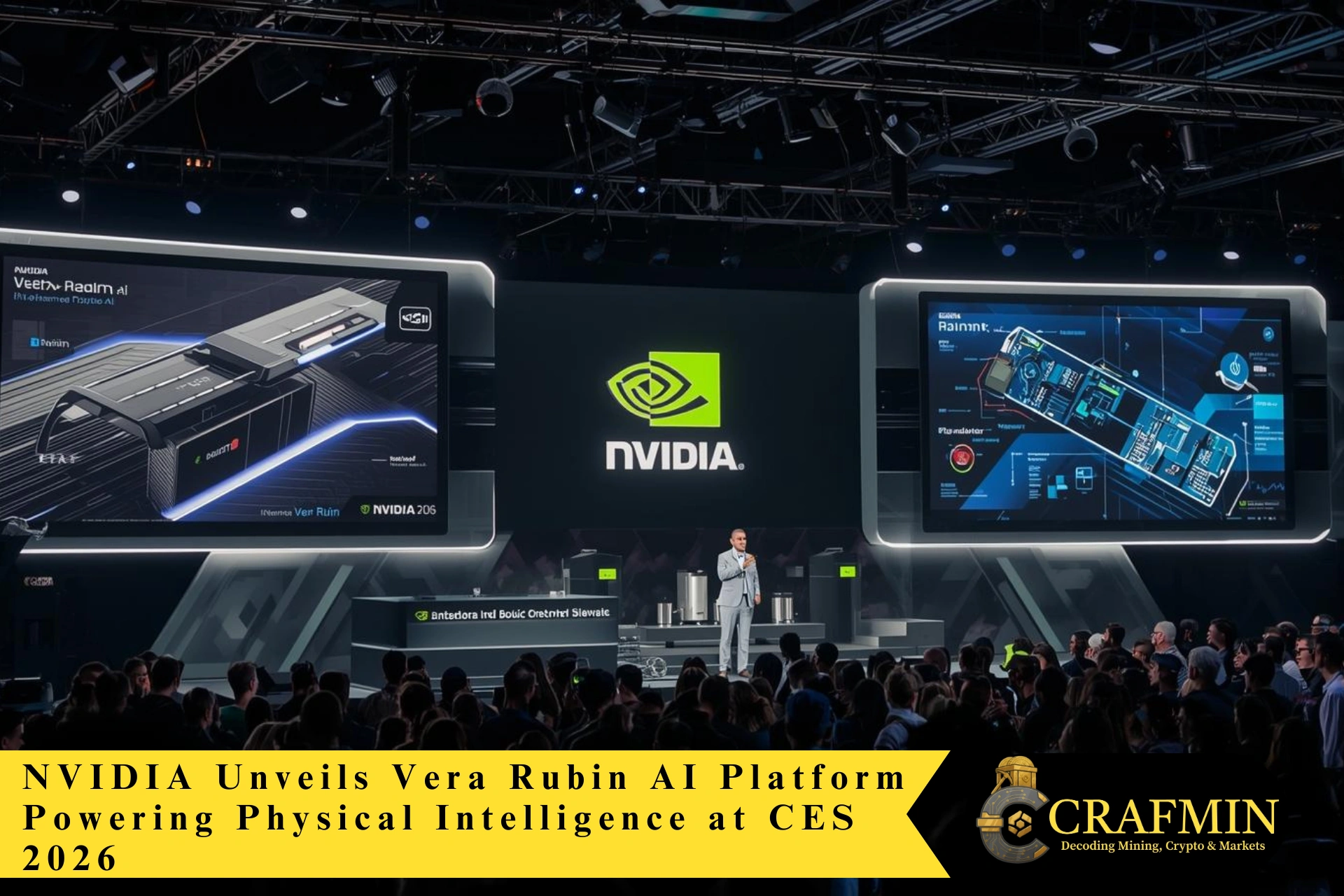
A New Era Starts in Las Vegas
In the glam mezzanine of CES 2026 in Las Vegas, an imposing declaration was made that transformed the discussion of the things contemporary computing is capable of doing. NVIDIA introduced the NVIDIA Vera Rubin platform, a next-generation computing powerhouse, to propel all forms of data centers to autonomous machines and agentic systems. (theverge)
It is not just another piece of hardware. It is a platform upon which physical intelligence is constructed- a trend towards machines that can perceive and reason, and take action in the real world. The Vera Rubin site is not just about raw speed but the ability to facilitate systems to bridge the gap between virtual processing and physical results to reshape the experience of technology by businesses and by everyday people.
We also take you through the innermost parts of the Vera Rubin platform, why it is unusual, and why it is important, not only to professionals, but to anyone who observes the future of technology come to pass.
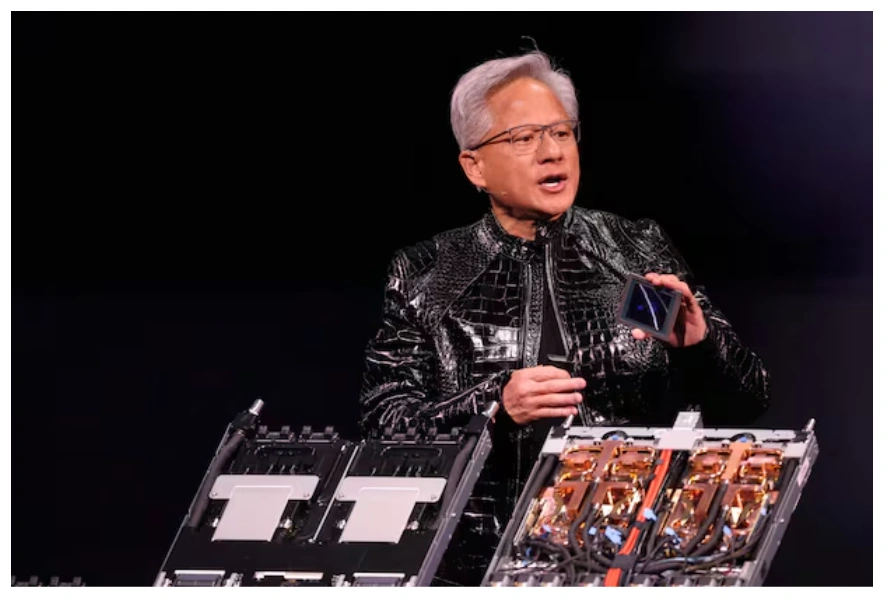
Unveiled at CES 2026, NVIDIA’s Vera Rubin platform marks a new era of physical intelligence. (Image Source: www.chosun.com)
What Is the Vera Rubin Platform? The Foundations of the New Innovations
Fundamentally, the Vera Rubin platform is a huge step NVIDIA made in incorporating computing. It is not a single chip or processor, but a rack-scale system that combines several highly specialized components – each specialised to particular tasks in large-scale computing systems.
These components include:
- A custom CPU, named Vera
- The new Rubin GPU
- NVLink 6- Technology of interconnect
- Ethernet networking, NetworkX-9
- BlueField -4 data processing units
- Spectrum-X network switching switches
Combining these elements means that the platform is acting like a supercomputer on a rack, able to address the large context reasoning job, long sequence data flows, and systems that think beyond mere pattern recognition.
Analysts already consider this a fundamental change in computing – a change that is redefining capabilities and expectations in industries.
Why the Frontier of Intelligence is Physical
Up to this point, the tech world has been mostly centered on software-based systems that take input data and deliver insights. The Vera Rubin platform is used to enter into the new world of physical intelligence systems that do not merely produce answers but also provide the possibility for machines to engage with the real world intelligently.
At CES, NVIDIA CEO Jensen Huang employed the term to describe a transformation of passive computing to active reasoning in the real world. Imagine a system that is capable of making decisions that use real environments, such as the robotics that navigate safely across a factory floor or the self-driving cars that respond to unforeseen situations within milliseconds. (techwireasia)
This change is important since the physical world is erratic, and this aspect stretches the traditional data processing to its boundaries. Hardware is needed to enable physical intelligence to provide fast sensory information, instantaneous computation, and decision-making, without concession. The solution to that demand is the Vera Rubin platform of NVIDIA.
Beyond Expectations Meet Performance: The Force of Power and Efficiency
Among the outstanding assertions regarding the Vera Rubin system is that it is better off than the prior NVIDIA architectures. The platform, according to various sources, provides up to 5x inference performance of the Blackwell systems, and also reduces the cost of training large models (in terms of token costs) to a fraction of the previous requirements.
It is not a step forward; it is a jump that alters the way in which data centers are structured and how organizations consider compute budgets. That is as follows in practice:
- Systems use a minimal number of resources and are quicker.
- Lower usage of energy per task.
- Reduced the total cost of ownership of advanced computing.
- Capacity to implement bigger, more intricate reasoning applications with enormous hardware burdens.
The resulting performance improvements are the result of co-design, in which every hardware component, such as CPU, GPU, networking, and storage, is designed to function synergistically as one. That coherence not only offers efficiency in speed, but also in the actual workload execution in the real world, where tasks exchange data in real-time and safely. (nvidianews)
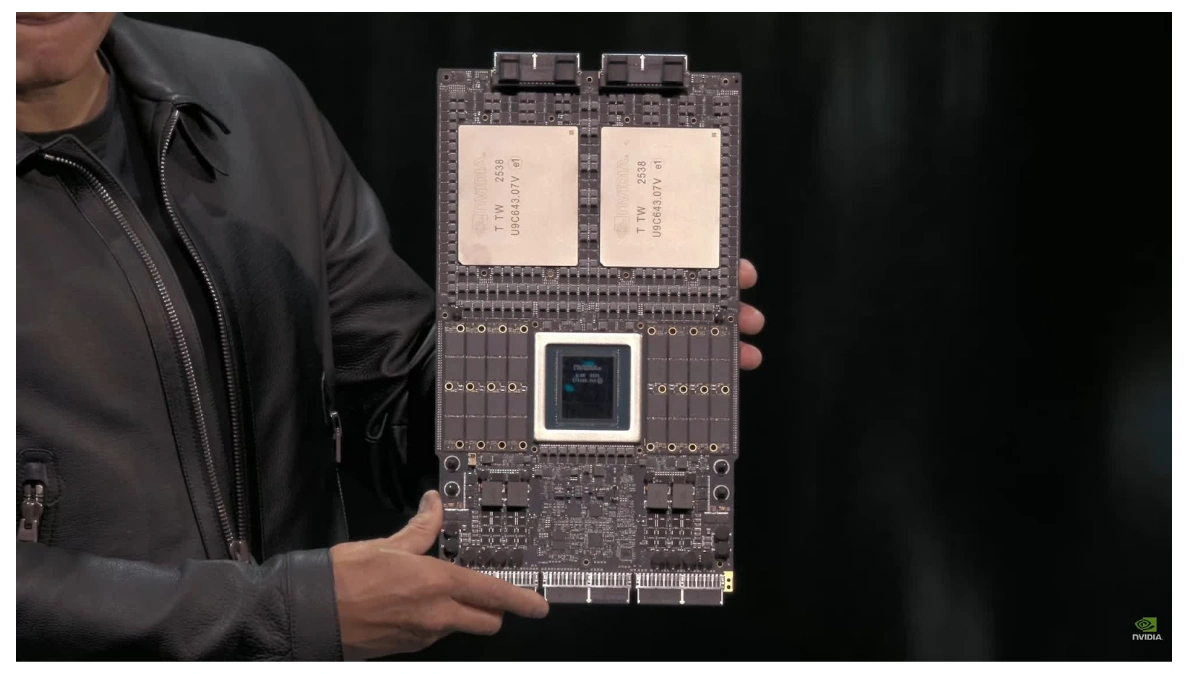 NVIDIA’s Vera Rubin platform delivers up to 5× faster inference, reshaping data centre performance. (Image Source: TechSpot)
Real-World Applications: Road to Data Centers
The potential of the Vera Rubin platform cuts across various areas. The following are some of the new applications already getting noticed:
Enterprise Data Centers
Large cloud vendors are queueing up to connect Rubin-based systems, which will accelerate the processing of data to the extent of analytics, as well as simulation and reasoning as services.
Robotics That Think
Physical intelligence is actualized by the action of machines. With this platform, robots are capable of logistics, assembly, exploration, and on-site decision-making with a minimum of latency.
Autonomous Transport
During CES 2026, NVIDIA also suggested collaborations in which enhanced reasoning systems could be implemented on vehicles that would go beyond route following, as they will be able to devise situations and make spontaneous decisions.
Simulation and Creative Media
High-performance inference enables imaginative applications to execute longer videos, richer simulations, and immersive experiences, quicker than ever, which is paramount to gaming, movies, and 3D virtual worlds.
Scientific Computing
From physics to genomics, scientists rely on high-context reasoning as fast as possible. The architecture of Vera Rubin is much more efficient in meeting these needs than the previous systems.
Watch Nvidia CEO Jensen Huang reveal what he described as the state of the art in AI hardware: the new Rubin computing architecture.
“Vera Rubin is designed to address this fundamental challenge that we have: The amount of computation necessary for AI is skyrocketing.” Huang… pic.twitter.com/MhGVqytX04
— TechCrunch (@TechCrunch) January 5, 2026
The Technology Supporting the Innovation
The Vera Rubin platform may appear to be a speed machine at first sight, but there is scalability, security, and manageability involved. Here’s how:
- NVLink 6 Interconnect: Ultra-high-speed interconnection between CPUs and GPUs can make data flow without bottlenecks.
- Spectrum-X Networking: Next-generation Networking Systems. Spectrum-X Networking can help data centers manage AI traffic at scale.
- BlueField -4 DPUs: Specialized processing units handling storage and security operations with little impact on the host compute.
- Confidential Computing: Further encryption on system parts to safeguard data and proprietary workloads.
To the infrastructure cost evaluator, these features indicate that Vera Rubin is not only performance-tuned, but also long-term deployment, which is a fundamental requirement of enterprise planning for the next-generation computing environment.
The Investor and Industry Buzz Concerning the Reveal
The unveiling of the CES was met with a strong response in the markets, and analysts and tech leaders regard it as a paradigm shift. Vera Rubin’s announcement is considered to be rather an infrastructure strategy rather than product marketing. It may alter the way the computing power is purchased, installed, and monetised.
 Vera Rubin’s CES 2026 debut sparks strong investor interest, seen as a shift in infrastructure strategy. (Image Sourcece: Forum bez kabli)
Post Reveal: Industry Response and Pre-launch Hype
The technological world took the Vera Rubin platform with enthusiasm, discussion, and expectations when it was shown at CES 2026. There was a rush to express interest on the part of cloud providers and infrastructure specialists, who are intending to deploy Vera Rubin systems to their portfolios in the coming years.
Microsoft is also planning its Azure data centres to be Rack-scale to Rubin NVL72. Such systems will be the foundations of the next-generation AI superfactories, in which giant models and sophisticated reasoning tasks would become ordinary operations and not the exception.
Smaller cloud providers such as Nebius are going to sell Rubin-powered infrastructure in the United States and Europe beginning in the second half of 2026. This will allow research laboratories, startups, and businesses to gain access to the most computing power ever without having to construct their own hardware farms.
There is more than lip service in the industry response. It demonstrates the change of the expectations: organisations now plan not data processing but further reasoning and real-world workloads that demand the advanced capabilities of Vera Rubin.
The Future of Data Centres: A New Compute Foundation
Conventional data centres are being transformed out of mere server racks to complete ecosystems capable of managing complex workloads, such as reasoning, extensive sequence decision-making, and simulating real-world tasks. Vera Rubin hastens this change by providing:
- Rack-scale integration – CPU, GPU, networking, and storage are integrated.
- Scaling efficiency – clusters of many NVL72 racks can compete with traditional supercomputers.
- Inference context memory storage Large reasoning models do not slack in terms of context maintenance.
The features are a fundamental reengineering of the basic stack of computing. Vera Rubin is not exactly a new gadget, but it is a prototype of the next generationof data centres.
What does it imply for the businesses and developers? It opens up applications that were too expensive or too slow to be warranted:
- Multistep reasoning models that track intricate data sequences and give more contextual responses.
- Agentic systems that respond dynamically to environments rather than have scripted behavior.
- “Mixture of experts” models with a massive routing of specialist systems dynamically through the architecture.
The potentials have a revolutionary impact in areas such as bioinformatics, autonomous systems, logistics, and long-form scientific simulation.
 Vera Rubin redefines data centres, turning compute infrastructure into integrated, scalable ecosystems for advanced reasoning. (Image Source: Innovation News Network)
Hot Water Cooling and Infrastructure Smarts
Hot-water cooling in NVIDIA was impressive in the presentation at CES. The Vera Rubin racks can run at temperatures of approximately 45 degrees C, without the power-consuming chillers. The platforms also save energy by using higher temperature cooling loops, and this saves the operators on the overall cost of ownership.
This will allow harder computing systems to use less power simply to cool them down. To the data centre architects and sustainability officers, this implies that there is a possibility of reduced carbon footprints and maintenance expenses.
The Implication of Vera Rubin to Everyday Tech
Even though the hardware is designed to serve high-end infrastructure, it will have spill over to consumer and enterprise technology.
More Intelligent Personal Assistants and Interactions
Natural language assistants, predictive interfaces, and real-time translators will be improved by long-context reasoning. Adaptation of the travel plans to changing weather using a virtual planner might become smooth and responsive.
Thinking on Their Feet: Autonomous Systems
It will help the vehicles, drones, robots, and industrial agents. The previous publication of autonomous vehicle reasoning systems by NVIDIA, including Alpamayo, showcases dealing with unknown situations with little information. The platform created by Vera Rubin does reasoning faster and richer, allowing machines to change on the fly and learn from subtle changes in the environment, and not respond according to the pre-determined options.
Refined Virtual Modelling and Simulation
Better memory bandwidth and context recall can be used in industries that depend on simulation, such as weather forecasting, financial market modelling, etc. Massive models that were once limited by the data capacities will operate more smoothly, and scientists will be able to pose larger questions and retrieve the answers in less time.
Objections and Dissatisfaction
A significant change in infrastructure is problematic. The Vera Rubin platform is coming across with hype, but already, analysts and engineers are bringing up serious questions.
To begin with, will the ecosystem be able to keep abreast with the fast-paced innovation without getting divided? The platform integrates six types of chips and systems, and therefore, software development needs to be expedited; otherwise, the potential of the hardware will not be fully realized.
Competition is also a factor. Other chip designers and architects are moving towards custom silicon and unique designs, and thus, the competition over efficient and powerful computing is a multi-horse race. Competitors might drive innovation in forms that question the innovation phases or iterations of Vera Rubin. The bigger picture of the industry suggests this.
However, the extensive degree of investment and market attention, which has been conducted by hyperscale cloud suppliers and infrastructure collaborators, implies that this trend is not temporary. These platforms are designed to be durable, and those first to use them are planning to use them in the nextfew years.
Also Read: AI Boom in 2026: The Global AI Race, Chip Wars, IPOs and Jobs
Future: The Future of Compute Innovation
The Vera Rubin platform does not represent an endpoint, but an entry to the future. Computing requirements are evolving at a very high rate. There is an increase in the complexity of models. The application of real-world reasoning is shifting not only to an experiment but also to a need. The physical environments, like the factories, autonomous vehicles, and others, demand systems that are aware of the surroundings, adjust, and can be trusted.
It is a structural change and not marginal. Such shows as CES 2026 are important not because of their devices, but because of the technologies that transform the possible. Vera Rubin might be that breakthrough, not because it sells the most units, but because it thought of machines as data processors.
Frequently Asked Questions (FAQs)
- What makes the Vera Rubin platform different from conventional GPUs?
Ans: Traditional GPUs focus mainly on parallel processing. The Vera Rubin platform integrates CPU, GPU, networking, and storage into a single rack-scale system designed for real-time reasoning and physical operations, rather than isolated compute tasks. - Why is the performance improvement so significant?
Ans: Higher performance at a lower cost allows increasingly complex reasoning applications to run without expensive hardware investments. This opens new possibilities in autonomous robotics, advanced simulation, and large-scale real-world modelling. - When will Vera Rubin systems be available?
Ans: Companies and cloud providers are expected to begin deploying Vera Rubin-based systems in the second half of 2026. - How does Vera Rubin impact data centre design?
Ans: Faster compute and built-in networking allow workloads to be consolidated, reduce latency, and support advanced reasoning services that go beyond standard GPU-based deployments. - Will older systems become obsolete?
Ans: Not immediately. Existing systems will continue to serve critical roles. However, Vera Rubin is likely to become the benchmark for future-proof infrastructure for organisations planning long-term upgrades. - How does Vera Rubin compare to Blackwell and earlier platforms?
Ans: Vera Rubin is not just a chip upgrade. It is a co-designed platform that combines specialised CPUs, GPUs, networking, and memory into a rack-scale system. This design improves performance, context retention, and supports complex reasoning workloads that previous platforms struggled to handle. - Which industries will benefit most in the short term?
Ans: Cloud providers, research institutions, and enterprises working with large-scale models or advanced reasoning tasks are likely to be early adopters. Over time, sectors such as robotic automation, autonomous logistics, and dynamic simulation are expected to see the greatest transformation. - When will the Vera Rubin infrastructure be available to developers?
Ans: Cloud availability timelines point to commercial access through partners from the second half of 2026. Developers and businesses can begin planning integrations now, with broader rollouts expected by the end of 2026. - Will existing computing systems lose relevance?
Ans: Not immediately. Current hardware will remain important for many workloads. However, for applications requiring deep reasoning, long-context processing, or large-scale inference, Vera Rubin delivers performance levels that traditional systems cannot match. Careful transition planning will be essential. - Are these systems accessible to most businesses?
Ans: High-end platforms like Vera Rubin start at premium infrastructure tiers. However, lower inference costs and efficiency gains mean long-term operating expenses may be significantly lower than earlier premium solutions once deployed.
Disclaimer