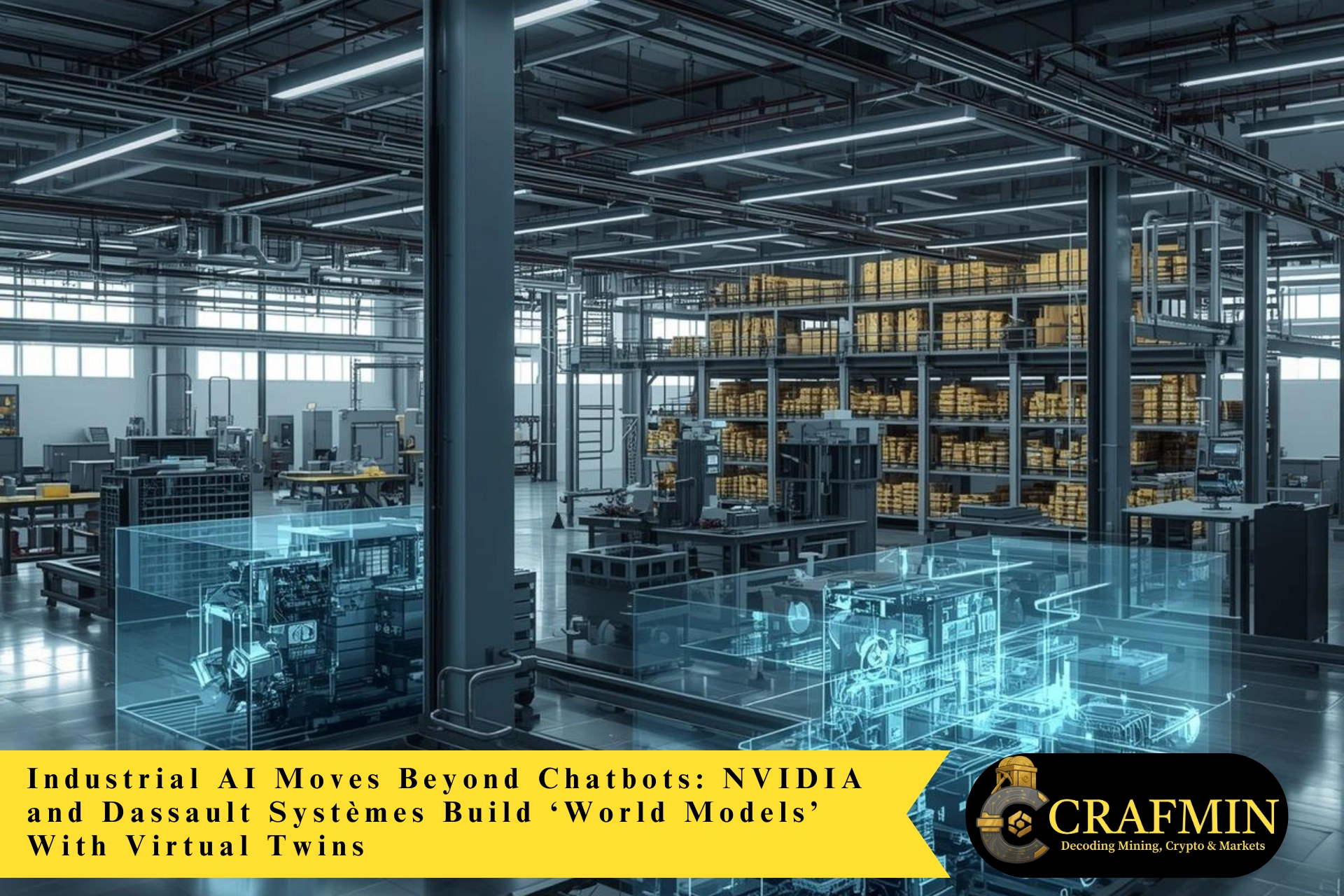
On 3 February 2026, NVIDIA and Dassault Systèmes declared a long-term agreement to create an industrial AI platform, which integrates Virtual Twins with NVIDIA AI infrastructure and software. The objective is greater than smart conversation. They desire science-proven Industry World Models, systems that enable engineers and operators to design, simulate and execute complicated real-world functions with additional faith.
The news is settled at 3DEXPERIence World in Houston, where the two companies present a case to change: industrial AI is no longer a bolt-on helper, but a crucial part of infrastructure.
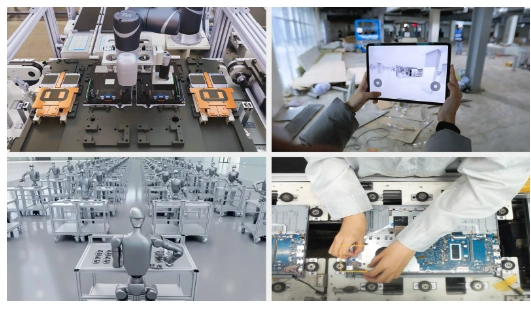 NVIDIA and Dassault Systèmes unveil a 3 Feb 2026 partnership to turn virtual twins into industrial “world models” at 3DEXPERIENCE World in Houston. (Image Source: NVIDIA Blog)
What’s Just Been Announced
The companies outline a common industrial AI architecture which combines:
- Virtual twins (online representations of products, factories, and systems) of Dassault Systèmes.
- AI infrastructure, open models, and accelerated libraries of NVIDIA.
These two, they claim, will together constitute science-proven Industry World Models, or AI based on physics and confirmed industrial know-how and not merely generic internet trends.
They also bet on virtual companions in the 3DEXperience environment of Dassault, which are AI assistants capable of operating with deep industrial knowledge (design constraints, simulation results, process rules), as opposed to general prompts.
The Instant Non-Engineering Summary
In a different aisle, this story is found in case the past two years of AI are better at autocomplete.
The vision of this collaboration is the creation of an AI that will be able to respond to questions such as:
- Which of this material would be destroyed first?
- What happens to heat when we re-route this production line?
- When we overload output by 8 per cent, will we violate maintenance next month?
That’s not a chatbot problem.
A physics + constraints + operational reality problem.
And that is why suddenly, such concepts as world models and virtual twins become the centre of the discussion.
A Brief Real Life Scene
Imagine a picture of a plant manager who lives in dashboards.
They do not wake up with prompts in their minds.
They get up thinking of downtime, scrap, energy bills and how one machine keeps acting up every time they are about to change shifts.
Assume that this manager poses a query to a system:
This is what I want to know: How to increase output by 5 per cent this week–without either violating the safety limits or causing the maintenance to exceed the threshold.
A chatbot guesses.
A world model simulates.
That is what the difference is all about.
Virtual Twins Vs Digital Twins (And What the Difference Between the Two Terms Means)
You have listened to the digital twin for so long.
It is a convenient digital version of an asset used in monitoring and prediction in many companies.
Virtual Twin is a term that Dassault goes a step further with: it is not just a duplicate. It has the characteristics of a living model, which is able to integrate design intent, simulation, manufacturing realities and operational data within a single environment.
In the meantime, in the mainstream media, the umbrella term to use is the digital twin, particularly when referring to enterprise deployments and data centres.
The practical explanation of it is as follows:
Digital twin frequently begins with the reflection of data.
Virtual twin drives to validated behaviour- the model does not merely present reality but behaves as reality in other circumstances.
That validation article is important, as the industry does not get to shrug.
A misdirected response in any factory is missed production.
In aerospace, a wrong answer is a safety problem.
When there is a false decision in drug discovery, time is squandered.
And the pitch is trust, not vibes.
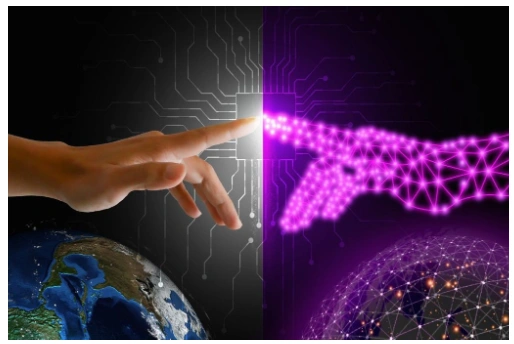 Digital twins mirror data; Dassault’s virtual twins aim for validated behaviour, models you can trust when mistakes are costly. (Image Source: rebim)
Models of the World in Layman’s Language
A world model is a mechanism which attempts to model the behaviour of a real environment.
Not only how it looks.
How it responds.
When there is a change of input, it extrapolates results–preferably in a manner that can be tested, validated, and recreated.
NVIDIA and Dassault, in this announcement, associate world models with physics-based comprehension, which incorporates industrial knowledge.
This is the reason why you continue to read the word science-validated in the official statements.
They are making a distinction between:
- AI conditioned on general text/video patterns, and
- AI based on real-world engineering, scientific and tested industrial processes.
This doesn’t kill chatbots.
It simply reduces their role.
A chatbot is useful in a plant when you need to locate a document.
A production mistake can be prevented with a world model.
The Reason Why This Alliance is Occurring at This Time
Industrial AI sounds slow. Heavy. Bureaucratic.
The market pressure, however, is the reverse.
Factories are forced to contend with declining margins, unpredictable energy, a skilled workforce, increased compliance, and supply chain uncertainty.
Meanwhile, GPUs become increasingly faster, simulation processes become real-time and organisations require decisions which cannot wait until the next quarterly review meeting.
It therefore follows that logic: in the case you can simulate that which is in reality faster than you can be forced to regret you, you win.
NVIDIA describes this as Physical AI- AI based on the physical world laws. Dassault positions it as a transition to world models that may serve as a system of record to make industrial decisions.
The Actual Content Of The Platform (According to the Release)
The press releases refer to a number of concrete building blocks.
1) AI Factories Through OUTSCALE (Reason Why Sovereignty Is Mentioned)
Dassault claims that its brand of cloud OUTSCALE builds so-called AI factories with the newest NVIDIA hardware on three continents. It addresses the topic of securing information, IP, and providing customers with control of their data.
It is an actual technicality, not mere marketing.
Industrial buyers are concerned with:
- Where do the models run?
- Who can see their data?
- What counts as IP loss?
- Who is in charge of the entire system?
Dassault would like to address such concerns head-on.
2) NVIDIA Picks Up Dassault MBSE to AI Factories
According to NVIDIA, the model-based systems engineering (MBSE) approach of Dassault will be applied to AI factories, and the first example will be a Rubin platform created by NVIDIA. It associates this with an Omniverse DSX blueprint to deploy AI factories that are large in scale.
And you do not even need to be an expert in MBSE to understand the point: NVIDIA is not selling chips only. They are peddling an experimental method of constructing the infrastructure on which the models operate, within the industrial regulations.
3) Domain Stacks: BIOVIA, SIMULIA, DELMIA + NVIDIA
The press announcement contains specific combinations:
BioNeMo + BIOVIA find new molecules and materials.
– SIMULIA based on CUDA-X and AI physics libraries to compute physics faster.
It includes:
- DELMIA, which integrates Omniverse AI libraries into software-defined manufacturing systems.
It is not a generic platform narrative.
It is the inclusion of NVIDIA acceleration in the gist of industrial modelling.
The Most Captivating One: Virtual Companions of Professionals
The majority of the population imagines an AI assistant as a chat box.
Engineers do not desire that. The engineers desire a partner that:
- Understands the way the product is assembled.
- Understands limits
- Looks at simulation results
- Tracks changes
- Implies choices are verifiable.
The announcement discusses Virtual Companions within the 3DEXPERIENCE environment of Dassault, driven by NVIDIA technology and open models of Nemotron and Dassault Industry World Models provide context to these open models.
When this succeeds, then daily work will be transformed practically:
They do not have to save files, create a simulation, wait, read charts, and rewrite designs; they just work in a single rapid cycle as an engineer does.
And safety regulations and a history of revision.
The latter is important since industry cannot afford to take the output of the model as evidence.
Why This is More Than Any Other Headline of Partnerships
The majority of AI alliances are identical, i.e. Company A uses Company B.
This one is unique in that it is focused on where errors cost actual money.
It drives AI into the system of record section.
According to the press release, it is clear that science-tested world models are not a quick fix.
This is a big claim. It means:
- Repeatable checking
- Controls
- Reliable under pressure
- Operation as a part of workflows, operating plants and products.
You can’t bluff into this role.
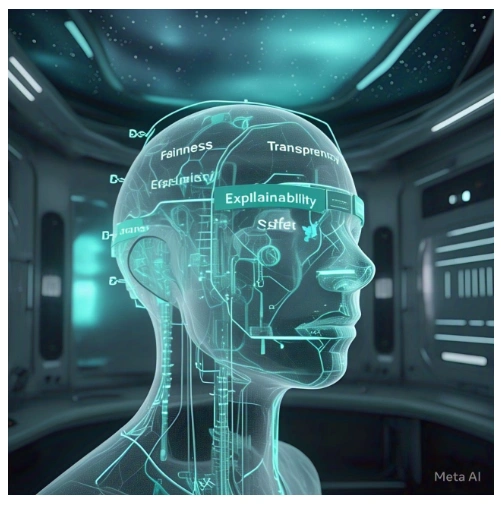 Most AI partnerships are simple integrations; this one targets system-of-record workflows where mistakes cost real money, so trust and reliability matter. (Image Source: Medium)
Whatever Happens to be the First Landing Point: Real-World Applications That Are Self-Paying
The announcement and initial coverage also indicate a number of short-term applications.
1) Factories: Scheduling to Autonomous Systems
The manufacturing angle is concerned with implementing Omniverse AI libraries into the virtual twin of DELMIA to facilitate more autonomous software-driven production.
The model is not just a simulation of a factory. It helps run it.
That can mean:
- Checking line movements before the tightening of the first bolt.
- Identifying new bottlenecks in advance.
- Testing energy consumption in reality.
- Reducing the time of failure by anticipating it.
2) Engineering: The Speed of the Simulation is a Competitive Weapon
The push toward near real-time prediction in coverage, as it is being targeted, is aimed at designers who are not simulation experts, with SIMULIA and fast libraries offered by NVIDIA.
That is a big culture shift.
Simulation nowadays is a preserve of experts. It will be in the hands of more people tomorrow since the system is fast and easy.
At that point, iteration jumps.
And fast cycles claim merchandise.
3) Life Sciences And Materials: Search is Smarter Than a Trial-And-Error
The release is named NVIDIA BioNeMo and BIOVIA world models to accelerate the process of finding molecules and new materials.
To the great majority, this implies:
A virtual twin of a molecule is not a science fiction gimmick. It reduces the search space such that the laboratory, instead of guessing at large during the search, tests the most promising ones.
4) Data Centres (The Dark Side of Industry Twin Market)
An angle that should not be overlooked: digital twins are found in data centres to enhance power, cooling, capacity planning, and failure prediction.
These facilities are becoming more complex as the AI workloads increase.
Simulation is the favourite of complex work.
Therefore, it is not just factories under industrial AI.
Modern computing itself is made possible by its infrastructure.
Who is Already Queuing (And Why That is a Sign)
It releases proponents and use-case providers early, including Bel Group, OMRON, Lucid and Wichita State NIAR (National Institute for Aviation Research).
This is important to indicate the extent:
- Food and packaging
- Industrial automation
- Automotive design
- Aerospace research
In the case when one platform’s story attracts that mix, it typically implies:
– the platform searches patterns that apply to lots of industries (limits, optimisation, checking)
- buyers share similar issues (efficiency, reliability, regulations)
– Sellers seek size and not a small demo.
Also Read: Microsoft Azure Perplexity Deal Reshapes AI Cloud Race
The Actual Change: The Transition of So-Called Text Intelligence to the Operational Intelligence
Let’s put it bluntly.
Chatbots transform the way individuals write and search.
The world models are meant to transform the way individuals work.
That is the reason why CEOs are discussing AI becoming infrastructure.
As soon as AI becomes infrastructure, it ceases to be a feature that you can experiment with.
It turns out to be something that you plan and manage and count on.
It is at that time that competitors become divided.
Since firms with modelled business processes work more rapidly than firms performing endless debates over spreadsheets.
Conclusion: The Easiest Way Of Saying What Is Going On
Industrial AI does not bother to make a claim.
It attempts to win through results.
Should NVIDIA and Dassault Systèmes act on their announcement this week, it will not be another AI partnership story.
It’s this:
The new generation of AI is not on your browser.
It exists within the infrastructure that constructs, transports, energises, and supplies the globe.
Frequently Asked Questions (FAQs)
- What is the Validation of a World Model?
Ans: Commercial customers desire evidence.
They want error limits.
They desire comparisons with real-world results.
When the model fails, they would wish to know.
The announcement mentions science-validated, but you can elaborate on what validation might be:- Comparison with previous results
- Monitored simulation examinations
- Instrumental field trials
- Validation of training data and assumptions
This is where trust is earned.
- Who is the Owner of the Data? Who is the Trainer?
Ans: Industrial information is confidential.
It is also regulated sometimes.
The IP and the sovereignty of OUTSCALE demonstrate this by drawing buyers to this.
This produces a tension in the real world in your story:- Better models are desired by engineers
- Legal departments do not wish to leak
- Executives want speed
An arena that mitigates this tension prevails.
- Does This Replace People?
Ans: That thought is not sold to any serious industrial leader.
Instead, they sell power:- Simulation speed of thought
- Guardrail decision support
- Fewer surprises during production
- Improved design-op operations handover
Virtual companions only imply assistance, not substitution—and the system requires people to make decisions, to give agreements, and own the results.
- What is the Speed of This Landing in Products?
Ans: This is where the following 60–180 days play a role.
Watch for:- Productised 3DEXPERIENCE workflows and integrations
- Test customers with quantifiable outcomes
- Reference architectures of AI factories
- Evidence that non-specialists can use real-time simulation
That is what distinguishes between a trend and a shift.
Disclaimer