
A New Digital Race Has Just Begun
The global tech scene is buzzing today, not because of another glossy launch, but because two giants, Google and Amazon, have quietly changed the direction of modern computing. Google releases Gemini 3 Deep Think, a new system renowned for its deliberate, long-chain reasoning. Meanwhile, AWS unveils Trainium3, a powerhouse chip purpose-built for large-scale model development.
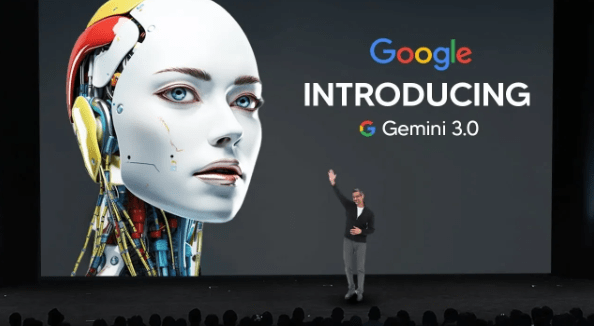
Gemini 3 Deep Think and Trainium3 usher in a new era of smart, strategic computing (Image Source: Geeky Gadgets)
These two moves land at the same time. Not by accident but because the world is shifting into a new phase of digital intelligence. The focus is no longer on who has the flashiest chatbot or slickest app. The real race now centres on who builds the strongest thinking system paired with the fastest, most efficient infrastructure.
Together, Gemini 3 Deep Think and Trainium3 mark the beginning of a major transition:
- The leap from fast responses to strategic, deliberate digital reasoning backed by industrial-scale power.
- And 2026 is shaping up to be the year this transformation truly takes hold.
The Big Reveal: What Google Just Released
- Google’s Gemini 3 Deep Think isn’t a simple upgrade: It represents a new direction entirely. Instead of prioritising quick, surface-level replies, Deep Think focuses on something far more valuable: slow reasoning, long-form planning, and structured thinking.
- In a world drowning in speed, Google is betting big on depth:
This system handles multi-step logic, complex data interpretation, and careful thought. It acts less like a tool that spits out answers and more like a system that strategises. That difference changes everything.
Where typical systems sprint toward an instant response, Deep Think pauses not to delay you, but to understand your goal, break the task into steps, assess multiple paths, and deliver a solution that looks considered, not rushed.
AWS Trainium3: A Power Shift Beneath the Surface
While Google upgrades the “brain,” Amazon upgrades the “body.” AWS Trainium3 is a silicon monster designed for one thing: training and running large systems at extraordinary speed and efficiency. (aboutamazon)
If you think hardware doesn’t drive innovation, think again.
Every breakthrough system runs on the back of industrial power and Trainium3 is built for the next decade, not just today.
Here’s what stands out:
- It reduces the cost of running large-scale reasoning systems.
- It handles massive workloads with energy-efficient performance.
- It offers near-seamless scaling for enterprises and startups.
- It accelerates development cycles dramatically.
In summary: Trainium3 removes the bottleneck that has slowed global digital growth for years.
When you combine Google’s new reasoning abilities with Amazon’s raw processing strength, you get something the industry hasn’t had before: a world where deep reasoning is not only possible but also practical and affordable at massive scale.
This is why analysts and enterprise tech leaders are calling 2025–2026 the beginning of The Cognitive Infrastructure Era.

AWS Trainium3 signals a hidden but powerful shift in computing infrastructure. (Image Source: About Amazon)
Why These Two Releases Matter Right Now
It’s easy to treat innovation as background noise, another release, another upgrade. But this time, the shift is different. It’s happening at the core layer of global digital technology.
Here’s why the world is paying attention:
- The future depends on deeper reasoning, not faster replies
Businesses are moving from simple automation to strategic digital problem-solving.
Gemini 3 Deep Think delivers that. - The world can’t scale without cheaper, more efficient computing
- Trainium3 slashes compute costs and accelerates training cycles.
- Companies finally gain room to experiment, innovate, and deploy.
- A new class of applications becomes possible
Expect breakthroughs in:
- Finance and market modelling
- Climate prediction
- Healthcare diagnostics
- Cybersecurity
- Logistics and supply-chain forecasting
- Autonomous systems
- Scientific research
In each category, speed alone isn’t enough. Deliberate reasoning is the missing ingredient and Deep Think is built for exactly that.
- Nations are entering an infrastructure arms race
The US, Europe, the Middle East, and the Asia-Pacific regions are aggressively investing in data
- Centres, chips, and large-scale computing clusters.
- Trainium3 becomes a strategic asset in this race.
- 2026 is shaping up to be the first year of global “thinking infrastructure” adoption.
We’re stepping beyond chat interfaces into an era where digital systems:
- Plan events
- Make recommendations based on deeper logic
- Understand long-term goals
- Adapt to new information
- Operate autonomously with guardrails
This is the leap enterprises have been waiting for.
The Story Behind the Shift: From Speed to Strategy
For years, digital systems have been praised for their speed. Instant replies. Quick predictions. Fast calculations. But speed without depth becomes noise.
Imagine a system that writes responses instantly but misunderstands the question. Or generates a solution quickly but overlooks risks. Or gives you numbers but no context.
The world no longer needs “faster answers.” It needs better thought.
That’s the emotional weight behind Gemini 3 Deep Think. It reflects a global appetite for digital systems that think more like humans: slowly, carefully, with a sense of direction.
Meanwhile, AWS Trainium3 reflects the other half of the story: the push to make these deeper systems accessible to businesses of all sizes. It’s no longer about elite corporations controlling the strongest tools. Cloud infrastructure democratises access.
This is why the combination of these two releases is so powerful. Together, they create a world where:
- Deeper reasoning becomes the norm, not the exception
- Scaled computing becomes affordable
- Digital systems move from reactive to strategic
- 2026 becomes the year of deliberate digital intelligence
And this shift is already underway.
How Industries are Responding Right Now
Tech leaders across Australia, Asia, Europe, Africa, and North America are paying attention not because the releases sound impressive, but because they directly affect the bottom-line performance and operational efficiency.
Here’s how industries are reacting today:
-
Finance
Banks and hedge funds see Deep Think as a tool for sophisticated scenario planning. Trainium3 gives them the power to run simulations at unprecedented scale. (hffinancial)
-
Healthcare
Medical research teams are exploring how Deep Think can assist with complex diagnostics and personalised treatment plans. Hospitals need systems that think, not guess and compute efficiently.
-
Manufacturing
Supply-chain prediction becomes stronger when powered by strategic reasoning and affordable compute cycles.
-
Media And Creativity
Studios use deep strategic reasoning to orchestrate production schedules, optimise budgets, and enhance creativity planning.
-
Government And Public Services
Policy modelling requires long-chain reasoning, something traditional systems are too shallow to handle.
-
Startups
This is where the biggest shift occurs. With Trainium3, even small teams can run large systems on budgets that were impossible last year.

Industries worldwide are taking notice, as these releases impact performance and efficiency, not just impress. (Image Source: Carnegie Endowment for International Peace)
Why This Matters for Everyday Users
You don’t need to be a developer to feel the impact. The changes coming in 2026 influence daily life:
- Smarter digital services
- More personalised user experiences
- More stable online tools
- Better decision-making support
- Stronger fraud detection
- Improved safety systems
- Higher-quality recommendations
For many people, digital systems have been “fast but shallow.” The next phase makes them smart, intentional, and reliable.
2026: The Year Everything Gets Rebuilt
If 2025 is the year of transition, 2026 is the year of transformation. Expect major rewrites in:
- Enterprise workflows
- Data ecosystems
- Research pipelines
- Industrial systems
- Cybersecurity frameworks
- Cloud architecture
- Global digital policy
What Gemini 3 Deep Think represents is the future of structured reasoning. What Trainium3 represents is the future of scalable power. Together, they form the foundation of the next era of digital capability. Not hype. Not speculation. A real, measurable shift felt across industries.

2026 is the year of transformation, with Gemini 3 Deep Think and Trainium3 driving smarter, more powerful digital systems. (Image Source: Medium)
Deep Industry Analysis: Where the Change Lands First
Large organisations move faster than you think when the plumbing beneath their products changes. Financial firms rewrite risk models. Hospitals rethink diagnostic pipelines. Logistics companies rewire forecasts.
Gemini 3 Deep Think improves reasoning on multi-step problems, while Trainium3 slashes the cost and time to train and run those systems. That combo flips two chronic blockers at once: quality of thinking and the economics of running it. Google’s product post confirms Deep Think’s focus on tough reasoning tasks, and AWS’s technical notes spell out Trainium3’s step-change in compute and efficiency.
Take healthcare, clinicians already use decision support for routine tasks. When systems start to reason across entire patient journeys, integrating imaging, lab history and long-form notes, those supports shift from helpful to indispensable. Equally, banks using deeper reasoning can stress-test portfolios with far richer scenario trees, revealing risks that simplistic models miss.
Startups feel the shift most acutely. With cheaper, denser compute, a small team can iterate on models that once required a multinational budget. That levels the playing field for clever product design and fuels more specialised, domain-specific services.
Global Competition: The New Infrastructure Arms Race
Up to now, competition has focused on cutting-edge models and datasets. Now it pivots below the surface: chips, networks, and data-centre scale. Governments and cloud providers invest in local capacity because compute has become strategic.
AWS signals this in its Trainium3 rollout. UltraServers that pack hundreds of chips and offer huge PFLOP counts, lower latency and better energy use per workload. That isn’t just a product announcement, it’s infrastructure diplomacy. Countries that host these clusters attract research, jobs and enterprise spend.
Expect nations to accelerate cloud partnerships, incentive packages for data-centre builds, and training schemes for high-performance engineering roles. Regions that move quickly will capture a disproportionate share of the economic upside. Regions that lag risk becoming dependent consumers of thinking infrastructure rather than creators.

Trainium3 shifts the global tech race to chips and data centres. (Image Source: USFunds)
Regulatory and Policy Outlook: Catching Up Fast
Regulators face a tough balancing act. On one hand, deeper reasoning systems promise better public services and private goods. On the other hand, they raise novel risks: opaque decision chains, amplified biases across longer reasoning chains, and concentration of power.
Policymakers cannot keep pretending that oversight frameworks from five years ago will suffice. Expect three broad moves in 2026:
- Operational transparency rules for services that make high-impact decisions (credit, medical diagnosis, legal outcomes).
- Minimum reliability and audit standards tests that verify how systems reason through multi-step decisions.
- Infrastructure resilience requirements rules to ensure critical services don’t hinge on a single cloud provider or chip vendor.
These shifts will force vendors and customers to design with auditability and fallbacks in mind. For businesses, compliance becomes a design constraint rather than a box-ticking exercise.
S&P on Data Center Value Chain into 2026: Not without its risks. Near-term growth looks rock solid, lot of questions on how much of this persists in the MT-LT as constraints loosen or any of these trends reverse.
-Investment-grade hyperscalers offering to backstop leases for… pic.twitter.com/rMEmuPFacg
— Shanu Mathew (@ShanuMathew93) December 5, 2025
The Future of Work: Augmentation, Not Replacement (Mostly)
When systems reason better, they change how work happens. They do not simply replace people; they augment roles that need judgment and long-range planning.
In creative professions, expect tools that help architects draft multi-stage design strategies, editors that map narrative arcs across long series, and investment analysts that extend scenario planning from months to years.
Jobs that depend on routine pattern-matching may still decline. But roles that require oversight, interpretation, ethical judgement and cross-domain coordination will grow. Training becomes central: organisations that reskill staff to work with reasoning systems will win.
Importantly, the most valuable human skill becomes curiosity-driven oversight, asking the right questions, interpreting the system’s rationale, and steering outcomes. That’s not a robotic task. It’s deeply human.
Risks and Limits: What We Must Watch Closely
The excitement around better reasoning and cheaper computing must not blind us to hazards.
- First, overconfidence: A system that reasons deeply can still be confidently wrong. Longer reasoning chains can compound subtle errors.
- Second, centralisation: When a few vendors control the most energy-efficient chips and the densest clusters, they also control access to critical tools.
- Third, resource footprint: Trainium3 promises better energy efficiency per operation, but overall demand may balloon.
- Fourth, ethical drift: Deeper systems can justify decisions in apparently plausible ways. We must ensure those justifications align with social values and are open to scrutiny.
Mitigation starts with design, embed verification steps, require human-in-the-loop checks for consequential tasks, and mandate diverse audit teams that can scrutinise reasoning pathways.
Opportunity for Australia: An Edge in Research & Industry Partnerships
- Australia can turn this moment into an advantage:
The country has strong research institutions, a robust cloud adoption rate, and a growing pool of skilled engineers.
- Practical moves for Australian leaders:
Fast-track partnerships between universities and cloud providers to host regional UltraServers.
Invest in cross-disciplinary programmes (engineering + ethics + public policy) so graduates can steward these technologies.
Encourage regulated trialbeds for public services (health, transport) to safely pilot deeper reasoning systems.
With the right strategy, Australia can host regional centres of excellence and attract both talent and investment.
Also Read: What the Fusaka Hard Fork Means For the Future Of Web3
Opportunity for Emerging Markets: Leapfrogging With Cloud-First Strategies
Emerging markets can benefit from the cloud democratisation that Trainium3 enables. They don’t need to build every data centre locally to access advanced systems; they can partner smartly.
Key approaches:
- Focus on vertical strengths (finance, agriculture, telecoms) and pilot high-value use cases that solve local problems.
- Leverage remote partnerships to access capacity and expertise while building local talent pipelines.
- Advocate for open standards and interoperable tooling to avoid vendor lock-in.
This moment offers emerging markets a chance to skip middle steps and adopt state-of-the-art capabilities quickly, but the path requires strategic policy and partnerships.

Trainium3 lets emerging markets leapfrog by using cloud access, local strengths, and open standards. (Image Source: Gale Blog)
Practical Advice for Business Leaders Today
If you lead a product, a team, or a public service, you don’t need to rush blindly. But you should act deliberately.
Start with three steps:
- Audit your high-impact decision paths. Which workflows would benefit most from deeper reasoning? Prioritise those.
- Run controlled pilots. Use Trainium3-class compute where necessary, but keep human oversight and rollback plans.
- Invest in literate teams. Hire and train people who can read a system’s reasoning and ask the right questions.
These are pragmatic moves that keep you safe while unlocking real value.
Final Thoughts: A Human Future, Powered By Better Thinking Systems
We often frame technological shifts as a battle between humans and machines. That’s the wrong metaphor. This change feels different: it’s about giving systems the patience to reason and giving people the tools to act on better insight.
Gemini 3 Deep Think brings a new kind of deliberation to systems. Trainium3 gives that deliberation the muscle to scale. Together, they change the economics and the character of digital work.
2026 will not be a single moment. It will be a pattern: more considered systems, better-informed decisions, and a renewed need for skilled human stewardship. If we design with care, centring auditability, fairness and accessibility, this era can increase capability without sacrificing humanity.
FAQs
- What makes Gemini 3 Deep Think different from previous systems?
It focuses on structured, deliberate reasoning rather than fast surface-level responses. It solves multi-step problems with more clarity and depth. - Why is AWS Trainium3 important right now?
Trainium3 reduces compute costs, boosts energy efficiency, and accelerates large-scale system training, enabling wider access for businesses. - How do Gemini 3 Deep Think and Trainium3 work together?
Deep Think delivers advanced reasoning, while Trainium3 provides the raw power and efficiency needed to run such heavy workloads at scale. - Will these technologies affect everyday users?
Yes. They support smarter services, more accurate recommendations, better planning systems, and more reliable digital experiences. - What industries will benefit the most?
Finance, healthcare, logistics, research, media, government, and fast-growing startups gain immediate value from both systems. - Why is 2026 shaping up to be a turning point?
Because global infrastructure, chip development, and new reasoning systems align at the same time, creating the conditions for widespread adoption. - When did Gemini 3 Deep Think and Trainium3 launch?
Google rolled out Gemini 3 Deep Think to Google AI Ultra subscribers in early December 2025; AWS announced Trainium3 and its UltraServer systems around the same time during re: Invent 2025. - Will Trainium3 make model hosting cheaper for startups?
Yes. AWS reports material reductions in cost and energy per workload, making long-form reasoning systems economically viable for smaller teams. - Can smaller companies use Deep Think today?
Access to Deep Think initially sits behind premium tiers. However, alternatives and clever orchestration strategies are emerging that let smaller teams achieve similar outcomes without identical models. - What are the first safe use cases to try?
Start with non-critical but high-value workflows: document review and summarisation, scenario planning for logistics, and research assistance that remains overseen by humans.
