
The Big Moment: Fusaka Goes Live
On December 3, 2025, at exactly slot 13,164,544, Ethereum’s mainnet ups the game with the Fusaka upgrade carefully planned hard fork that signals a big leap forward. This isn’t just another patch. It’s a deep rewrite of Ethereum’s plumbing, aimed at slashing the bottlenecks that slow growth, easing the load on validators, and paving the way for broad Layer-2 expansion.
At the heart of Fusaka is a feature called PeerDAS (Peer Data Availability Sampling), which fundamentally changes how data is verified and stored on the network. Other key changes include a substantial jump in block gas limits to boost throughput, plus expanded “blob” capacity via incremental post-fork adjustments.
In plain terms: Fusaka is preparing Ethereum for a future where Web3 apps, Layer-2 rollups, and DeFi can operate at a much larger scalemore like a global financial network than a curiosity in a testnet. (ethereum.org)
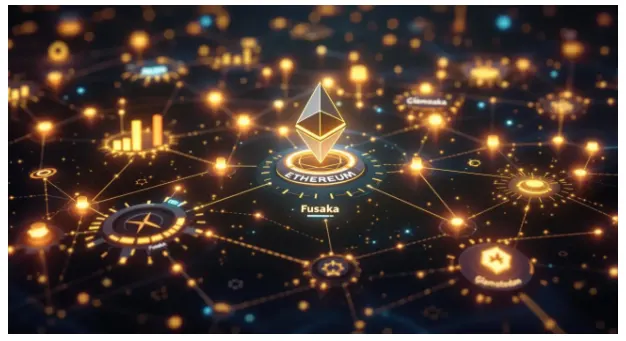
Ethereum launches Fusaka, boosting scalability and enabling larger Layer-2 growth. (Image Source: Bitcoin world)
What Fusaka Actually Upgrades in Tech Under the Hood
Fusaka isn’t about flashy features or pretty UI. It tackles Ethereum’s hard, technical kind that has held back growth. Here’s what’s changing under the hood:
PeerDAS = Smarter Data Verification
- Before Fusaka, full nodes validating Ethereum transactions often had to download entire data blobs to confirm what Layer-2 networks (rollups) posted. That’s heavy on bandwidth and storage.
- With PeerDAS, validators only sample small, random parts of blob data to verify availability. No need to download every blobsaving bandwidth and making nodes much lighter.
- The result: Ethereum can support many more blobs per block, which means far greater Layer-2 capacity while keeping security and decentralisation intact.
Gas Limit & Block Capacity Increase
- Fusaka raises the block gas limit dramatically, letting more transactions and more complex smart-contract work fit in each block.
- That reduces bottlenecks during busy periodsgreat for DeFi surges, NFT drops, and heavy Layer-2 usage.
Blob Capacity Expansion Via BPO Forks
- Fusaka isn’t a one-time boost. It sets off a phased expansion of blob capacity through Blob Parameter Only (BPO) forks.
- In the weeks and months ahead, blob limits per block will rise, enabling more data throughput and supporting a growing roll-up / L2 ecosystem.
Back-End Optimisations, Cleaner EVM Execution & Better Developer Experience
- Beyond throughput and data handling, Fusaka brings protocol-level upgrades: faster execution-layer performance, updated APIs, better support for common cryptographic standards, and new opcodes for efficient contract execution.
- Think of it as engine tuning: the code runs more cleanly, nodes sync faster, and smart contracts execute more efficientlybenefiting developers and users alike.
What that Means for Web3, Layer-2s & Everyday Users
Fusaka isn’t just a technical milestone; its ripple effects touch the whole Ethereum ecosystem and potentially beyond.
Lower Costs, Faster Transactions, Better UX
By boosting capacity and trimming data requirements, Fusaka should lower fees on Layer-2 networks during peaks. With more blob space and smoother throughput, rollups can post batches more cheaplytranslating to cheaper fees for DeFi apps, wallets, and NFT platforms. In short, Web3 could start to feel less like niche tech and more like a practical everyday tool.
More Decentralisation: Easier to Run a Node
PeerDAS cuts bandwidth and storage needs so more people (even hobbyists) can run validator nodes without enterprise gear. That boosts decentralisationa core Ethereum value. More distributed nodes = more resilience, fewer choke points.
Layer-2 Ecosystem Growth Accelerates
Rollups, built on Ethereum’s security, stand to gain the most. With bigger data space and cheaper blob posting, Layer-2 networks can scale more aggressively, support more users, and host more complex appsDeFi, gaming, NFTs, mass adoption. Developers can tackle bigger, bolder Web3 projects now that the infrastructure is upgraded.
A Smoother Route Toward Ethereum’s Long-Term Vision
Fusaka isn’t a stand-alone momentit’s part of a long-term roadmap (post-Merge) toward a high-performance, globally scalable, sustainable blockchain.
By solving data availability and throughput now, Ethereum lays the groundwork for future innovationslarger DeFi, widespread Layer-2 adoption, and the potential for a blockchain that supports millions of users worldwide.
Why this Matters Right Now
We’re at a pivotal Web3 moment. Fusaka’s activation isn’t just technicalit signals Ethereum is ready for serious, large-scale use.
- For Developers: The infrastructure just got far more capable. Building complex dApps, high-volume marketplaces, mass-user DeFi, or global Layer-2 services becomes realistic without choke points.
- For Investors And Users: Cheaper, faster, more reliable transactions translate into real-world utility. Ethereum and Web3 could shift from hype to practical digital economy.
- For The Broader Blockchain World: Fusaka could reaffirm Ethereum’s leadership in scalability, decentralisation, and long-term innovationattracting talent, projects, and capital.
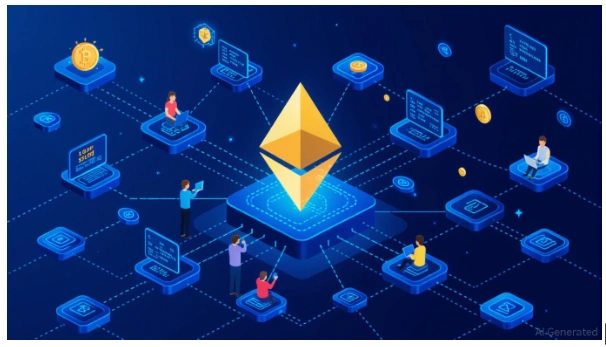
Fusaka marks Ethereum’s leap into large-scale, faster Web3. (Image Source: AInvest)
A Layer-2 and User Tsunami Is Coming
- With Fusaka live, the clearest effects will show up for Layer-2 users and buildersrollups, DeFi apps, NFT platforms, gaming chains, and any dApp hungry for throughput. The boost in data capacity and cheaper posting creates fertile ground for widespread activity.
- L2 Rollups Gain Breathing Room: More data per block, less strain on the base layer. Developers can scale apps, support more users, and try bigger experienceslarger NFT drops, high-frequency trades, social apps, games, you name it.
- For Users: Cheaper, faster, smoother interactions. Lower blob/rollup fees translate to more affordable transactionswhether you’re buying an NFT, swapping tokens, playing a blockchain game, or using DeFi. Lower friction may bring more people into Web3.
- For The Broader Ecosystem: Faster innovation. As L2s become cheaper, smaller teams and independent developers can build useful apps, pushing decentralised adoption beyond early adopters.
In short: Fusaka isn’t just an upgrade to infrastructureit could redefine what usable Web3 feels like.
Potential ETH Price Impact: Investor Sentiment & Market Flows
- Since the upgrade went live, the market has priced in optimism: ETH is trading higher on expectations of greater utility and burn from higher transaction volume.
- Analysts see this as a potential demand catalyst, especially if Layer-2 usage climbs as anticipated.
- For Staked ETH Holders, Fusaka reshapes the long-term narrative: not just a speculative asset, but the backbone of a high-performance Web3 economydriving demand from real usage.
- For Institutions And Large dApp Builders, Fusaka signals Ethereum is ready for serious businesshigh throughput, enterprise-grade dApps, and global user bases.
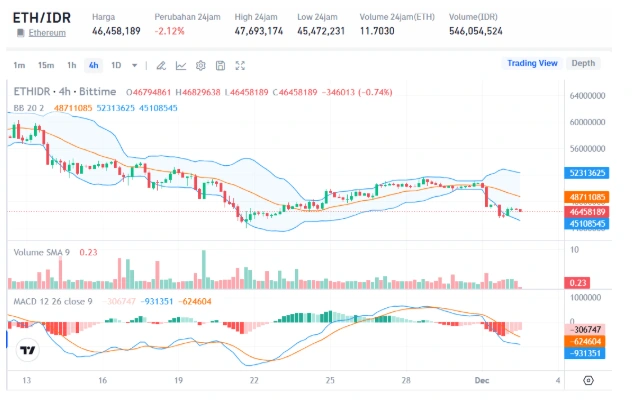
Fusaka fuels ETH optimism, real-usage growth, and enterprise-ready adoption. (Image Source: Bittime)
Barriers, Risks & What Could Go Wrong
Every big upgrade comes with downsides. Fusaka is powerful but not free of risks.
Validator/Node Operator Concerns: Who Runs Ethereum
One goal is lighter node operation via sampling, which lowers the bar to run a validator and helps decentralisation.
But the plan also includes future BPO forks to raise blob capacity. As throughput grows, bandwidth and upload needs for some validators will rise, potentially favouring better-resourced operators and making hobbyist nodes harder to maintain.
Also, the upgrade’s complexitynumerous interlinked EIPs, new data-availability model, EVM changescreates non-zero risk of bugs, stress, or compatibility issues for apps or wallets built pre-upgrade.
Adoption is Not Automatic: Rollups and Developers Have to Embrace it
Fusaka provides the plumbing, but L2 rollups, dApps, and dev communities must adapt to the new environment: update contracts, test thoroughly, migrate storage and data posting logic, rework fee models. If many projects delay or avoid changes due to risk, legacy code, or resources, adoption could be slow and the benefits muted in the near term.
Market Dynamics and External Influences: Ethereum’s Value is Never Certain
While optimism runs high, price depends on more than tech upgrades. Macro conditions, sentiment, regulation, and competing blockchains still matter. Some risk reports note that higher gas limits and throughput could drive state-size growth and computational load, making long-term node maintenance harder if not managed carefully.
What to Watch in the Coming 6–12 Months
Watch to see if Fusaka is a turning point, or just another upgrade:
- Layer-2 Activity Metrics: Throughput, Fees, Usage
Are rollups posting more blob data? Is L2 transaction volume rising? Are average fees dropping? Is there a wave of new dApps, NFT launches, or DeFi projects on rollups? A sustained up-trend would show real adoption from Fusaka’s capacity boost. - Node Health & Decentralisation
Are more validators joining? Are home setups rising? Are fewer nodes dropping due to resource strain? Is the validator balance staying even, or drifting toward big operators? Does Fusaka democratise node operation or centralise it? - ETH Supply & Burn With Usage
Higher throughput could mean more blob fees and more ETH burned, potentially tightening supply if usage grows fast. Some see this narrative taking shape. - Developer Sentiment & Ecosystem Growth
A surge of new projects migrating post-Fusaka would signal the upgrade unlocked new waves of innovation.
The Bigger Picture: Fusaka as a Step Toward Ethereum’s Long-Term Vision
Fusaka isn’t the final word, but it could mark the moment Ethereum moves from “blockchain under development” to “scalable Web3 infrastructure ready for serious adoption.” It brings the network closer to the ideal: scalable, secure, decentralised, and practical. If usage climbs, rollups scale, and developers build, a renewed wave of interest in decentralised apps could bridge the gap between speculative markets and real Web3 utility.
But the caveat remains that success isn’t guaranteed. Infrastructure upgrades matter only if people use them. The coming months will reveal whether Fusaka delivers.
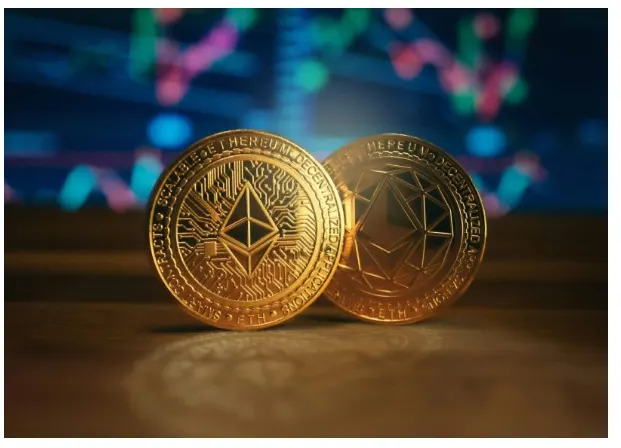
Fusaka moves Ethereum closer to scalable, secure, and practical Web3. (Image Source: LinkedIn)
Possible ETH Price Impact, Investor Sentiment & Market Flows
- Since the upgrade went live, the market has already responded: ETH Ethereum’s native token is trading higher, buoyed by optimism that increased utility and burn (from higher transaction volume) could support longer‑term value. (FX Leaders)
- Some analysts see this as a catalyst for renewed ETH demand, especially if Layer‑2 usage surges as expected. (CoinCentral)
- Meanwhile, for users or holders of staked ETH, the upgrade reshapes ETH’s long‑term narrative: not just a speculative asset, but the backbone of a high‑performance Web3 economy driving demand based on real usage, not hype. (CoinDesk)
- For institutional actors, enterprises, or large‑scale dApp builders, Fusaka may signal that Ethereum is ready for “serious business” a network that can support high throughput, enterprise‑grade dApps, and global‑scale user bases.
Hurdles, Risks & What Could Go Wrong
Every big upgrade has trade‑offs. Fusaka is powerful but not risk‑free.
Validator / node operator concerns: who actually runs Ethereum?
One design goal of Fusaka is to make node operation lighter (via sampling instead of full data download). This lowers the barrier to entry for validators and decentralisation good. (Ethereum Foundation Blog)
But: the roadmap also includes incremental increases in blob capacity through upcoming parameter‑only forks (BPO forks). As data throughput rises, bandwidth and upload requirements for some validators will increase. That could favour better‑resourced operators, or make hobbyist/self‑hosted nodes harder to maintain over time. (Longbridge SG)
Also, the complexity of the upgrade many interlinked EIPs, new data‑availability model, changes in EVM behaviour means there’s a non-zero risk of bugs, unexpected network stress, or compatibility issues, especially for applications or wallets built before the upgrade. (Datawallet)
Adoption is not automatic: rollups & developers must embrace it
Fusaka gives the plumbing, but to see the benefit, L2 rollups, dApp teams, and developer communities must adapt to the new environment. That means updating smart contracts, testing thoroughly, migrating storage/data‑posting logic, and reworking fee models.
If many projects delay or avoid those changes e.g. due to perceived risks, legacy codebases, or resource constraints adoption could be slow. That could mute the theoretical benefits, at least in the near term.
Market dynamics and external factors ETH’s value isn’t guaranteed
While many are optimistic about ETH’s price trajectory post‑Fusaka, price depends on more than just technical upgrades. Macro economic conditions, global market sentiment, regulatory developments, and competing blockchain innovations will still play big roles. As one risk report noted, elevated gas limits and data throughput could increase state‑size growth and computational load potentially making long‑term node maintenance harder if not carefully managed. (JuCoin)
What to Watch in the Coming 6–12 Months
To gauge whether Fusaka becomes a turning point or just another “good upgrade” keep an eye on these indicators:
1. Layer‑2 activity metrics: throughput, fees, usage
- Are rollups posting more blob data?
- Is transaction volume on L2s increasing significantly?
- Are average fees per transaction dropping?
- Is there a surge in new dApps, NFT drops, or DeFi launches on rollups?
A sustained up‑trend here signals that Fusaka’s capacity boost is translating into real adoption and user growth.
Also Read: XRP Price Forecast 2025: Vanguard Shift Ignites New Demand
2. Node‑operator health & decentralisation metrics
- How many new validators are joining? Are home‑setup or small validators increasing?
- Are fewer nodes dropping off due to hardware/bandwidth stress?
- Is the node‑count distribution (big validators vs small) remaining balanced?
Key question: does Fusaka truly democratise node operation or gradually centralise it around well‑resourced operators?
3. ETH supply & burn dynamics combined with network usage
Post‑upgrade, higher transaction/rollup throughput → more blob fees → more ETH burn (via base‑fee mechanics) could impact ETH’s supply dynamics. If usage grows strongly and burn keeps pace, that could modestly tighten supply or at least support value over time. Some analysts already see that narrative in motion. (CoinCentral)
4. Developer sentiment, new project launches & ecosystem growth
If we see a wave of new projects games, social apps, DeFi protocols migrating or launching post‑Fusaka, that’s a strong sign the upgrade enabled a new phase of innovation.
Of course, some may wait, test thoroughly, or build cautiously. But consistent growth in developer activity, tooling support and audits will matter.
The Bigger Picture: Fusaka as a Step Toward Ethereum’s Long‑Term Vision
Fusaka isn’t the final chapter but it may mark the moment when Ethereum shifts from “blockchain under development” to “scalable Web3 infrastructure ready for serious adoption.”
With this upgrade, Ethereum moves closer to realising what many in the community have long championed: a blockchain that is scalable, secure, decentralised, and practical. The improvements address core technical bottlenecks not surface‑level features making the network resilient and future‑proof. (Ethereum Foundation Blog)
If usage climbs, rollups scale, and developers build we might see a renewed wave of interest in decentralised applications, bridging the gap between speculative crypto markets and actual Web3 utility.
But and it’s a big but success isn’t guaranteed. Infrastructure upgrades only matter when real people use them. The next months will reveal if Fusaka delivers on its promise.
Frequently Asked Questions (F.A.Q.)
- Q: What Is Fusaka?
A: The December 2025 Ethereum hard-fork was to enhance scalability, handling of data, validator efficiency, and gas throughput. - Q: What Is PeerDAS And Why Does It Matter?
A: Peer Data Availability Sampling lets validators verify blob data by sampling small parts instead of downloading everythingcutting bandwidth/storage needs and enabling secure but scalable Layer-2 rollups. - Q: Will Fusaka Make Gas Fees Cheaper For The Users?
A: Indirectly, yesespecially for Layer-2 users. Additional data capacity and smoother throughput allow rollups to post batches cheaper, reducing costs and improving speed. - Q: Does Fusaka Change The Way I Am Interacting With Ethereum As A Normal User?
A: Not immediately. It strengthens the network behind the scenes. Benefits like lower fees, faster L2 apps, and better decentralisation will appear gradually as developers scale up. - Q: Is Fusaka The Last Upgrade Ethereum Will Ever Need?
A: No. It’s a key step in a broader roadmap of future upgrades to further scale and optimise the network. - Q: I’m A Regular User Of EthereumWill I Notice The Difference Right Away?
A: Not necessarily at first. The backend improves, not the UI. Over time, as Layer-2s and dApps take advantage, you’ll likely see lower fees, faster transactions, and smoother UX. - Q: Should I Be Running A Validator/Node Now That Fusaka Is Live?
A: Possiblyfewer storage and bandwidth demands help. But as blob usage rises, upload needs may increase again. If you’re on a modest setup, monitor capacity closely. - Q: Could Fusaka Cause Fee Drops But More Centralisation?
A: That’s possible. Though sampling eases light nodes, higher throughput could favour better-resourced validators. Monitoring decentralisation metrics will be important. - Q: So Fusaka Makes Ethereum “Bulletproof” Right Now?
A: No. It’s a major step, but not the final solution. Future upgrades will address state management, stateless clients, and more to keep Ethereum robust as usage grows. - Q: What is Fusaka?
A: Fusaka is the December 2025 hard‑fork upgrade of Ethereum, designed to boost scalability, data handling, validator efficiency, and gas throughput across the network. (Ethereum Foundation Blog) - Q: What is PeerDAS and why does it matter?
A: PeerDAS stands for Peer Data Availability Sampling. It lets validator nodes verify blob data by sampling small parts instead of downloading everything drastically reducing bandwidth/storage demands and enabling secure but scalable Layer‑2 rollups. (ethereum.org) - Q: Will Fusaka make gas fees cheaper for users?
A: Indirectly, yes especially for users of Layer‑2 rollups. With increased data capacity and smoother throughput, rollups can post batches more cheaply, which can reduce transaction costs and improve speed. (CCN.com) - Q: Does Fusaka change how I interact with Ethereum as a normal user?
A: Not instantly. Fusaka doesn’t add flashy new user‑facing features. Instead, it strengthens the network’s core. The benefits lower fees, faster L2 apps, better decentralisation will show up gradually as developers and rollups scale up. - Q: Is Fusaka the final upgrade Ethereum will ever need?
A: No. Fusaka is a critical step but part of a broader roadmap. Ethereum’s team continues to plan future upgrades to further scale, optimise, and evolve the network. Fusaka simply lays the foundation for those next phases. (ethereum.org) - Q: I am a normal Ethereum user will I immediately notice a difference after Fusaka?
A: Not necessarily immediately. Fusaka improves the network’s backend, not the user interface. But over time as Layer‑2 rollups, dApps, and services take advantage of the upgrade you’ll likely benefit from lower fees, faster transactions, and smoother UX. - Q: Should I run a validator/node now that Fusaka is live?
A: Possibly Fusaka lowers storage and bandwidth demands thanks to PeerDAS, which can make node‑running more accessible. But be aware that as blob‑usage rises, upload/bandwidth demands may climb again. If you’re running on a modest setup, monitor capacity closely. - Q: Could Fusaka trigger a drop in fees but worse centralisation (only big operators supporting high-volume nodes)?
A: That is a realistic concern. While sampling reduces burden on light nodes, the sheer increase in throughput and data could favour better‑resourced validators over time. Watching decentralisation metrics will be important. - Q: Does Fusaka make Ethereum “bulletproof” now no more scaling problems?
A: No. Fusaka is a major step, but not the final solution. The roadmap still includes future upgrades (state‑management improvements, “stateless clients”, further scalability tweaks) to keep Ethereum robust and scalable as usage grows.