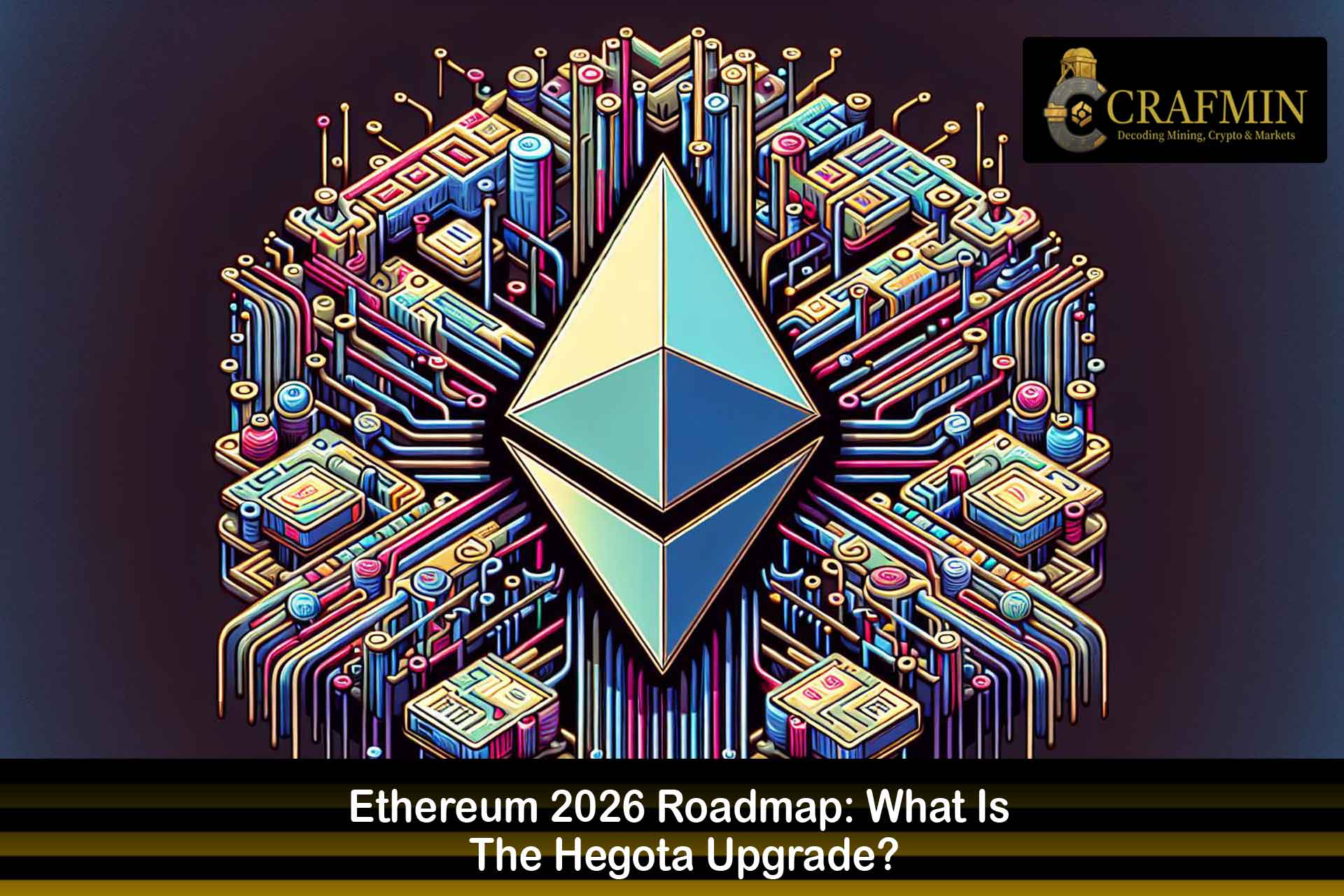
Developers have officially confirmed the Ethereum Hegota Upgrade, which is set to arrive in late 2026, thus marking the beginning of a new era for the Ethereum 2026 roadmap. The announcement comes right after
Ethereum transitions to a faster and more predictable development cycle, which is aimed at delivering structured improvements across the network. The Hegota upgrade will take place after the Glamsterdam hard fork, which is anticipated to occur earlier in 2026.
All these upgrades together form a coordinated plan to enhance the network’s scalability, decentralisation, and long-term sustainability while keeping the development leadership of Ethereum around the globe.

The announcement comes right after the Glamsterdam upgrade finalisation.
What Is Driving The Ethereum 2026 Roadmap?
To reduce the number of irregular upgrades, Ethereum developers have decided to move towards a biannual release schedule. This major turn is a reflection of ecosystem demand for faster innovation and, at the same time, clear expectations around the evolution of the protocol.
Under the Ethereum 2026 roadmap, Glamsterdam will deliver earlier network changes, and Hegota will finish a second round of refinements at the end of the year. This rhythm also allows for the more careful creation of complex proposals without overall progress being delayed.
How Will The Ethereum Hegota Upgrade Improve Performance?
The Hegota upgrade for Ethereum is still in the planning phase, with the main proposal to be chosen at the beginning of 2026. The initial talks have it that the upgrade may contain enhancements that were left out of Glamsterdam in order to prevent a single hard fork from being overloaded.
Implementation of Verkle Trees, a data structure intended to cut down storage needs for node operators, is the most prominent candidate among the upgrades. This transition might make the hardware requirement less strict, and hence it will be possible for more people to participate in the Ethereum network all over the world.
Another potential improvement is related to state and history expiry, whereby the previous data storage requirement for nodes will be reduced. The network will thus save on long-term state growth and be made more efficient.

Hegota may include enhancements deferred from the Glamsterdam upgrade.
Why Does The Ethereum Hard Fork 2026 Matter?
In more than one way, the Ethereum hard fork 2026 cycle is a technical maintenance work, but more than that. The hard fork reflects the strategic thinking of Ethereum regarding scalability while preserving decentralisation, which is still a major concern for public blockchains.
Lowering the storage and operational costs, Ethereum would make it easier for independent validators and developers to come in. This wider participation not only supports the network but also strengthens the trust in its long-term viability.
Will The Ethereum 2026 Roadmap Affect Global Adoption?
A more transparent and quicker upgrade schedule might put more confidence in the institutions and developers who are already on Ethereum. Predictable upgrades give large projects the possibility to plan their deployments without the risk of unexpected disruptions.
With the expansion of decentralised finance, gaming and tokenisation, the efficient evolution of Ethereum remains a necessity. The Ethereum 2026 roadmap thus puts the network in a position to be a strong competitor even in the midst of a congested blockchain market.

Ethereum’s efficient evolution ensures competitiveness in a crowded blockchain market.
What Comes Next After Hegota?
The developers of Ethereum will define in detail the scope of both Glamsterdam and Hegota in the preliminary meetings of 2026. Before each upgrade is applied to the main network, the testing phases will occur.
Eventually, the success of the Ethereum Hegota upgrade will hinge on adoption, performance gains and network stability. These are not the kind of upgrades that are targeting short-term changes, but are more aimed at strengthening the foundation of Ethereum.
How Developers Are Preparing For Hegota
To confirm the Hegota upgrade’s stability, Ethereum developers are rigorously testing new features in a controlled environment. Various testnets are running the simulations where the focus is on Verkle Trees, state expiry, and other efficiency improvements.
This testing iteration method is aimed at allowing the network issues to be detected well in advance before the hard fork is done, thus keeping the ecosystem secure and reliable.
Potential Implications For Investors And Users
The Ethereum 2026 roadmap could be a confidence booster for the market as it sets out the upgrade schedule more clearly. Though price changes stay uncertain, the Hegota upgrade might be the main reason that both institutions and individual investors, who are looking for a network that is predictable and resilient, come to the Ethereum market.
Along with that, the improved network efficiency may lead to lower transaction costs, which will in turn lead to wider use of dApps, DeFi projects, and staking opportunities.
Also Read: Ethereum’s Fusaka Upgrade Sparks Altcoin Revival: Is the Market Poised for a Year-End Surge?
Frequently Asked Questions
Q1: What is the Ethereum 2026 roadmap?
A1: The Ethereum 2026 roadmap outlines planned network upgrades, including Glamsterdam and Hegota, designed to improve performance and decentralisation.
Q2: When will the Ethereum Hegota upgrade occur?
A2: The Ethereum Hegota upgrade is scheduled for late 2026, following the Glamsterdam hard fork earlier in the year.
Q3: What is the goal of the Ethereum hard fork 2026?
A3: The Ethereum hard fork 2026 aims to reduce storage burdens, improve efficiency, and support long-term network scalability.
Q4: Will Hegota impact Ethereum users directly?
A4: Most users may not notice immediate changes, but improved efficiency and decentralisation benefit the broader ecosystem.