
The Keys to Knowledge Initiatives
What is Happening?
Binance faces challenges yet again. Not quietly. Not hypothetically. Now.
Internal reports and messages related to compliance that have leaked seem to point to the fact that the world’s largest cryptocurrency exchange continues to process high-risk transactions despite a historic settlement with US regulators. (financemagnates)
Binance is under renewed regulatory pressure after compliance leaks. (Image Source: The Africa Report)
In these texts, the relevant question being asked at present in unison by regulators, investors, and the government is: Is Binance really transforming, or has just the compliance problem become less noticeable in the world of cryptocurrency?
Timing is of the essence. It becomes relevant in the context of the ever-tightening global framework of regulation of cryptocurrencies, the focus on enforcement, and intolerance of grey areas. It is not even an issue of whether there should be cryptocurrency regulation. The answer to that question is long past.
Who complies, and who claims to comply, becomes the question at this point.
Why This Binance Scandal Sinks Deeper Than Other Scandals
There has been a scandal associated with crypto since the beginning. Fail, rug pull, fraud, manipulation.
It feels different.
Binance has already paid out a settlement in the order of multiple billions, in addition to agreeing to abide by strict regulations. This was a time that was expected to mark the beginning of crypto’s co-existence with the norms of the financial market across the world.
Rather, it would appear that the leaks are a manifestation of a certain level of friction within the system itself.
There are suggestions that the accounts that contained the characteristics of high risk had been identified as such by the compliance departments. Some transaction patterns had raised an alarm. Escalations within the company had occurred.
It is this difference, between the warning and the guarantee, that regulators are most anxious about. It shifts the emphasis from past mistakes to the present risk.
What Apparently Appears in Leaked Files
From the leaked files, there appears to be a situation of institutional friction as opposed to a situation of a lone wrongful decision.
According to the reports, the documents comprise:
- Identifying high-risk users repeatedly
- Internal debate on transaction exposure
- Delays or disputes concerning account action
- Pressures between Growth, Liquidity, and Enforcement
This in itself may not represent wrongful action. This is an important difference. However, regulators do not regulate intent. They determine consequences.
Should the high-risk flows continue despite awareness, then the law enforcement agencies will see this as a failure, rather than a technical one.
Why Regulators are Losing Patience in 2025
“Crypto is new.” That explanation will no longer suffice in the eyes of regulators.
The crypto infrastructure industry has grown to an equal level compared to traditional finance in terms of size, speed, and reach by the year 2025. The crypto industry is in the same category concerning the level of expectation, to an even stricter standard.
Among the reasons for this backlash are:
- Cross-border risks associated with money laundering
- Sanctions enforcement in a fractured geopolitical landscape
- Terrorist financing
- Losses occasioned to consumers by market changes
- Political pressure to demonstrate strength against financial crimes
Currently, cryptocurrency exchanges are sitting right in the middle of all five. Binance, because of its sheer size, is caught up in the middle of the middle.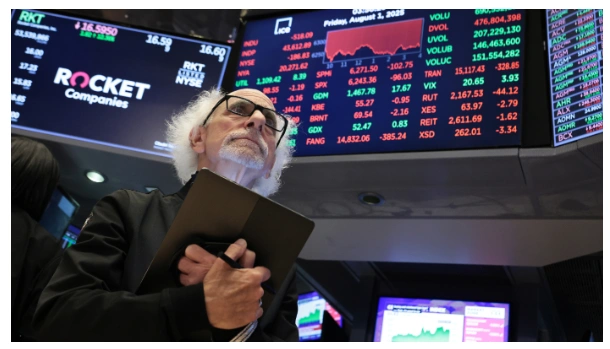
Regulators lose patience as crypto reaches traditional finance scale. (Image Source: The Hill)
Challenge of AML/KYC in Crypto Exchanges
Conventional banks operate under geographical constraints. Cryptocurrency exchanges don’t.
Binance has to operate within hundreds of jurisdictions that come along with their own laws and enforcement standards. This limits scalability.
Key compliance drivers are:
- Know-Your-Customer
- Anti-Money Laundering
- Sanctions Screening
- Ongoing account risk assessment
- Transaction pattern analysis
In the cryptocurrency world, at the speed at which things are moving, when the loss of confidence happens, it becomes difficult to restore trust.
What it All Means For Casual Crypto Users
This is more than a Binance story. It applies to those who:
- Hold cryptocurrency in an exchange
- Trade on centralized platforms
- Make use of stablecoins
- Operate Web3 businesses
- Hold long-term investments in digital assets
This would mean that stricter enforcement would bring repercussions trickling down. Accounts freeze. Withdrawals dwindle. Liquidity shifts. Market confidence trembles.
It normally has its impacts on the retail customers before impacting any institution.
How the Market Resisted: Masking Turmoil With Tranquility
Until now, the crypto markets have been cautious. Bitcoin has not crashed. Ethereum is applicable. Alt coins fluctuate before stabilizing.
This serenity conceals an important thing. A sufficient level of market development has emerged such that the risk of exchange can be separated from value. That is certainly positive. However, it does not eliminate risk.
Since the presence of regulatory authorities to penalize, restrict, and challenge their licenses affects more than just one platform, there could be severe repercussions. Liquidity splinters. Transaction costs rise. Access becomes limited.
This morning I talked on @Bloomberg TV about crypto market structure, 2025 institutional adoption, and 2026 outlook. Key takeaways:
Markets are maturing. Institutional participation improved liquidity across the board, with healthier price discovery, deeper order books,… pic.twitter.com/wHACP9bJDt
— Ambre Soubiran (@ambresoub) December 22, 2025
A Turning Point in the World of Crypto Regulation
This leak comes at a critical moment. Countries stopped drafting laws on cryptocurrencies. They started to implement them.
- Australia streamlines licensing regulations.
- Europe has adopted MiCA.
- There is US coordination between agencies.
- Asia refines supervision.
This is the age of operation regulation, not the age of consultation. These kinds of dealings are not capable of proving on a real-time basis that they are in compliance with regulatory requirements. This lack of ability to prove real-time compliance affects the governance structure and controls of these dealings.
Binance files will be a test of strength for the entire industry.
Rising International Action: Regulators, The Marketplace, And The Crypto Community
Although Binance asserts that it has enhanced strict surveillance policies, it looks like regulators, as well as members in the marketplace, are in doubt concerning whether Binance has been able to shut gaps in its oversight body. The countries in Europe, Asia, and the Middle East see it as an opportunity to express their concerns about transparency issues.
In France, there is the performance of operations that come alongside strong Anti-Money Laundering reviews by authorities, specifically on Binance and other crypto-exchange platforms. This is part of the strong effort by the entire EU to increase compliance with the MiCA framework, which is called a historic regulation aimed at harmonizing the supervision of digital assets across the entire EU.
On the other hand, in the Asia-Pacific region, the regulation of cryptocurrency is being encouraged by the development of international standards and the sharing of information. Some of the countries have also toughened the licensing requirements for the running of cryptocurrency exchanges, highlighting the need for enhanced Know-Your-Customer standards.
Global regulators intensify scrutiny on Binance amid transparency and compliance concerns. (Image Source: OneSafe)
Binance’s Response: Balancing Compliance and Competitive Pressure
Binance has also not remained idle. It has experienced the launch of learning resources regarding regulatory risks and other issues related to these matters, such as regulations and frameworks, offered by Binance Academy within the last year.
In Binance, for example, regulators have also emphasized the need for clarity in regulation to foster the development of the crypto industry. According to the senior APAC representative, regulation clarity will ensure more investments in crypto resources, which are required by traders as well as institutional investors alike.
However, it appears the leaked files expose a couple of weaknesses in their restrictions on harmful accounts in spite of their public commitment. There have been dozens of transactions that have shown linkage to illicit bodies, money for terrorism, as well as other fishy account behavior, such as accessing their accounts on different continents in a matter of hours.
What This Means for End-Users
For the common cryptocurrency investor, the aftermath of the scandal goes beyond the abstract regulation. Some of the implications that the incident has are the following:
- Risk Perception: Exchanges with massive trading operations participating in risks of compliance may significantly lower the confidence levels of risk-averse investors.
- Market Volatility: This may be as a result of public sentiment regarding compliance matters that not only influence the price volatility on the exchange-native assets like BNB but the overall market.
- Regulatory Pressures: This attention will always trigger stricter regulation that can affect the user experience in areas like KYC and access to accounts in certain countries.
This is to say that the frontier environment that had light regulation is quickly being replaced by a financial world where trust, transparency, and innovation might be viewed as being of equal importance.
Thoughts on the Market
Exchanges and Market Makers are not your friends. The biggest edge you have against them is simple: a long term horizon.
The lack of real regulatory clarity, currently no “Clarity Act” established, gives these players room to run tactics that can be… pic.twitter.com/e5fcfHvpuX
— Carlitosway (@Carlitoswa_y) December 19, 2025
A Defining Moment in Crypto Integrity
The Binance situation prompts a critical moment for all things crypto. The industry has been doing well for years with the themes of decentralization and the lack of traditional financial regulatory oversight. It seems, however, that the year 2025 is increasingly shaping up as the point when regulatory toughness will meet market reality.
US policymakers are also focusing their attention on crypto regulations in the US through new legislative initiatives that aim to modify the paradigm on which cryptocurrency platforms would function within US securities laws.
However, simultaneously, financial bodies in the international arena and financial watchdogs in the world today are improving their capacity to track blockchains in order to intercept illicit money through the illicit networks that use digital currencies as their means. This isn’t just about Binance. It’s a wake-up call for the sector as a whole.
Also Read: Tom Lee Responds To Fundstrat Bitcoin Debate As Market Outlooks Diverge
What Steps Might Occur in 2026?
Looking ahead, several trends emerge:
- More Stringent AML Regulations: There shall be an uptick in exchanges that use AI for risk monitoring.
- Global Regulatory Frameworks: Countries are gradually adopting standardized regulations that can reduce the loopholes that black markets utilize.
- Institutional Adoption: More traditional financial market participants might use digital assets. A combination of such participants and improved liquidity could potentially lead to enhanced risk management strategies.
- Shifts In Attitudes Among The Public: Scandals such as Binance data leaks will affect public confidence in the short term; however, will be useful in generating a trustworthy network for cryptocurrency in the long run.
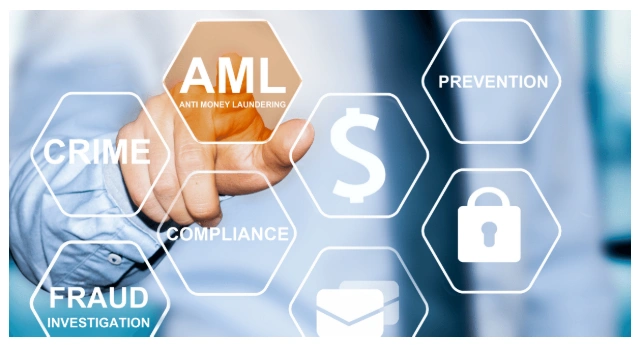
In 2026, stricter AML rules and global standards aim to boost crypto trust and adoption. (Image Source: Global RADAR)
Conclusion
Binance’s situation regarding compliance sheds light on the essence of the conflict between the pace of innovation experienced in the rapid growth of cryptocurrency and the cumbersome nature of traditional financial regulatory frameworks.
In the current situation, innovation is not just important but crucial to common investors, the regulatory bodies, and stakeholders in the industry. The history of Binance is much more than the history of one particular exchange. This is where the future of digital finance will be put to the test, if it has the capability of growing while maintaining its ideals.
Frequently Asked Questions (FAQ)
1. What is the Binance compliance leak?
Ans:
This refers to leaked internal documents that raise concerns about high-risk transactions continuing on Binance despite the company’s public commitments to stricter compliance controls.
2. Is Binance charged with any illegal acts?
Ans:
No new criminal charges have been announced. The issues raised relate to compliance violations rather than confirmed crimes. However, regulatory investigations are ongoing.
3. What does this mean for current Binance users?
Ans:
There is no immediate direct impact on users. Indirectly, increased regulatory scrutiny could influence service availability, operational functions, and regional access over time.
4. How likely is stricter crypto regulation in 2025?
Ans:
Very likely. The global trend points clearly towards stronger enforcement rather than regulatory relaxation.
5. Should users withdraw their funds from crypto exchanges?
Ans:
This depends on individual risk tolerance. Some users may prefer self-custody options, while others may remain comfortable using regulated exchanges.
6. What did the leaked Binance files actually reveal?
Ans:
Journalists reviewing the documents found that hundreds of millions of dollars continued to move through flagged accounts even after Binance reached a compliance agreement with US regulators in 2023. The activity included alleged links to terrorism financing, identity verification failures, and unusual login behaviour. These are the types of red flags that would trigger immediate alerts in a regulated financial institution.
7. How does this impact the broader crypto market?
Ans:
The revelations weaken investor confidence and underscore that crypto compliance systems still lag behind those in traditional finance. They also increase the likelihood of stricter oversight, which can affect market stability, platform operations, and adoption rates.
8. Has Binance responded to these allegations?
Ans:
Yes. Binance states that it has advanced compliance systems in place and does not ignore malicious activity. The company claims it continues to strengthen user verification and transaction monitoring, noting that blockchain transparency makes sustained illicit activity difficult.
9. What are the regulatory implications of this case?
Ans:
Regulators worldwide are drafting tighter rules covering transaction monitoring, licensing requirements, and anti-money-laundering standards. This could lead to more harmonised global regulations, an area where crypto has historically lacked consistency.
10. How can users protect themselves amid ongoing uncertainty?
Ans:
Investors should prioritise platforms that:
- Comply with local financial regulations
- Publish transparency reports and audit findings
- Enforce robust KYC and AML controls
- Offer clear and accessible dispute resolution processes
Users should also diversify their holdings and follow strong personal security practices, including hardware wallets and two-factor authentication.