

It is the holiday season of 2025, and e-shoppers from around the world are logging in, each with different hopes. This time, besides buying, they converse, inquire, and learn from new-wave shopping assistants. In most retail businesses, digital or smart shopping assistants, after a long time, are finally getting a chance to enjoy the spotlight.
Instead of browsing endless pages of items or working on multiple open tabs, consumers now utilize smart, interactive, and intelligent shopping assistants to assist them, provide suggestions, make comparisons, offer discounts, and even facilitate payments.
All this is far from subtle. It is a total introduction of retail technology platforms, and this is truly revolutionizing gift, holiday, or sales products. After all, this season’s holiday experience is far less about drudgery and far more about what a smart, knowledgeable, and kind ‘friend’ who happens to be up on exactly what you’re after. (blueconic)

Holiday 2025: Smart assistants simplify gift shopping worldwide. (Image Source: Mastercard)
Why 2025 Feels Different: Artificial Intelligence Goes From Backstage To Center Stage
For a long time, recommendation algorithms, ‘You might also like…’ boxes, and basic chatbots have remained a common feature of e-commerce platforms. However, for the year 2025, these technologies have evolved from being background assisters to being front-and-centre shopping companions.
These assistants can now be found on websites, apps, social media platforms, or even through image or voice searches. They allow you to type, speak, or even take a photograph, and these assistants can then direct you to related products, their availability, price comparisons, or even payments.
The adopters of the tools above experience positive gains such as improved exploration of products, faster correspondence of customers’ queries, reduced abandonment of carts, and optimized sales conversion.
That is, the future role of a shopping assistant powered by AI for the year 2025 is much more than what can assist you in your search, because they can actually affect your behavior.
What Shoppers Really Experience
Imagine this. You’re on your phone, searching for a birthday gift for your friend. You’re not typing keywords or verifying ten different shops. You’re asking your assistant, ‘Okay, give me a price for a medium-range wireless speaker that’s less than USD 100, for outdoors.’
They give you shortlisted picks for wireless speakers in 4-5 options, categorized according to your price range, availability, review, and relevance. You ask another question, ‘Which of them contains the highest capacity of battery?’ Your assistant filters your picks. You say, ‘Alright, get that for me if the price is slashed by 10%.’
That stream, conversational, natural, personalized, is what most consumers are trying this season. Chat assistants, especially those that proactively strive to drive sales, can now claim that they help to recapture up to 35 percent of lost sales that stem from consumers abandoning carts. Most of this is now being fueled by data.
Finally, the assistants work round-the-clock. That means whether you access the website at 2 am in Lagos, 3 pm in London, or 12 noon in New York, the bot is up. No waiting, clicking the refresh button, or the “Sorry, we’re offline” page.
For most of us, this is a convenience and a paradigm shift beyond what we’re accustomed to.
What Retailers And Brands Gain
For the mercantile and retail sectors, the implications of shopping assistants using Artificial Intelligence reach far beyond trend-setting technology.
● Personalised Engagement And Higher Conversions
These assistants provide suggestions to customers based on browsing behavior, previous purchases, or even the mood that can be identified from the text. It means that customers get to see relevant products that suit them, hence boosting conversions.
● Reduced the Workload Of Operation
Instead of training the support personnel to answer questions such as “Is this item in stock?”, “Do you have this item in size L?”, and “What is the shipping time?” A chat assistant can answer them. This leaves the human to answer difficult questions.
● Safer Margins Through Smart Pricing And Fraud/Security Checks
By adjusting pricing, testing promotion offers, and identifying ‘suspicious’ orders or payments, the artificial intelligence models can aid a retail business in overcoming a chargeback or even a fraudulent payment.
● Enhanced Data And Future-Proofed Insights
These feedback entities provide high-quality information to businesses about what their customers inquire about, what they react to when suggested, or what they choose to buy or forfeit. Feedback can be a real value for companies through this intelligence.
Finally, providing a remote-sustaining assistant that is based on artificial intelligence is merely another value-added difference that matters for both local businesses and retail chains.
Real-World Proof: Who’s Rolling Out What
Among the biggest companies, from the retail as well as tech side, have already partnered for this season.
An increasing trend among retail companies is to incorporate ‘shopping assistants’ into their websites and applications to assist shoppers via voice, chat, and image-based search and browsing.
Even on a smartphone, ‘push notifications,’ and suggestions lead consumers to promotions or to abandoned cartsthus gently steering them towards a checkout.
When it comes to high consideration areas such as electronics, fashion, or gifts, assistant technology is now better than ever at inventory, price comparisons, or consumer preference, offering an almost market experience of shopping.
Even those delivering for direct-to-consumer or niche-based companies and products feel the positive impact. A smaller enterprise can now, through the development of no-code platforms for AI assistants, develop its own personal assistant in mere hours, rather than months.
The trend here is that adoption among the giants and bite-sized companies is increasing, making this holiday season one for the books for “assistant-first” e-commerce.

AI shopping assistants help shoppers buy smarter, from global giants to small businesses. (Image Source: Newo.ai)
However, It’s Not All Smooth Sailing: Challenges And Trade-Offs
Although there is optimism, the development of AI-based electronic shopping companions also includes challenges for consumers as well as businesses.
Data Integrity And Inventory Transparency
- For such assistants to be beneficial, they need accurate information about the product, such as price, availability, shipping, and returns. If this is not available from retail companies, the recommendation offered by the assistant to a buyer can be considered deceiving.
- Brands need to provide flawless product metadata and ensure that their systems interact flawlessly with the engine.
Issues Of Trust Among Consumers
- Not all customers feel happy about relying on a digital assistant for handling the pick, pack, and ship process. Privacy of information is a concern. Some customers enjoy browsing by themselves to take a look at graphics, among others. Up to 46 percent of customers feel a little uneasy about carrying a digital assistant along for the whole way.
- Especially for high-value transactions or products that require a hands-on experience, a considerable number of customers might revert to normal browsing or a combination of both.
Merchants Must Adapt Quickly
- In retail businesses, this implies a shift towards what can be referred to as ‘agent-ready’ retailing, where the way a product is offered, priced, or merchandised marketing can become stale if retail businesses fall behind.
- First impressions have become outsourced to agents, and a poor experience can be costly for long-term loyalty. A cool storefront is no longer enough. Businesses have to be AR-friendly and friendly to Artificial Intelligence.
What It All Means For Holiday Shoppers Of 2025 And You
If you’re connecting to these e-commerce platforms this season, here’s what you can expect, along with advice on maximising your experience.
Gift Finding Suggestions
- You can ask your assistant what’s appropriate for your price range and interests. You don’t need to scroll endlessly.
Smart Deals And Price Alerts
- You can even set up price triggers or have your assistant look at deals for you as you get about your day.
Cross-Region Convenience For A Buyer
- Whether you are from Port Harcourt, Sydney, London, or New York, the assistants can adapt to different time zones and devices, and most likely be of help to you, possibly from another region, to aid you in finding deals or stock.
Hassle-Free Returning Or Comparing
- Compare specs, reviews, and offers faster, and get returned to previous selections if a product is sold out.
Better Time Management
- People who juggle work and family responsibilities, or have extremely busy lifestyles, can now save time from the previous inconvenience of actually going to the shop.
For most of us, this is what differentiates browsing for extended periods of time from obtaining a list of gifts within a matter of minutes.
What It All Means For Retailers: How To Prepare Or Fall Behind
It’s about much more than just delivering a new, shiny thing; it’s about changing the way every aspect of what they do is done. That’s what this season is about for retail.
The New Rules Of Engagement
Metadata is more important than ever. In order for recommendations to be made through AI-powered shopping assistants, all information about each product, price, size, colour, availability, and even shipping must be accurate and available to the system. If this is not the case, a retail business can be ignored by the passing-by agent, even if the store has a fantastic product.
It is now a necessity to have integrated information from multiple systems. E-commerce platforms, inventory, loyalty cards, and marketing channels all require efficient communication. If systems of a retail business communicate in different languages, this can lead to an AI-powered assistant saying a product is available even if it is not. This can cause a lack of trust between customers and retail businesses.
Speed Becomes The Key To Success
When a holiday sale or launch is involved, there is less time to influence purchasing behaviour. The functions of a shortlist provided by the AI system include speedy creation of a positive purchasing experience. Delays may cause a missed sale.
Adding a chatbot to your store is only scratching the surface. Your e-commerce business requires solid backend integration, where areas such as supply chain data, logistics, real-time inventory, payments, returns, and customer service can all be connected.
For successful AI-based e-shopping, it is most important that the retail firm considers the AI assistant, its tools, and communication channels as central to operations.
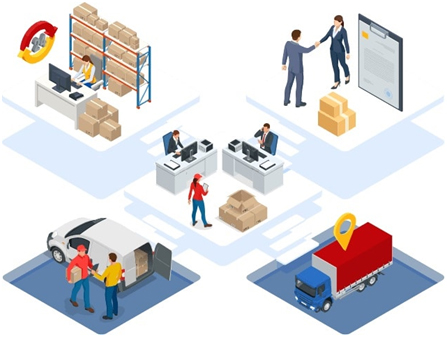
Retailers need accurate data and AI integration for seamless shopping. (Image Source: Geospatial World)
Where AI Helpers Are Strong And Where They Are A Problem
Optimising Speed Of Decision-Making And Encouraging Purchases
- People who receive assistance from AI-powered assistants make fewer decisions. Transactions happen up to 47% faster when assisted by AI.
- Individuals interacting with AI-powered chat assistants have a rate of conversion four times higher than their counterparts. Customers’ average order value is higher for AI-assisted conversations, by 20-25% compared to non-AI interactions.
Friction Reduction: Fewer Abandoned Carts And Better Support
- Active and interactive AI assistance can decrease procrastination. Customers often abandon carts due to uncertainties about sizes, shipping, costs, or availability, but quick AI help can recover up to 35% of lost sales.
- For retailers, the cost of customer service is reduced because AI assistants can answer repetitive questions, leaving human staff to address complicated queries.
Experience, Reward, And Convenience Especially For Busy Or Cross-Region Consumers
- People ordering gifts or products across time zones can use these assistants for convenience. They can ask questions, get suggestions, check availability, and proceed to checkout without waiting. This makes gift hunting a breeze.
Small To Mid-Size Retailers Opportunity
- Smaller retail businesses can also benefit. Most solutions for creating AI shopping assistants are cloud-based or SaaS, requiring minimal IT investment. Even smaller companies can become ‘agent-ready’ if their product details are optimised.
The Friction: What Remains Dragging
Trust, Transparency, And Data Privacy
These assistants tend to utilise personal information such as browsing behaviour, purchasing behaviour, or even sensitive information about payment preferences. Consumers tend to feel a little anxious about this because privacy-aware customers want to be able to see what happens to their own information.
Retailers need to be absolutely careful; failing to abide by data protection laws and regulations is unthinkable. Consumers increasingly rate companies based on responsible data handling.
Algorithmic Bias And Inequality Of The Recommendations
Inaccurate or incomplete information about the product, such as incorrect sizes or pictures, can lead to poor suggestions. This can be worse if biases exist within these algorithms, for example, favouring particular brands or products, leaving customers underserved or misled.
It can lead to customer dissatisfaction, particularly if they had relied on the AI.
Only A Minority Of Users Are Active
Although adoption is occurring, the number of users is still limited. Recent data reveals that only 25% of net shoppers have actually utilised an AI-based shopping assistant, a number that is up from previous years.
Despite this, there is some skepticism, especially among older consumers, less affluent consumers, or those uncomfortable sharing a digital assistant.
Infrastructure And Scale
For most retail businesses, especially smaller ones, the challenge of making the best use of these AI assistants lies in data cleanliness, back-end unification, and maintenance. This is a non-trivial task.
Without this, the AI assistant is merely a gadget, a stagnating, unreliable, or even negative force in terms of customer trust.

AI shopping assistants face trust, bias, and adoption challenges. (Image Source: Brookings Institution)
Larger Picture: How It’s All Pointing To A Large E-Commerce Future
Transition From Store-First To Agent-First Retail
The retail experience was historically store-based, whether in ecommerce or offline. The product description page, the category page, my account page, or the search box are optimised for human users.
2025 is a pivot, as a growing number of e-commerce transactions now begin with a conversational assistant. You’re no longer browsingyou’re asking questions. You’re no longer scrolling through your shortlistyou’re being given shortlists. You’re no longer comparing five preferred shops’s now done for you by your assistant. This is faster, simpler, and easier for most people.
New Demands For Speed, Clarity, And Transparency
Consumers increasingly demand:
- Seamless metadata (accurate stocks, up-to-the-minute price, accurate shipping/delivery times)
- Smooth checkout and fast delivery
- Privacy and transparency in communication about what’s done with the data
- Human-in-the-loop fallback for complex or sensitive matters
Merchants meeting this standard will garner loyalty; others could simply be left behind.
The Digital Divide Among Shoppers
Not all customers may fully embrace these assistants. Some prefer conventional shopping, enjoy “window shopping,” or simply do not trust these robots.
For some demographics, older consumers, or regions with less developed internet or payment systems, traditional e-commerce paths will coexist with assistant-powered paths in the short term.
Data And Ethics Are Now Essential To Brand Reputation
Every recommendation or suggestion is linked to a significant amount of dataproduct data, user data, behavioural data, or transaction data. Handling this data is now a technical, reputational, and ethical issue.
Companies that practice transparent data handling, enable opt-outs, address biases, and implement consistent controls can be viewed as exemplary. Companies that undermine these concerns risk consumer push-back or regulatory trouble.
Today, it is imperative to know all the data and use it effectively. Companies will have to continuously extract data from sources and apply insights. Here are some of the challenges they will face.
Source @Techment Link https://t.co/1cUdudrjVg rt @antgrasso #DataGovernance pic.twitter.com/smS4K1rqop
— Marketer and Customer (@MarketerNCust) November 25, 2025
What Holiday Shoppers 2025 Need To Be Aware Of: And How To Be A Smart Shopper
It is enough for a shopper this holiday season, whether in Nigeria, the UK, or Australia, to have a shopping assistant to save time. Here are methods to make the experience safe and efficient:
- Cross-Check Product Information: Rely on the assistant for suggestions, but for high-value or unique products, click through to full pages. Carefully read the terms as suggested solutions may come from different companies with varying delivery, refund, or warranty policies.
- Personal Choice + Artificial Intelligence Integration: Allow your assistant to provide suggestions, but make your own decisions. Use filters for details such as colour, size, or brand.
- Be Careful About Sharing Data: Review what your assistant requests access to. Limit or opt out if uncomfortable sharing purchase or browsing history data.
- Compare Offers By Hand If Interested: Personal assistants might favour certain suppliers. Casual manual checks can help ensure the best deal.
Why It Matters To You: As A Person Interested In Technology, Writing, And Global Audiences
You, as a writer, tech enthusiast, and world traveller, can fully take advantage of this situation:
- Content Opportunities: Retail sites now implement metadata-rich product pages, creating new opportunities for readable, scannable, human-readable content for AI agents.
- Cross-Region Relevance: Remote work across Nigeria, India, the USA, the UK, and Australia allows you to help brands optimise for diverse audiences, including underserved regions.
- Communicating Tech To Non-Tech Folks: As a philosopher and writer, you can explain how AI assistants work, their limitations, and their philosophical implications.
- Thought Leadership: This trend is expanding beyond retail into digital marketing, UX writing, and product marketing. You can articulate insights on e-commerce transformation.
Final Thoughts: The Human + AI Shopping Era Has Arrived
Holiday 2025 marks the beginning of a new retail rhythm, one where shoppers are no longer alone, and where browsing isn’t a chore but a guided, personalised experience.
Whether you’re in Lagos comparing tech gadgets, in Sydney searching for gifts, or in London tracking discounts, AI assistants are becoming universal shopping partners.
They simplify decisions.
They save time.
They remove friction.
And for retailers, they reshape what “customer experience” truly means.
As adoption continues to rise, the next frontier of e-commerce will be defined by brands that don’t just use AI, but integrate it into every touchpoint with clarity, transparency, and trust.
Frequently Asked Questions
- Q: Are Shopping Assistants Powered By Artificial Intelligence Only For Holiday Purchases?
Not at all. Holiday sales drive adoption, but the convenience of quick suggestions, procurement, and price comparisons applies every day for a variety of products.
- Q: Do These Virtual Assistants Work Effectively For Users Outside The USA Or the UK?
It varies from store to store and depends on the delivery to your region. Some global platforms allow worldwide shipping, though optimal AI paths are often directed at prominent markets such as the US, UK, or EU. Success depends on local store product availability and shipping ability.
- Q: Shall I Be Able To Surf Myself Or Continue To Depend On The Assistant?
Hybrid approach: use the tool for speed and suggestions, then manually fact-check critical information such as quality, size, specifications, shipping costs, and return policies.
- Q: Will I Be Saving Money?
Not necessarily. AI assistants may aid in finding discounts, but may also promote high-margin products. Keep track, make comparisons, and ensure the best deal.
- Q: Are Shopping Assistants From AI Safe To Use?
Yes, most of them come from reputable retail websites. They ensure a secure payment system, and they don’t require perilous permissions. However, as is the case for every online purchase, you need to review their policies for delivery, returns, and privacy.
- Q: Are These Assistants Good For Other Tasks Besides Gift-Buying For Holiday Celebrations?
Definitely. Even though holiday-related purchases lead to quicker adoption because of a high demand for gifts and a hurry to get them, there’s a need for convenience related to suggestions, checkout, and price monitoring for basic gifts, electronics, clothes, and other consumer goods.
- Q: What If The Product That I’m Interested In Is Unavailable Or From an SME?
In a couple of instances, the agents could get around this or give alternatives. These, of course, shall depend largely on the quality of integration that exists between the retail side and the system of the agents, including the availability of key stock data, good metadata, and the ability to ship, among others.