

Even the opening days of 2026 are already telling of a nervous and restless world.
The bourses in Hong Kong are booming with frontline technology offerings. Large companies are moving investments to high-end computing equipment. The economic pressure and technological change that redefine work are changing the global employment landscape. The technological race in the whole world is no longer a prediction of what lies ahead of us, but it is happening.
On the other side of the world, in cities and economies, three forces of great strength are influencing this situation: capital flows to underlying technologies, competition over who has the best computational advantage, and changes in the workforce that are driving through industries. This melting pot (where finance is hardware, talent disruption) preconditions one of the most significant years in recent technological history.

Early 2026 reveals a global economy in motion as the tech race intensifies. (Image Source: Caixin Global)
The IPO Wave: It Sets the Tone 2026
The beginning of 2026 and the end of 2025 recorded a rapid movement in the equity markets that specialised in technological companies that were developing advanced systems. One of the marquee deals is the MiniMax IPO – a Shanghai based start up that has submitted applications to list on the Hong Kong Stock Exchange and intends to raise approximately HK4.19 billion (approximately US538 million) before the commencement of trading in January.
The MiniMax story is not a capital raising story, but is anchored by Alibaba heavyweight investors to the Abu Dhabi Investment Authority. It is a perception thing: investors find opportunity in businesses that have a chance to connect local markets and global demand and ambition in the technical field. And they are moving quickly, setting posts early on what can turn out to be defining technology games of the decade.
The equity markets in Hong Kong are going through the best year of technology listing in the city since 2021. Overall, over HK16.7 billion worth of new IPOs, both AI and semiconductor companies, have been issued, and this has become the precursor of a capital mobilisation process analysts believe is sweeping Asia and further afield.
This stampede is not taking place in a vacuum. Venture capital and private equity firms are already giving out signals that 2026 will be a consolidation and growth year – mergers, acquisitions and strategic capital will increase in pace.
Chip Spending Spur: A Strategic Arms Race
The global technology push has only one side, which is the financial capital. No less dramatic is the inflow of billions of dollars in sophisticated hardware, particularly the existence of specialised chips that are used to process hard and complicated computational tasks.
Among the most notable ones is the fact that by 2026, ByteDance is set to spend on high-performance chips, which are likely to be approximately $14 billion, as the company increases its internal compute capacity to accommodate all its requirements, including content optimisation as well as advanced data processing.
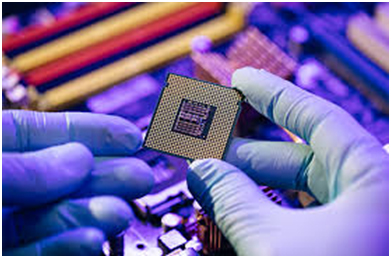
The tech race shifts to hardware as billions flow into specialised chips. (Image Source: USFunds)
It is not just a step-by-step investment. It is a change of order: organisations are no longer regarding raw computational power as a cost to operations but a strategic asset. Technical prowess on the hardware side becomes a competitive moat – similar to oil deposits that powered the world in the 20 th century.
In the case of markets like China, where state and private capital are becoming more and more integrated in terms of making technological bets, what would follow is a high level of competition, whereby infrastructure and innovation are inseparable. The dominion of the semiconductor ecosystem is viewed by tech leaders and national policymakers alike, not only on a commercial level but also on a geopolitical level.
Shifts in Employment: Not Jobs Only
Employment trends are of concern and curiosity to both investors and labour specialists.
With capital moving to automation, infrastructure, and new high-tech computing, certain industries, especially those that are repetitive or process-oriented, become strained. Research predicts major shifts in the location of labour and the way productivity requirements transform the company’s manpower patterns.
Operation-related layoffs have made headlines and received criticism. Although publicly restructuring or realigning with the economic times has been cited as the cause of some of the cuts, there is a deeper trend which is seeking better efficiency by the use of technology-enhanced workflow by organisations.
The plot is not entirely loss of a job. The data science, advanced analytics, and specialised engineering are new positions that are growing faster than a number of traditional industries. Increase in these aspects is an indicator of a bifurcation of the labour market: the fall of others, the rise of others – both under the influence of the rate of technological potential, and not only the economic fluctuations.
To the modern-day workers, this translates to an increased emphasis on flexibility and competencies that can be used to support new systems instead of competing with them.
The Capital and Talent Tug-Of-War
Simultaneously with IPO movements and spending on hardware, companies all over the world are engaged in a highly competitive race for talented workers.
Major companies on the continents are modifying remuneration, developing talent rewards and research centres to lure engineers, analysts and experts who can manage to navigate the system design and scale issues.
This reality show is a two-sided talent competition. On the one hand, it drives more investment into education, certification programmes and specialised training markets. Conversely, it increases disparity between the jobs with high skill and those with automation that can be direct or indirect, eliminating the necessity of human intervention.
This can be physically felt in financial centres and technology centres: soaring pay of specialised positions, mobility of those who do well, and the strategic movement to areas with strong research environments.

The tech boom fuels a global tug-of-war for skilled workers. (Image Source: Professional Wealth Management)
Shifts of Power: Technology is a National Strategy
It is no longer solely a cycle of technology that is unfolding in 2026.
It is a power shift.
The advanced computing capability has become a strategic infrastructure to governments, just like energy, defence, and transportation. Policymaking, business dealings, and foreign policy tensions are increasingly dependent on chip domination, data centre domination, and technical skills.
In Asia, North America, and some parts of Europe, government subsidies are being poured into computer infrastructure, research laboratories and semiconductor fabrication chains. The aim is obvious: to decrease dependency, to safeguard national competitiveness and to influence global standards.
This recalibration is the reason why the news on technology is now being featured next to the news about geopolitical briefings. Innovation is no longer an outer policy. It sits at the centre.
The New Geography of Tech Power
Over the decades, the technological leadership was concentrated in several known areas.
That geography is changing.
The revival in Hong Kong as a listing centre is an indication of a repositioning of the Asian financial markets. In the meantime, data centre investment is growing in Southeast Asia, the Middle East, and certain regions of Africa – areas that were viewed as remote to high-technology infrastructures.
This is not just the redistribution of fortune. Firms want to find places where they have access to energy, flexibility in the regulations and places where they are close to the rapidly growing users.
In 2026, the power of technology does not exist at a vertical level. Power is no longer something that is confined to Silicon Valley or a small group of Western capitals. It is common, not to mention disputed, among continents.
Why Chips Now: The Corporate Destiny
Software defined winners in previous technology cycles.
Survival in this cycle is determined by hardware access.
High-sophistication chips are no longer commodities. They are bottlenecks. Not all companies can grow equally, regardless of the cleverness of the product, due to scarcity, cost, and geopolitical restrictions.
This fact is the reason why companies focus on long-term hardware supply contracts, construct personal compute clusters, and invest in chip ecosystems themselves. The processing power is controlled to dictate the speed, dependability and capacity to expand further.
In practice, this has the effect of a new hierarchy:
- The companies that have a guaranteed compute scale accelerate.
- Companies that lack such ones fail or merge.
- Uniqueness in the hardware of a startup receives disproportionate attention.
The outcome is a market in which the choices made by the infrastructure drive the results of innovation.
The Automation Anxiety to Adaptation Reality
The workforce change is often discussed as a mere replacement narrative to the public.
The reality is more layered.
Yes, there are some roles that go away or get reduced. Tasks that are based on predictability and repetition are pressured. However, simultaneously, completely new roles appear – those that were not present just three years ago.
Organisations now seek:
- Technical to business bridging system translators.
- Those who analyze the output instead of the raw data.
- Experts who operate, audit and tune automated systems.
There is no collapse of the labour market. It reconfigures.
Adjustable workers, such as reskilled workers or workers with domain knowledge or cross-disciplinary competence, climb the ladder. There is a tension experienced by those who stand by.
Coding is not the most important skill of 2026. It is learning velocity.

From automation anxiety to new opportunities, adaptability is the skill of 2026. (Image Source: Zeno Group)
Investors No Longer Frenzied With Hype
A second silent change characterises the present moment.
Capital is growing more discriminating.
Promising was rewarded by earlier waves. This cycle rewards proof.
Investors scrutinise:
- Compute efficiency
- Revenue durability
- Infrastructure partnerships
- Regulatory resilience
Slick presentations do not secure investments. Markets prefer companies that are disciplined in terms of their operations and scalability in the long-term.
That is why infrastructure-intensive businesses that were previously perceived as slow or costly are subject to new attention. They provide concrete resources in a world where abstraction will not be a sufficient persuasion any longer.
Strategic patience replaces the age of speculative enthusiasm.
Also Read: Voice-First AI: How Next-Gen Voice Assistants are Transforming Human-Computer Interaction in 2026
The Corporate Divide Widens
With the speeding up of the technology race, there is a gap created in industries.
Big companies amalgamate benefits in terms of capital, infrastructure and talent. Smaller players have more difficult decisions to make: partner, specialise, or exit.
This does not do away with innovation. Rather, it causes it to be pushed into smaller, more targeted lanes.
Smaller companies achieve success:
- Owning niche expertise
- Serving specific verticals
- Knowledge supplements instead of platforms.
Scale is important still; more so, relevancy.
Data Centres: The Cities of the Future that Are Vowel-Less
Beyond the gaze of society, there is another change.
The data centres grow fast, reorganizing energy needs, land utilization, and local economies. Whole local economies are built around such facilities – building and maintenance, energy innovation.
In other areas, data centres transform into anchor infrastructure, leading to renewable investment and grid modernisation. They cause controversies on sustainability and resource distribution in others.
What was no longer visible is now moulding physical landscapes.
The online realm creates tangible impressions.
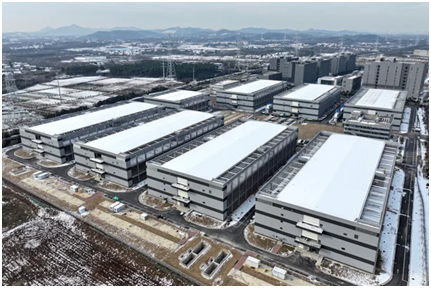
Data centres expand rapidly, reshaping energy, land use, and local economies. (Image Source: Scientific American)
Public Trust Comes into the Picture
The power of technology is scrutinised.
Since the systems affect the hiring, finance, media and governance, the expectations of the populace increase. Openness, responsibility and justice are shifted between ethical principles and business needs.
In companies that overlook trust, legitimacy is lost (and ultimately market share).
This pressure restructures product design, forms of governance and communication strategies. Trust is not a liability of compliance, but an advantage.
Reputation goes as fast as technology in 2026.
What Comes Next: The Shape of 2026 and Beyond
The technological acceleration is not theoretical anymore.
It shapes markets today.
It shapes careers today.
It shapes geopolitics today.
With the movement of capital, increased infrastructure development, and the evolution of labour, it is obvious that this is not a time of machines taking over people. It is of reorganisation around ability.
Anyone who recognises this change early, whether it is the government, business, or employees, has leverage. Those who are resistant are left behind.
2026 does not mark an endpoint. It marks a rebalancing.
And the race continues.
Frequently Asked Questions
Q1: What is making tech IPOs boom in early 2026?
Ans: Tech IPOs are riding high as investors respond to strong enterprise demand for next-generation computing, data services, and foundational technology companies that can deliver performance and scale. This surge reflects broad confidence in technology as a driver of economic growth and competitive advantage.
Q2: What does the record chip spending tell us about global competition?
Ans: Large capital allocations to compute infrastructure signal strategic positioning. Access to high-performance chips is viewed as essential by both companies and governments to maintain technological leadership and market influence.
Q3: Can we be sure of losing jobs in this new tech world?
Ans: Workforce shifts are complex. While some roles are reduced or eliminated due to technology integration, more opportunities emerge in specialised, high-skill fields. The landscape increasingly requires lifelong learning and adaptability.
Q4: Why is global competition becoming more intense now?
Ans: Foundational technology now determines economic resilience, security, and long-term growth. Countries and corporations act strategically to secure this advantage.
Q5: Can this change be maintained in the long term?
Ans: Yes, but unevenly. Regions with aligned infrastructure, education, and policy adapt faster, while others lag until reforms are implemented.
Q6: Which skills matter most in this environment?
Ans: Flexibility, systems thinking, domain expertise, and the ability to collaborate effectively with automated systems are the most valuable skills.
Q7: Are smaller companies going to survive this cycle?
Ans: Many will, by specialising. Broad competition benefits larger firms, but focused innovation allows smaller companies to thrive in niche areas.
Q8: Does this mean constant disruption at work?
Ans: Change is constant, but disruption is not uniform. Roles evolve more frequently than they disappear, requiring continuous adaptation rather than fear of elimination.