

The threat of cybersecurity is speeding at machine velocity in the international markets. It takes hackers two seconds to transfer stolen assets after an attack.
Money is being lost over networks, and the victims do not even notice. This worrying trend has been pointed out by a new report by Global Ledger. The company examined 255 crypto hacks valued at 4.04 billion US dollars in 2025.
The results indicate that attackers, in most cases, were transferring assets prior to disclosure to the masses. Approximately three-quarters of hacks experienced instant fund transfer. That share reached 84.6 per cent in the second half.
Investigators and exchanges have difficulties responding promptly. This fast implementation poses severe threats to investors and platforms. It is also an indication of a new dawn in the money laundering activities of cryptocurrency globally.

Blockchain trackers indicate near-instant transfers following significant breaches of cryptos. [Outlook India]
Instant Transfers Reshape Crypto Money Laundering Patterns
The way crypto money laundering is done is now characterised by speed. Hackers make transfers a few seconds after they access wallets. This strategy helps to avoid freezing of suspicious addresses. The initial transfer is usually made prior to the detection of abnormalities in exchanges.
However, the entire laundering process is more protracted. It required an average of 10.6 days for hackers to access final deposits in late 2025. At the beginning of the year, the process would require about eight days.
This delayed completion is an indicator of more powerful surveillance measures. When the breaches are publicised, the exchanges are more cautious and labelled. Money is then divided into smaller parts among criminals.
They take money through several wallets and chains. These measures cause obscuration of ownership and postponement of tracing. The marathon is slower compared to the sprint. This evolution reflects the way in which cybersecurity threats keep changing past mere theft.
How Crypto Laundering Works Across Bridges And Mixers?
To realise the process of crypto laundering, it is necessary to monitor cross-chain bridges and mixers. Bridges have become the primary channels of transporting stolen goods. Almost half of the illegal funds were transferred over bridges.
Approximately 2.01 billion crossed networks were done through this means. That number is higher than mixers and privacy tools. In the case of Bybit, 94.91 per cent of stolen money passed through bridges. Mixers still play a role.
It is Tornado Cash that emerged in 41.57 of hacks in 2025. It began to explode in the second half following changes in sanctions. These systems are transaction blending systems that conceal origins.
Attackers do not touch off-putting exchange deposits until scrutiny wears off. This multi-layered routing complicates work on the part of investigators and regulators.
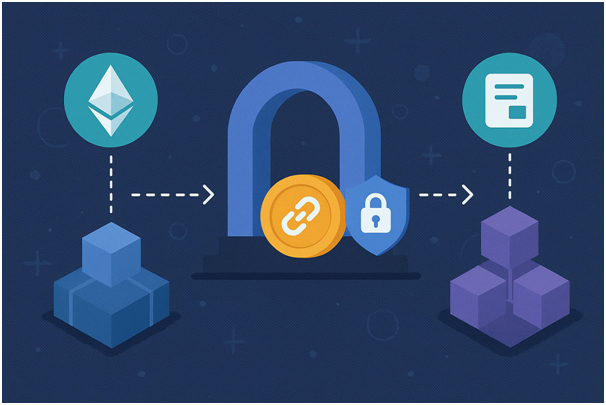
Cross-chain bridges and mixers prevail on the paths of laundering stolen tokens. [Medium]
Billions In Stolen Crypto Remain Idle
A huge portion of the stolen money is not touched. Assets are lying idle in pockets, almost half of them. Lower monitoring levels may be exploited by criminals.
This strategy decreases the possibility of freezing or recovery. The overall losses are still huge. Ethereum alone registered thefts to the tune of 2.44 billion.
That is 60.64 per cent of reported losses. Total damages were in the range of 4.04 billion in 255 incidents. Outcomes of recovery are still poor.
Only 9.52% of funds were frozen. Just 6.52% returned to the victims. Such statistics point to lapses in international enforcement. They also support the magnitude of crypto security threats to markets.
Monitoring Tools Push Criminals Toward DeFi Routes
Better analytics have now affected the behaviour of attackers. Transactions react more to breaches when they are disclosed.
Blockchain companies brand suspicious wallets in a few hours. This pressure discourages direct cash-outs to centralised exchanges.
Rather, decentralised finance has been favoured by criminals. Increasing amounts of stolen money go to DeFi services. These systems have fewer checks, and they are quicker to execute.
According to attackers, the attention dies with time. Then they make withdrawal attempts after. This procrastinated approach makes investigations difficult. It also diversifies network and jurisdiction risks.

DeFi sites are becoming secondary channels of illegal crypto flows. [The Payements Association]
What Does This Mean For Global Crypto Security Threats?
The statistics reveal that crypto security threats are becoming more automated and structured. The hackers work at machine speed within seconds.
Only then do investigators come after the money that is floating around. The regulators are under stress to enhance cross-border coordination.
Exchanges need to invest more in real-time monitoring. There is also a need for greater protection and disclosure practices among investors.
Losses are also likely to continue without the quick detection instruments. Laundering playbook continues to develop along with technology. The new stage is a crucial problem of the digital asset industry on a global level.
Also Read: Why Quantum Computing Limitations Stall Crypto Risk
FAQs
Q1. How fast do hackers move stolen crypto funds now?
A1: Hackers can shift funds within two seconds of gaining access.
Q2. How much crypto was stolen in the study?
A2: Losses reached $4.04 billion across 255 separate hacks.
Q3. What tools do criminals use for cryptocurrency money laundering?
A3: They use cross-chain bridges, mixers, and DeFi platforms.
Q4. How much stolen crypto was recovered?
A4: Only 9.52% was frozen, and 6.52% returned to victims.