

OpenAI reports having a new consumer AI device under construction with ex-Apple design head Jony Ive. It remains a secret device, but the timeline has now become a fact.
In Davos, the chief global affairs officer of OpenAI, Chris Lehane, stated that the device will probably be introduced in the second half of 2026, though he did not provide any specific date. This one fact alters all that. Hardware race is no longer a possibility. It is a fact, a scheduled event of the company which popularized chatbots.
In case OpenAI is successful, the transition will not be a new device. It will become a new routine: To talk to AI as you look at your time.
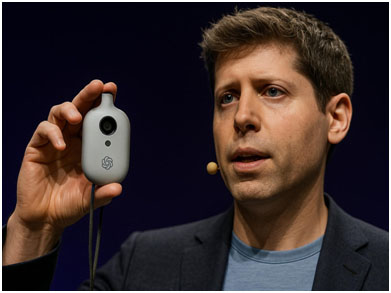
OpenAI is building a secret consumer AI device with ex-Apple design chief Jony Ive, with a likely launch in late 2026. If it lands, it could make talking to AI as normal as checking the time. (Image Source: Yanko Design)
What OpenAI Affirms (And What It Won’t)
This is what is validated at the moment. OpenAI is building a device. OpenAI said this at Davos. Jony Ive is involved in the design of the device. According to OpenAI, the second half of 2026 is the probable launch period.
What OpenAI fails to validate: the form. Lehane made no mention as to whether it was a pin, an earpiece or an object. Such ambiguity brings excitement. It also contributes to the entertaining aspect of the story since it is the time of big stakes, yet we are still left with blank details.
The Most Significant Hint: Peaceful Computing
The hints that OpenAI gives publicly are more of a feel rather than a specification. Axios reports that Sam Altman terms the device as being more peaceful than a smartphone. Peaceful refers to having fewer tabs, less bright screens, and less doom-scrolling. It is an appliance that does not tax your eyes, waits, listens and responds when you call.
To the end user, the pledge is very straightforward: less friction. To the power users, it is larger: there is a new interface layer above apps and operating systems. There, the long-term power is to be found.
What is Different About This Moment Compared to All Others of the AI Gadget Attempts?
AI gadgets have struggled. Humane AI Pin became the poster child of the issue: a bold concept, wobbly implementation, and a market that is not going to adopt a new trend. The early AI devices, such as the AI Pin, are referred to as big flops by Axios.
Why then does OpenAI believe that it can make it where others failed? Two reasons stand out now.
First: distribution. ChatGPT is not only an idea, but it is a habit. People are not being asked to try AI. You are providing them a new mode of utilization of something they are already utilizing.
Second: design credibility. Jony Ive is not a well-known designer. He creates products that people would want to touch, carry around and demonstrate. Ive speaks of high-end products that are easy, not threatening, nearly effortless to navigate.
The emotional layer is mostly absent in AI equipment. Since the AI can be brilliant, once the object is unnatural, it gets put in the back of a drawer.
The Two Most Powerful Rumours at Present: Earbuds Vs a Screenless Pen
OpenAI is quiet. Leaks are not. The present rumours are collected by Axios.
Rumour 1: “Sweetpea” earbuds. Several documents indicate that there is an earbud-like appliance with a codename, Sweetpea. TechCrunch reports that it is being indicated in the recent reports that earbuds are being developed, repeating the codename Sweet Pea. Assuming this is so, earbuds are strategically sound. They sit in your day already. They accept voice input and sound output without the use of a screen. They make AI look like a friend and not an application.
Rumour 2: a tiny, screen‑free “pen”. The other rumour is that it has a small pen-like gadget with no screen, but it is iPod shuffle-sized. That is, an object which can be clipped, pocketed, or held in your hand – the interface is dialogue, not presentation.
Although neither rumour may be flawless, they all indicate the same direction: OpenAI is pursuing screen light computing. Not anti‑screen. Not “throw your phone away.” Just… less screen by default.
Hardware is Not The Actual Battle. It is Trust.
A listening device is not new. What is novel is the fact that it listens intelligently. That puts immediate tension: Is it always on? Where does the audio go? Is it processed on-device or on the cloud? Who can access the data? Were you aware when it was listening?
The rumours even parted ways on this point. Axios provides cloud-based processing. TechCrunch documents tasks that are performed within the area instead of requesting the cloud to perform the tasks.
That distinction is not a technical point. It is the gin of the pitch to consumers. To most individuals, it might seem useful to have an AI that lives in your ear until it feels intrusive.
This is a major narrative backbone of the article. In the case of writing this as a long-form SEO article, this is one spine. OpenAI does not only sell a device. It is retailing a new level of comfort.
The Reason Why Experts Are Worried: A Fresh Interface Layer Will Pose a Danger to the App Economy
This is the angle that appeals to the technologically savvy readers. When AI starts existing on an app you open, as an assistant you speak to, the priority shifts. Search patterns change. Notifications change. There is also a change in how businesses acquire customers. Even the concept of a default application suffers when your assistant is able to do it through speaking.
And that is why this story is already gaining the attention of the broader tech community. Axios reports that the giant corporations are also heading toward consumer artificial intelligence devices: Meta has AI-enabled Ray-Ban glasses, Apple is transforming Siri into a chatbot, and Samsung is suggesting additional AI in mobile devices.
The macro trend: everybody desires to have control over the layer between you and your device.

AI is shifting from apps to voice assistants, and Big Tech is racing to own the layer between you and your device. (Image Source: Medium)
The Reason Why Ordinary Citizens Are So Interested: It is Appearing Less Taping and More Action
We can dwell on the day-to-day effect. The majority of individuals do not wake up in search of a new AI interface. They do not want to see so many annoying steps. They would like to pose questions when walking. They desire to arrange something without the opening of five applications. They desire fast summaries of messages without going through them. During cooking, they desire a shopping list to be added.
In case the device created by OpenAI can provide that very peaceful promise, it will be a part of everyday life, not a technological presentation. That is why this idea has actual momentum: it fits one of the needs that people already possess.
The Davos Signal: OpenAI is Not Much Hype, it Needs Real Use
The timing is another indirect cue. During Davos, companies talk about their objectives for the coming year. In making that announcement, OpenAI can say, “We are ready to make this a reality.
According to The Verge, OpenAI is now focusing on practical adoption in the year 2026. It observes that hardware devices powered by Ive may be included in that push, the first of which may be presented later this year, i.e., later in 2026.
In simple terms: this is not a hobby. OpenAI is taking a step towards hardware.
Davos signals intent. OpenAI’s late-2026 device talk fits its 2026 “practical adoption” push; this isn’t a side project, it’s a serious move into hardware. (Image Source: Quartz)
Market Environment: The Wearable Trail is Taking Shape
Here’s a fact that adds weight. The cover of Axios states that the Qualcomm CEO, Cristiano Amon, has said that there are 107 million AI glasses shipped each year and that this figure will increase exponentially, potentially 1007 millions next year.
Even supposing you think that is optimistic, the trend is apparent: Wearable AI is shifting to mass. This is important since OpenAI does not have to generate demand; it only has to provide the best form of something that is already wanted in the market.
The Appearance of the AI That is Leaving the Chat Box in Real Life
It is the point where storytelling is not sci-fi but real. Picture an ordinary weekday:
You’re in a noisy street. You enquire what the fastest way to your meeting would be. It answers in your ear.
You receive a message which requires a reply. You gossip when you are carrying groceries.
You hear a claim in a podcast. You request a fast fact test and reference. It answers briefly and in a reliable manner.
You walk into a café. You request it to remember the name later. It does.
It is not magic at all; it is just a convenient thing. Good convenience is the transformation of platforms.
What Next (The Telltale Signs) to Watch
OpenAI is capable of remaining silent; nevertheless, individuals will notice indicators. One of the signs to look for is close to this type of device:
Additional recruitment in hardware engineering, product designing and embedded systems.
Discuss partnering in chips, manufacture and audio parts.
More obvious privacy communications.
Even simple developer tools are an allusion at a new ecosystem.
OpenAI does not have to display the entire product to create a story. It simply continues to leave believable hints. The timeline, the second half of 2026, is that clue at the moment.
The Best Design is the One You Forget That You Are Wearing
The majority of consumer tech fails due to the fact that they require attention. Phones prevail since they capture attention. Wearables prevail when not required. The language around the launch demonstrates that OpenAI desires a quieter than a phone and simpler than an app, a process that is deemed to be peaceful.
So What Design Will Win in 2026?
It is not likely to be a device with a heavy screen. It would be placing OpenAI in the smartphone competition. The light or screen-free device combines with the existing signals and other market trends of voice-first and glance-free gadgets.
That is why the rumours are concerned with two shapes.
Option A: Earbuds (The Sweet Pea Direction)
Earbuds are already a habit. Individuals use them when commuting, in the gym, cooking and during calls. A robot in such a habit is natural. And that is why there are numerous reports about earbuds and the nickname Sweet Pea.
In case OpenAI decides on that, it is not that it speaks. What makes it really special, though, is that it provides good sound, even in noisy conditions, and is responsive enough to be believable. Earbuds also open up micro-moments that are usually ruined by the phone. You need not stop and unlock anything. You ask, find an answer and go on.
B: A Little Screenless Device That You Carry
It has also been rumoured that the existence of a small, screen-free device that you can attach, put in your pocket, or carry around. The benefit of it is that it does not remain in your ear all day. That matters for trust. Others will never embrace always-in-ear technology, however handy.
A physical reminder can be attached to a small device, such that you are always aware of whether it is on or not, such as a light or a tap. That signal is not an advantage; it makes people calm down.
The Aspect That Counts All: The Speed of Response
It is possible to forgive a lot in a new device. You will not forgive lag. When a device holds you back, you revert to your phone.
This is why the edge-versus-cloud debate is so core. According to some reports, the device is supposed to be able to process data locally; other reports state that it relies on the cloud.
As a consumer, the question is easy: Does it feel instant?
Businesswise, it is more difficult: Local processing will make it quicker and data confidential, but at the cost of added complexity and increased cost of the device. Cloud processing simplifies the device; however, this introduces issues of privacy, and it is dependent on the network.
In any case, OpenAI requires an easy experience despite the poor conditions, patchy reception, noisy streets, and busy routine. It is in that regard that the majority of AI devices falter.
The Trust Barrier: Does it Listen to Me When I Am Not Speaking?
It is here that your article can be enlightening indeed. Since it is not just a tale of design or hype. It is about consent. A talking machine instantly, utilitatively, asks you questions:
Is it constantly attentive, or only when I stimulate it? What makes me know when it is recording? Where does my data go? What gets stored? What can I delete? Is it possible to make use of it without connecting my entire life?
These are still not publicly detailed answers by OpenAI. The fact that silence is part of the norm, at this point, merely implies that the initial privacy error will take over the headlines. To make this feel peaceful, OpenAI must gain this sense through concrete indicators and direct wording policies.
The Privacy Habits Of 2026 Technology
To be trusted, a device of this sort must do three things:
- It makes listening visible. A clear indicator. No vague “maybe it’s on” moments.
- It gives you hard switches. A physical mute. A quick disable. It is not something you can tap in only in settings.
- It minimises default retention. Store less. Keep less. Allow others to have the freedom of choosing to remember instead of coercing them.
That is not idealism. It is consumer psychology. Individuals are ready to forgive potent tech when they feel dominant.
The Business Model Dilemma: Ecosystem, Subscription, Or Bundle?
This is the money question that the professionals will be interested in. OpenAI prices a device that relies on intelligence, how?
An inexpensive device that comes with an expensive subscription turns away individuals. An expensive device that is not subject to any recurring expense might not finance the computer. So OpenAI also has levels, bundles, or partnerships, in particular, since it discusses more generally practical adoption and new business models.
Possible (guessing in advance, we do not know) outcomes:
A “ChatGPT + hardware” bundle. This is the cleanest pitch. You already pay. The device transforms into your entry point.
A free base device that is upgraded to paid pro. This is the same as the scale of software products. It is also a hazard of being irritating when fundamental features get locked.
Carrier or OEM partnerships. It is the mass scale of consumer tech. Nonetheless, it diminishes the ability to control the experience, which poses a danger to a product which must feel the same.

OpenAI’s pricing puzzle: bundle it with ChatGPT, go freemium with “pro” upgrades, or partner with carriers; each option has trade-offs. (Image Source: Vertical Motion)
What is Not Out of the Ordinary About the Timing: The Market is Shifting Towards the Edge
At Davos, there is no discussion of AI in the cloud forever. It is AI coming into instruments: glasses, tools, robots, sensors, where it will be more direct and applicable. The CEO of Qualcomm attributes this to the fact that the company is already releasing AI-powered glasses in large quantities and hopes to grow tremendously.
Even when you are careful about those projections, the trend is obvious: Wearable AI ceases to be a back bet. It is the second competitive layer. The shift by OpenAI exactly fits the shift. And pressures everybody in general.
The Rivalry Wave: Apple, Meta, and the Assistant Arms Race
In case OpenAI is successful in landing a device that people love, it alters the power map. We are no longer asking which phone do you own? It is reduced to which assistant do you trust?
And giants have already been rushing to that area, be it glasses, enhanced phone assistants, or alternative wearables. This is why this story is important even to non-technical readers. The assistant you adopt is habitual. And habits are sticky.
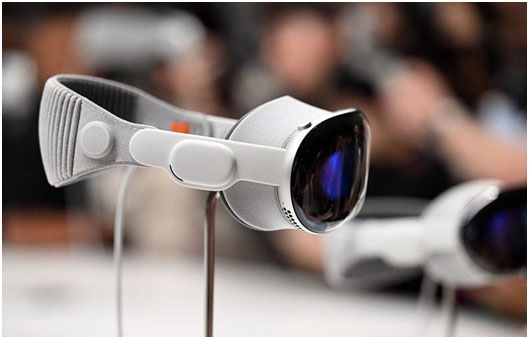
If OpenAI nails this device, the question shifts from “which phone do you use?” to “which assistant do you trust?” Big Tech is already racing there and once people pick an assistant, the habit tends to stick. (Image Source: WFFT FOX 55 Fort Wayne)
The Practical Applications That Market It (Not The Sci-Fi)
To keep your long-form SEO grounded, ground it in normal life. The following are some of the situations that sound plausible nowadays:
On the move: You tell it to take the fastest path, and then tell it to call somebody you are late. No screen, no typing.
At work: You write a stinging response as you pass through appointments. It maintains a professional and short tone.
At home: You give it the details of energy plans or insurance plans to compare and then request it to summarise the differences in plain English.
While learning, you watch a video that makes an audacious statement. You demand the first-hand source and a brief description.
These aren’t fantasies. They are the same things people do now, only fewer steps are involved.
How OpenAI Should Demonstrate (The “Make Or Break Checklist)
When you structure your article by using a checklist, it takes the readers through the entire article. The following is the list that will determine whether this device will be a daily tool:
- It must be reliable in noise. If it does not work in the street, it does not work in life.
- It must feel fast. Lag kills trust instantly.
- It has to take up the tedious tasks. Calendars. Messages. Notes. Reminders. Summaries. When it is just a response to trivia, then it is a party trick.
- It must not feel creepy; unambiguous indications, unambiguous measures, unambiguous privacy terms.
- It has to operate in ecosystems. Most people mix platforms. When it is only effective in a limited configuration, adoption is slowed.
It is this practical adoption emphasis that OpenAI is pointing to in 2026. This powerful conclusion is the one that you will use as a transition to your conclusion.
OpenAI does not have to overthrow the phone to win. It just should win the time when you do not want to see a screen. This is the actual objective in 2026, not a gadget, but a new default mode of our daily life. As soon as OpenAI and Jony Ive invent something that people really like, i.e. calm, quick, and respectful, AI will leave a chatbox and enter real life.
Frequently Asked Questions (FQAS)
- Could this be OpenAI’s secret AI device?
Ans: OpenAI says it’s building a new consumer AI device with Jony Ive, but the design and form factor remain secret for now. - What is OpenAI’s secret AI device?
Ans: OpenAI confirms the device is in development with Jony Ive, but it hasn’t revealed what it looks like or how it works yet. - When will OpenAI’s AI device be released?
Ans: OpenAI’s Chris Lehane points to a likely launch window in the second half of 2026, shared at Axios House Davos. - Is the OpenAI device a pair of earbuds?
Ans: It’s not confirmed, but several reports suggest an earbud-style device with the codename “Sweetpea / Sweet Pea.” - Will the OpenAI device have a screen?
Ans: OpenAI hasn’t confirmed this, but reporting and rumours often point to screen-light or screen-free prototypes. - Why is Jony Ive involved?
Ans: OpenAI is working with Ive to bring consumer-grade design to AI hardware, aiming for something people actually want to use daily. - Why do many AI devices fail?
Ans: Early AI gadgets often struggle with real-world usability, battery life, reliability, and convincing people to change habits. - What does this mean for Apple, Meta, and Samsung?
Ans: It reinforces a broader race: Meta pushes AI glasses, Apple is reportedly upgrading Siri toward chatbot-like capability, and Samsung keeps adding AI to phones. - What is OpenAI doing with Jony Ive?
Ans: OpenAI confirms a consumer device co-designed with Ive, but details are still under wraps. - What is the confirmed launch window for the OpenAI AI device?
Ans: The most likely window mentioned publicly is the second half of 2026. - Does the OpenAI device look like earbuds?
Ans: Not verified by OpenAI, but multiple sources keep pointing to earbuds and the “Sweet Pea” codename. - Will the OpenAI device be screen-free?
Ans: Not confirmed, but screen-free or screen-light concepts appear repeatedly in coverage and rumours. - Why do smartphones succeed while AI devices struggle?
Ans: Phones deliver consistent daily value; many AI devices ask for new habits without delivering reliable, must-have usefulness. - Why might OpenAI’s attempt work better?
Ans: OpenAI starts with a massive existing user base and pairs it with a designer known for consumer-friendly product experiences. - Will the device run on-device AI or cloud AI?
Ans: Reports conflict, some suggest local handling, others suggest cloud processing. OpenAI hasn’t confirmed the technical approach. - What does this mean for SEO and content strategy?
Ans: As voice-first devices grow, people ask longer questions and expect shorter, spoken answers, so content needs a clear structure, direct responses, and strong FAQ sections without losing depth.