
Cryptocurrency supervision in 2026 is first reshaping the US regulators’ strategy regarding digital asset markets and then making the CFTC ‘s authority the subject of a legal dispute. The proposal comes at a time when the agency is experiencing internal tensions and a reduction in staff.
The Office of Inspector General’s report mentioned digital asset regulation as a major concern for management and performance in fiscal year 2026. The law under discussion could give the CFTC unprecedented power over both crypto spot trading and prediction markets.
The number of staff dropped from approximately 708 full-time employees at the end of fiscal year 2024 to about 556 one year later, representing a decline of around 21.5%. These numbers indicate that the quality and speed of supervision may be adversely affected by the pressures of the agency’s capacity.
Global investors are keenly aware that the liquidity flows, as well as the participation of institutions, are often determined by the clarity of the regulations.
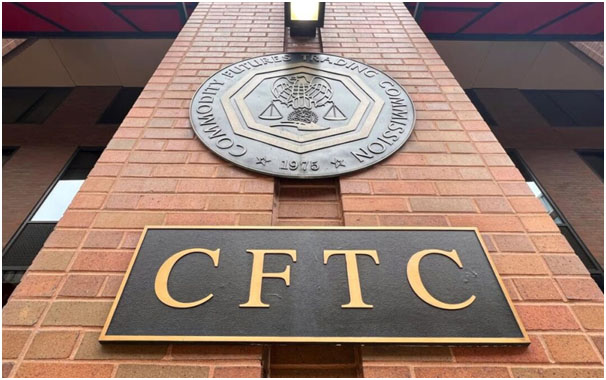
Cryptocurrency supervision reshapes US strategy, sparking a CFTC authority legal dispute. [Trade Brains]
How Will Cryptocurrency Oversight 2026 Change Market Supervision?
The US 2026 cryptocurrency oversight may compel the CFTC to increase its workforce, acquire technical knowledge, and invest in new data systems. The inspector general predicted that the mandate would become more intricate as decentralised platforms work 24/7.
Vincent Liu of Kronos Research argued the agency is already in sync with crypto derivatives and prediction markets, but the existing frameworks were not made for spot markets that work 24/7.
Therefore, the new approaches for surveillance, enforcement, and data collection will likely be introduced. Regulatory models could be hybrid, combining statutory expansion with adaptive monitoring tools.
If so, it may affect the regulators’ management of transparency, compliance, and systemic risk in the global crypto venues. Although investors are expecting the strengthening of trust through better oversight, the cost of implementation could delay the process.
CFTC Faces Staffing And Technology Pressures
The declining workforce continues to be the most apparent limitation that the regulator must deal with. The decrease in manpower leads to less frequent inspections, longer case resolutions, and greater operational risks.
Gaps in technology also hinder the capacity for data processing and real-time analytics. The inspector general pointed out that there is a need for modern infrastructure to carry out broader supervision.
Without enough money and the right people, regulations might burden internal controls. Legislators have to find a way to let their wishes be known, but at the same time be realistic in terms of funds/resources so that they do not lose the effectiveness of the regulation.

Technology investment remains critical for real-time crypto surveillance efficiency. [Deloitte]
Can The CFTC Crypto Mandate 2026 Deliver Clarity?
The CFTC crypto mandate 2026 will be greatly influenced by the developments related to the CLARITY Act. The legislation intends to provide more distinct regulatory lines between the CFTC and the SEC, with the former being in charge of the cryptocurrency cash market.
Furthermore, it discusses the need for the introduction of better classification and registration requirements. After stalemating negotiations due to last-minute changes and jurisdictional disputes, the momentum has remained quite uneven.
Feedback from Coinbase was influential in the background of the revisions, thus making the bipartisan support more complicated. The postponements have heightened uncertainty not only for the exchanges but also for the investors and compliance teams all over the world.
Regulatory uncertainty still exists to a certain extent, but it will not stop or slow down the flow of confidence and participation from institutions in the cross-border markets.
Prediction Markets Add Regulatory Complexity
By converting actual occurrences into the forms of contracts that can be traded, prediction markets expand the definition of commodities and their related markets. Such platforms put one foot in both the camps of financial speculation and the information markets.
Rob Viglione from Horizen Labs indicated that compliance-aware architectures could pave the way for selective transparency. Regulators, on the other hand, would be able to verify legality and market integrity without the necessity of exposing the entire user activity.
Such frameworks could thus foster innovation while still keeping enforcement visibility. Moreover, to the market participants, it is no longer a question but rather a matter of fact that adaptive governance models will be developed in parallel with tokenised collateral initiatives.

Prediction markets challenge traditional definitions of regulated commodities activity. [Esya Centre]
What Do 2026 US Crypto Regulation Updates Mean For Investors?
The US crypto regulation updates for the year 2026 have foreseen tighter supervisory control and enhanced accountability in digital asset markets. The enlargement of the authority’s jurisdiction might reinforce the stability of the market, while, on the other hand, it might also result in increased compliance costs.
Improved transparency might be a welcoming factor to institutional investors, but the operational risks of transitioning between the old and the new regimes will still be there. U.S. regulatory changes usually affect international markets, and the latter often reflect the former, thus increasing the latter’s global impact.
The positioning of different players will depend on the pace at which the respective agencies will adapt their resources and systems.
Also Read: Bybit Fiat‑to‑Crypto Frenzy Shakes Up New User Rewards
FAQs
Q1: What is Cryptocurrency Oversight 2026?
A1: It refers to expanded regulatory responsibilities aimed at supervising crypto spot markets and prediction platforms.
Q2: Why is the CFTC under pressure?
A2: Staffing declined from about 708 to roughly 556 employees, a reduction of about 21.5%.
Q3: What is the CFTC crypto mandate 2026?
A3: It involves potential authority expansion under proposed legislation like the CLARITY Act.
Q4: How will investors be affected by the 2026 US crypto regulation updates?
A4: Investors may gain clarity and stability but face higher compliance and transitional risks.