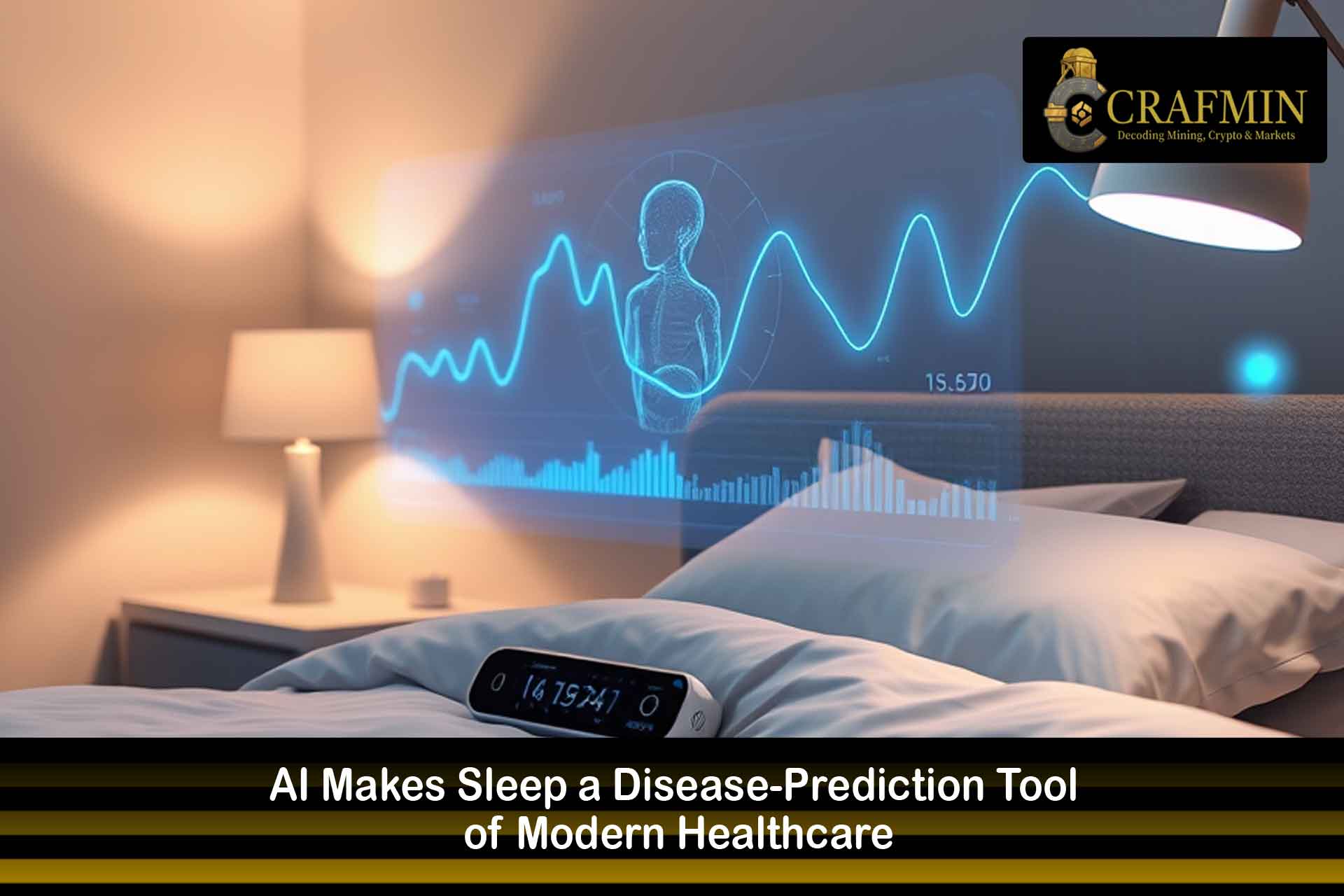
In 2026, AI will track the trends and hear the body when lying down, and notice the changes that a physician is unable to notice in real-time. (stanford)
The most dramatic change is that of sleep-based disease prediction- a growing area in which AI analyses sleep data to identify early signs of disease, often before patients feel ill.
It is not an experimental theory. These systems are already implemented in hospitals, research centres and health-tech companies.
The pledge is direct and effective: diagnose the illness earlier, cure the patients faster, and save the unnecessary medical expenses.
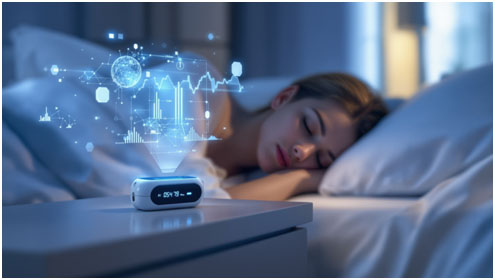
While the world sleeps, AI listens. By analysing sleep patterns, it spots early signs of disease long before illness becomes visible. (Image Source: LinkedIn)
The AI and Sleep: Why the Body Tells the Most When You Rest
The most candid state of the body is sleep.
The heart rate, breathing, oxygenation, brain activity, and movement have specific rhythmic patterns during sleep. These rhythms vary weeks or months before the emergence of symptoms when the disease develops.
AI is effective at identifying these minor anomalies.
Recent machine-learning systems use millions of data points of sleep simultaneously and seek to find temporal trends instead of individual outliers.
That distinction matters.
A clinical practitioner can overlook a gradual change in respiratory changeability in a human patient. AI does not.
What Will Make Sleep-Based AI Diagnosis Special in 2026
Previous sleep research involved the use of laboratory devices and nocturnal observation.
This model is no longer characteristic of the field.
Today’s AI systems work with:
- Wearables
- Smart mattresses
- Phone-based sleep sensors
- Domestic health care monitoring systems
These are non-invasive tools that are used to gather information without interfering with everyday life.
This data is processed by AI and creates an individual health profile.
There are no two sleep patterns that are the same. AI is adaptable to the individual and does not impose averages.
Such personalisation is what makes the modern sleep-based diagnosis so effective.
Sleep Data Can Be Used to Predict Diseases That AI Can Make
The detection range is extended at a high rate.
As early as 2026, AI models will be highly accurate in detecting early indicators of:
- Cardiovascular Disease: AI identifies alterations in the heart-rate variability and sleep fragmentation that are precursors to heart disease.
- Respiratory Disorders: Minute anomalies in breathing during sleep enable AI to identify the development of sleep apnoea, the advancement of asthma, and inflammation within the lungs in the early stage.
- Neurological Disorders: The interference with the REM sleeping patterns is an indicator of Parkinson’s disease and premature cognitive impairment.
- Metabolic Disorders: AI monitors sleeping disturbances associated with insulin resistance and early onset of diabetes.
- Mental Health Conditions: Sleep architecture is an emotional regulation measure; AI identifies trends that signal depression, anxiety and burnout.
Such insights cannot substitute for doctors. They guide them.
Action to Alerts: Physicians Using AI Sleep Insights
AI is not a diagnostic agent.
Rather, it provides risk indications.
Clinicians are provided with structured information and not raw data when a system raises a warning about abnormal sleep trends.
They see:
- Risk scores
- Pattern shifts over time
- Confidence ranges
- Suggested follow‑up tests
This situation minimises false alarms and enhances trust.
Doctors use these signals to:
- Order targeted screenings
- Adjust treatment plans
- Intervene earlier
- Monitor recovery remotely
The outcome is more intelligent treatment and fewer surplus treatments.
A Change from Reactive to the Preventative Healthcare
Conventional health care is a response.
The patients become ill, address the health practitioner, take tests and get medical care.
AI flips that model.
Sleep-based prediction shifts care upstream- before the appearance of symptoms.
The practical consequences of this change are:
- Fewer emergency admissions
- Reduce the costs of long-term treatment
- Improved patient outcomes
- Less strain on hospitals
Preventive care is no longer utopian. AI makes it operational.
Traditional healthcare reacts after illness begins. Sleep-based AI reverses that approach, detecting risk early and turning prevention into practice. (Image Source: Echelon Health)
The Story of the Human Faces Behind the Data
Take the case of a middle-aged working person who feels healthy.
No pain. No obvious warning signs.
A bracelet silently monitors months of sleep. AI picks up on the slightest breathing disturbances and changes in heart rate that are on the wrong track.
The system indicates a high risk of cardiovascular disease.
There is a follow-up test that validates initial-stage heart disease.
The treatment is initiated at an early stage; lifestyle modification is effective; medication normalises the situation.
No hospital admission. No emergency.
Just information at the appropriate time.
This scenario is more common in 2026.
AI now predicts 130 diseases from 1 night of sleep 🛌.
Newly nature-published research brought SleepFM, a foundation model trained on 585K hours of sleep recordings from 65K participants, combining brain, heart, muscle, and breathing data.
Polysomnography (PSG) records brain,… pic.twitter.com/mN54tmxgEL
— Rohan Paul (@rohanpaul_ai) January 6, 2026
Why AI Sleep Diagnosis Can Win the Trust of Other AI Tools More Often
Professionals in healthcare are very sceptical of AI.
They require transparency and reliability and clinical relevance.
Sleep-based AI is trusted to be trustworthy since:
- It is longitudinal, not cross-sectional.
- It elaborates the pattern of risks.
- It does not work against making decisions; it aids decisions.
- It is incorporated within the current clinical processes.
- Findings are consistent with actual performance.
Physicians regard earlier diagnosis as improved care. The adoption is expedited by that feedback loop.
Sleep Health and AI, Ethics, and Data Privacy
Health data is sensitive.
Sleep data not only shows the rest patterns, but it also displays mental health, habits, and vulnerabilities.
By 2026, the regulations surrounding it will be tightened:
- Data anonymisation
- Patient consent
- Secure cloud storage
- Model transparency
Now, healthcare providers are inclined to use AI systems that:
- Process the data where it can be done.
- Encrypt data end‑to‑end
- Permit patient access control.
Trust remains foundational. In its absence, stagnation of innovation occurs.

As sleep data exposes mental and physical health, trust, security and patient control become non-negotiable in healthcare AI. (Image Source: ET Edge Insights)
The Current State of AI Sleep System Usage in Hospitals
Hospitals do not implement AI alone.
They incorporate sleep-based knowledge into:
- Electronic health records
- Dashboards in remote patient monitoring
- Prophylactic screening programmes
Clinicians get notifications in addition to lab reports and imaging reports.
This integration matters.
AI is effective only when it is integrated into everyday care, rather than an additional element.
The AI Sleep Diagnostics Business Case
There is an increase in the cost and shortage of employees in healthcare systems.
AI helps address both.
Sleep-based monitoring decreases:
- Non-essential face-to-face meetings
- Late‑stage interventions
- Hospital bed occupancy
To insurers, early claims reduce claims.
To patients, it minimises disturbances and anxiety.
It gives priority to clinicians in the most important areas.
Such alignment drives adoption.
Real Hospital Case SleepFM Stanford in Practice
In the case of Stanford Medicine researchers, they developed SleepFM, which does not simply monitor sleep stages or snoring. It was constructed out of close to 600,000 hours of intense sleep tracking of approximately 65,000 individuals. SleepFM understands the secret physiological language of sleep through the monitoring of bodily heart rhythms, brain signals, body motions and breathing indicators.
The only difference is the magnitude and scope of this work. After analysing the SleepFM data against decades of health records, researchers discovered that it was able to forecast risk on over 130 diseases with a high level of accuracy, among them being heart attack, dementia, Parkinson and chronic kidney diseases.
Practically, one overnight sleep study is now capable of raising an alarm on possible health dangers that would otherwise manifest themselves many years later. Instead of raw signal traces, doctors are presented with ranked risk scores, which are valuable, practical numbers, and can make informed decisions without carrying out further invasive tests.

Stanford’s SleepFM uses large-scale sleep data to predict disease risk years before symptoms appear. (Image Source: Stanford Health Care)
Case Study Sleep Tech and Remote Monitoring
A bedroom lab is unnecessary for Silicon Valley breakthroughs. The Icahn School of Medicine at Mount Sinai obtained multimillion-dollar grants to test the tools that will not only identify obstructive sleep apnoea, but also forecast the cardiovascular risk and response to treatment.
Clinicians are also getting to learn how sleeping behaviour can predict deteriorating health way before symptoms compel them to visit the hospital through partnerships and data integration.
The trend is a contributor to telehealth development. Remote monitoring systems that alert when long-term patterns show the risk and not just momentary aberrations will include devices that only log sleep by 2026.
Consumer Wearables: The Fitness to Health Alerts
Consumer devices such as smartwatches, rings and fitness trackers are now the primary source of sleep data that continuously measures heart rate, breathing, movement and sleep quality.
Current research trains predictive models on this type of wearable data, which identifies harbingers of illness merely by alterations in sleep.
Therefore, a smart watch might be able to assist you and your clinician in identifying trouble when trends do not conform to your typical baseline.
They do not substitute formal diagnosis but rather close the chasm between clinic visits, particularly in chronic or slow-developing conditions.
Appreciating the Limitations
Sleep-based disease prediction is not an ideal thing, although promising.
Data Quality Matters: Polysomnography is a type of clinical sleep data, and there are numerous more signals than consumer data devices. Clinically trained models might not perform well on less clinical inputs.
Prognosis vs Diagnosis: High risk scores are an indication of further investigation rather than a conclusive diagnosis.
Personal Differences: Genetic factors, lifestyle, stress, drugs and even a transient illness influence sleep. Models have to be able to distinguish between normal variation and actual risk.
Access and Equity: Improved tools are still to be taken care of and with follow-up diagnostics. The first advantage can be limited to centres that are richly equipped.
Regulatory, Privacy and Ethical Issues
The data on sleep is highly personal; it indicates the quality of sleep, emotional well-being, stress reaction and brain dynamics.
Various measures are necessary as these systems become part of the clinical work systems.
Patient Consent and Control: Patients need to be aware of what data is being collected, the one storing it, and who is allowed access to it.
Transparency of Predictions: Health systems require that an explanation be made of why a model is predicting. Black-box models undermine clinicians’ trust.
Data Security: Sleep and physiological information need to be safeguarded so that they are not abused, particularly when exchanged between platforms.
Recent scholarship demonstrates that privacy-conscious models are capable of ensuring the safety of sleep cues and, at the same time, allowing useful analysis.
What This Implicates for Ordinary Patients
The disease prediction based on sleep changes the way the patients transition through their symptoms to treatment:
Patients are given actionable insights sooner. Clinicians observe the patterns which cannot be seen. Care is proactive instead of being reactive.
Clinicians can identify risk factors months or years before the appearance of chest pain or memory loss to prevent emergency admissions, decrease long-term spending, and enhance the quality of life.
Professional Opinion: The Future of Sleep Prediction
The health care is at a crossroads.
The Stanford research supports the fact that sleep possesses unexploited physiological cues which are infrequently utilised by conventional care.
Sleep experts are convinced that with the increasing number of longitudinal sleep data sets, prediction models will become more valid and expansive.
Already, studies in leading journals have demonstrated that non-invasive sleep monitoring is capable of diagnosing such conditions as sleeping apnoea with the same accuracy as clinical criteria.
This level of development is an indication of a time when sleep data will be as important to health measurement as blood pressure or cholesterol.

Healthcare stands at a turning point, with research showing that sleep holds vital health signals long overlooked by traditional care. (Image Source: The Economic Times)
Predicting Sleep Outside the Clinic
Contactless monitoring is being investigated by healthcare systems, which are devices that monitor vital signs without wearables or labs.
Radar sensors for ambient home monitoring are technologies that seek to capture slight alterations in breathing, movement and behaviour, which are indicators of impending health hazards.
This inclination makes health information a democratic process, which may be expanded to communities with low access to clinical labs in terms of early detection.
Also Read: AI Boom in 2026: The Global AI Race, Chip Wars, IPOs and Jobs
The Problem of Sleep Prediction and Public Health
On the systems level, sleep-based risk prediction aids in promoting the health goals of the population:
Risk mapping at the population level can be used to develop an effective screening campaign.
Distribution of resources is enhanced when clinicians are aware of areas or populations where there is an increase in risk indices.
Continuous data is beneficial in chronic disease management as compared to ad hoc check-ups.
Integrated in a clever way, predictive sleep signals may turn into potent meat to individuals and health care systems.
The Future Landscape- 2026 and Beyond
Sleep data will be a common tool of predictive medicine by 2026. This change may transform care in several aspects:
Wider Clinical Adoption Sleep signals will be included in the regular check-ups of patients at risk of diseases in hospitals, unlike before, when such a practice was only undertaken in special hospitals.
Smarter Wearables The closer will be the lines between lifestyle trackers and clinical instruments will become closer as consumer devices will become more accurate and clinically relevant.
Population Health Systems Anonymised, sleep-derived risk data can be used to track the trend and enable the health authorities to become proactive in anticipating the increase in chronic conditions.
Individualised Preventive Plans Evidence-based insights will empower health programmes specifically designed for each person- sleeping, diet, exercises and medication.
The theme of centrality is proactivity. With the help of patterns that are often implicit in sleep, healthcare can shift out of responding when patients already have an illness and instead direct them towards improved health.
Conclusion
The current sleep-based disease prediction technologies are a glimpse of a future where care is more attentive, sooner and more often. Predicting disease on the basis of fine sleeping habits has been something unproven, but now has a foundation of data, science and clinical practice. With the development of research and technologies, sleep can become one of the strongest opportunities to understand long-term health and well-being.
Frequently Asked Questions (FAQ)
- Q: To what extent is AI prediction of disease based on sleep accurate?
Ans: Accuracy is improving continuously. Current models are robust predictors when based on long-term sleep data rather than a single night. - Q: Does artificial intelligence substitute physicians in diagnosis?
Ans: AI supports clinical decision-making. Diagnosis and treatment remain the responsibility of qualified doctors. - Q: Do I require costly equipment for AI sleep monitoring?
Ans: Not necessarily. Many applications work with consumer wearables and home sensors already in use. - Q: Can sleep data be a disease predictor?
Ans: Yes, especially when combined with other health signals. Sleep data alone can frequently indicate impending health issues. - Q: Is my sleep data safe?
Ans: Most providers follow strict privacy regulations and give patients control over who can access their data. - Q: When can sleep-based prediction be used in clinics?
Ans: These tools are already being piloted in large health systems. Wider adoption is expected over the next 12–24 months as evidence accumulates and the economic value of the tools is demonstrated. - Q: Are predictions accurate?
Ans: Models trained on clinical sleep data have achieved clinically effective accuracy, particularly for heart disease and neurodegenerative conditions. - Q: Can wearables provide the same insights as complete sleep studies?
Ans: Wearables provide valuable trend tracking and continuous monitoring but may not match the comprehensiveness of polysomnography used in clinics. Their strength lies in ongoing surveillance rather than full clinical precision. - Q: What role does privacy play?
Ans: Privacy is crucial. Providers and patients must agree on data usage, opt-in policies, and secure storage. Trust and transparency are key to success. - Q: Can this technology replace diagnostic tests?
Ans: AI guides clinicians on what to investigate and when, but formal medical testing and professional judgment remain essential for accurate diagnosis.