
The Big Indication the Market is Looking at the Moment
Ripple unlocks 1 billion XRP and the crypto market notices instantly.
Not because this move is new. Not because it is unexpected. Nevertheless, it is being implemented at a time when XRP is experiencing increasing institutional demand through ETFs, custody products, and regulated exposure.
It is not a sham of a release. It is a stress test of these supply mechanics for XRP in a market that now appears quite different from what it did even a year ago.
The critical facts are not complicated.
Ripple pushes XRP out of escrow. ETF inflows absorb supply. Exchange balances tighten. Price volatility follows.
It is the interaction of the following forces in the present that is of interest and what this interaction tells us about the position of XRP in the crypto market of 2026?
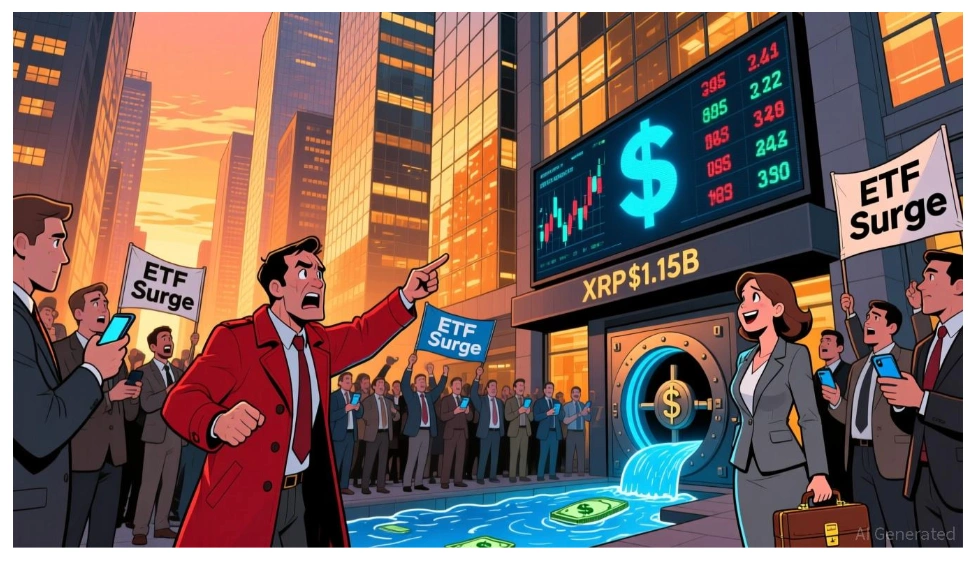 Ripple unlocks 1B XRP as ETF demand tightens supply ahead of 2026. (Image Source: AInvest)
What Went Wrong: The XRP Unlock Explained Easily
In its long-standing token distribution system, Ripple releases up to 1 billion of the XRP per month out of escrow.
This month’s unlock will be close to the 1 billion valuation mark based on the price in the market.
Part of this XRP is back in escrow. Some enter circulation. Others are used strategically, such as in providing liquidity, partnerships, and the development of ecosystems.
The very process is not a surprise to experienced investors.
The only thing that is notable is the timing.
In the market, XRP currently trades at:
- Institutional demand is directed by spot and derivative ETFs.
- The measures of exchange supply reflect balance decreases.
- Regulatory clarity of the XRP can be enhanced in major areas.
- Macro investors look after utility-based altcoins.
Earlier unlock cycles did not have that mixture.
The Reasons Why this XRP Unlock is Different Than the Rest
Fear is frequently aroused by XRP unlocks in the past years.
An increase in supply was generally understood as the selling pressure. The traders anticipated low prices. The opponents positioned XRP as inflationary.
The current market does not respond in that manner.
Traders examine absorption capacity as an alternative to panic.
They ask one core question:
Will the present demand absorb this supply without destabilising the price?
To date, the response is inclined to yes.
ETF inflows, long-term custody and declined exchange balances are indicators of XRP going into longer-term hands, not speculative churn.
This is a little twist and everything is different.
XRP ETFs, the Mute Mover of the Demand
XRP ETFs are not as attention-getting as Bitcoin or Ethereum products are.
But they are more significant than they think they are.
ETFs transform speculative interest into compliant, orderly demand. They eliminate the friction of custody. They bring institutions which do not have direct exposure to tokens.
Every ETF takes in XRP in circulation silently.
Not loudly. Not dramatically. But consistently.
This is important in an unlock cycle.
Price is likely to drop when there is a new supply in a market where the buyers are not organized.
Once there is a new supply into the ETF, driven demand, the impact is cushioned, or not seen at all.
It is this which analysts observe at present.
‼️XRP ETFS ARE TARGETING THE 42.87% THAT ACTUALLY MATTERS‼️
XRP ETFs do not need to take all of the XRP supply to create a supply shock. 😶🌫️
Only 42.87% of all XRP is truly circulating and available for the market to buy, and that is the real pool ETFs pull from.💯
ETFs now… pic.twitter.com/3U0LyHrZSa
— SMQKE (@SMQKEDQG) December 11, 2025
XRP Supply Dynamics: It is Not All About “More Tokens”
The supply side of XRP is massively simplified in conversation.
They give attention to such headline numbers: total supply, monthly unlocks, and circulating tokens.
That methodology lacks the actual mechanics.
The real thing is the supply of liquid-XRP that is in the exchanges.
The current trends in data indicate that the exchange-held XRP is slowly decreasing.
That signals accumulation.
It implies that the holders transfer XRP to the third party out of the exchanges as a custody, staking alternatives, or wallets.
Big unlocks lose their sting even in the face of tightening exchange supply.
This is the reason why price reaction mostly comes as a surprise to newer traders.
The Market Reads the Unlock as a Signal, Not a Threat
Markets respond to stories rather than to figures.
At this point, the prevailing story about XRP will change to manipulated allocation instead of excess supply.
The currently viable and predictable Ripple escrow system, which was formerly criticised, has become apparent.
Markets are pacified by predictability.
Supply events can be priced in by traders. Institutions can organize allocations. Volatility turns into opportunity and not risk.
That is a silent but radical transformation.
Price Movement Of XRP: What Traders Are Watching Now
Structural signals are important as compared to short-term price movements.
The professional traders control:
- ETF net inflows and daily unlock volumes.
- Exchange wallet balances
- Derivatives funding rates
- Post unlock event spot volume behaviour.
Up to this moment, XRP is not as weak as it is resilient.
Price has strategic support areas. Volatility surges are kept at bay. Sell-offs are bought within a shorter time than in past cycles.
This action is an indication of confidence and not complacency.
 XRP shows resilience as ETF inflows and support levels keep volatility in check. (Image Source: FXLeaders)
Ripple’s Strategy: The Long Game By Ripple
Ripple does not consider XRP as a speculative asset.
It considers XRP as infrastructure.
Cross-border payment liquidity. Settlement rails. Experimentation in tokenised finance. Institutional corridors.
Such an approach determines the market penetration of XRP.
Instead of dumping supply, Ripple diverts XRP to partnerships, liquidity pools and ecosystem development.
This strategy is in line with the increasing institutional interest in utility-backed crypto assets.
There is still speculation–but speculation, no longer, that characterizes the whole market.
The XRP is a Significant Concern to Institutions at the Moment
Hypes are not pursued by institutions.
They pursue liquidity, predictability and compliance.
XRP offers:
- Strong liquidity throughout the markets of the world.
- Fast settlement times
- Lower transaction costs
- An emerging regulatory discourse.
Include ETFs in that concoction, and XRP is simpler to defend within diversified crypto-pocketbooks.
Institutions are not scared of the unlock event.
It enables them to know the supply cadence.
Clarity attracts capital.
XRP and the Greater 2026 Cryptocurrency Market Trend
The XRP unlock narrative is a part of a bigger market change.
Crypto capital is shifting out of pure narratives and towards assets that have quantifiable applications.
Bitcoin is considered to be digital gold.
Decentralised finance relies on Ethereum.
XRP presents itself as a liquidity and payments layer.
Each plays a different role.
Maximalism is of less significance in 2026 positioning strategies as compared to diversification.
XRP has the advantage of such an attitude.
XRP emerges as a liquidity and payments layer as crypto shifts toward practical, diversified assets. (Image Source: InteractiveCrypto)
The Undercurrent Of Emotion: Between Doubt And Unspoken Confidence
The XRP retail sentiment varies.
The long-term holders recollect legal fights, price freezes and missed cycles.
New entrants perceive stability, development of infrastructure and institutional confirmation.
That emotional cadence gives a strain and a chance.
The markets tend to swing as sentiment changes, preceding the headlines.
This scene seems to be one of such turning points.
XRP: 2026 Price Projections Bull, Bear and Base Case
It is more of an art than a science to forecast the price of any crypto asset, particularly in an environment that is constantly changing on a macro scale.
However, plausible models are opening up.
St. Chartered analysts, a leading international financial institution, estimate that by the end of 2026, XRP may be trading at approximately US $8, which is the potential gain of approximately 330% over the present position and is based on consistent spot ETF inflows, reduced regulatory uncertainty, and significant adoption indications.
This is not merely a hypothetical prediction.
It is connected with objective tendencies:
- More ETF flows from institutions.
- Less exchange liquidity constrains the supply.
- Increasing the real-world utility through payment lanes and stablecoin corridors.
In a bearish market, the hurdle conditions, e.g. greater macro stress, technical resistance failure, may keep the XRP on the sidelines or below the support levels (e.g. at US 2). But since it is ETF flows and enhanced fundamentals, several traders consider that a short-term trap instead of a long-term trend.
The base case, which most institutional analysts prefer, is XRP that is placed between US $3 to US $5, with inflows compounding and supply tightening.
The Hidden Supply Shock and Exchange Supply
Supply contraction is one of the greatest structural changes that supports the narrative of XRPs going into 2026.
The quantity of XRP stored in centralised exchange has reduced drastically over the last year. Between 4 billion and 1.5 billion tokens or so, or a multi-year low.
This is an indication of several behaviours:
- Whale and institutional long-term retention.
- Transfer to ETF custody, non-traded token value.
- Accumulation by advanced investors in self-custody.
Such tightening has the effect of producing what traders refer to as a supply shock, that is, additional demand will have exaggerated price impacts even when minor.
It is the cycle observed in the past with Bitcoin following ETF approval, in which liquidity conditions contributed to increasing price rises several months later.
Balance indicators in the exchange should be monitored by the investors. Volatility can rise and the price can be more susceptible to inflows when the float to buy or sell is reduced.
Institutions Are Not Simply Sitting and Holding But They Are Creating Structures
Institutional infrastructure surrounding the asset is what makes the existing ecosystem of XRP different compared to previous cycles.
XRP ETF exposure or custody services are now available at more financial platforms and custodians such as Charles Schwab, Interactive Brokers and BNY Mellon.
That’s significant.
Institutional capital does not park funds. It anticipates vigorous settlement, reporting, compliance and liquidity solutions.
This demand is met in the advances of Ripple:
- The use of On-Demand Liquidity (ODL) is increasing with growth in real payment corridors.
- Stablecoins like RLUSD, which are connected to Ripple, are also receiving the endorsement of big banks.
- Timed releases of XRP ETFs include Franklin Templeton and Bitwise heavy hitters.
Institutions invest in the long term when they put money in place and those investments are not on a daily basis.
This change of behaviour is more important than cosmetic price fluctuations.
Transparency in Regulation is Becoming a True Driving Force
Legal certainty is required by institutional interest.
The legal landscape surrounding XRP that was previously thorny shifted to an undisputed direction in 2025, mainly in the US, as Ripple settled lawsuits and the legal uncertainty faded.
Currently, the evolving policies such as the Clarity Act that is on its way to Senate markup in early 2026 are providing a blueprint on how banks and institutions can deal with digital assets without confusion.
This changes the story of XRP to a legal wager whose outcome remains uncertain to a financial instrument that is ready to infrastructural development.
Regulatory transparency does not assure a boom but it eliminates a significant psychological and structural impediment on institutional capital.
Regulatory clarity turns XRP from a legal gamble into an institution-ready crypto asset. (Image Source: Fox Business)
Real-Life Applications Are on the Rise
Despite all this attention on ETFs and institutional acceptance, XRP has quite a number of practical uses.
RippleNet corridors currently cover a variety of geographies, such as Brazil, Singapore and the UAE, and billions of remittances and settlement volume are generated.
This shifts XRP’s identity:
- It is not simply a hypothetical token.
- It is an international payment method.
- It saves time and money compared to the old-fashioned correspondent banking.
The more it is used in non-financial speculation contexts, the more the XRP will become a legitimate financial infrastructure token a milestone in the long-term adoption.
XRP Vs. Other Large Altcoins
The XRP path is not similar to other altcoins, such as Ethereum or Solana.
As those ecosystems operate on the basis of smart contracts and decentralised applications, liquidity, settlement, and speed of XRP is its strength.
It does not compete with chains but with legacy systems – and more often, utility-oriented institutional products.
Bitcoin and Ethereum ETFs are established. The ETFs of XRP, being new, quickly accumulated more than US $1 billion within less than two months – one of the quickest adoption rates of an altcoin product.
That is what makes XRP stand out among other altcoins that are still not yet organized to offer institutional access.
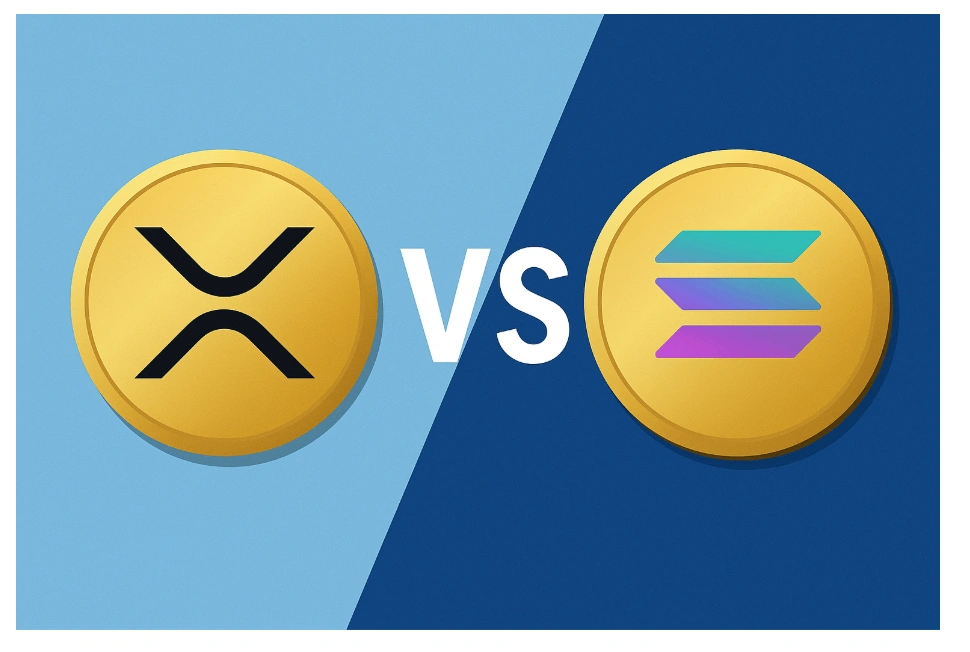
XRP’s liquidity and fast adoption of ETFs set it apart from other large altcoins. (Image Source: InvestingHaven)
Investor Risks Need to be Taken Into Account
No asset is without risk.
Despite the tightening of the structure of XRP, there are also a number of red flags that should be noted:
- Technological Resistance Levels
The action of short-term prices has been unable to overcome critical zones of resistance, and this implies that the prices cannot be expected to increase without market validation.
- Macro Headwinds
Greater economic circumstances continue to affect crypto. Rallies can be tamed by interest rates, geopolitics, and tightening of liquidity.
- Whale Dynamics
Even big players may have a say and volatility may arise when whales are sold in large blocks with any change of heart.
- Regulatory Nuances
As the clarity is improving, there are diverse global regulatory regimes and such changes may affect the cross-border flows or custodial structures.
Coming out about these risks results in a more believable long-form article and allows the readers to learn more about opportunities and traps.
Also Read: Trump Crypto Influence: How 2025 Shaped the Cryptocurrency Market 2026
Strategic Takeaways for 2026
These motifs are the story of XRP:
- The use of ETFs is not just hype but a structural aspect that is influencing access to supply and the institutions.
- Contraction of supply on exchanges forms valuable asymmetry that may result in price growth in the favorable demand circumstances.
- Retail turnover is not serious capital which institutional structures are mature enough to attract.
- Clarity of regulations minimizes uncertainty creating a wider participation.
- The use of utility is one of the most important distinguishing factors between XRP and most altcoins.
All this is to say that what was the story of XRP in 2026 is far beyond a price pump narrative; it is forming into a market microstructure transition that is affecting the nature of the interaction between capital and digital assets.
Concluding Reflections: What is Going on Behind the News
The January unlock of XRP does not just amount to a supply release.
It is a turning point in the perception of the market with regard to the structural forces, supply dynamics, institutional adoption, regulatory transparency and practical utility.
This isn’t about quick gains.
It is concerning positioning of XRP as a pillar of regulated crypto finance in 2026.
It will be seen during the next 12 months whether these forces will coordinate to form an enduring trend or market will go back to the old trends.
In any case, the performance indicates that we are witnessing one of the key chapters in the maturation of crypto, and XRP is the focal point of it.
Frequently Asked Questions
Q1. Why is Ripple unlocking XRP every month?
Ans: Ripple uses escrow releases to manage predictable supply distribution while supporting ecosystem expansion and liquidity requirements.
Q2. Does a $1 billion XRP unlock imply a price decrease?
Ans: Not necessarily. Price impact depends on how much of the unlocked supply enters exchanges versus long-term holdings and ETF absorption.
Q3. Do XRP ETFs have an impact on supply?
Ans: Yes. ETFs absorb circulating XRP and reduce the amount of liquid supply available for trading in the market.
Q4. Is XRP inflationary?
Ans: No. XRP has a fixed total supply. Unlocks do not create new tokens; they simply redistribute existing ones.
Q5. What is the relevance of XRP in the 2026 market trend?
Ans: XRP sits at the intersection of global payments, institutional adoption, and regulated crypto exposure, making it a key asset to watch in 2026.
Q6. Why are XRP ETFs different from Bitcoin ETFs?
Ans: XRP ETFs operate within a smaller liquidity pool, meaning institutional inflows can have a more pronounced impact on supply dynamics and price behaviour.
Q7. Could XRP potentially reach US$8 or higher?
Ans: Several institutional models, including those from Standard Chartered, suggest that US$8 is possible with sustained ETF inflows and tightening supply, though broader market conditions remain decisive.
Q8. How do ETFs create a supply constriction effect for XRP?
Ans: When XRP moves into ETF custody, it exits the liquid trading pool on exchanges, reducing available supply and tightening market liquidity.
Q9. Does Ripple’s selling of tokens negatively affect the price?
Ans: Not necessarily. Ripple often re-escrows or strategically deploys tokens rather than releasing them directly into the market, helping to limit sudden sell pressure.
Q10. What could derail XRP’s 2026 rally?
Ans: Prolonged market instability, abrupt regulatory shifts, or large-scale sell-offs by major holders could disrupt XRP’s upward trajectory.