
December Starts With a Shockwave
Cryptocurrency markets shook awake in December – and it’s not in a pleasant manner. Towards the end of 2025, the top digital currencies are plummeting. BTC goes beneath US$87,000, and Ethereum (ETH) declines by 5%, while the entire range of altcoins suffers due to the sell-off trend.
What led to this is the security incident at Yearn Finance and, in particular, its yETH liquidity pool that has shaken investors’ confidence. In this incident, it was possible for the attacker to print too much of yETH, withdraw around 1,000 ETH or around US$3 million in the pool, and use the mixers.
Repercussions began rolling in shortly after. Risk-off behavior spread rapidly in the crypto markets. Even bitcoin, which had been considered such a safe asset class until now, suffered losses and pulled the entire ecosystem down in the process. (crypto.news)
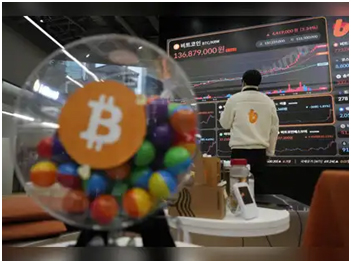
Crypto markets fell after a $3M Yearn Finance yETH exploit shook investor confidence. (Image Source: The Economic Times)
How The yETH Incident Is Important Beyond The Lost Millions
Prima facie, losing several million dollars may look small compared to the multi-billion-dollar size of the crypto market. However, this is only the tip of the iceberg.
Another Blow To DeFi Trust
Considering that “DeFi” platforms never cease to advertise “decentralised” finance, the problem is that incidents such as this one reduce confidence in this ecosystem. Even when it is only “one pool that is hacked, it rattles confidence in this DeFi ecosystem.
Liquidity Panic Spreads To Altcoins And Ultimately, BTC As Well
The incident at yETH led to rapid withdrawals and panic selling on different pools. In the wake of investors seeking shelter, funds streamed out rapidly–not only in smaller currencies, but in leading currencies as well. Suddenly, the relationship between BTC and alts coincided: when one went down, the other followed suit.
Institutional Cracks Showing
Incidents such as this are especially timely in that they have been happening when the institution has been re-emerging in the markets, and this can be seen in the use of ETFs or similar institutional channels. Systemic weaknesses, such as security risks in DeFi, for example, demonstrate that, just due to institutional investments, the markets are still at risk.
Heavy Losses In November Paved The Way
In late November of 2025, Bitcoin had already experienced its worst month since mid-2022. It decreased by more than 21% in just November.
There were several factors that came together: profit taking, rising uncertainty in the macro economy, and diminishing hopes of any near-term cuts in interest rates from the Fed. That discounted much of the bullish sentiment that had accumulated over the past several months.
ETF Outflows And Liquidity Squeeze
Institutional funds, in the form of spot ETFs for bitcoin, had kick-started a huge rally earlier in the year. Now, as sentiments change, the same institutional channels are causing downward forces. Liquidity dries out, and bid-ask spreads get wider when funds leave the markets, and this accelerates downward movements.
Global Risk-Off Markets: Crypto Caught In The Current
Macro headwinds such as rising bond yields and global uncertainty are deterring investors from risk markets. Bitcoin, which had always been labeled as digital gold, is moving more and more like a risk asset. Because stocks and risk markets are struggling, it has spillover effects on BTC. (investing.com)
What Does This Mean For Investors?
This is more than just another dip. What has been seen in yETH and the drop in BTC indicates that there may be another turning point in the understanding of risk in the world of crypto.
1. DeFi No Longer Invulnerable To Fear
DeFi, which had once been the darling of decentralised innovation, will now be in the spotlight yet again. Investors and organisations are expected to ask for better security audit guarantees and risk protection methodologies in the DeFi world.
2. Interconnectedness Multiplies
BTC and altcoins are very closely intertwined, such that any issue on one side of the crypto world can impact the whole market negatively. Diversification in the crypto market may be rendered futile. Increasingly, the crypto world may be seen as one asset class.
3. Institutional Participation Introduces Novel Factors, Including Risk
Even as institutional capital created size and volume, it also increased complexity. ETFs and large-scale positions magnify stock movements. In periods of selling, institutional investors can sell out of positions quickly, causing widespread sell-offs and sharp declines.
4. Sharper Need For Risk Management And Liquidity Buffers
Volatility is obviously part of the crypto game, and yesterday’s crash is just another reminder that leverage needs to be carefully managed and scaled back when appropriate and that no crypto asset is “safe” enough to be treated in the same manner as more conventional markets.

DeFi is no longer risk-free, crypto is highly interconnected, and careful risk management is now essential. (Image Source: Fidelity Investments)
Signals To Watch And Cautions On The Road Ahead
So, just what is it that the PCE Price Index measures, and why should investors care about it? In short, it is an inflation index that tracks core and total personal consumer spending in the USA. Historically, this spending
- Security Audits and DeFi Transparency: Platforms that are transparent and fast in fixing vulnerabilities and displaying audit results can recover. Watch out for the DeFi that moves at a fast pace.
- ETF Fund Flow Data: Are institutional investors still injecting funds or withdrawing funds? ETF fund inflows and outflows can also influence the market sentiment.
- Macro-Economic Indicators: Interest rates, bond yields, and international economic stability are factors that will influence crypto demand. If international markets continue to be unstable, it may put pressure on cryptos. (financefeeds)
- Metrics and Whale Action: Who’s moving large sums of BTC or ETH? Large movements of funds into exchanges are potentially indicative of further selling pressure.
- Sentiment and Regulatory Changes: Changes in the sentiment of regulators towards DeFi exploits may trigger changes in investment and the nature of investment in the DeFi space. ()
Where We Go From Here: Three Possible Scenarios
Currently, the market has three possible scenarios it can choose from. Each of them has different consequences and likelihoods.
Scenario A: Stabilization And Shallow Recovery
Confidence is repaired rapidly. Yearn and other DeFi project teams issue transparent PMs on what went wrong and are satisfied that problems are solved, and ETF inflows gradually stabilize. Liquidity comes back to order books and volatility declines. Bitcoin adjusts to a range of US$85k–95k, and traders view this incident as merely a ‘reset,’ not an inflection point. Scenario A may be expected if institutional inflows stabilize and macro numbers aren’t surprising on the hawkish side.
Scenario B: Long-Term Correction (High Likelihood In The Near-Term Future)
Risk aversion remains entrenched. There are still ETF outflows and little on-chain liquidity, and regulators continue to shine the spotlight on DeFi. Bitcoin and large caps are lower and range-bound for several weeks. DeFi applications that fail to demonstrate rapid, verifiable improvement are abandoned for good. This is due to the current combination of large ETF outflows and risk sensitivity to security incidents.
Scenario C: Crash And Contagion (Low Likelihood, High Consequence)
An attacker deploys more money, other cryptos, and systems expose connected weaknesses, or an institutional selling frenzy causes large downstream bitcoin outflows and order books dry up. Price cascades lead to margin squeezes, and substantial drawdowns emerge in the markets. Even if less probable than in Scenario B, this case holds extreme tail risk and causes an about-face in rethinking leverage and counterparty risk.
$BTC / Bitcoin Microstructure Analysis
Buy Volume:
Buy volume dried out completely on the move down to $85K. Barely any aggressive buyers stepping in. The only green spikes were desperation bids, not any real strength. Market wasn’t interested in defending this drop.
Sell… pic.twitter.com/cUuzr1bXH3
— Ardi (@ArdiNSC) December 1, 2025
How The Scenarios May Affect The Average Investor
Do not generalize about crypto. Your approach will depend on the timeline, risk level, and liquidity requirement.
Short-Term Trader (Days–Weeks)
Volatility means opportunity and risk. Reduce stop-losses, lower leverage, and don’t chase the stock down unless you have an advantage (order flow, derivatives expertise, or easy exit strategies). Monitor exchange order books: when ask sizes are rising, and spreads widen, it means that slippage will be problematic.
Medium-Term Investor (Weeks–Months)
Dollar-cost average into core positions only after establishing that stabilization has been achieved in the following areas: less ETF outflows, stable on-chain inflows to cold wallets, and DeFi bug fixes that have been audited. Do not invest in yield farms and leveraged positions that remain unaudited.
Long-Term Holder (Years)
Re-evaluate position sizing decisions in light of this incident, but don’t act on emotions. If you still believe in your investment thesis (e.g., that Bitcoin is digital property), stick to that investment plan and resist the urge to act on current markets. Still, this experience argues for having an increased cash cushion in non-crypto reserves for unexpected situations.
Tactical Playbook: What To Watch And When To Act
Here are specific signals that matter, and what you should do.
● ETF Out/In Flow Reversals
If inflows continue and outflows turn around, that is tension good sign. If outflows pick up, get prepared for further downward moves. Short traders can capitalize on this for their trade timing decisions.
● Whale Action On-Chain
Large money transfers to exchanges indicate impending sales. Look for clusters of Watch wallets and Tornado-type money mixing for indications of attacker money movements. If large sums are transferred to exchanges, bolster risk controls.
● DeFi Remediation And Audit Confirmation
Definitely, those that reveal transparent and attestation-verified remediation and compensation measures recover faster. Always favor exchanges that have substantial formal audit and bug bounty programs in place.
● Order Book Liquidity And Spreads
In case the leading exchanges demonstrate low bids and spreads, it is better to limit large orders and enter them at different levels.
● Macro Calendar Events
Rate decisions, CPI, and important news will push markets further. Do not forget about the risk calendar and adjust the size of positions in relation to it.
Institutional Perspective: Why Big Money Is Important In This Scenario
Institutional investors alter the mechanics of markets. Institutional investment leads to the creation of a double-edged sword.
Pros: It brings scale and additional liquidity in usual market conditions. ETFs aid in onboarding and price discovery.
Cons: When sentiment turns, outflows of funds from institutions in large numbers are evident. Big outflows increase the effects of price movements, and algorithmic Market Makers increase spreads when the markets are under stress. Inflows and outflows of funds in September are evident when the data for November is taken into account, and this is contributing to the current state of sensitivity. (deriv.com)

Institutional flows boost liquidity but can amplify crypto market swings. (Image Source: Dreamstime.com)
Regulatory Ripple Effects: What To Expect
Breaches such as yETH attract the attention of regulators. Government authorities finally have a case in point for imposing tougher regulations on DeFi and stablecoins. Several immediate effects can be expected:
- Accelerated rulemaking on DeFi transparency and smart contract risk disclosure.
- Enforcement concerning the use of on-chain mixing services and tracing back transactions.
- “Expectations for self-custody education and fiduciary obligations for custodians have increased.”
Regulation may be very painful in the short run, and yet some level of clarification may deter fraud and attract more conservative capital in the medium run.
Risk Management Checklist: Simple Playbook That Can Be Used Right Now
It can be considered an operating checklist for protecting the capital.
- Leverage decrease. Leverage needs to be minimized or avoided until volatility passes.
- Size positions based on risk, not conviction. Implement a maximum loss on trade rule (e.g., 1-3% portfolio risk exposure).
- Audited protocol preferable. Review audit reports and recent patch notes before staking or adding liquidity.
- Cold storage for large positions. Active funds on the stock exchange only.
- Space out entries and exits. Slice and dice trades to overcome slippage.
- Keep an “emergency fund” in cash. Having sources of money other than crypto means that you can pounce on investment opportunities without
Watch on-chain movements daily. Minor movements can be indicative of larger markets.

Reduce leverage, trade carefully, use audits, store securely, keep cash, and watch on-chain activity. (Image Source: Opofinance Blog)
Technical And On-Chain Data Points To Monitor
- Exchange Net Flow: steady inflows → selling pressure, steady outflows → accumulation.
- Futures’ Open Interest: Large payoffs point towards deleveraging positions, while large explosive changes warn of crowded trades.
- Reserve Risk and Realized Cap: Long-term holder behavior can indicate accumulation periods.
- Stablecoin Supply: a decrease may be seen as outflows of capital from the crypto markets, while an increase can be seen as contributing to a rally
Also Read: Why SWIFT’s ISO 20022 Migration Is a Big Crypto Moment: And What It Means for Tokenised Finance
Implications For The DeFi Ecosystem And DeFi Builders/Depositors
Developers must halt their promises of “trustless” systems that disregard real-world security needs. Today, the marketplace succeeds in:
- Upgradable and clear contract governance featuring multisig and timelocks.
- Evidence of recent audits and bug bounties.
- Transparency in incident response and insurance safety nets.
Projects that practice institutional-grade security standards are rewarded in terms of capital inflows, and those that don’t will face perpetual capital outflows.
Five Hard Truths Investors Must Face Today
- No coin remains unaffected: Even the best projects are contaminated by non-related exploits.
- Correlation increases during stress periods: Cryptos act like one risk asset during markets.
- Liquidity goes dry quicker than you think: Order books are small for large trades.
- Regulations pick up speed in the wake of incidents: Expect increased regulation.
- Security is an ongoing expense: Now, coverage for audits and insurance fees constitutes due diligence.
Conclusion: A Clearer And Harder Market
In this scenario of December, optimism and hard-nosed realism are in play. Innovation can be fragile, and this month teaches an important lesson about maturity. Meanwhile, those investors who are nimble and evolve by emphasizing security and risk management will be better placed to ride out the storm.
Currently, the prudent risk stance is to roll back leverage, select DeFi investments cautiously, monitor ETF outflows and on-chain whale movements, and maintain a cash cushion. Markets will test patience: those who prepare will be rewarded when the storm passes.
Frequently Asked Questions
- Q: And what about this yETH?
A: The liquidity pool of yETH was hacked. A hacker successfully created an unusually large supply of yETH in one transaction and stole around 1,000 ETH (valued at US$3 million) from the pool, sending it to the mixer. Panic selling of digital currencies ensued due to the hack. - Q: How could Bitcoin be affected when the bug existed on the DeFi platform?
A: It weakened confidence in the wider crypto universe. In their rush for safety, money exited the DeFi space and top-tier cryptos alike. That, together with factors of the wider economy, led to the downturn in Bitcoin. - Q: Could this be just a flash crash, or is it signifying trouble in the cryptos?
A: It is a little bit of both. That yETH exploit is more of a short-term stun. But those underlying the erosion of macro sentiment, institutional liquidity turning hostile, risk aversion escalating be the start of some structural change. How that unfolds depends on when confidence comes back. - Q: Should investors panic or look at this as a buying opportunity?
A: Panic selling never proves profitable. Having said that, only those investors who are comfortable with volatility and prepared for potential losses may choose to invest in DeFi at this point. Other investors may consider waiting for the stabilization of DeFi security. - Q: How can investors going forward protect themselves?
A: Diversification, limit leveraged positions, monitor institutional flow figures closely, and look at crypto investments the same way you look at risky investments. Transparency and an audit trail are of utmost importance when it comes to DeFi investments. - Q: How dangerous is the yETH exploit for Yearn Finance in the long run?
A: Yearn’s long-term health is what it needs to recover from. If the team is operating in the open, compensates victims when possible, and addresses fixed issues, it can turn this around. However, it is easy for them to lose the community’s trust. Some liquidity may never come back. - Q: Will it recover soon if DeFi stabilizes?
A: Bitcoin can bounce back when ETF inflows turn more stable and when the larger macro factors turn less hawkish. BTC is more susceptible to institutional money and the state of liquidity in the wider macro economy than any DeFi hackthough this hack clearly just accelerates and heightens the crisis and correlation. - Q: Should I panic sell or hold in this?
A: Panic never pays off. Re-evaluate your position sizing and level of leverage, and maybe stagger your buys and sells. Match your actions to your horizon: Day traders are fast movers, while investors are disciplined thinkers. - Q: How trustworthy are DeFi insurance products?
A: Some are protective, but the level of coverage is very different. Always carefully review insurance coverage: many exceptions apply, and the claims process can be very slow. Insuring can help, but it never replaces sound exposure practice.